
What to Do When You Feel Lonely: What Do You Need Right Now?

Key highlights
- Feelings of loneliness can occur even when you have people around you if the connection you need is missing.
- More socialising is not always the answer. Close relationships and meaningful conversations can matter more than the amount of contact you have.
- Introverts can enjoy solitude while still needing social support and meaningful connection.
- Repeated community activities can help build familiarity, belonging, and new connections over time.
- Nighttime loneliness can be easier to manage when you plan options for connection and coping in advance.
- Persistent loneliness deserves attention when it begins affecting your daily life, mental wellbeing, or ability to connect with others.
- Listennr offers a low-pressure space to express difficult feelings and talk privately with a real human listener.
Loneliness does not always mean being physically alone. You can feel disconnected while living with family, spending time with friends, working alongside colleagues, or being in a relationship. This is why advice to simply “get out more” or spend more time with people often misses what you actually need.
Working out what to do when you feel lonely starts with identifying the kind of connection that feels absent. You might want company, a meaningful conversation, reassurance, or simply someone who will listen without trying to fix the situation. At other times, you may be feeling lonely but not wanting company, particularly when social interaction feels tiring or overwhelming.
The right response depends on that difference. This guide will help you recognise what your loneliness may be signalling and choose practical next steps based on the type of connection or support you need right now.
What should you do first when you feel lonely?
When loneliness hits, avoid assuming that being around more people is automatically the answer. First, identify what feels absent. You may be missing conversation, emotional understanding, familiarity, belonging, someone's physical presence, or simply knowing that someone is available to listen.
This distinction matters because the wrong response can leave the underlying need untouched. A social event might help if you have had very little human contact, but it may do little if you already see people regularly and still feel disconnected.
Use a quick loneliness check before deciding what to do
Before deciding what to do next, ask yourself:
- Do I want interaction, or do I want to feel understood?
- Is there a particular person I am missing?
- When did I last have a meaningful conversation?
- Am I around people but still feeling emotionally disconnected?
- Do I want someone to listen without giving me advice?
- Do I actually want company right now?
- Does loneliness tend to appear at particular times, such as at night or on weekends?
- Is this an occasional feeling, or has it become a recurring pattern?
Your answers can help you choose a response that fits what is actually missing:
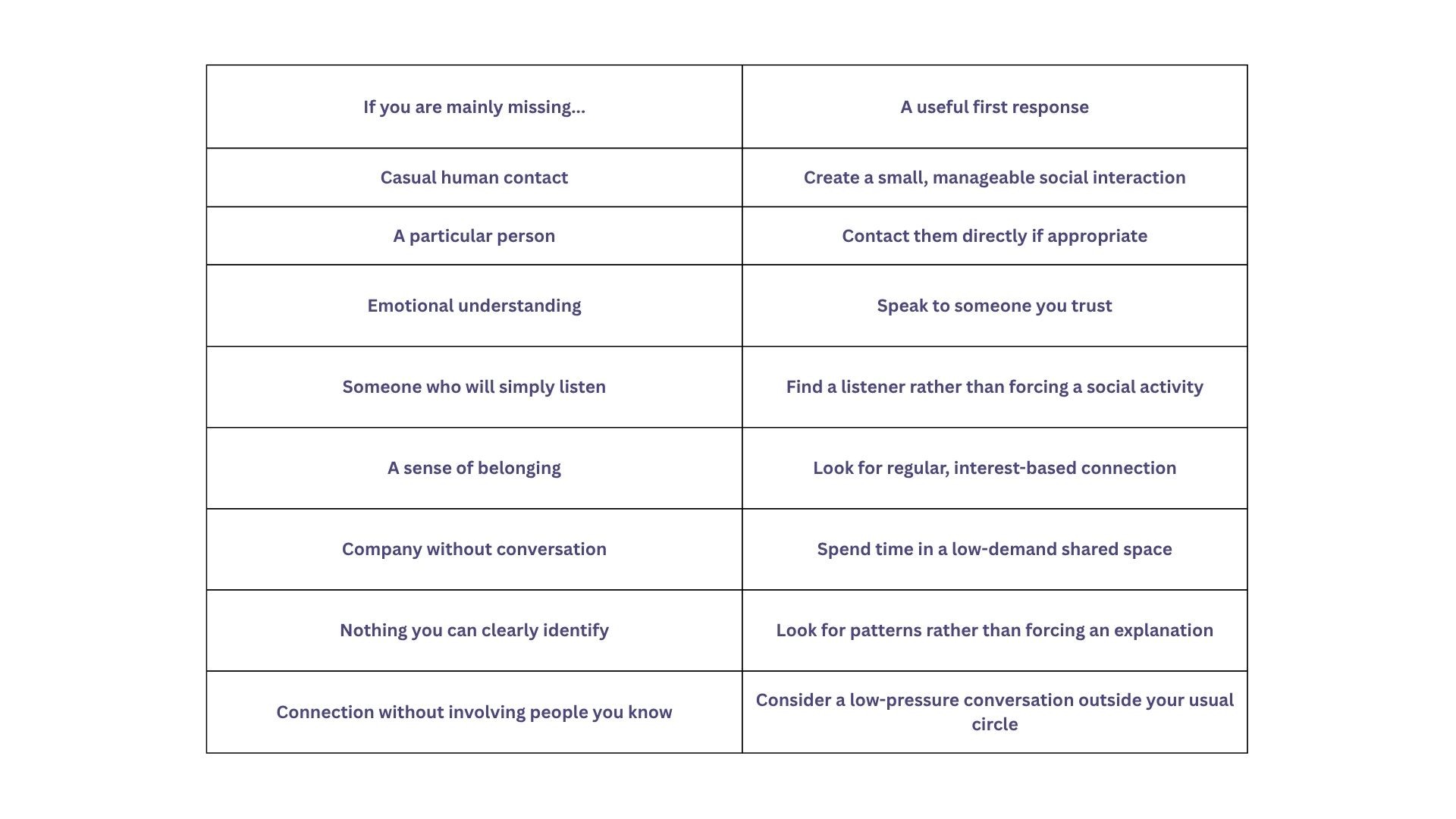
When deciding what to do when you feel lonely, the aim is not to choose the most social response. Choose the response that most closely matches what you need at that moment.
Why can you feel lonely even when you are not alone?
You can feel lonely at home, at work, with friends, or in a relationship because loneliness is not only about how many people are around you. It can also come from the type of connection that is missing.
1. Social disconnection
Social disconnection happens when you have too little regular interaction with others. You might work from home, live alone, or have friends who are rarely available. In this case, consistent human contact may be more helpful than occasional social plans.
2. Emotional disconnection
Emotional disconnection happens when people are present, but you do not feel able to say what you actually think or feel. You may have plenty of contacts without having someone you can confide in, particularly if you worry about judgement, unwanted advice, or being misunderstood.
3. Relational disconnection
Relational disconnection occurs when existing relationships no longer provide the closeness or reciprocity you need. Friendships can become limited to surface-level updates, relationships can fall into routine, or you may give more emotional support than you receive.
If you already spend plenty of time around people, more social activity may not be the answer. You may need a different quality of connection rather than more interaction.
Why might you be feeling lonely without any reason?
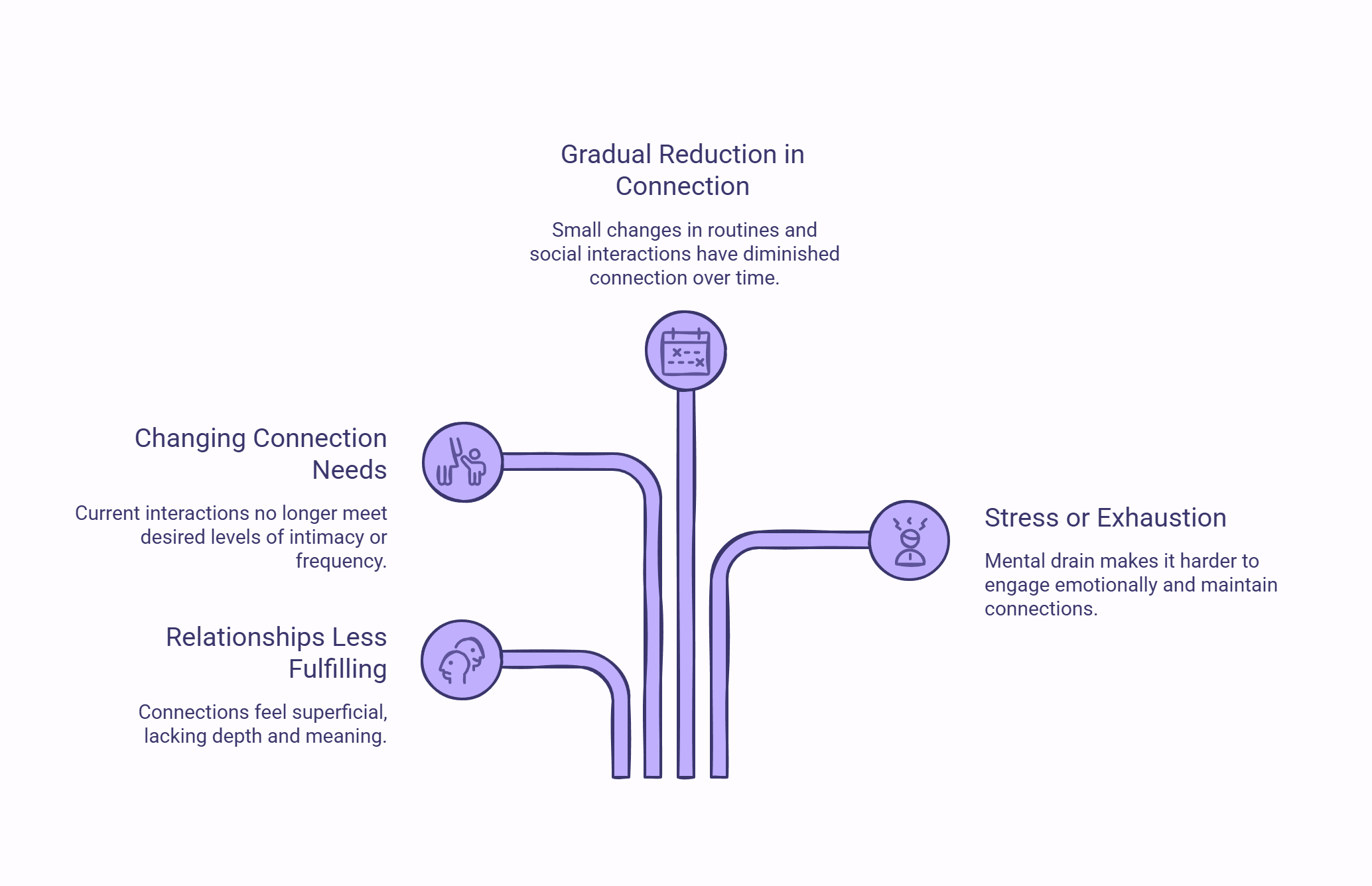
Feeling lonely without any reason does not mean there is no underlying cause. Sometimes changes in your relationships, social needs, or energy happen gradually, making it difficult to identify what is contributing to the feeling.
1. Your relationships feel less emotionally fulfilling
You may still see and speak to the same people, but the connection no longer feels as close or meaningful. Conversations may have become more surface-level, or you may no longer feel the same sense of belonging within certain relationships.
2. Your need for connection has changed
The amount or type of interaction that once felt sufficient may no longer meet your needs. You may now want deeper conversations, more regular contact, or greater openness in your relationships.
3. Small changes have gradually reduced connection
Friends becoming busier, fewer conversations, cancelled plans, changing routines, or moving away from familiar communities can gradually reduce connection without creating one obvious turning point.
4. Stress or exhaustion is making connection harder
When you are mentally drained, reaching out and being emotionally present can require more effort. You may also keep more to yourself, which can reduce meaningful interaction and make loneliness more noticeable.
Look for patterns instead of forcing yourself to find a cause
Pay attention to when loneliness becomes stronger, such as at night, at weekends, after socialising, on remote-working days, or after spending time on social media. Notice who you have been speaking to, when you last had a meaningful conversation, and what you repeatedly wish you could tell someone.
Understanding what to do when you feel lonely does not require finding one exact cause. Recurring patterns can help you recognise what may be missing and choose a more suitable response.
Can introverts feel lonely even if they enjoy being alone?
Yes. Can introverts feel lonely even when they value time alone? Absolutely. Introversion relates to how much social stimulation you prefer, while loneliness reflects whether you have the connection you need. You can enjoy solitude and still miss a meaningful conversation or sense of belonging.
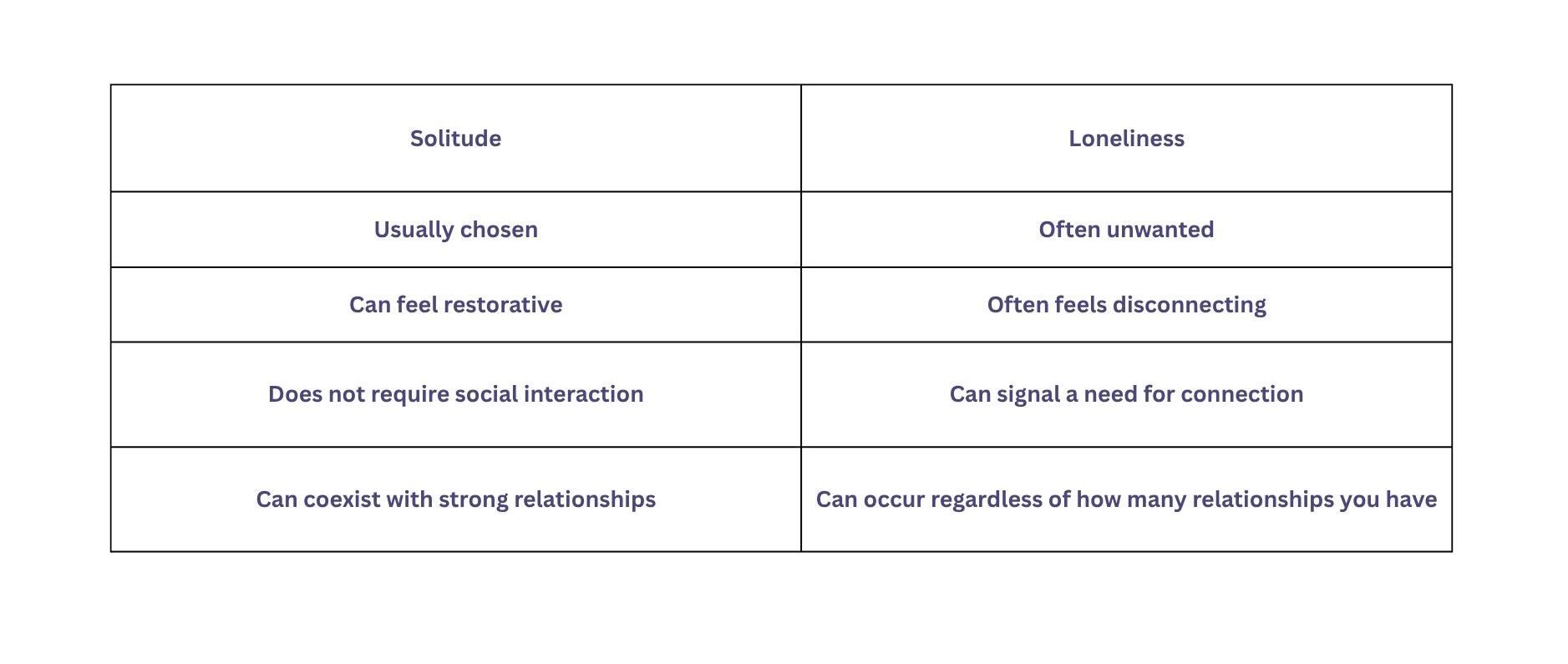
Why can conventional loneliness advice be unhelpful for introverts?
More events, bigger friendship groups, or constant messaging can increase social demands without reducing loneliness. One-to-one conversations, smaller communities, shared interests, and lower-pressure communication may provide more meaningful connection without becoming overwhelming.
What matters is finding enough of the right kind of connection for you, rather than simply increasing how often you socialise.
What are useful things to do when feeling lonely?
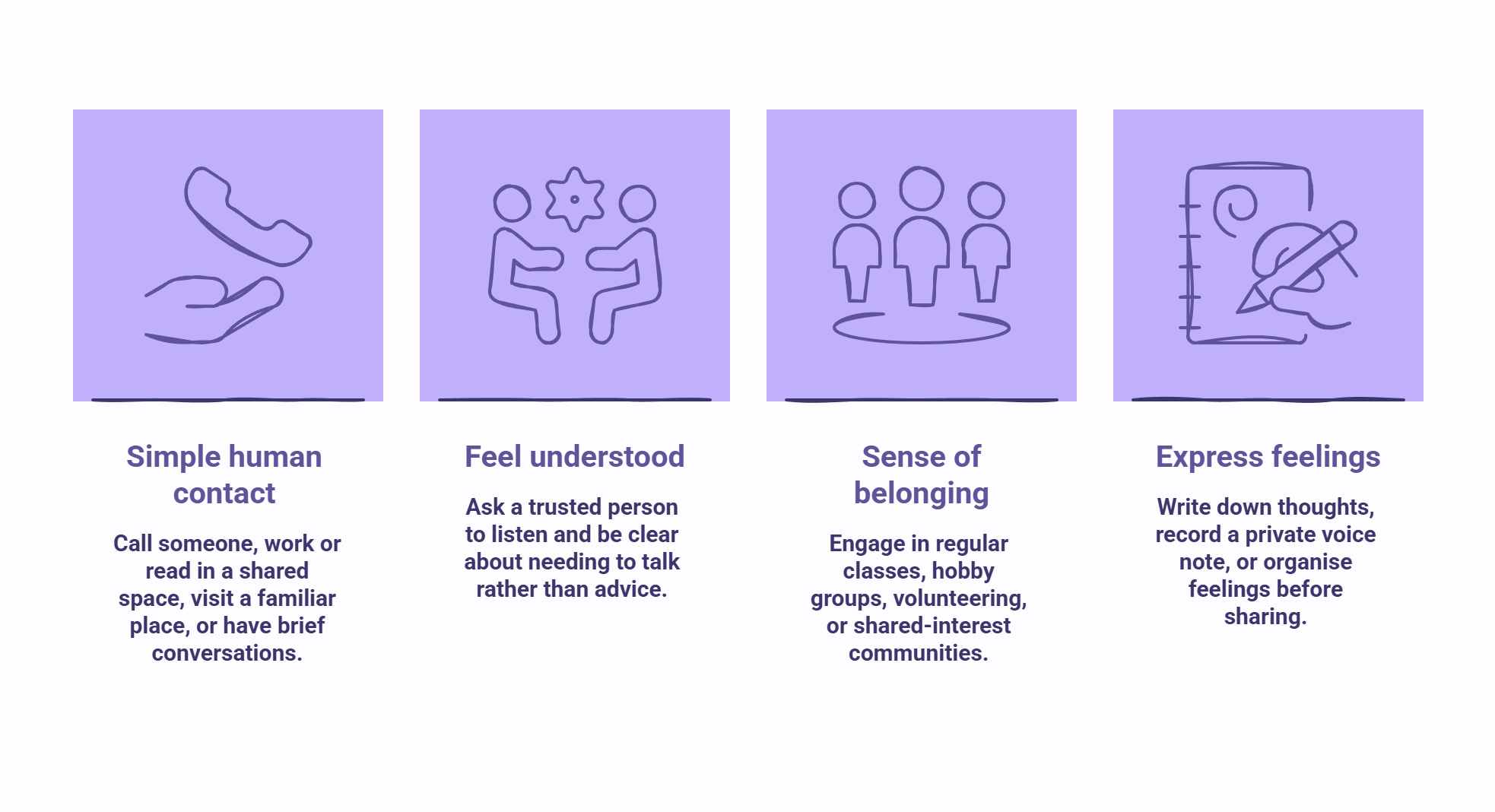
The most useful things to do when feeling lonely depend on what feels missing. Instead of simply keeping yourself busy, choose an action that matches the type of connection you need.
1. If you need simple human contact
Choose low-pressure interaction. Call someone instead of texting, work or read somewhere shared, visit a familiar place, or have a brief conversation with someone you regularly see. Small interactions can help when you have had too little contact with others.
2. If you need to feel understood
Choose one person you trust and ask if they have time to listen. Be clear about what you need rather than waiting for them to guess. You could say, “I don't really need advice right now. Could I just talk something through with you?”
3. If you miss a sense of belonging
Look for repeated rather than one-off interaction. A regular class, hobby group, volunteering role, community group, or shared-interest community gives familiarity and stronger connections time to develop.
4. If you need to express what you are feeling
Write down what you wish you could tell someone, record a private voice note, or organise your thoughts before sharing them. This can help you process the feeling, but it is not a substitute when what you really need is to be heard.
The important difference is whether an activity simply distracts you from loneliness or leaves you feeling more connected afterwards. Keep this in mind when deciding what to do when you feel lonely.
What if you feel lonely but do not want company?
Feeling lonely but not wanting company is not contradictory. You may want connection without the effort that comes with socialising. Meeting people can feel exhausting when you have little energy, particularly if you feel expected to make conversation, appear engaged, or explain how you are feeling.
You may also want to be heard rather than entertained, prefer one person over a group, or feel that the people available are not people you can comfortably open up to. In these situations, the issue is often not whether you want connection, but how much social demand you can manage.
Choose lower-pressure forms of connection
You can reduce that demand without cutting yourself off completely:
- Text instead of meeting: Stay connected without committing to a longer social interaction.
- Have a phone conversation: Talk without the additional effort of going out or being face-to-face.
- Speak to one person: A one-to-one conversation may feel more manageable than joining a group.
- Be around people without interacting: A cafe, library, park, or other shared space can provide human presence without requiring conversation.
- Consider an anonymous conversation: A privacy-focused platform can offer a lower-pressure way to open up outside your usual circle.
You do not have to force yourself into a social situation simply because you feel lonely. Reduce the social demand while keeping the possibility of meaningful connection open.
How can you stop feeling lonely at night?
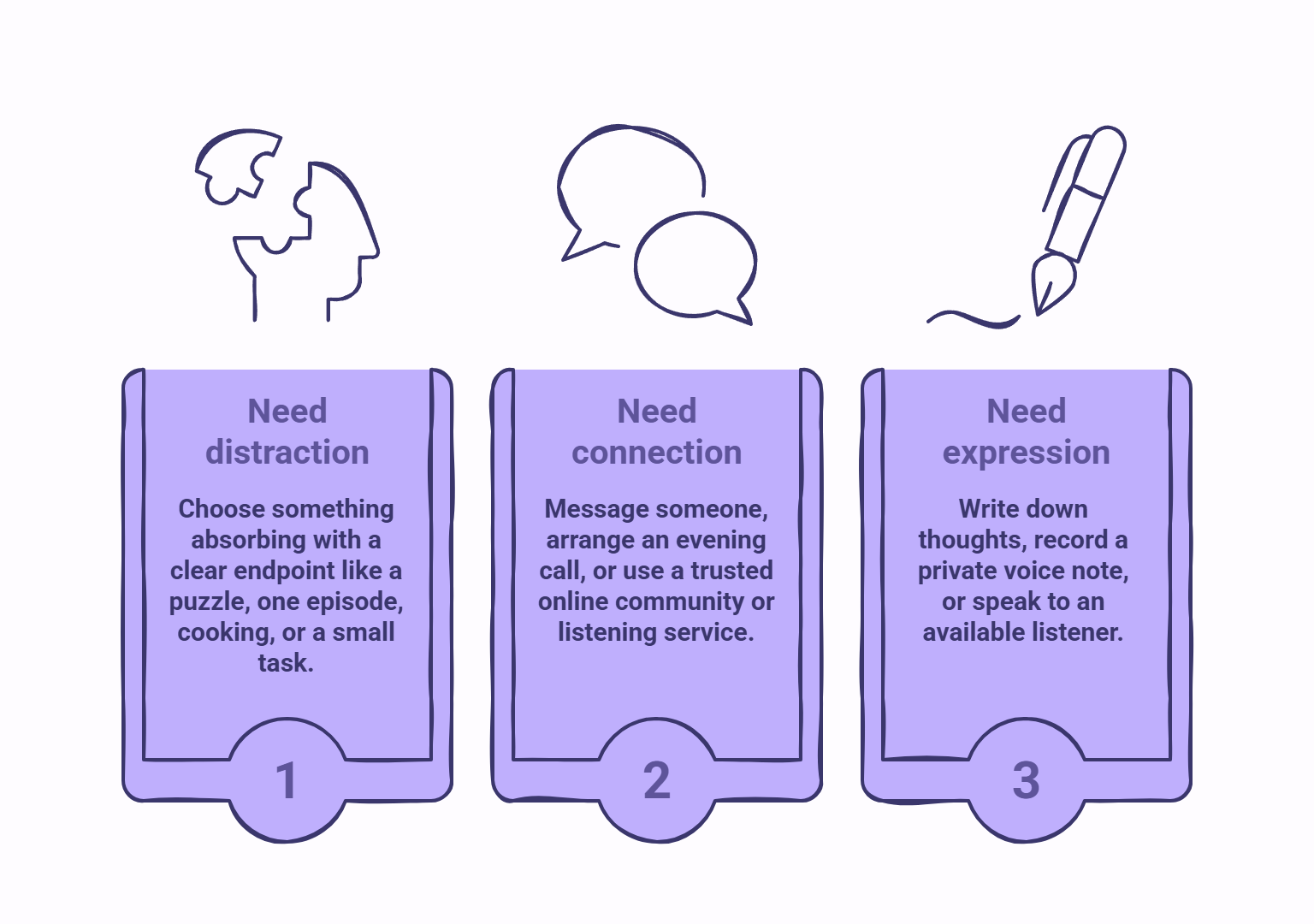
If you are wondering how to stop feeling lonely at night, notice what changes as the day quietens down. Fewer distractions, less access to other people, and more time with your thoughts may make feelings of loneliness more noticeable.
Rather than automatically distracting yourself, consider what you need that evening.
1. If you need distraction
Choose something absorbing with a clear endpoint, such as completing a puzzle, watching one episode, cooking something, or finishing a small task. A defined activity gives you something specific to focus on instead of defaulting to passive scrolling.
2. If you need connection
Message someone before it gets too late, arrange an evening call in advance, or use a trusted online community or listening service. If loneliness tends to appear at the same time, planning contact in advance gives you an option to turn to.
3. If you need to get something off your mind
Write down what you would say if someone were sitting beside you, record a private voice note, or speak to an available listener. These options give you different ways to express what is on your mind.
Build a plan before nighttime loneliness starts
If evenings are a recurring problem, decide in advance:
Person I can contact → place I can turn to online or offline → activity I can use if nobody is available
Having a plan means you do not have to decide what to do in the moment. A useful part of learning what to do when you feel lonely is having options for connection and coping available when you need them.
What if you feel lonely and need someone to talk to?
Sometimes the activity you choose is not the issue. You may simply need another person to hear what is going through your mind. If you are feeling lonely and need someone to talk to, the difficulty may be taking that first step, especially when you are unsure whom to approach or how to start.
You might hesitate to contact friends or family because you think they already have enough going on, do not want them to worry, or feel uncomfortable bringing up the same issue again. Instead of avoiding the conversation altogether, make the request smaller and clearer:
- Check their capacity: Ask whether they have a few minutes to talk.
- Say what you need: Let them know whether you want listening, reassurance, or advice.
- Start with one thing: You do not need to explain everything at once.
You could simply say, “Do you have ten minutes to listen? I don't need you to fix anything.”
If involving someone you know still feels uncomfortable, a neutral listening option may be worth considering. The next step is choosing a space where you can speak openly while still considering privacy, boundaries, and safety.
Why can talking to someone you do not know sometimes feel easier?
Talking to someone you do not know can feel easier because there is less fear of judgement, fewer expectations, and no shared history influencing what you say. You do not have to maintain a particular role, protect the other person's feelings, or worry as much about whether being honest will change an existing relationship.
This distance can make it easier to focus on expressing what you actually think or feel. However, a stranger is not automatically a good listener. Privacy, moderation, boundaries, and the purpose of the platform still matter.
When might an anonymous conversation make sense?
An anonymous conversation may be useful when:
- You are not ready to involve friends or family.
- You want to say something out loud before deciding what to do.
- You want a neutral person to listen.
- You want connection without an ongoing social commitment.
- You are uncomfortable attaching your identity to the conversation.
Anonymity can make opening up feel less complicated, but choose a service specifically designed for supportive conversations rather than simply talking to strangers anywhere online.
Why do you constantly feel lonely?
Persistent loneliness can develop when the same patterns repeatedly limit the connection available to you. Rather than looking for another cause, consider whether your usual way of connecting is keeping an important need unmet.
Common patterns include:
- You withdraw when you need connection: Cancelling plans, delaying replies, or avoiding conversations can reduce opportunities to reconnect.
- You rely heavily on one person: When most of your emotional support comes from one relationship, their absence or unavailability can leave a significant gap.
- Your routine leaves little room for connection: Work, responsibilities, or irregular schedules can make consistent contact difficult to maintain.
- You rarely feel able to be yourself: Regularly filtering what you say or how you behave can make interactions feel less personally meaningful.
Look at the pattern, not individual bad days
If loneliness keeps returning, examine it as a sequence:
Frequency → triggers → unmet need → your usual response → whether that response actually helps
For example, if loneliness leads you to withdraw, and withdrawing leaves you with fewer opportunities for connection, that cycle may be more useful to address than each lonely day separately. Identifying where the pattern repeats can help you decide what to change.
How do you get over feeling lonely in the longer term?
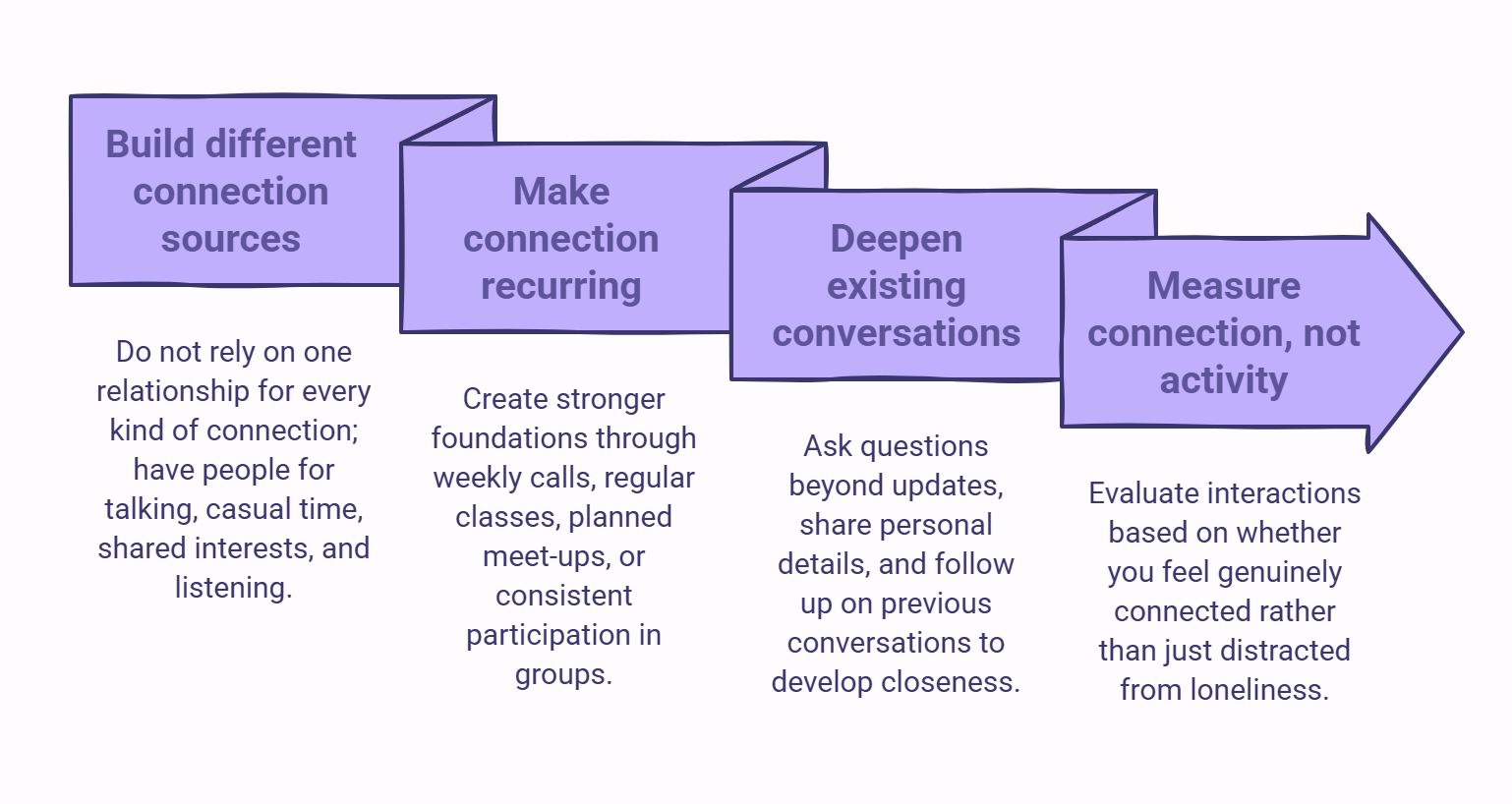
Learning how to get over feeling lonely in a healthy way is less about eliminating loneliness completely and more about making it less frequent, intense, and disruptive. Longer-term change usually comes from building reliable connections rather than repeatedly looking for relief only when loneliness becomes difficult.
1. Build different sources of connection
Do not rely on one relationship for every kind of connection. Have people you can talk openly with, spend time casually with, share interests with, or turn to when you simply need someone to listen.
2. Make connection recurring
Familiarity develops through repeated contact. Weekly calls, regular classes, planned meet-ups, community involvement, or consistent participation in an online group can create stronger foundations than occasional bursts of social activity followed by long gaps.
3. Deepen the conversations you already have
Not every relationship needs to become deeply personal, but some need room to develop. Ask questions beyond everyday updates, share something slightly more personal, follow up on previous conversations, and be clear when you want listening rather than advice. Closeness usually develops gradually through repeated moments of openness.
4. Measure connection, not activity
Pay attention to how you feel after different interactions. Ask yourself: Did this simply distract me from feeling lonely, or do I genuinely feel more connected afterwards? Use that difference to decide which relationships, communities, and forms of interaction deserve more of your time.
Reducing loneliness over time is less about filling your calendar and more about building connections that remain available, meaningful, and varied enough to support different needs. This is an important part of understanding what to do when you feel lonely in the longer term.
What can you do the next time loneliness hits?
You do not have to wait until loneliness feels difficult to decide where you can turn. Preparing a few realistic options in advance can make it easier to take the first step when you want connection.
1. Know who and where you can turn to
Think of a few options that suit different situations. You might have a friend you can message casually, someone you trust for a more personal conversation, a regular community, or a trusted listening service when you would rather speak outside your usual circle. This also avoids expecting one person to always be available.
2. Make reaching out easier
Starting the conversation can sometimes be the hardest part, so decide what you could say in advance. A simple message such as “Are you free to talk for a few minutes?” can open the conversation without requiring you to explain everything immediately.
3. Have a fallback if your first option is unavailable
Someone not replying or being unable to talk does not have to leave you without another option. Decide who else you could contact, where you could find safe connection, or what supportive resource you could turn to next.
Having more than one realistic way to connect means you do not have to work out your entire response from scratch each time loneliness returns.
How can Listennr help when you feel lonely and need someone to talk to?
Sometimes you do not need another activity, more social plans, or advice about how to fix what you are feeling. You simply want a real person who will listen.
If you are feeling lonely, need someone to talk to, and would rather not involve people you know, Listennr provides a low-pressure way to have a private, one-to-one conversation with a real human listener. You can speak anonymously, without involving friends, family, or other people from your everyday life. This can make it easier to open up when you primarily want space to talk and feel heard without judgement.
Listennr's listeners are not therapists or counsellors, so the service is not a replacement for professional mental health treatment or emergency support. It is designed for supportive human conversations when having someone listen is what you need.
Feeling lonely and need someone to talk to? Connect with a listener on Listennr and have a conversation without the pressure of involving someone you know.
Finding the right response to loneliness
Knowing what to do when you feel lonely starts with recognising what kind of connection is missing. More company is not always the answer. You may need a meaningful conversation, a stronger sense of belonging, emotional understanding, or simply someone who will listen.
Rather than responding to every lonely moment in the same way, notice what genuinely leaves you feeling more connected. The right response may be reaching out to someone you trust, building more consistent connections, or finding a low-pressure space where you can talk openly and feel heard.
Frequently asked questions
What can I do when I'm feeling sad and lonely?
Start by identifying whether you need company, conversation, or emotional support. Even brief social contact with someone you trust can help you feel more connected and give you space to express what is on your mind.
Why do I constantly feel lonely?
Persistent loneliness can develop when your social connections do not provide the closeness, belonging, or understanding you need. Look for recurring patterns in your relationships and routines rather than treating each experience of loneliness as an isolated event.
What are simple activities I can do immediately when I feel lonely?
Call someone, take a walk somewhere people are present, write down what you want to say, or join a familiar activity. Choose different things depending on whether you need distraction, conversation, or connection.
How can I connect with others if I’m feeling isolated and don’t know where to start?
Start with one manageable interaction rather than trying to build a social circle immediately. Contact someone familiar, join a support group, or attend recurring activities where seeing the same people can make connection easier over time.
What to do if I feel lonely and depressed?
If loneliness comes with persistent low mood, withdrawal, or difficulty managing daily life, speak to someone you trust and consider professional support. Ongoing loneliness can sometimes occur alongside mental health concerns that need additional care.
How do I tell if my loneliness is affecting my mental health?
Pay attention if loneliness becomes persistent, increases withdrawal, disrupts sleep or daily functioning, or accompanies prolonged low mood. If it is having a negative impact on everyday life, consider discussing what you are experiencing with a qualified professional.
When should I seek professional help for chronic loneliness?
Consider professional support if loneliness persists, affects your sleep, relationships, work, or daily functioning, or occurs alongside prolonged low mood or other mental health concerns. A qualified professional can help identify contributing factors and appropriate support.