%20(1).jpg)
Where Can I Find Someone to Talk To and Be Heard?

Key highlights
- Feeling unheard does not mean no one cares. It means the right listener matters.
- Most people struggle to open up because of fear of judgment or being a burden.
- Online support platforms make it easier to talk without face-to-face pressure or fear.
- You do not need perfect words to start. Showing up as you are is enough.
- Trained listeners focus on hearing you out, not fixing or advising you unsolicited.
- If reaching out has not worked yet, the match was wrong, not you.
- Professional help is a valid next step when conversations alone are no longer enough.
- One honest conversation with the right listener can make everything feel more manageable today.
There are moments when everything feels like too much, but putting it into words is the hardest part.
You might be going through something at work, feeling disconnected from the people around you, or carrying a quiet sadness you cannot quite explain. It does not always have to be a big event. Sometimes it is just the slow build-up of things left unsaid, with no one around who feels right to say them.
That is exactly why you might be searching for "where can I find someone to talk to." You are not always looking for therapy or a diagnosis. You just want one person who will listen without making it weird, without offering unsolicited advice, and without making you feel like a burden.
The good news is that finding that person or space is more possible today than ever before. This guide covers why it feels so hard to open up, where you can actually go to find support, and how to take that first step when you are not sure where to begin.
Why does it feel so hard to find someone who actually listens?
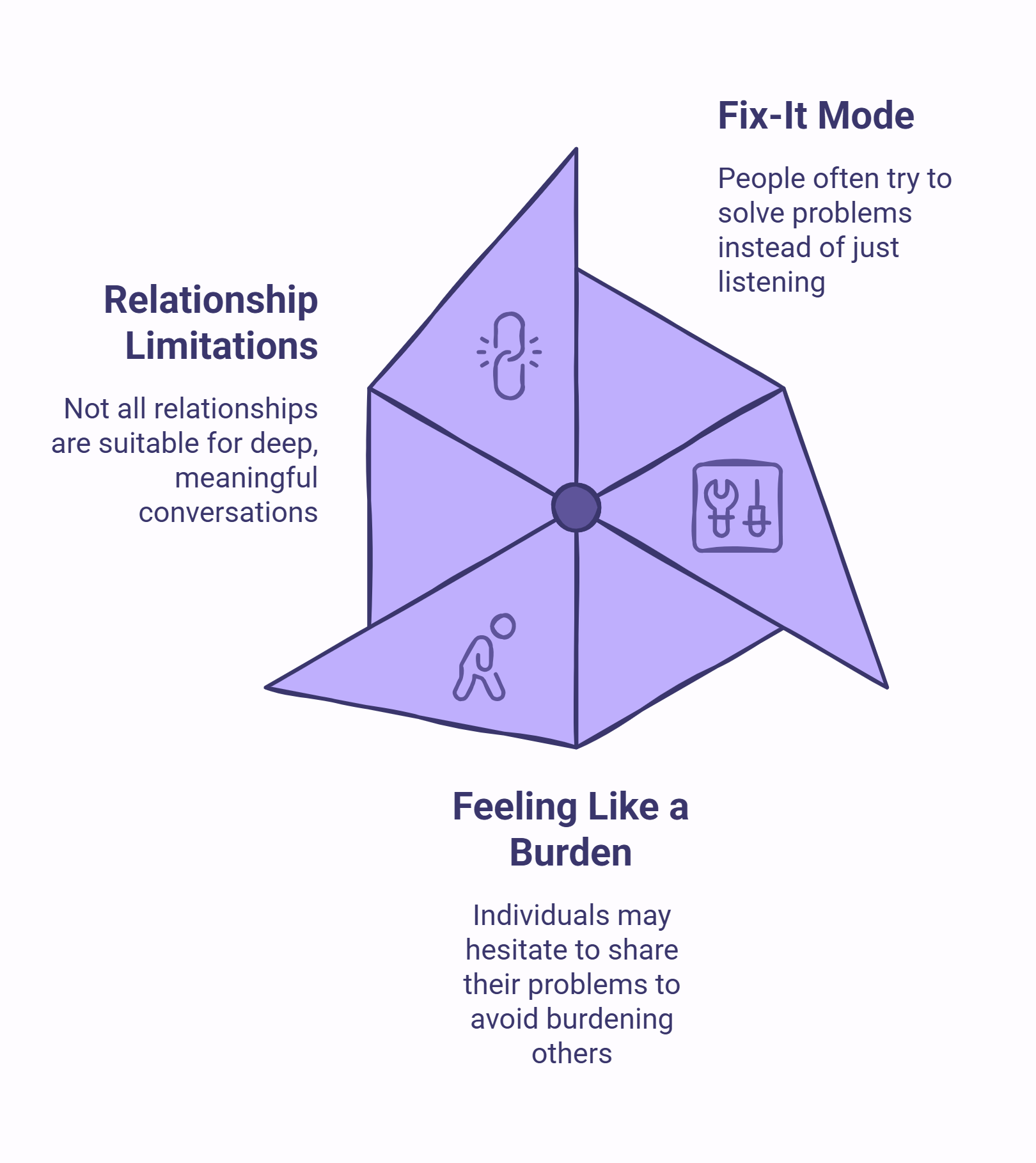
Honestly, it is not just you. A lot of people have a circle around them and still feel like there is no one to really talk to. That gap between being surrounded and feeling heard is very real, and it leaves you stuck.
1. The people around you mean well, but often jump into fix-it mode
When you open up to someone, they tend to suggest solutions, share their own stories, or try to cheer you up. It comes from a good place. But when all you needed was for someone to listen, it can leave you feeling more alone than before you said anything.
2. You do not want to feel like a burden
There is a quiet voice that talks you out of reaching out. What if they are busy? What if it is too much? What if they think less of you after? So instead of saying something, you sit with it. And it gets heavier.
3. Not every relationship is built for deep conversations
You might have people who love you and show up for the good stuff. But honestly, no-filter conversations need a certain kind of safety, and that is not something every relationship naturally has.
None of this means something is wrong with you or the people in your life. It just means the kind of listening you are looking for deserves a little more intention to find.
Take a look at our blog on who to talk to about depression when you feel alone for more guidance.
Where can you find someone to talk about your feelings?
The honest answer is that you have more options than you probably think. Many of them available right now, including anonymous chat rooms that do not require you to explain your entire life story before someone will listen. If you have been asking yourself where you can find someone to talk to, the good news is that support is closer than it feels right now.
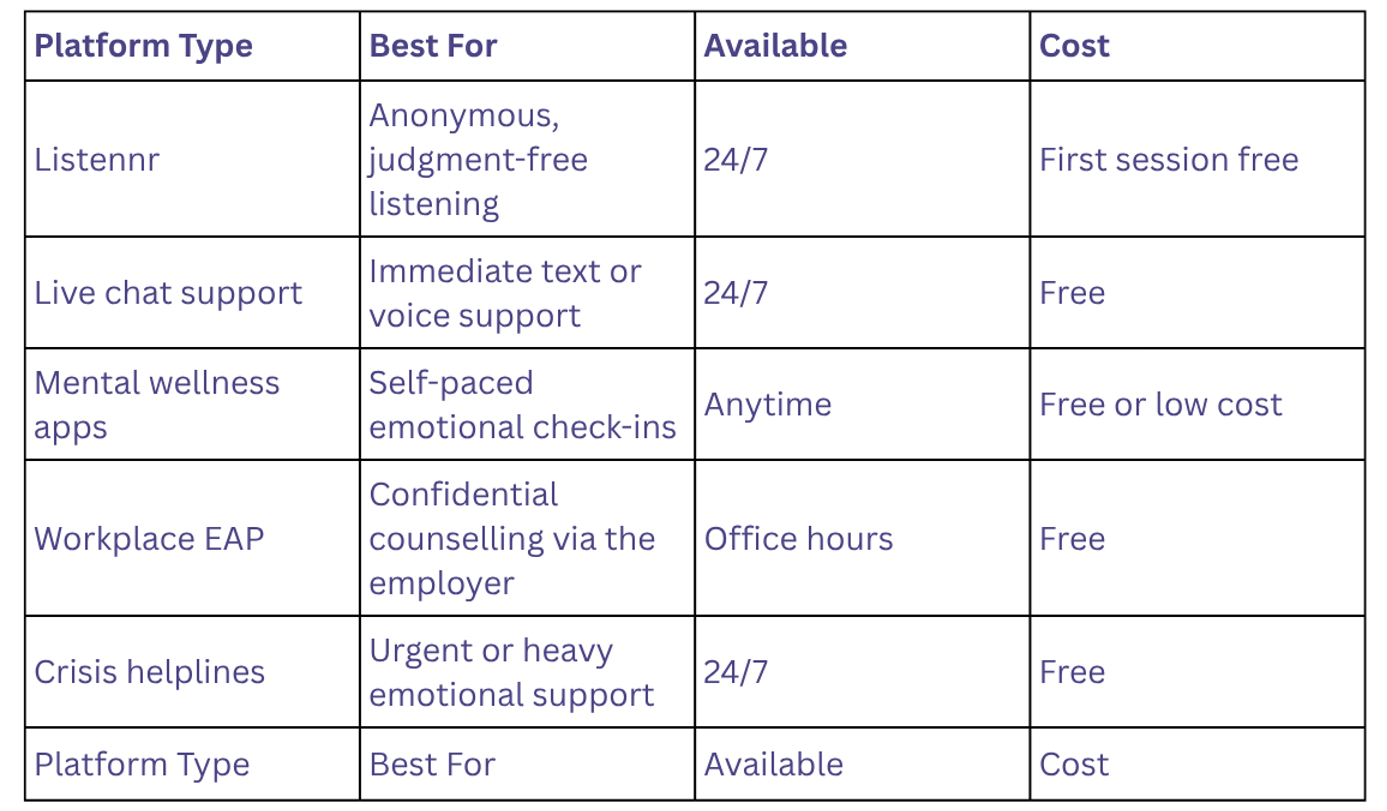
1. Listennr
Listennr connects you with real people, listeners who are there for one reason only: to hear you out. No advice and no judgment. Just a calm, safe space to say what you feel.
- Nobody here is going to judge what you say or how you say it
- No need to fill in personal details before you start talking
- Whatever you share stays between you and your listener, always
- Available around the clock, because difficult feelings do not keep office hours
- Start with one free session, no strings attached
If talking to someone you know feels like too much right now, this is a quieter, gentler place to begin.
2. Live chat support
Some platforms connect you with real, trained volunteers who are ready to listen at any hour through free chat rooms, online chat rooms, and voice chat, where you can also meet new friends. You do not need to have the perfect words or a clear explanation. You can show up exactly as you are, mid-thought and all, and someone will be on the other side ready to hear you out.
3. Mental wellness apps
There are apps built specifically for moments when reaching out to a real person feels like too big a step. They gently check in on how you are feeling and help you work through what is going on in your real life at your own pace. They are not a replacement for human connection, but on the harder days, having something that meets you where you are and offers similar experiences can make a real difference.
4. Workplace support programs
This one surprises a lot of people. If you are employed, there is a good chance your company already offers free and confidential counseling sessions as part of an Employee Assistance Program. Most people never use it simply because no one told them it was there, or they may not realize it could involve a group of people willing to help. A quick check with your HR team could open a door you did not know existed.
5. Crisis helplines and hotlines
If what you are carrying feels heavier than just needing to vent, helplines like the Crisis Lifeline or Crisis Text Line (text HOME to 741741) are available around the clock to support your mental health. They are free, confidential, and staffed by people who are trained to listen without judgment. Reaching out is never too dramatic. If it feels heavy, it is heavy enough.
Sometimes that little bit of distance is exactly what makes honesty feel possible. And once you find a space that feels right, especially one that includes a live stream or social network.
How do you actually start the conversation when you don't know what to say?
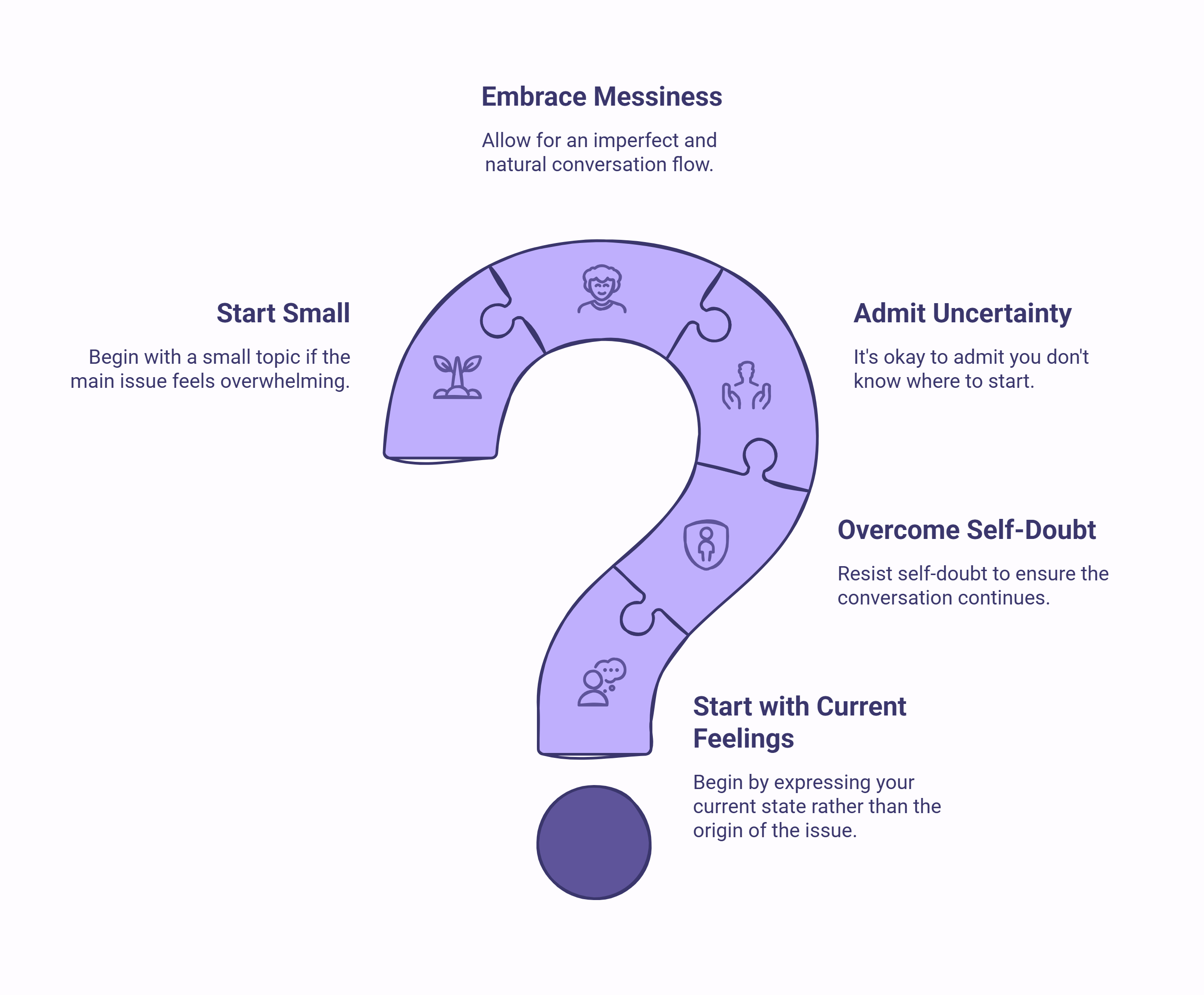
This is the part nobody talks about. You finally find someone to open up to, and then your mind goes completely blank. Or you know what you are feeling but cannot find the words to explain it without it sounding strange. That moment of not knowing where to begin is enough to make most people close up and say "I am fine" instead.
You do not need to have it all figured out before you start talking. Here is how to just begin.
1. Start with where you are, not where it started
You do not have to go back to the beginning and explain everything. Just say what is happening right now, in this moment. Something as simple as "I have been feeling really off lately, and I am not even sure why" is enough to start a conversation with your random chat partner. The listener's job is to help you find the words, not wait for you to arrive perfectly prepared.
2. Do not let self-doubt cut the conversation short
There can be a feeling like "this sounds stupid" or "I am probably overreacting" that will show up mid-conversation. Almost everyone feels it. And most people stop talking the moment it does.
The thing is, that feeling is not a signal to stop. It is just what vulnerability feels like when it is unfamiliar. The discomfort does not mean you said the wrong thing. It means you are finally saying something real. And the more you let yourself stay in the conversation despite that fear, the easier it gets to keep going.
3. It is okay to say you do not know where to begin
Seriously. You can open with exactly that. "I have a lot going on and I do not even know where to start." A good listener will not rush you. They will sit with you in that uncertainty and help you find your way into it slowly. You are not expected to walk in with a clear story.
4. Let yourself be messy
Real conversations are not neat. You might jump from one thing to another, circle back, or get emotional in the middle of a sentence. That is not a problem. That is just what it looks like when something has been held in for too long. You do not need to make sense for your feelings to be valid.
For example, you start talking about work stress and somehow end up crying about something that happened three years ago. That is not you being dramatic. That is just how feelings work when they finally get space to come out.
5. Start small if the big thing feels too heavy
If what you are really carrying feels too raw to say out loud yet, start with something smaller that is still true. Talk about the stress of the week, the situation that triggered it, or just how tired you have been feeling. Often, the bigger thing finds its way out naturally once you feel safe enough to keep going.
Taking that first step is always the hardest part. But once the conversation starts, most people find it flows more easily than they expected.
If this feels familiar, our blog on why it is so hard to find someone who listens to you is worth a read.
What should you do if you keep reaching out but still don't feel heard?
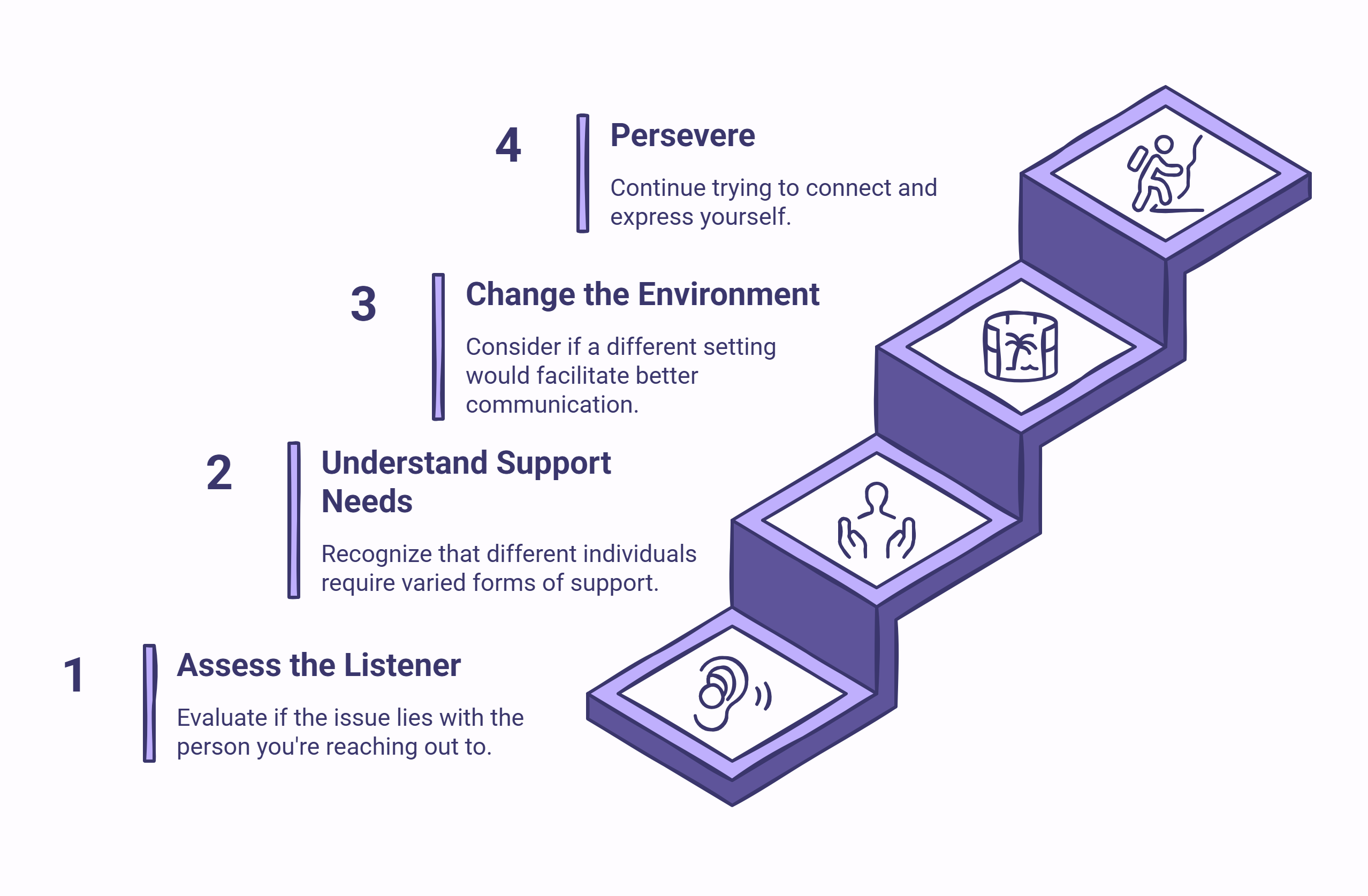
This one is painful in a different way. You did the hard part. You opened up, you reached out, you tried. And somehow you still walked away feeling empty or misunderstood. That is not a sign that you are too much or that something is wrong with you. It is a sign that the match was not right, and that is something you can actually do something about.
1. The problem might be the listener, not you
Not everyone knows how to hold space for someone else. Some people listen to respond. Some get uncomfortable with heavy emotions and unconsciously change the subject. Some care deeply but just do not have the capacity right now. None of that is a reflection of your worth or how valid your feelings are. It just means the person wasn't the right fit for this conversation.
2. Different people need different kinds of support
A friend who is great at distracting you on a bad day might not be the same person you need when something is really weighing on you. A family member who means well might not know how to sit with difficult emotions without trying to fix them.
Recognising what kind of support you actually need, whether that is someone to vent to, someone to problem-solve with, or simply someone to listen without responding, helps you reach out to the right person for the right moment.
3. You might need a different kind of space
There is a difference between venting to a friend and talking to someone who is trained to listen without judgment. If casual conversations keep leaving you feeling unheard, it might be worth rethinking where to find someone to talk to who is actually equipped for this. Platforms like Listennr exist specifically for this reason. The listener's only there to hear you out about your unheard feelings. No distractions, no agenda, no advice you did not ask for.
4. Give it more than one try
One conversation that didn't land doesn't mean talking will never work for you. Sometimes it takes a few attempts with different people or platforms before you find the one that actually fits. Think of it less like a test you failed and more like finding the right pair of shoes. It sometimes takes a few tries.
How does it feel to actually be heard?
When you talk to someone who genuinely listens through active listening, something shifts. You are not necessarily walking away with answers or solutions. But you feel a little clearer, a little less tangled up inside. Like you finally got to say the thing you have been holding onto, and someone received it without making it weird or rushing past it.
It is a simple feeling, but it is necessary. You feel like you mattered in that conversation.
For example, you talk to a listener, and they do not interrupt, they do not judge, they just stay with you through it. By the end, you think, "I did not solve anything, but I feel so much better." That is what being truly heard feels like.
If you have tried reaching out more than once and still feel like something deeper is going on, that might be a sign that what you need goes beyond a conversation with a peer.
Read our blog on whether you can talk to someone online about your problems.
Is it time to ask for professional help?
Sometimes talking to a friend or a peer listener is enough to help you feel lighter. But if you have been feeling low, disconnected, or overwhelmed for a while and nothing seems to shift, that is worth paying attention to, as it could indicate potential mental illnesses. It does not mean something is permanently wrong. It just means what you are carrying might need a little more than a casual conversation.
Before jumping straight into therapy, many people find it helpful to first talk to someone who will simply listen without any agenda. If you are figuring out where to find new people to talk to who can hold space for what you are feeling, starting with a safe and judgment-free environment can help you get clearer on what kind of support you actually need next.
That is exactly what Listennr offers. It is not therapy, and it does not try to be. It is simply a real human on the other side who is trained to listen, without rushing you, without judging you, and without trying to fix what you are feeling. It is anonymous, emotionally safe, and available when you need it most.
- Listeners are compassionate people trained in active, empathetic listening.
- Fully anonymous. No real name or personal information needed to get started.
- Private and encrypted. Every text chat and voice conversation is confidential.
- Talk your way. Text chat or voice call, whatever feels most comfortable.
Ready to talk? Connect with a real listener on Listennr and start feeling heard.
Conclusion
Finding someone who truly listens is possible and more accessible than it felt before you started reading. You do not need the perfect words or a big reason to reach out to random people. Needing someone to talk to is one of the most human things there is. Take one small step today, even if it feels uncertain. A single conversation, with the right person, in the right space, can make everything feel a little less heavy. You have already taken a step by being here. That matters more than you think.
Frequently asked questions
How can I get someone to chat online?
Simply sign up on a peer support platform, create an anonymous profile, and connect with a listener through various chat apps to engage with random strangers. You do not need to explain everything up front. Just show up and start where you are.
What is the best website to talk to anyone?
It depends on what you need. If you are looking for a real human who listens without judgment, Listennr connects you with trained listeners through private online chatrooms, anonymous conversations, and text messages available anytime you need support.
How can I chat safely online?
Choose platforms that are encrypted, anonymous, and moderated, which often include various features for safety. These platforms can connect you with individuals from different countries, including the United Kingdom, through online chatting. Avoid sharing personal details like your location or full name. Stick to spaces built specifically for emotional support rather than general chat platforms with unknown users.
Are there any free chat sites?
Yes. Several platforms offer free options, including Reddit support communities and other peer-based spaces online. Listennr also offers your first session completely free, with no subscription or hidden fees required.
Who is this anonymous online chat for?
It is for anyone carrying something they have not been able to say out loud yet. Whether you are feeling overwhelmed, lonely, anxious, or just need to talk to online strangers in our global community, anonymous chat is for anyone who needs to be heard without fear of judgment.
Is it okay to talk to a stranger about my problems?
Yes. Talking to a stranger can feel easier than opening up to someone you know. There's no history, no judgment, and no fear of changing the relationship.
How do I know if I need professional help?
If the feeling of loneliness persists for weeks, affects your sleep, or stops you from functioning normally, speaking to a professional is a worthwhile and sensible next step.