.jpg)
I Want to Talk to Someone About My Feelings: What Should I Do?

Key highlights
- Many people want to talk about their feelings but stay silent because they fear judgment, misunderstanding, or becoming a burden.
- Finding someone to talk to is often less difficult than finding someone who truly listens without trying to fix the problem.
- You do not need a perfect explanation for your emotions before reaching out and starting a conversation.
- Advice can feel frustrating when what you really need is understanding, empathy, and emotional space.
- Signs like overthinking, emotional withdrawal, and replaying conversations may indicate you have been holding things in too long.
- Listennr provides a supportive space for mental health support where you can talk openly, feel heard, and share what is on your mind without pressure or judgment.
Have you ever wanted to tell someone what you were feeling, only to stop yourself at the last moment? You open a chat, type a message, then delete it. You tell yourself it is not that important, that people are busy, or that you will deal with it on your own. But the thoughts never really go away. They stay with you, getting heavier every day.
Maybe you cannot even explain what is wrong. You just know something feels off. You keep replaying conversations, overthinking small moments, or carrying emotions that no one else knows about. If you have ever thought, "I want to talk to someone about my feelings," but did not know who to turn to, you are far from alone.
The truth is that most people do not need advice as much as they need someone who will simply listen. Talking about your feelings is not about finding all the answers. It is about feeling heard, understood, and less alone. In this article, we'll explore why opening up feels so difficult, who you can talk to when you feel alone, what to do if you have no one to talk to about your feelings, and how finding the right listener can make a difficult day feel a little lighter.
Why is it so hard to talk about your feelings?
Growing up, many of us were taught to handle difficult emotions quietly. Be strong. Keep going. Do not make a fuss. So when life starts to feel overwhelming, staying silent can feel more natural than speaking up.
The problem is that silence often becomes a habit. You get used to carrying things on your own, even when they are becoming harder to carry. From the outside, everything may look fine. You show up to work, reply to messages, and go about your day. But inside, there may be thoughts, worries, or feelings you have never shared with anyone.
There are many reasons why staying silent can feel easier than opening up:
- Emotions were not openly discussed while growing up. If you rarely saw people talk honestly about their feelings, expressing your own emotions may feel uncomfortable or unfamiliar.
- Social media can make everyone else seem like they are coping perfectly. It is easy to believe you are the only person struggling when most people only share the highlights of their lives.
- Previous experiences may have left you feeling misunderstood. If someone dismissed your feelings or immediately offered advice instead of listening, you may hesitate to open up again.
- You worry about becoming a burden. Many people stay silent because they do not want to add to someone else's stress, even when they genuinely need support.
- The people closest to you may not know how to respond. Caring about someone and knowing how to support them are not always the same thing. Sometimes people simply do not have the listening skills you need in that moment.
Over time, carrying everything on your own can start to feel normal. But just because you have learned to stay quiet does not mean you have to keep doing it. Talking about your feelings is often the first step toward feeling understood and less alone.
Why is it still so hard to find someone to talk to?
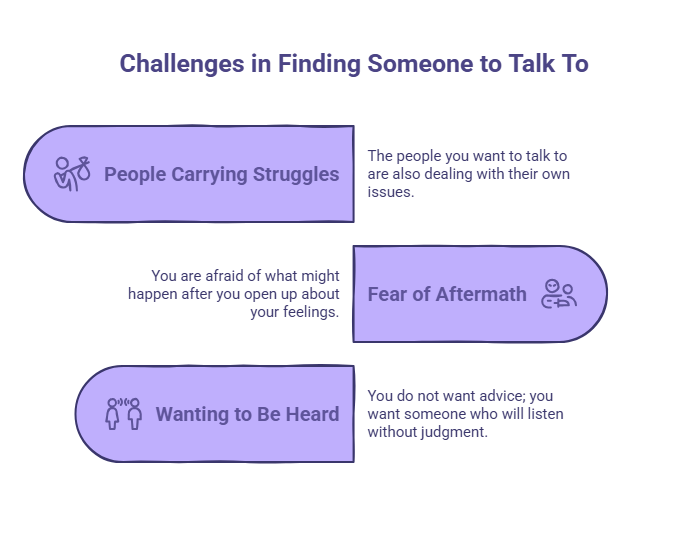
Even when you know you need to talk, finding the right person can feel surprisingly difficult. It is not always because people do not care. More often, it is because not everyone knows how to listen in the way you need.
The challenge is not finding someone to talk to. It is finding someone who feels safe to talk to.
1. The people you want to talk to are carrying their own struggles
Sometimes, the first people who come to mind are also the people you worry about burdening.
The friend you want to text seems overwhelmed. A family member may worry too much. A colleague may not feel like the right person for such a personal conversation.
This often looks like:
- Typing a message and deleting it
- Staring at your contact list without choosing anyone
- Rehearsing what you want to say but never saying it
- Deciding it is easier to stay quiet
Before you know it, "later" turns into weeks of carrying the same thoughts alone.
2. You are afraid of what happens after you open up
Sometimes, the fear is not the conversation itself. It is what comes after.
You worry about being judged, misunderstood, or having your words shared with someone else. One disappointing experience can make future conversations feel much riskier.
That fear often sounds like:
- "What if they see me differently?"
- "What if they tell someone else?"
- "What if they do not understand?"
- "What if I regret saying anything?"
Over time, staying quiet can start to feel safer than being vulnerable.
3. You do not want advice. You want someone who listens
Many people open up, hoping to feel understood, but end up getting advice instead.
This often sounds like:
- "Have you tried..."
- "You should just..."
- "At least..."
- "Here is what I would do..."
Even when well-intentioned, these responses can leave you feeling unheard.
That is why platforms like Listennr can feel different. Sometimes, you do not need solutions or opinions. You just need a space where someone will listen without judgment and let you speak honestly about what is on your mind.
When that kind of space is missing, silence often feels easier. Not because you have nothing to say, but because you have not found the right person to say it to.
Who can you talk to when you feel alone?
Who you can talk to when you feel alone depends on your situation and comfort level. A trusted family member, close friend, partner, neighbor, counselor, support group, or healthcare professional can all provide emotional support. The most important thing is choosing someone who listens without judgment and makes you feel safe sharing your thoughts.
Here are a few people you might consider talking to:
1. A trusted friend or family member
Sometimes the people who care about you simply do not know what you have been carrying. If there is someone in your life who usually listens without interrupting or rushing to solve your problems, they may be a good place to start. You do not have to share everything at once. Even saying, "I've been struggling lately and could really use someone to listen," can open the door to an honest conversation.
2. A counsellor or mental health professional
If your feelings have been affecting your daily life for a long time or feel too overwhelming to manage alone, speaking with a mental health professional can provide guidance and support. They can help you understand your emotions and develop healthier ways to cope.
3. A support group or community
Sometimes it feels easier to talk to people who have been through similar experiences. Peer support through support groups and online communities can remind you that you are not the only person feeling this way and can offer understanding without judgment.
4. An anonymous listener
If opening up to someone you know feels too difficult, talking to an anonymous listener can be a good first step. Many people find it easier to express themselves when they do not have to worry about being judged, misunderstood, or changing the way someone sees them.
There is no perfect person to talk to about what you are feeling.. The right person is someone who makes you feel heard, respected, and safe enough to be honest about what you are feeling. Sometimes that person is a close friend. Sometimes it is a professional. And sometimes it is an anonymous listener through a platform like Listennr. What matters is that you do not have to keep carrying everything on your own.
Why do people try to fix your problems instead of listening?
There is a particular kind of disappointment that comes from finally opening up and immediately getting advice in return. You were not looking for solutions. You simply wanted space to talk about what was weighing on you.
Many people are taught that helping means fixing. As a result, conversations often become focused on answers rather than understanding.
It often sounds like:
- "Have you tried looking at it differently?"
- "You should just focus on the positive."
- "Here is what I would do."
- "You just need to stop thinking about it."
While well-intentioned, these responses can leave you feeling:
- Misunderstood
- Pressured to act
- Reluctant to open up again
- More alone than before
This is why platforms like Listennr can feel different. Instead of focusing on solutions, the focus is on listening first.
The difference between being listened to and being fixed is simple. One tries to solve the problem. The other gives you space to express what the problem feels like. And often, that is exactly what people need most.
Do you need to understand your feelings before talking about them?
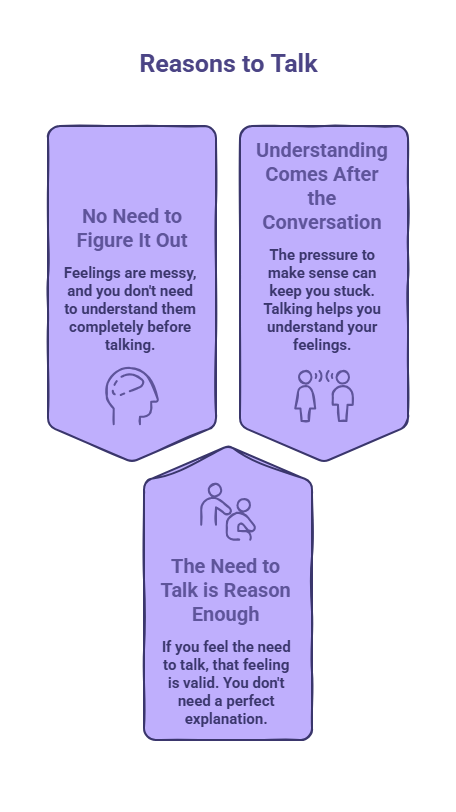
A lot of people stay quiet because they think they need to have the right words before they can talk about what is bothering them.
They tell themselves they will bring it up once they understand it better, once they can explain it properly, or once they know exactly why they feel the way they do. But that moment does not always come.
1. You do not need to have it all figured out
Feelings are often messy. Sometimes you know something is bothering you, but you cannot explain where it started or why it is affecting you so much.
That does not mean you should keep it to yourself. Talking is often part of the process of understanding what you are going through.
2. The need to talk is reason enough
Many people spend weeks or even months waiting for clarity when what they really need is a conversation.
If you keep thinking, "I feel like I need to talk to someone," that feeling is worth paying attention to. You do not need a perfectly organised explanation to justify reaching out.
3. Understanding often comes after the conversation
The pressure to make everything make sense can keep you stuck. The right listener will not expect a polished story or all the answers. They will simply give you space to talk through what is on your mind, even if your thoughts come out in pieces. Sometimes, talking things through is what helps you understand how you really feel.
Sometimes the hardest part is saying the first few words. Once you do, the rest often becomes a little easier to understand.
How Do You Know Someone Is Safe to Talk To?
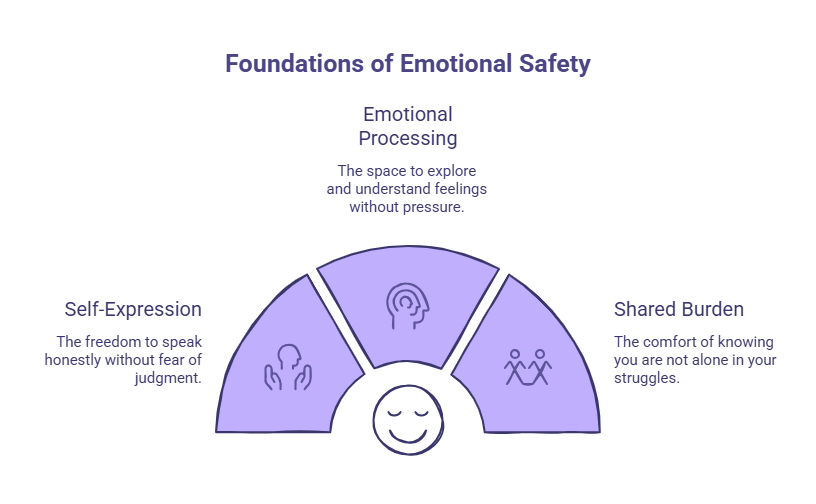
Most people know what it feels like to hold back. You start to say something, then change your wording, leave details out, or stop altogether because you are unsure how the other person will react. Over time, that kind of self-editing becomes a habit.
That is why real emotional safety can feel so different when you finally experience it.
1. You stop editing yourself
In many conversations, you are busy managing someone else's reaction. You wonder whether you are saying too much, sharing the wrong thing, or opening up too soon. Emotional safety feels different. It allows you to speak honestly without worrying about being judged, criticised, or misunderstood.
2. You do not feel pressured to explain everything
Not every feeling comes with a clear explanation. Sometimes you just know something feels heavy. A safe listener does not expect you to have all the answers. They give you space to think out loud, process your emotions, and find your words at your own pace.
3. The weight feels shared
If you have ever thought, "I have no one to talk to about my feelings," what you may be missing is not advice but a space where you feel heard.
That is one reason platforms like Listennr exist. Sometimes, the most helpful thing is not a solution. It is having someone listen without judgment, pressure, or interruption.
That is what emotional safety often feels like. Not having all the answers, but knowing you do not have to carry everything alone.
How do you know if you've been holding things in too long?
Sometimes, you do not realise how much you have been carrying until it starts affecting how you think, feel, or connect with others.
If you often feel like "I have no one to talk to about my feelings," even when people are around you, it may be a sign that your emotions have been sitting with you for longer than they should.
Common signs include:
- Feeling irritable or emotionally flat without a clear reason
- Replaying conversations in your head
- Starting to open up, then stopping yourself
- Feeling distant from people you care about
- Thinking, "I need someone to share my feelings with," but never reaching out
- Carrying a sense that something feels off
None of this means something is wrong with you. It may simply mean you have been holding too much on your own. Sometimes, one honest conversation with someone who truly listens can make that weight feel lighter.
What if you don't feel comfortable talking to friends or family?
Not everyone feels safe opening up to the people closest to them. If talking to friends or family feels difficult, you're not alone. There are valid reasons why sharing your feelings can feel uncomfortable.
1. Why opening up to loved ones can feel difficult
The people closest to you are often the ones whose opinions matter most, which can make being vulnerable feel intimidating.
You may hesitate because:
- You do not want to become a burden when they already have their own problems.
- You worry they will immediately try to fix the situation instead of listening.
- You are afraid they will judge you or misunderstand what you are trying to say.
- You do not want every future conversation to revolve around what you shared.
- You are still trying to understand your own feelings and do not know how to explain them.
These concerns are common and can make staying silent feel like the easier option, even when you need support.
2. When anonymous support may feel easier
Sometimes, talking to someone who is not part of your everyday life feels less overwhelming.
An anonymous conversation allows you to express yourself honestly without worrying about being judged, changing a relationship, or having the conversation brought up again later. You can focus on sharing what is on your mind instead of managing someone else's reactions.
For many people, speaking with an anonymous listener is a comfortable first step before opening up to people they know.
3. Other places to find support besides friends and family
Support does not have to come only from the people in your personal life. Depending on what you need, you can also talk to:
- A counselor or therapist for professional guidance and emotional support.
- A support group or community where you can connect with people who have similar experiences.
- An anonymous listening service like Listenrr if you simply want someone to listen without judgment or pressure.
The right support is the one that makes you feel heard, understood, and comfortable enough to speak openly, regardless of whether you already know the person listening.
What if you have no one to talk to about your feelings?
One of the hardest feelings to carry is believing there is nobody you can talk to. Maybe you worry about being a burden, fear being judged, or simply do not know who would understand. If you have been thinking, "I have no one to talk to about my feelings," you are not alone. Many people stay silent, not because they do not want support, but because they cannot find a space where they feel safe enough to open up.
The good news is that support does not always have to come from people you already know. If talking to friends or family feels difficult, there are other options, including counsellors, support groups, and anonymous listening services where you can express yourself without fear of judgment.
Who should you talk to?
Not every type of support is the same. The best option depends on what you need in the moment.
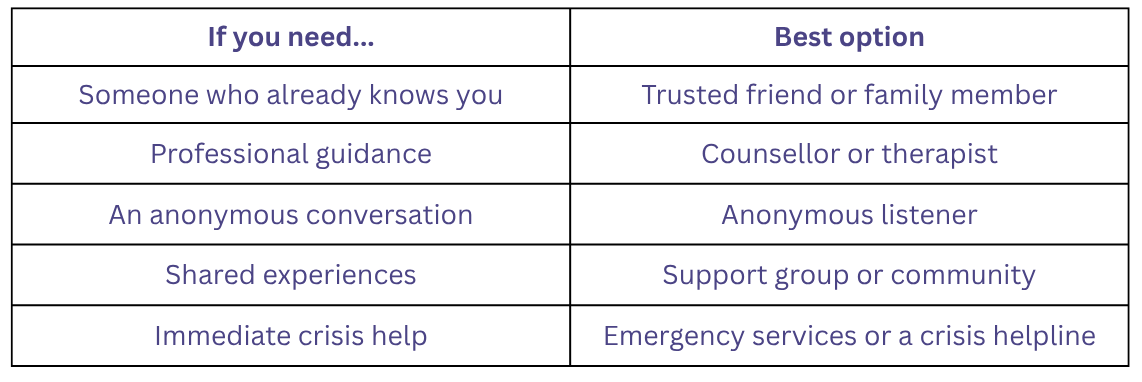
That is where Listennr can help.
Listennr is built around one simple idea: everyone deserves a space to feel heard. Instead of focusing on fixing problems, it provides a supportive space where you can talk openly and know that someone is genuinely listening.
With Listennr, you can:
- Talk anonymously without sharing personal details
- Express yourself openly in a supportive environment
- Share what is on your mind without pressure or judgment
- Talk at your own pace
- Start your first conversation for free
You do not need the perfect words or a complete explanation before reaching out. Whether you choose a trusted friend, a counselor, or a compassionate listener on Listennr, the important thing is giving yourself permission to talk. Sometimes, one honest conversation is enough to help you feel lighter and less alone.
Conclusion
Wanting to talk to someone about your feelings is not asking for too much. Whether you are feeling overwhelmed, lonely, or simply carrying emotions you cannot explain, opening up to the right person can help you feel understood and less alone. You do not need to have all the answers or the perfect words before reaching out.
If you've been wanting to talk to someone about your feelings, let that be the first step instead of the last. Whether you choose a trusted friend, a family member, a counselor, or a compassionate listener on Listennr, remember that you do not have to carry everything by yourself. Sometimes, one conversation is enough to help you feel heard, gain clarity, and move forward.
Frequently asked questions
1. What should I do if I want to talk to someone about my feelings?
If you want to talk to someone about your feelings, start by choosing someone you trust who listens without judgment. This could be a friend, family member, counsellor, support group, or an anonymous listener, like the Crisis Text Line, who provides a safe space to open up.
2. Who can I talk to when I feel alone?
When you feel alone, consider talking to a trusted friend, family member, counselor, support group, or an anonymous listener via text message. The right person is someone who makes you feel heard, respected, and comfortable sharing your thoughts without fear of judgment.
3. What if I have no one to talk to about my feelings?
If you feel like you have no one to talk to about your feelings, remember that support is available beyond friends and family. Anonymous listening platforms, support groups, and mental health professionals can provide a safe place to express yourself openly.
4. I feel like I need to talk to someone. Is that normal?
Yes. Feeling like you need to talk to someone is completely normal. Everyone experiences moments when emotions become difficult to carry alone, and speaking with someone who listens can provide emotional support and direct you to mental health resources, helping you feel understood, supported, and emotionally lighter.
5. Can talking to someone really help?
Yes. Talking to someone may not immediately solve every problem, but it can help you process your emotions, reduce feelings of loneliness, gain a clearer perspective, and feel supported during difficult moments through effective crisis intervention, instead of carrying everything by yourself.
6. Where can I find immediate support during a crisis?
If you are experiencing a mental health crisis or feel at risk of harming yourself or others due to substance abuse, contact your local emergency services or a crisis helpline immediately. Trained professionals are available to provide confidential support whenever you need urgent help.
7. Can talking to someone improve your mental wellbeing?
Yes. Talking to someone can improve your mental wellbeing by helping you process difficult emotions, reduce feelings of isolation, and gain perspective. Feeling heard does not solve every problem, but it often makes challenges feel more manageable.
8. Can talking to someone help you feel less alone?
Yes. Talking to someone can strengthen your social connections and help you feel less alone. While it is not a treatment for mental illness, feeling heard can reduce loneliness and support your overall emotional wellbeing, regardless of your age.