.jpg)
How to Start a Conversation Online with a Stranger Today

Key highlights
- Most people struggle with the first message because of fear of being ignored, sounding awkward, or overthinking what to say.
- The best way to start a conversation with a stranger online is by using simple, specific questions.
- Shared interests often create better conversations than generic greetings.
- Most online conversations become easier once you move beyond the first message.
- The best follow-up questions come from what the other person has already shared.
- Conversations tend to last longer when both people share information rather than just ask questions.
- Common mistakes include overthinking, sending generic openers, asking too many questions, and expecting instant chemistry.
- Not every conversation will turn into a friendship, and that is completely normal.
- Confidence grows through practice, not by finding the perfect opening line.
Starting a conversation online with a stranger sounds easy until you actually have to send the first message. You open the chat box, type something, delete it, type something else, and wonder whether it sounds awkward. Maybe you worry about being ignored.
Maybe you do not know what to say after "Hi." Or maybe you are overthinking a conversation that has not even started yet. The tricky part is that online conversations give you more time to think, which often means more time to doubt yourself. A simple message can suddenly feel like a big social risk.
The good news is that most people are not judging your opening line as closely as you think. In this guide, you will learn how to start a conversation online with a stranger, what messages work best, common mistakes to avoid, and how to keep the conversation going naturally once they reply.
Why does sending the first message feel so difficult?

Most people do not struggle with sending a message because they lack something interesting to say. They struggle because the first message feels like a small social risk. Before you even type, your mind starts predicting what could go wrong.
1. Fear of Being Ignored
An unanswered message can feel more personal than it really is. You send one line and suddenly start wondering whether you sounded awkward, boring, or annoying.
In reality, people leave messages unread for dozens of reasons. Most of them have nothing to do with you. One unanswered message is not a verdict on your ability to start conversations.
2. Worrying About Sounding Awkward
The first message carries a lot of pressure because you do not have the things that normally make conversations easier, such as facial expressions, tone of voice, or body language.
That is why people often overcompensate. They write long introductions, explain too much, or try too hard to be impressive. Most of the time, a simple and natural message works better.
3. Overthinking What to Say
Many conversations never start because they stay trapped in the draft box.
You rewrite the opener, change a few words, read it again, and convince yourself it is not good enough. The problem is that good conversations rarely start because of a perfect opening line. They start because someone pressed send.
4. Expecting the Conversation to Go Perfectly
A common mistake is expecting instant chemistry. You send one message and hope it will immediately turn into a meaningful conversation. Most connections do not work that way. The first goal is not to create a friendship. It is simple to start an exchange. Once that happens, the conversation can grow naturally.
The first message feels difficult because you are focused on what might happen next, but most conversations only begin when someone decides to stop predicting and start typing.
What is the best way to start a conversation with a stranger online?

Starting a conversation online often feels harder than it should. Not because the message is complicated, but because you have time to rethink every word before you send it. If you are unsure where to begin, these five steps provide a simple framework that makes starting a conversation feel more natural.
1. Find a conversation hook
The easiest conversations usually start with something that already connects the two of you. It could be a post, a comment, a shared interest, a profile detail, or even the community you are both part of. Having a clear reason to reach out makes the conversation feel more natural and gives the other person context. Instead of wondering why you messaged them, they immediately understand what sparked the interaction.
2. Send a simple opener
Many people put too much pressure on the first message because they believe it needs to be memorable. In reality, most successful conversations start with ordinary messages rather than clever ones. A simple opener feels easier to answer and creates less pressure for both people. The purpose of the first message is not to impress someone instantly. It is to create an opportunity for the conversation to begin.
3. Ask one easy question
A conversation needs direction, and a question often provides it. Without one, the other person may not know how to continue the exchange. The best opening questions are usually simple, relevant, and easy to answer without much thought. They help create momentum while keeping the interaction comfortable. When replying feels easy, people are naturally more likely to engage and keep the conversation moving.
4. Share something about yourself
Good conversations are rarely built on questions alone. If your message only asks for information, the interaction can start to feel one-sided. Sharing a small opinion, experience, or observation helps create balance and makes the exchange feel more natural. It also gives the other person more than one way to respond, which can make the conversation flow more easily and feel less like an interview.
5. Follow their response
Once the other person replies, focus on what they actually said instead of worrying about finding the next topic. Many conversations lose momentum because people ignore useful details and immediately change direction. Paying attention to what someone shares often gives you the next question or talking point naturally. Following the thread already in front of you usually creates a smoother conversation than constantly trying to introduce something new.
Starting a conversation is rarely about finding perfect words. More often, it is about making the first reply feel easy enough that the conversation can begin.
What are some good first messages to send a stranger online?
The best first messages are short, specific, and easy to answer. Instead of relying on a generic "Hi," give the other person a reason to reply. The most effective opener usually depends on where the conversation is happening.
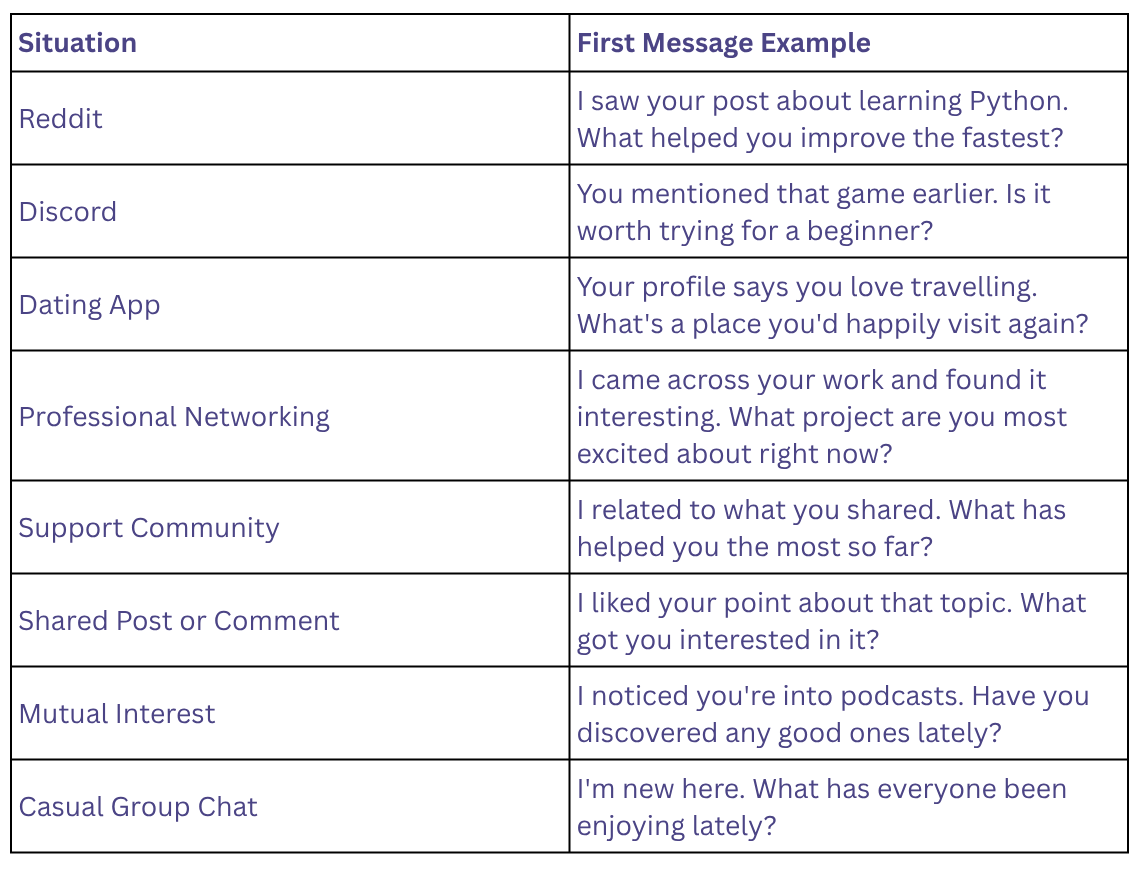
The best opener is usually the one that feels connected to the situation. When people can see why you are reaching out, replying feels more natural and less like responding to a random message.
What questions should you ask after they reply?
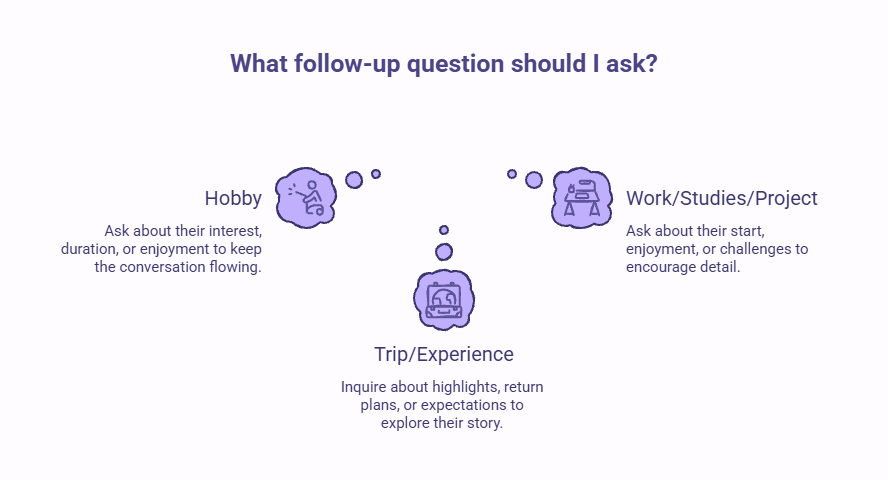
A common mistake is thinking you need a completely new topic after someone responds. Usually, the best follow-up question is hidden in what they just told you. Instead of jumping to another subject, stay curious about the one they already introduced.
1. If they mention a hobby
Many conversations lose momentum because people acknowledge a hobby without exploring it further.
Weak follow-ups:
- That's cool.
- Nice.
- I've heard of that.
These replies show you read the message, but they give the other person very little to build on.
Better follow-ups:
- What got you interested in that?
- How long have you been doing it?
- What do you enjoy most about it?
2. If they mention a trip or experience
Travel stories, events, and personal experiences often contain several conversation paths. The easiest way to keep the exchange moving is to stay with the experience they already shared.
Weak follow-ups:
- Sounds fun.
- Nice trip.
- That's interesting.
Better follow-ups:
- What was the highlight for you?
- Would you go back?
- Was anything different from what you expected?
3. If they mention work, studies, or a project
People often mention work, studies, or projects without going into much detail. A good follow-up helps them expand on something they already care about.
Weak follow-ups:
- Sounds busy.
- Good luck with that.
- Nice.
Better follow-ups:
- How did you get started?
- What do you enjoy most about it?
- What has been the biggest challenge so far?
The difference is simple: weak follow-ups acknowledge the conversation, while strong follow-ups give the other person something meaningful to respond to. Good conversations usually grow because someone stays interested in the topic already being discussed.
How do you keep the conversation from dying after the first few messages?
Most conversations do not die because someone said the wrong thing. They die because neither person gives the conversation anywhere to go. A simple way to keep the chat moving is to look for details you can build on. People often leave small openings in their replies without realising it. A hobby, weekend plan, favourite show, recent trip, or work project can all become the next topic naturally.
Instead of changing the subject completely, try asking one follow-up question:
- "How did you get into that?"
- "What was the best part?"
- "Would you do it again?"
- "What made you choose that?"
If you start running out of topics, the FORD framework can help. It stands for:
- Family - family background, pets, or hometown
- Occupation – work, studies, or career interests
- Recreation – hobbies, sports, travel, or entertainment
- Dreams – goals, ambitions, or future plans
Just as importantly, share something back. If every message is a question, the conversation can start to feel like an interview. A quick reaction, opinion, or related experience helps create a more balanced exchange.
The goal is not to keep the conversation alive through constant effort. It is to give both people enough to build on. When curiosity goes both ways, the conversation usually takes care of itself.
What mistakes make online conversations awkward?
Most awkward conversations are not caused by one bad message. They usually happen when the interaction feels forced, one-sided, or rushed.
Common mistakes include:
- Starting with a generic "Hi" or "Hey" and giving the other person nothing to respond to
- Asking too many questions in a row makes the conversation feel like an interview
- Trying too hard to sound funny, clever, or impressive from the start
- Bringing up personal topics before enough trust has been built
- Sending long messages when the conversation has barely started
- Ignoring details in the other person's replies and changing topics too quickly
- Overthinking every message instead of responding naturally
- Expecting an instant friendship or deep connection after a few exchanges
- Giving one-word replies makes it difficult for the conversation to continue
- Copying and pasting the same opener to multiple people
A good conversation usually feels balanced. Both people share, ask questions, and build on what the other person says instead of trying to carry the entire interaction alone.
What should you do if the conversation becomes awkward or stops?
If the chat hits awkward silence, do not panic. You can gently restart with a simple question, shift to a lighter topic, or wrap things up politely. Not every pause means failure. Not every pause means failure. Sometimes the conversation has simply reached a natural end, and that is completely normal. Not every conversation is meant to last for hours.
Sometimes people get busy, run out of things to say, or simply lose momentum. A pause in the conversation does not automatically mean you did something wrong.
If the conversation feels awkward, you can:
- Pick up on something they mentioned earlier and ask a follow-up question
- Introduce a lighter topic related to the current conversation
- Share a small observation or experience instead of asking another question
- Accept a brief pause instead of rushing to fill the silence
If someone does not reply, resist the urge to send multiple follow-up messages. One message is enough. Chasing a response often creates more awkwardness than the silence itself.
The easiest mindset is to treat each conversation as an opportunity rather than a test. Some chats lead to meaningful connections, some stay brief, and some naturally fade away. That is a normal part of talking to new people online.
What if starting a conversation still feels overwhelming?
If starting a conversation feels overwhelming, the problem is usually not the message itself. It is everything that happens before you send it. You think about being ignored, sounding awkward, or running out of things to say, and suddenly a simple hello feels much bigger than it is.
Instead of focusing on the whole conversation, focus on the first message only. You do not need to know where the chat will go or whether the other person will reply. Your only job is to send one respectful message that gives them an easy way to respond.
A few ways to make it feel easier:
- Start with people who share a common interest or community
- Use short opening messages instead of long introductions
- Ask simple questions that are easy to answer
- Remind yourself that not every conversation needs to become a friendship
Most people who seem confident online are not sending perfect messages. They have simply stopped treating every conversation as a high-stakes moment. The more often you start small conversations, the less intimidating they tend to feel.
What If starting a conversation still feels overwhelming?
Sometimes, the biggest challenge is not finding someone to talk to. It is taking that first step. You might stare at the screen, unsure of what to say, worried about sounding awkward, or wondering if anyone will really understand.
Those feelings are more common than you think.
Many people hesitate to start conversations because they fear rejection, judgment, or uncomfortable silence. Others simply do not know how to begin. When you have been keeping things to yourself for a long time, even a simple "hello" can feel overwhelming.
That is where Listennr can help.
Listennr is designed to make conversations feel less intimidating. Instead of social pressure, public profiles, or expectations, it focuses on creating a welcoming space where genuine conversations can happen naturally.
With Listennr, you can:
- Start conversations at your own pace
- Talk anonymously without sharing personal details
- Connect with people who value listening and understanding
- Share your thoughts without worrying about likes or followers
- Build confidence through meaningful one-to-one conversations
- Start your first conversation for free
You do not need a perfect introduction. You do not need the right words prepared in advance. Sometimes, one small message is all it takes to start feeling more connected.
Whether you want to meet new people, practice opening up, or simply have a conversation with someone who is willing to listen, Listennr offers a space designed for authentic human connection.
Take the first step today. Download Listennr and discover how much easier conversation can feel when you are talking to someone who is ready to listen.
Conclusion
Starting a conversation with a stranger online can feel intimidating, but most people are not looking for the perfect message. They are looking for a conversation that feels genuine, easy, and comfortable to join, especially if it's their first time engaging in such an interaction. In many cases, a simple question, a shared interest, or a thoughtful observation is enough to get things moving.
The biggest shift comes when you stop treating every message as a test. A lot of people find that some conversations will be brief, some will fade, and some may lead to meaningful connections. The goal is not to control the outcome. It is to make it easy for a conversation to begin and see where it goes from there.
Frequently asked questions
How to start a conversation with a stranger online?
Start with something relevant to the person or situation, keep your opener short, and ask one easy question. The best conversations usually begin with genuine curiosity, not a perfect opening line.
What are some safe topics to start a chat with a stranger online?
Safe conversation topics include hobbies, food, podcasts, books, travel, entertainment, and the online space you already share. These small talk subjects help you find common ground with new coworkers and other people through mutual interests. They feel light, friendly, and easy to discuss without becoming too personal too quickly.
How do I keep the conversation going if they reply?
Use active listening. Ask follow-up questions based on what they actually said, then share a little about yourself in return. That balance builds rapport and improves your social skills. For introverts, when people feel heard, deeper conversations and more meaningful connections become much easier to create.
How do I keep the conversation going after the initial message when talking to a stranger online?
Keep the conversation focused on what they shared. Ask a follow-up question, respond to their details, and share a related thought of your own. Conversations usually continue when both people have something to build on.
What should I do if the stranger doesn't respond to my first message online?
If a stranger does not respond, avoid sending repeated follow-ups. People miss messages, get busy, or choose not to reply for reasons that have nothing to do with you. Treat it as one interaction, not a judgment of your conversation skills, and move on.
What should I do if they don’t respond to my message?
If they do not reply, leave it there. Do not send repeated messages to fill the awkward silence. Sometimes people are busy, distracted, or simply not interested. Use it as practice for next time. Meeting new people always involves uncertainty, and handling that calmly is part of strong people skills.
How can I make my first message stand out and get a reply?
Make your conversation starter specific. Mention something you genuinely noticed, add a light question, and keep it short. That creates a better first impression than a generic hello. Genuine interest helps build rapport, and thoughtful small talk gives the other person an easy reason to respond.
What are some good questions to ask a stranger to start a conversation?
Good conversation starters are easy to answer and give the other person room to share something about themselves. Questions about interests, experiences, or recent activities often work best because they feel natural and low-pressure.
What are some effective ways to start a conversation with a stranger?
The easiest way to start a conversation is to comment on something you genuinely noticed, ask a simple question, or mention a shared interest. A short, friendly opener feels more natural than trying to sound clever or overly impressive.