.png)
Vent Out Your Feelings: Healthy Ways to Express Emotions

Key highlights
- Venting out emotions can support emotional release, reduce distress, and help process difficult feelings more effectively.
- Healthy emotional venting involves empathy, boundaries, and self-awareness, unlike trauma dumping, which can feel emotionally overwhelming.
- Bottling up negative emotions may increase rumination, emotional exhaustion, stress, and difficulty maintaining supportive relationships.
- Many people vent to someone trusted to seek validation, emotional clarity, and relief during stressful or overwhelming situations.
- Journaling, meditation, creative expression, and group therapy can become healthy coping strategies for emotional balance.
- Anonymous emotional support spaces may help people vent out feelings more honestly without fear of judgment or social pressure.
- Persistent emotional distress, isolation, or unhealthy coping mechanisms may signal the need for deeper professional support.
Need someone to vent to? You're not alone. Many people feel the need to talk through difficult emotions without being judged or given unwanted advice. Venting in a healthy way can help you process stress, reduce emotional pressure, and feel understood. In this article, you'll learn why people feel the need to vent, the difference between healthy venting and trauma dumping, and the best ways to express your emotions safely and constructively.
Many people vent their emotions as a coping mechanism during times of loss, sadness, anger, or emotional overwhelm. According to psychologist Ethan Kross, people experience at least one emotion about 90% of the time, showing how deeply emotions shape our daily lives.
This blog explores why people feel the need to vent it out, the difference between healthy emotional venting and trauma dumping, and helpful ways to seek emotional release while building supportive relationships and healthier coping strategies.
What does it mean to vent?
To vent out means expressing your thoughts, frustrations, or difficult emotions instead of keeping them bottled up inside. Most people vent because they want emotional release, empathy, or a safe space to speak openly without fear of judgment—not because they are looking for advice or solutions.
Emotional venting can happen in different ways. Some people vent to someone they trust, while others prefer journaling, meditation, group therapy, or anonymous conversations online.
In many cases, saying I just want to vent out does not mean a person is asking for solutions. They may simply need to feel heard and understood. When done in a healthy and balanced way, venting can become a helpful coping strategy that supports emotional processing and helps people gain new perspectives on their difficult feelings.
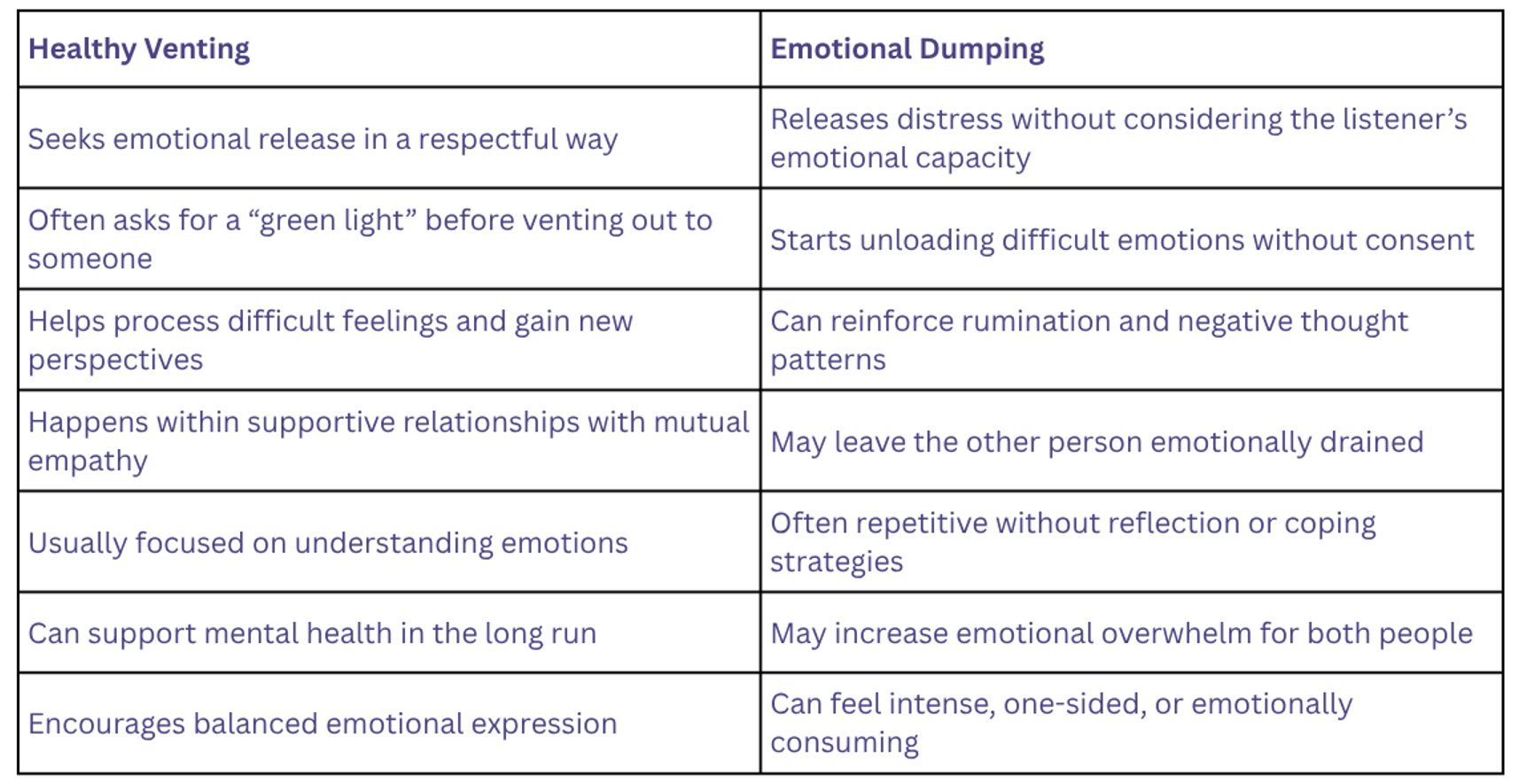
Healthy venting vs emotional dumping: how are they different?
While emotional venting can be a healthy coping mechanism, it may become overwhelming when it turns into trauma dumping. The difference often lies in self-awareness, boundaries, and mutual empathy.
Why do people feel the need to vent?
People often feel the need to vent when their thoughts and emotions become too heavy to carry alone. Emotional venting can be a helpful way to process distress, seek empathy, and release built-up emotional pressure.
Some common reasons why people vent out their feelings include:
- Emotional Overload: Stress, sadness, anger, or anxiety can build up over time and create a strong need for emotional release.
- Feeling Unheard or Unsupported: Many people say, I need someone to vent to, when they feel ignored, misunderstood, or emotionally isolated.
- Times of Loss or Major Life Changes: Breakups, grief, career stress, or family conflicts can trigger difficult emotions that people struggle to process alone.
- Managing Negative Emotions: Venting out to someone may temporarily reduce emotional intensity and help people feel lighter.
- Seeking Empathy and Validation: Sometimes, people do not want solutions. They simply want a trusted friend or listener who understands their feelings.
- Trying to Make Sense of Emotions: Talking openly can help organize your thoughts, challenge negative thought patterns, and gain new perspectives on difficult situations.
- Coping with the State of the World: Constant exposure to stressful news, social pressure, or uncertainty can increase emotional distress and the urge to vent it out.
- Reducing Mental Pressure: Keeping difficult emotions inside for too long may affect mental health and increase rumination in the long run.
Is venting actually healthy?
Yes, emotional venting can be healthy when done in a balanced and self-aware way. Talking to a trusted friend or supportive listener can help you process your emotions, reduce emotional distress, and gain a fresh perspective on difficult situations. However, repeatedly venting without reflection or taking steps to address the underlying issue may increase rumination and reinforce negative thought patterns.
Why Does Venting Make You Feel Better?
Venting can make you feel better because it helps you process emotions instead of carrying them alone. Putting difficult thoughts into words can reduce emotional pressure, improve clarity, and help you feel understood. When someone listens with empathy rather than judgment, venting often becomes a healthy form of emotional release rather than simply dwelling on negative experiences.
Here are some reasons why venting often helps:
1. It helps you process your emotions
Talking through your feelings helps organize your thoughts and make sense of difficult experiences. Instead of replaying emotions repeatedly in your mind, expressing them can make them feel more manageable.
2. It reduces mental and emotional pressure
Keeping everything inside can feel exhausting. Sharing what's on your mind often creates a sense of emotional release, making stress and overwhelm feel less intense.
3. Feeling heard provides validation
Sometimes you don't need advice. Knowing that someone understands your experience can reduce feelings of loneliness and reassure you that your emotions are valid.
4. It gives you a fresh perspective
Talking to someone else may help you notice solutions, challenge unhelpful thought patterns, or see a situation from a different angle without feeling pressured to fix everything immediately.
Healthy venting doesn't make problems disappear, but it can help you process emotions, reduce emotional pressure, and move forward with greater clarity.
What happens when you bottle up your emotions?
Ignoring or suppressing difficult emotions for a long time can affect both your emotional and mental well-being. While it may feel easier in the moment, constantly holding emotions in can create emotional pressure that becomes harder to manage over time.
Here are some common effects of bottling up emotions:
- Increased stress and emotional distress
- Stronger negative thought patterns and overthinking
- Sudden anger outbursts or emotional numbness
- Difficulty maintaining supportive relationships
- Increased rumination and mental exhaustion
- Trouble expressing feelings in a healthy way
- Feelings of loneliness, sadness, or isolation
- Physical symptoms like headaches, fatigue, or sleep issues
- Reduced ability to cope during times of loss or emotional overwhelm
In the long run, suppressing emotions instead of finding a healthy emotional release may negatively affect your mental health and overall emotional balance.
What are healthy ways to vent out your feelings?
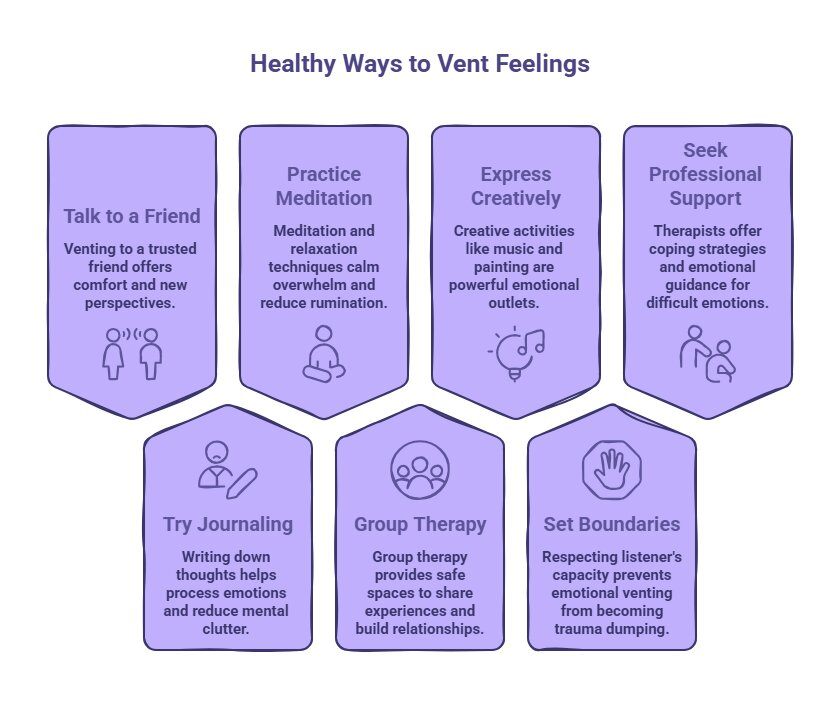
Healthy emotional venting is not just about releasing negative emotions. It is about expressing your feelings in ways that support emotional balance, self-awareness, and healthier coping in the long run.
1. Talk to a trusted friend
Sometimes, venting out to someone you trust can help you feel emotionally lighter. A trusted friend who may at first offer comfort, validation, and new perspectives without making you feel judged for your difficult emotions.
2. Try journaling
Writing down your thoughts can be a helpful way to process negative emotions and reduce mental clutter. Journaling allows you to vent out feelings privately while understanding emotional triggers, thought patterns, and unresolved distress more clearly.
3. Practice meditation and relaxation
Meditation, breathing exercises, and relaxation techniques may help calm emotional overwhelm and reduce rumination, contributing to a balanced emotional state. These practices support emotional release by helping your mind slow down and respond to difficult feelings more thoughtfully instead of reacting impulsively. Implementing these practices is a good first step in managing emotional challenges.
4. Consider group therapy or support communities
Group therapy and supportive communities create safe spaces where people can share their experiences, feel understood, and learn from others facing similar challenges. Listening to people with similar experiences can reduce feelings of isolation, provide reassurance, and help build supportive relationships during difficult times.
5. Express yourself creatively
Creative activities like music, painting, dancing, or poetry can become powerful outlets for expressing difficult emotions. Creative expression can help you process anger, sadness, or frustration when putting your feelings into words feels uncomfortable or emotionally exhausting.
6. Set healthy emotional boundaries
Healthy emotional venting also means respecting your listener's emotional capacity. Before venting, ask if they have the time and emotional space to listen. This simple check-in helps create a more balanced conversation, respects their boundaries, and reduces the risk of the conversation becoming emotionally overwhelming for either of you.
7. Seek professional support when needed
If difficult emotions begin affecting your daily life, relationships, or mental health, professional support can help. Therapists and counselors can provide coping strategies, emotional guidance, and practical tools to help you process difficult emotions and build healthier ways of managing stress over time.
Who Should You Vent To?
The best person to vent to depends on what you're looking for. Sometimes you need emotional support, while other situations may require practical advice or professional guidance. Choosing the right listener can make venting more helpful for both you and the person you're talking to.
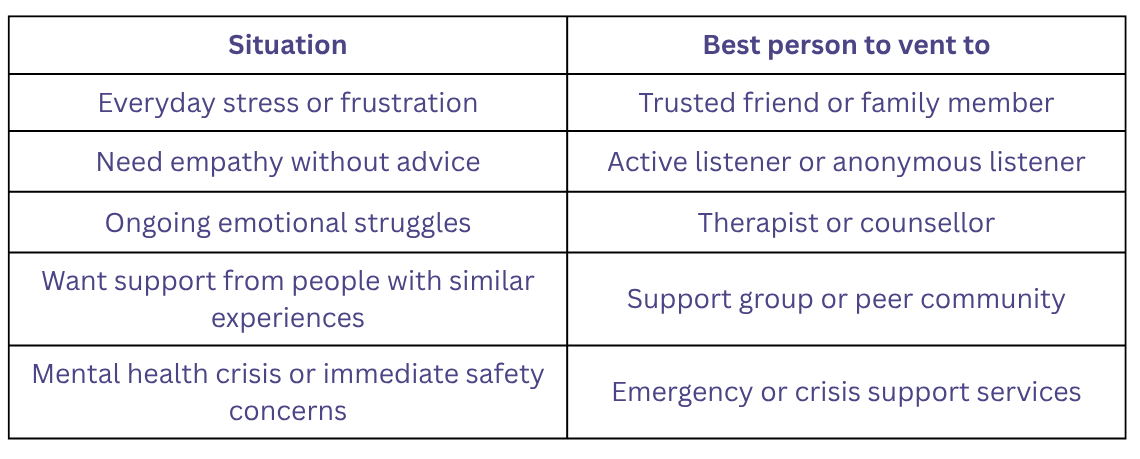
Choosing the right person helps ensure you feel heard, respected, and supported. If you're not comfortable talking to someone you know, anonymous listening platforms like Listennr can provide a safe, judgment-free space to express your feelings.
Why does anonymous venting feel easier for many people?
Many people find it difficult to vent to friends or family because they worry about being judged, misunderstood, or becoming an emotional burden. Sometimes, they simply want to express their feelings without having to explain every detail or worry about how the other person might respond.
Anonymous spaces can make venting feel safer because they remove many of those concerns. When people know they can speak openly without fear of judgment, they are often more honest about their thoughts and emotions, making it easier to process difficult feelings and experience emotional relief.
Platforms like Listennr create supportive spaces where people can vent to someone who listens with empathy and understanding.
When venting isn’t enough?
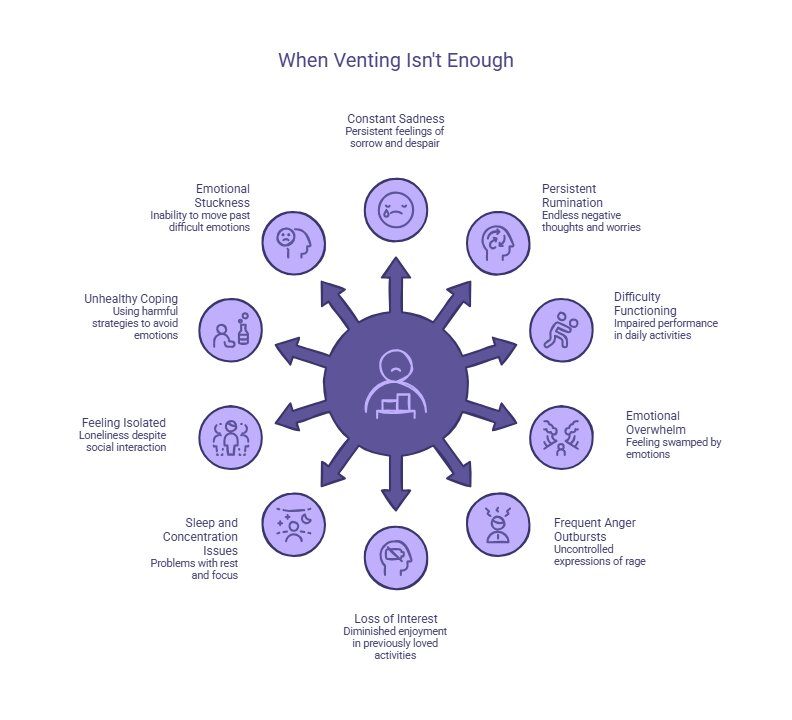
While emotional venting can be a healthy coping strategy, there are times when emotional distress may require additional support. If difficult emotions begin affecting your daily life, relationships, or overall wellbeing, it may be time to seek professional help. Therapists and counselors can help you understand your emotions, develop healthier coping strategies, and manage difficult situations more effectively.
Here are some signs that venting alone may not be enough:
- Constant sadness, anxiety, or emotional numbness
- Persistent rumination and negative thought patterns
- Difficulty functioning at work, school, or in relationships
- Feeling emotionally overwhelmed most of the time
- Frequent anger outbursts or emotional shutdowns
- Loss of interest in activities you once enjoyed
- Trouble sleeping, concentrating, or relaxing
- Feeling isolated even after talking to someone or venting your emotions.
- Using unhealthy coping strategies to avoid difficult emotions
- Feeling emotionally stuck for a long period of time
Seeking support is not a weakness. Sometimes, professional guidance can help you better understand your emotions, develop healthier neural pathways, and build long-term coping strategies for emotional well-being.
Need someone to vent to? Here’s a safe space to be heard
If you've ever thought, "I just want to vent," but didn't know who to talk to, you're not alone. Many people hesitate to open up because they fear judgment or worry about becoming a burden. Platforms like Listennr offer a safe, judgment-free space where you can express your feelings and know someone is there to listen.
With Listennr, you can:
- Vent out your feelings without fear of criticism or judgment
- Connect with listeners who have been through similar situations and respond with empathy
- Express sadness, anger, stress, or emotional overwhelm openly
- Find around-the-clock supportive conversations during difficult phases of life
- Experience emotional release in a more private and comfortable environment
- Feel heard without the pressure of social expectations or surface-level interactions
Sometimes, emotional support starts with something simple: having someone genuinely listen. If you need someone to vent to, Listennr offers a supportive space where your feelings can be heard, understood, and acknowledged. Download the app now.
Conclusion
Wanting to vent is a natural response to stress, sadness, anger, or emotional overwhelm. When you express your feelings in a healthy way, venting can help you process difficult emotions, reduce emotional pressure, and feel understood.
The key is choosing healthy ways to vent and finding someone who will listen without judgment. Whether it's a trusted friend, a support group, or a platform like Listennr, the right conversation can help you gain clarity and remind you that you don't have to carry everything on your own.
Frequently asked questions
Where can I find someone to vent to?
You can vent to a trusted friend, family member, support group, therapist, or an anonymous listening platform. If you prefer privacy, online emotional support services like Listennr offer a safe space to express your feelings without judgment.
Is it okay to vent to someone online?
Yes, venting to someone online through social media can be helpful, especially if you feel uncomfortable opening up to people you know. Choose trusted platforms that prioritize empathy, privacy, and respectful conversations to ensure a supportive and positive experience.
What should I do if I have nobody to vent to?
If you have nobody to vent to, try journaling, joining a support community, or speaking with an anonymous listener. Expressing your feelings and considering the feelings of others in a safe environment can reduce emotional pressure and help you process difficult emotions more clearly.
Is venting healthy, or can it make things worse?
Healthy venting can reduce emotional stress and help you process difficult feelings. However, another aspect of venting is that repeatedly venting without reflection or action may reinforce the habit of anger, which contributes to the biggest problems of negative thought patterns, making emotional distress feel more intense instead of helping you move forward.
What's the difference between venting and trauma dumping?
Venting is a healthy way to express emotions while respecting the listener's boundaries. Trauma dumping involves repeatedly sharing overwhelming emotions without considering the other person's emotional capacity, which can leave them feeling emotionally overwhelmed or exhausted.
Should I vent to a friend or a therapist?
Friends are helpful for everyday emotional support, while therapists are better suited for ongoing emotional struggles, trauma, or mental health concerns which can sometimes add to our emotional fire. If you simply need someone to listen without judgment, anonymous listeners can also be valuable.