.jpg)
Am I an Introvert? What Makes You Feel Different?

Key highlights
- Introversion is about how you recharge your energy, not whether you like people.
- Feeling drained after social interaction is one of the most common signs of an introvert.
- Introverts often prefer meaningful conversations over long periods of small talk.
- Being introverted is not the same as being shy or socially anxious.
- Genetics and life experiences can both influence introvert personality traits.
- Introverts can build confidence and social skills without changing who they are.
- Neither introverts nor extroverts are better; both bring different strengths to relationships and work.
- Understanding your energy patterns can help you create healthier social and personal boundaries
- Listennr helps people feel heard through supportive, judgment-free conversations.
You enjoy spending time with people, but after a busy day of conversations, meetings, or social events, you feel completely drained. While others seem energised by constant interaction, you find yourself needing quiet time to recharge. If that sounds familiar, you may have wondered, "Am I an introvert?"
Many people assume introverts are shy, antisocial, or uncomfortable around others. In reality, introversion is often less about avoiding people and more about how you regain energy. Many introverts enjoy close friendships, meaningful conversations, and social activities, but too much stimulation can leave them feeling exhausted.
Understanding whether you have an introvert personality can help explain why certain situations feel natural while others feel overwhelming. In this guide, we'll explore the common signs of an introvert, why some people are more introverted than others, and whether becoming more outgoing means changing who you are.
What does it really mean to be an introvert?
Being an introvert means you typically recharge through solitude rather than constant social interaction. Introversion is not about disliking people; it is about how you manage energy, process experiences, and respond to social stimulation.
1. Introversion is about energy, not avoiding people
A common misconception is that introverts dislike socialising. In reality, many introverts enjoy spending time with people they care about. The difference is often how much energy those interactions require.
You may relate to introversion if you:
- Feel mentally drained after long social events
- Need quiet time after a busy day
- Prefer smaller gatherings over crowded environments
- Enjoy meaningful conversations more than constant small talk
- Look forward to spending time alone after being around people
The challenge is not necessarily being with people. It is managing the stimulation and energy that comes with it.
2. Why being alone and feeling lonely are not the same thing
People often use the words alone and lonely as if they mean the same thing, but they describe very different experiences.

For many introverts, alone time feels comforting rather than isolating. It creates space to think, reflect, and recover from a busy day. That does not mean introverts do not value relationships. Many prefer a few meaningful connections over a large social circle, finding depth more fulfilling than constant interaction.
How do you know if you are an introvert?

You can often tell by paying attention to how you respond to people, social situations, and the amount of time you spend alone. Introverts are not defined by how many friends they have or whether they enjoy socialising. Instead, they tend to feel their best when they have a balance between meaningful connection and time to recharge on their own.
1. You feel drained after too much social interaction
One of the most common signs of an introvert is feeling mentally exhausted after spending a lot of time around people, including anxious introverts. You may enjoy the event, conversation, or gathering, but still feel the need to step away afterwards.
You might notice yourself:
- Wanting quiet time after social events
- Feeling overwhelmed by back-to-back plans
- Looking forward to being alone after a busy day
2. You prefer meaningful conversations over small talk
Many introverts enjoy talking to people. What they often find draining is staying on the surface for too long due to their dislike of small talk. Conversations about ideas, experiences, or personal interests usually feel more engaging than endless small talk.
This is why some introverts seem quiet at first but become much more animated when the discussion feels genuine and meaningful.
3. You need time alone to recharge
For many introverts, alone time is not a luxury. It is how they reset and tune into their own thoughts. After a busy day, even a short period of solitude can help them feel calmer, clearer, and more energised.
This might look like:
- Reading a book
- Going for a walk
- Listening to music
- Spending time on a favourite hobby
The goal is not to avoid people. It is to recover from stimulation.
4. You think before you speak
Have you ever thought of the perfect response after the conversation was over? Many introverts prefer to process their thoughts before sharing them.
You may relate to this if you:
- Take time to organise your thoughts
- Prefer listening before contributing
- Feel more comfortable with thoughtful discussions than fast-paced debates
Thinking before speaking does not mean you have less to say. It often means you prefer to be intentional with your words.
5. You often observe before participating
When entering a new environment, many introverts prefer to watch and listen before jumping in. They like understanding the atmosphere, people, and conversation before becoming actively involved.
This can sometimes be mistaken for shyness, but often it is simply a different way of processing social situations.
6. You enjoy solitary activities without feeling isolated
Spending time alone does not automatically mean feeling lonely. Many introverts genuinely enjoy their own company and find solo activities, especially on a Saturday night, relaxing and rewarding.
You might enjoy:
- Reading or journaling
- Taking a quiet walk
- Watching a favourite show
- Working on personal projects
Enjoying these activities does not mean you dislike people. It simply means your own company feels comfortable too.
If several of these signs feel familiar, there is a good chance your personality leans toward introversion. Remember, introversion exists on a spectrum, so you may relate to some of these traits more strongly than others.
Why am I an introvert?
Personality, environment, and life experiences can all shape how introversion shows up. While some people naturally prefer quieter environments, others develop social preferences through the experiences and relationships that influence them over time.
1. Personality Is Partly Influenced by Genetics
Some people naturally enjoy lower levels of stimulation and feel more comfortable in quieter settings. While genetics may play a role in personality, they do not determine who you become. Your preferences are shaped by a combination of factors, not a single cause.
2. Your Environment Can Shape How You Interact With Others
Family relationships, friendships, school experiences, and social environments can all influence how your introversion is expressed. This is why two introverts may behave very differently. One may enjoy leading meetings, while another prefers listening first. Their need for quiet time may be similar, but their experiences shape how they interact with others.
3. Introversion Is a Natural Personality Difference
Introversion is not a flaw or something that needs fixing. Some people feel energised by busy environments and constant interaction, while others feel their best after time to reflect and recharge.
Neither approach is better. They are simply different ways of building relationships, working, and moving through everyday life.
What are the 4 types of introverts?

Researchers suggest that introversion is not one-size-fits-all. While every introvert is different, four common personality patterns can help explain how introverts think, socialise, and respond to the world around them.
1. Social Introverts
Social introverts enjoy spending time with people but usually prefer smaller groups over large gatherings. They often choose meaningful one-to-one conversations instead of crowded social events and need quiet time afterwards to recharge. Their preference for solitude comes from comfort rather than fear of social interaction.
2. Thinking Introverts
Thinking introverts spend a great deal of time in their inner world, influenced by their distinct inner voice. They enjoy reflecting on ideas, imagining possibilities, and processing experiences before sharing them with others. This does not mean they avoid people. Instead, they naturally enjoy introspection and often feel energised by creative or thoughtful activities.
3. Anxious Introverts
Anxious introverts may feel uncomfortable in unfamiliar social situations and spend more time worrying about how interactions will unfold. While they also need time alone to recharge, their preference for solitude is sometimes influenced by nervousness or self-consciousness rather than personality alone.
4. Restrained Introverts
Restrained introverts tend to move through life at a slower, more thoughtful pace. They usually prefer to observe before participating, think before speaking, and make decisions carefully rather than act on impulse. Once they feel comfortable, they often engage confidently in conversations and relationships.
You do not need to fit neatly into just one type. Many people recognise traits from more than one category, and your behaviour may change depending on the situation, the people you're with, and your life experiences.
What challenges do introverts often face?
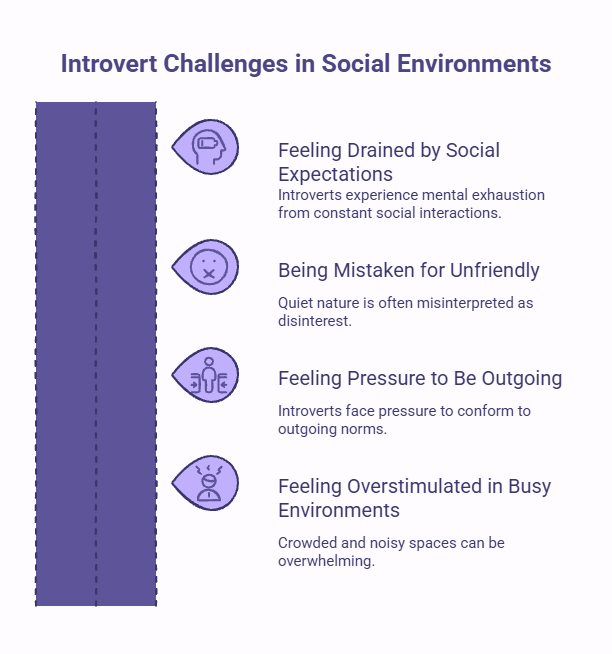
Being introverted does not usually create problems on its own. The challenge often comes from living in environments that reward constant interaction, quick responses, and being socially "on" all the time.
1. Feeling drained by constant social Expectations
Work meetings, family commitments, social events, and group chats can quickly fill your schedule. While you may enjoy these interactions, too many in a row can leave you feeling mentally exhausted.
You might notice yourself:
- Needing downtime after social events
- Feeling overwhelmed by back-to-back plans
- Craving quiet after a busy day with people
For many introverts, the issue is not socialising itself. It has too little time to recover between interactions.
2. Being mistaken for being unfriendly or distant
People often assume that quiet means uninterested. If you take time to warm up in conversations or prefer listening before speaking, others may mistakenly see you as distant.
In reality, many introverts are paying close attention. They may not speak as often, but they are often listening, observing, and processing what is happening around them.
Over time, these misunderstandings can become frustrating, especially when your quieter nature is mistaken for a lack of interest or enthusiasm.
3. Feeling pressure to be more outgoing
Many introverts grow up hearing they should speak more, socialise more, or put themselves out there. While these suggestions are usually well-intentioned, they can create pressure to behave in ways that do not feel natural.
The challenge is learning the difference between personal growth and changing yourself to meet other people's expectations. Building confidence is healthy. Pretending to be someone you are not is exhausting.
4. Feeling overstimulated in busy environments
Crowded spaces, loud conversations, constant notifications, and fast-paced environments can feel overwhelming for some introverts. Too much stimulation at once can make it harder to focus, think clearly, or stay engaged, as they often crave intimate moments and deep connections.
Common examples include:
- Busy networking events
- Crowded social gatherings
- Open-plan offices
- Constant messages and notifications
This does not mean you dislike people or excitement. It simply means your mind may need more opportunities to slow down and recharge after periods of intense stimulation.
Can an introvert become more outgoing?
Yes, introverts can become more comfortable in social situations, build confidence, and strengthen their communication skills. However, the short answer is that becoming more outgoing does not require changing your personality or giving up the qualities that make you who you are.
1. You can build social skills without changing your personality
Being introverted does not limit your ability to connect with others. Like any skill, conversation, communication, and relationship-building can become easier with practice.
Many introverts find that social situations feel more comfortable when they:
- Spend time with people who share similar interests
- Focus on meaningful conversations rather than trying to impress others
- Start with smaller groups before larger social settings
Growth does not require becoming more extroverted. It simply means finding approaches that work for you.
2. Why confidence and introversion are not opposites
Many people assume outgoing and confident mean the same thing, but they do not. Confidence is about trusting yourself, while introversion is about how you recharge your energy, especially when compared to your extroverted friends.
A confident introvert may:
- Speak up when they have something meaningful to say
- Set healthy boundaries around their time and energy
- Feel comfortable being themselves without trying to match other people's social style
You do not need to be the loudest person in the room to be confident.
3. Small changes can make social situations feel easier
If social situations leave you feeling drained, small adjustments can make a noticeable difference.
You might try:
- Arriving early before a space becomes crowded
- Taking short breaks during longer events
- Scheduling quiet time after social plans
- Giving yourself permission to leave when your energy is running low
The goal is not to become a different person. It is to participate in social situations in a way that feels sustainable and authentic.
Which is better: Introvert or extrovert?
Neither is better. Different situations reward different strengths, which is why both introverts and extroverts can thrive in relationships, careers, and leadership roles, showcasing their positive traits as great leaders. The good news is that the real advantage comes from understanding how you naturally operate rather than trying to become someone else.
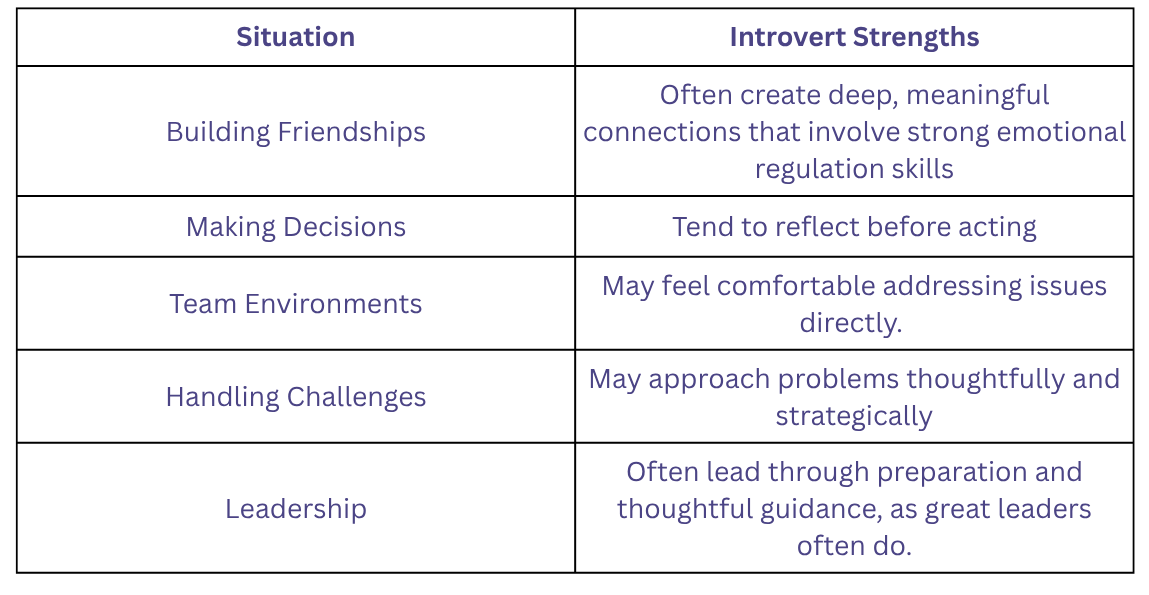
Neither personality type succeeds in every situation. An introvert may excel in roles that require focus, listening, and careful decision-making, while an extrovert may thrive in environments that involve networking, collaboration, and quick interaction.
Instead of asking which personality type is better, a more useful question is whether you understand your strengths and know how to use them. People tend to do their best when they stop comparing themselves to others and start working with their natural style.
Do you need to change if you're an introvert?

No, being introverted is not something that needs fixing. The goal is not to become more extroverted. It is to understand how you work best and make choices that support your energy, close relationships, and well-being.
1. Why introversion is not a personality flaw
Many introverts spend years wondering whether they are too quiet, too reserved, or not social enough. In reality, introversion is simply a different way of responding to people and stimulation.
Traits often associated with introversion can also be strengths:
- Listening carefully before responding
- Thinking deeply about decisions
- Building close, meaningful relationships
- Staying focused on tasks for long periods
The challenge is not your personality. It is learning how to use those strengths effectively.
2. The difference between growth and changing who you are
Personal growth does not require becoming a different person. You can become more confident, improve your communication skills, and feel more comfortable in social situations while still being an introvert. The five-factor model of personality psychology, as used in the personality test, suggests that growth expands your options. Changing who you are often creates frustration and exhaustion. The goal is flexibility, not transformation.
3. How to work with your personality instead of fighting it
The more you understand your energy patterns, the easier it becomes to make decisions that support you.
Helpful ways to work with your personality include:
- Scheduling quiet time after busy days
- Choosing social plans that match your energy levels
- Setting boundaries when you need time to recharge
- Focusing on relationships that feel meaningful and supportive
- Giving yourself permission to enjoy solitude without guilt
The most sustainable approach is not trying to be more like someone else. It is learning how to thrive as the person you already are.
Looking for someone who will simply listen?
Understanding that you're an introvert can help you make sense of your energy, preferences, and relationships. But understanding yourself does not always mean having someone who understands you too.
Sometimes, you may want to talk about what is on your mind without feeling pressured to be more outgoing, more social, or different from who you are. You may simply want a space where you can share your thoughts and feel heard.
At Listennr, conversations are built around listening and understanding rather than judgment, advice, or trying to change you. Whether you're feeling overwhelmed, misunderstood, or simply need someone to talk to, the focus is on giving you space to express yourself at your own pace.
Why people choose Listennr
- A space to talk openly without pressure
- Listeners who focus on understanding before responding
- One-to-one conversations without judgment
- The freedom to share what's on your mind at your own pace
- A chance to feel heard when connection feels difficult to find
Not every conversation needs solutions.
Sometimes, what helps most is having someone who takes the time to listen and understand where you're coming from. If you're looking for someone who will simply listen, Listennr is a place to start the conversation.
Conclusion
If you've been wondering, "Am I an introvert?", the answer often lies in how you recharge, connect with others, and respond to social stimulation, especially concerning mental health. Introversion is not a weakness or something that needs fixing. It is simply a different way of experiencing the world.
Understanding your inner world and personality can help you protect your energy, build meaningful relationships, and make choices that feel right for you. The goal is not to become someone else, but to work with your strengths and create a life that suits who you are.
Frequently asked questions
How can I tell if I am truly an introvert?
If you regularly feel drained after social interaction, need time alone to recharge, and prefer meaningful conversations over constant social activity, your personality may lean towards introversion.
Can an introvert become more extroverted?
Yes, an introvert can become more outgoing and confident over time. However, this does not usually change their core personality. Many introverts, as highlighted in the study of adult introverts, develop strong social skills while still needing time alone to recharge.
Are there any reliable quizzes to check if I am an introvert?
Yes, personality assessments can provide insight into whether you lean towards introversion or extroversion. However, your everyday habits, energy levels, and social preferences often reveal more than any quiz alone.
Is it possible to be an introvert and still enjoy socialising sometimes?
Yes, many introverts enjoy socialising, spending time with friends, and attending events. The difference is that social interaction, particularly with large groups of people, often uses more energy, so they may need quiet time afterwards to recharge.
Do introverts really prefer being alone, or is that a misconception?
Most introverts value relationships and social connections. They often enjoy spending time alone because it helps them recharge, but that does not mean they want to avoid people altogether.