
How to Deal With Loneliness & Improve Your Mental Well-being?

Key highlights
- Loneliness can happen even when you have people around you and an active social life.
- Small, immediate actions can interrupt isolation and help you feel more grounded and connected.
- Long-term improvement comes from building consistent contact, deeper relationships, and meaningful daily routines.
- Fear of rejection, overthinking, and social withdrawal can create a cycle that makes loneliness harder to overcome.
- Gradual, low-pressure interactions can help you rebuild social confidence without forcing connection.
- Different support options can help depending on whether you need companionship, shared understanding, or professional guidance.
- Listennr provides a private, anonymous space to express what you are feeling and feel genuinely heard.
You can be surrounded by people and still feel completely alone. Loneliness is not always about having no one around you. It often comes from missing the kind of connection you need, whether that is companionship, emotional closeness, belonging, or simply someone who genuinely listens.
And it is more common than you might think. According to the World Health Organization (WHO), around 1 in 6 people worldwide experience loneliness. Being alone, however, does not automatically mean being lonely. You can enjoy your own company and feel connected, just as you can have friends, family, or colleagues and still feel unseen or disconnected.
In this guide, you'll learn how to deal with loneliness, what may be keeping you stuck in it, and practical ways to reconnect without forcing yourself into uncomfortable situations. We'll also cover what to do when you have no one to talk to and when additional support may help.
Why might you feel lonely even when people are around?
There is no single cause behind the feeling of emptiness and loneliness. You may have people around you but still feel disconnected when your relationships do not provide the closeness, consistency, or sense of belonging you need.
- Major life changes: Moving, changing jobs, experiencing a breakup, retiring, or losing someone can disrupt familiar relationships and routines.
- Changes in friendships and relationships: Work, family responsibilities, or distance can reduce contact with people you once saw regularly.
- Feeling emotionally disconnected: You may socialise often but still lack someone you feel comfortable opening up to.
- Social isolation: Long periods with little interaction can reduce your sense of connection to other people.
- Mental health challenges: Anxiety, depression, and other mental health difficulties can affect how comfortable or motivated you feel connecting with others.
- Struggling to meet new people: Opportunities to form new friendships can become less frequent, particularly during adulthood.
- Life circumstances and transitions: Caregiving, remote work, ageing, and other changes can alter how often and meaningfully you interact with others.
Understanding what is contributing to your loneliness can make it easier to identify the kind of connection or support you are missing.
Need someone to talk to, but not sure who to turn to? Learn what to do when you feel alone, overwhelmed, or simply need a safe space to share what is on your mind.
What type of connection are you actually missing?
Loneliness can take different forms depending on your circumstances and relationships. Understanding the type of loneliness you are experiencing can make it easier to identify what kind of support or connection you may need.
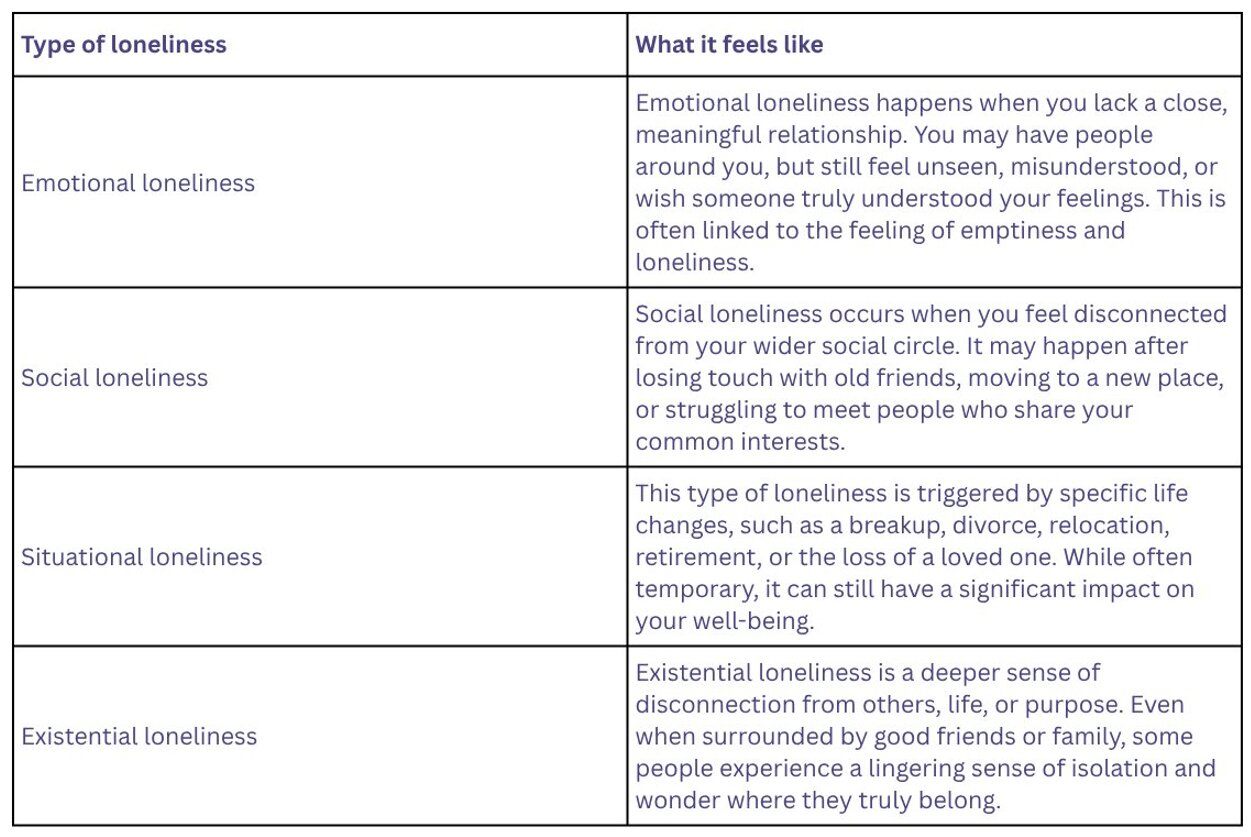
Recognising the different types of loneliness can be an important first step in learning how to cope with loneliness and building a stronger sense of connection.
What can you do when loneliness hits right now?
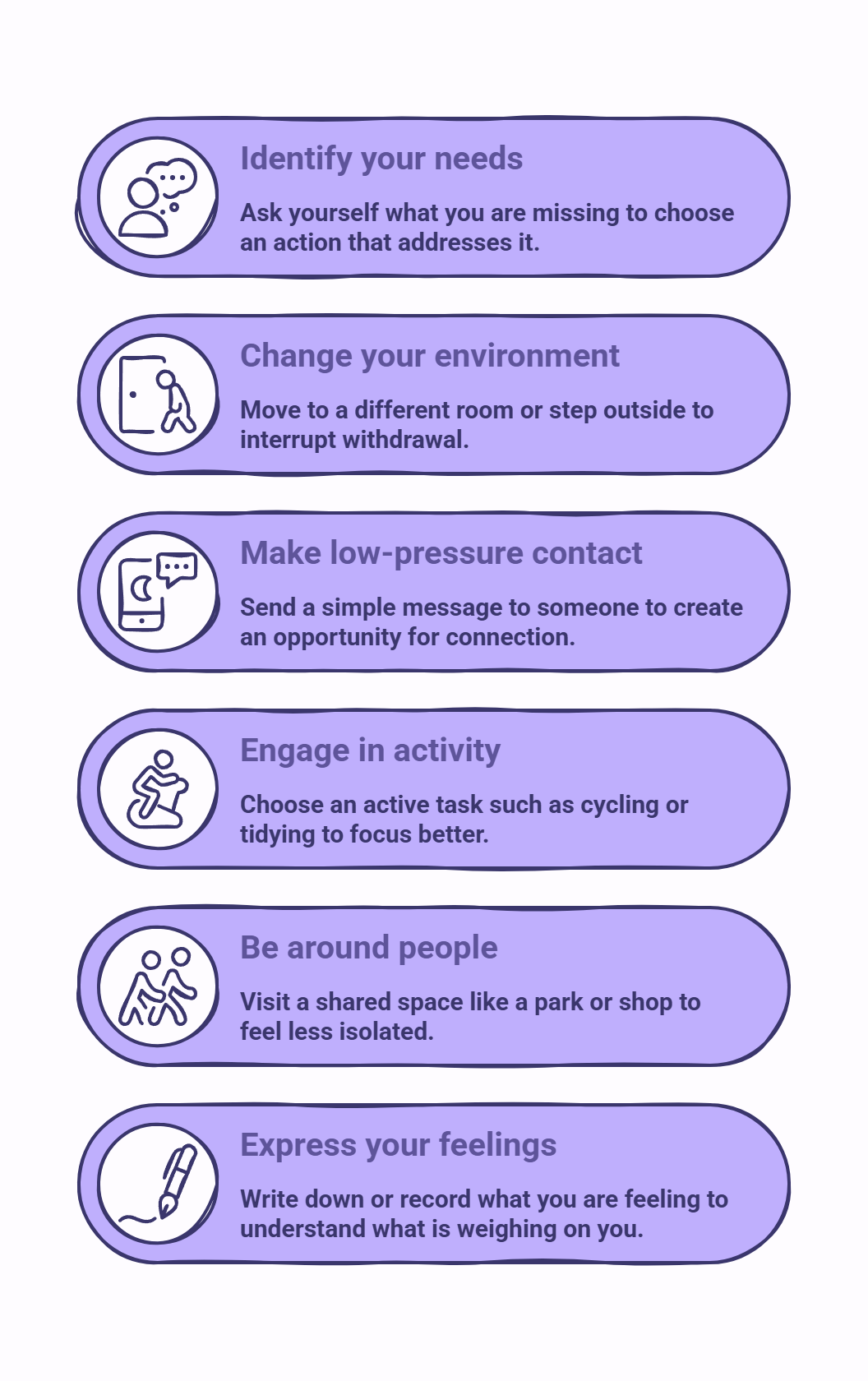
When loneliness suddenly feels intense, you do not need to solve your entire social life at once. Focus on changing what happens in the next 10 to 20 minutes. The aim is to interrupt the feeling of isolation and create a small point of contact with yourself, your surroundings, or another person.
1. Name what you need right now
Before reaching for your phone or distracting yourself, ask: “What am I missing right now?” You may want conversation, reassurance, company, physical presence, or simply somewhere to express what you are feeling. Identifying the need helps you choose an action that actually addresses it.
2. Change your immediate environment
If you have been sitting alone in the same room for hours, consider integrating practices like meditation. Move somewhere different. Step outside, walk around the block, sit on your balcony, or spend a few minutes in a shared space. A change in surroundings can interrupt the tendency to sit with the same thoughts and withdraw further.
3. Make one low-pressure contact
Send one person a simple message rather than waiting until you know exactly what to say. It could be as easy as, “Hey, how have you been?” or “Are you free for a quick chat?” You are creating an opportunity for connection, not asking someone to fix how you feel.
4. Give your mind something active to do
Choose an activity that requires your attention for a few minutes, such as making tea, taking a short walk in the fresh air, tidying one area, stretching, or writing down what is on your mind. Consider writing about three good things that occurred during your day. Active engagement can be more helpful in the moment than endlessly scrolling, which may leave you feeling just as disconnected afterwards.
5. Let yourself be around people
If nobody is available to talk, you do not necessarily have to remain isolated. Walk to a nearby shop, sit in a park, visit a library, or spend some time in another shared environment. You do not have to start a conversation. Sometimes, simply moving from complete isolation into a space where everyday life is happening can make the moment feel less closed in.
6. Say what you are feeling somewhere
If what you really need is to get something off your chest, write it down, record a private voice note, or talk to someone who is willing to listen. You do not need to turn the feeling into a perfectly explained story. Putting it into words can help you understand what is weighing on you and what kind of connection you may need next.
These steps will not make loneliness disappear in 20 minutes, and that is not the goal. Learning how to deal with loneliness in a healthy way starts with interrupting the urge to withdraw and taking one manageable next step instead of trying to fix everything at once.
How can you deal with loneliness in the longer term?
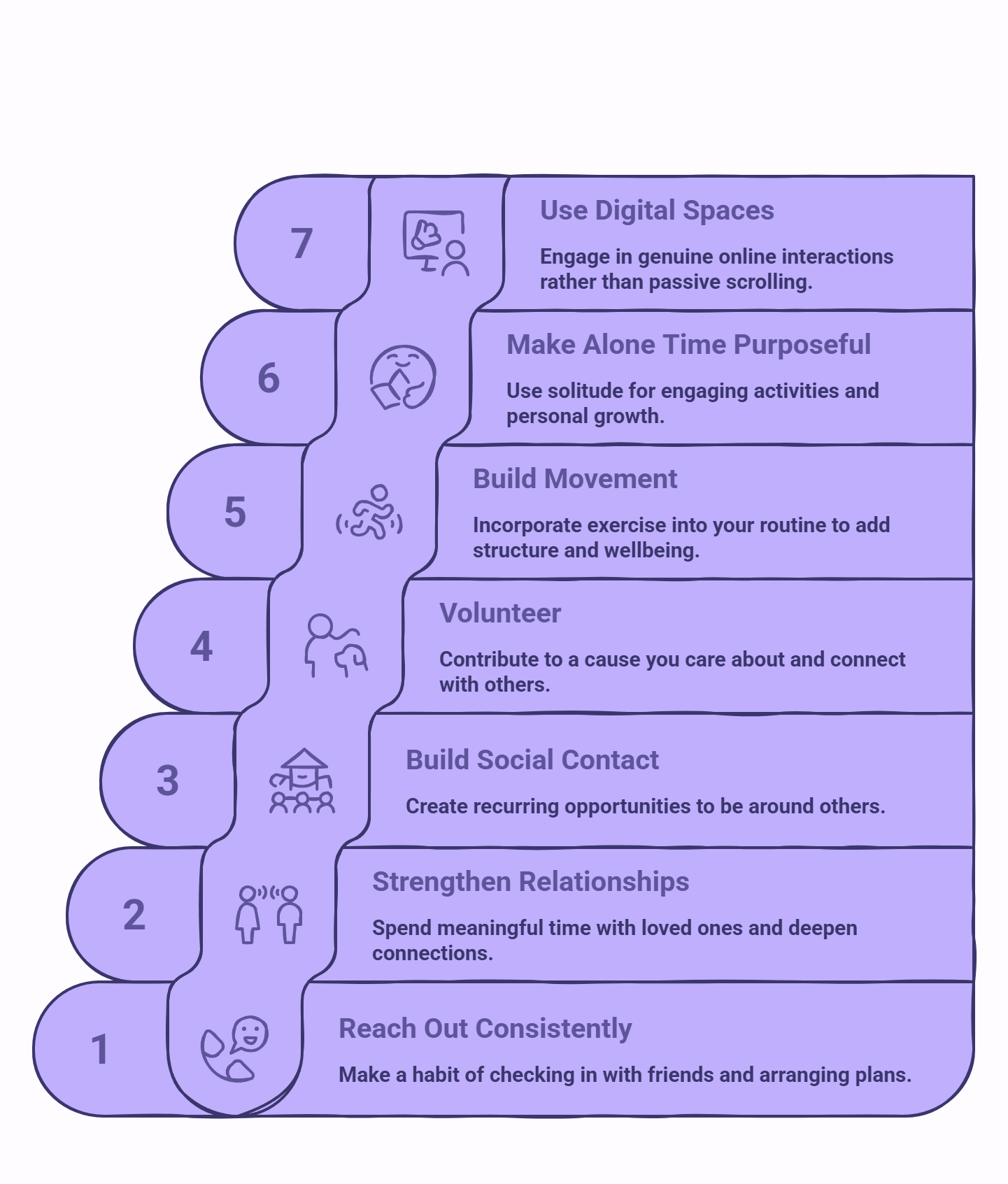
Building consistent habits is an important part of learning how to combat feelings of loneliness. Regular social contact, meaningful relationships, purposeful routines, and genuine interaction can help you create a stronger sense of connection over time.
1. Reach out consistently
Do not leave social contact entirely to chance. Make a habit of checking in with friends, arranging occasional plans, or keeping in touch with people who matter to you. Regular contact helps relationships remain active even when work, distance, or other responsibilities make spontaneous interaction less frequent.
2. Strengthen the relationships you already have
You may need deeper connections rather than more people. Spend meaningful time together, ask thoughtful questions, share something personal, or reconnect with someone you have drifted from. Small moments of openness can gradually turn surface-level relationships into closer ones.
3. Build regular social contact into your week
Create recurring opportunities to be around others instead of relying only on occasional plans. A weekly class, sports activity, hobby group, community event, or regular meet-up can give your social life more consistency and reduce long stretches of isolation.
4. Volunteer for something you care about
Volunteering combines social contact with a shared purpose. Choose a community project, animal welfare organisation, educational programme, or another cause that matters to you. Contributing regularly can help you stay involved with others while giving your time a meaningful focus.
5. Build movement into your routine
Exercise cannot replace meaningful connection, but it can keep isolation from narrowing your routine. Walking, swimming, playing a sport, or attending a fitness class can add structure to your week, support your wellbeing, and get you out of the same environment regularly.
6. Make time alone feel purposeful
Being alone does not have to mean feeling lonely. Use some of that time for activities that genuinely engage you, such as learning a skill, cooking, reading, creating something, or pursuing a personal project, while also ensuring you get enough sleep. Meaningful solitude can coexist with your need for close relationships.
7. Use digital spaces for genuine interaction
Use online spaces to maintain relationships, participate in communities, or have real conversations rather than only watching other people's lives. If passive scrolling regularly leaves you feeling more excluded or disconnected, change how and where you spend your time online.
Long-term change is rarely about filling your calendar or collecting more contacts. When learning how to deal with loneliness, focus on sustainable routines that strengthen relationships, create regular social contact, and keep you meaningfully engaged with life around you.
Why can loneliness make you withdraw even more?
Loneliness can create a difficult cycle: you want connection but become more cautious about seeking it. When you have felt disconnected for a while, you may become more sensitive to rejection and start interpreting uncertain social situations negatively.
This can show up in subtle ways:
- Assuming rejection: A delayed reply, cancelled plan, or quiet conversation may feel like proof that someone is not interested in you.
- Overthinking interactions: You may overthink or replay conversations, question what you said, or worry that you came across badly.
- Waiting for others to initiate: Fear of being ignored can make you stop reaching out, even when you want company.
- Avoiding social situations: Declining invitations or keeping conversations brief may feel safer than risking an uncomfortable interaction.
- Reinforcing the loneliness: With fewer interactions, there are fewer opportunities for positive experiences that could challenge those assumptions.
The pattern can gradually become:
Loneliness → expecting rejection → withdrawing → fewer meaningful interactions → greater loneliness
To interrupt it, pause when you notice yourself withdrawing and ask, “What do I actually know, and what am I assuming?” Then take one small action that keeps the possibility of connection open, such as replying to a message, accepting an invitation, or staying in a conversation instead of pulling away.
How can you reconnect without overwhelming yourself?
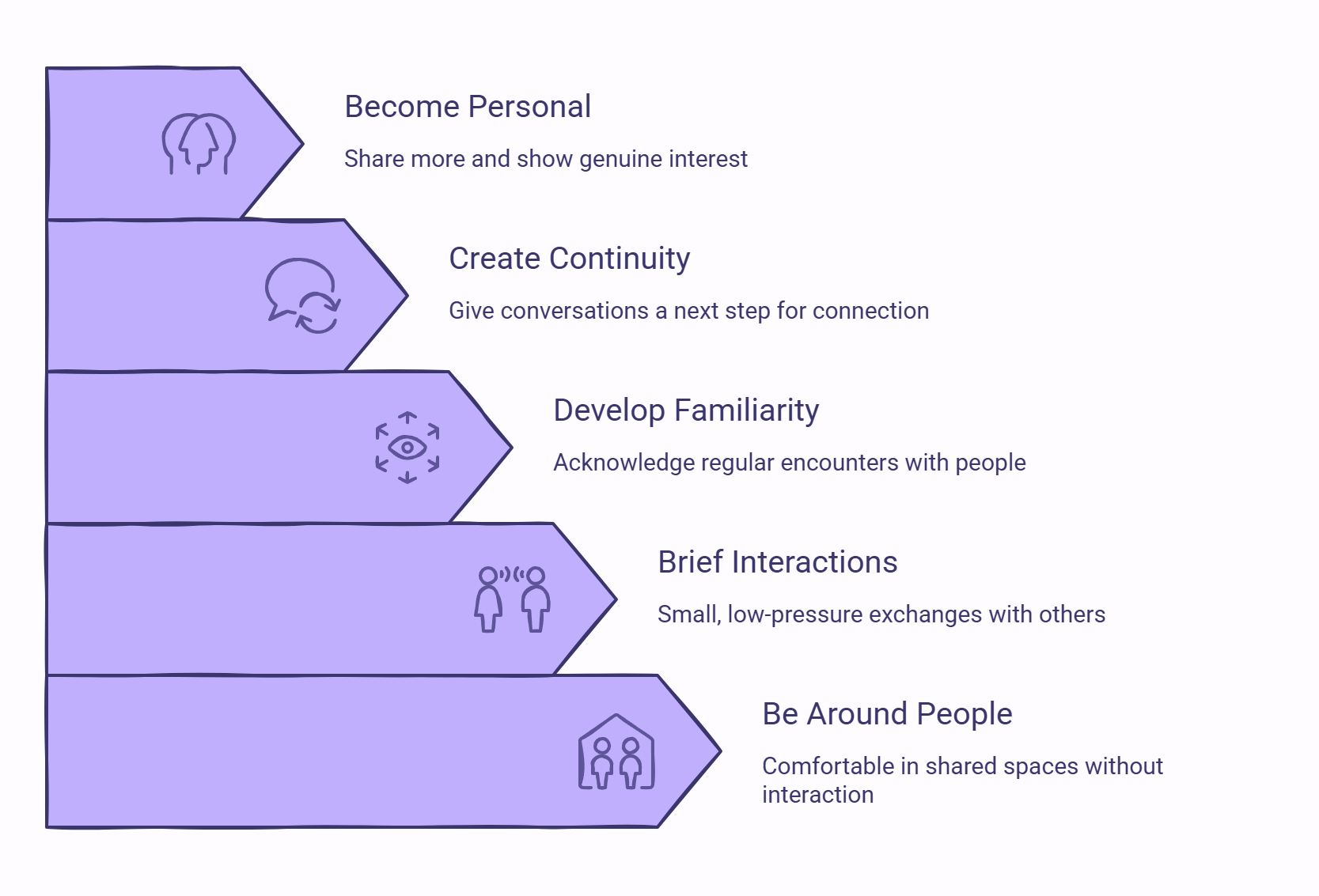
If socialising feels difficult after a period of loneliness, trying to make new friends immediately can feel like too much. Instead, start with small, low-pressure interactions and gradually move towards longer conversations and closer relationships as you become more comfortable.
Step 1: Be around people without needing to interact
Start with shared spaces where conversation is optional, such as a park, library, gym, or local market. The goal is simply to become more comfortable being part of the world around you rather than remaining isolated.
Step 2: Practise brief interactions
Move towards small exchanges that carry little social pressure. Greet a neighbour, ask someone a simple question, speak briefly to a colleague, or thank someone helping you. These interactions can make conversation feel less intimidating over time.
Step 3: Allow familiarity to develop
When you regularly encounter the same people, acknowledge them again rather than treating every interaction as a fresh start. Remembering a name, continuing an earlier conversation, or simply saying hello can gradually turn unfamiliar people into familiar faces.
Step 4: Create continuity
When a conversation feels comfortable, give it somewhere to go next. You might exchange contact details, suggest having coffee, continue talking online, or make a simple plan. The aim is not instant friendship but another opportunity to connect.
Step 5: Let the relationship become more personal
As trust develops, move beyond small talk gradually. Share more about yourself, ask thoughtful questions, and show genuine interest in the other person's experiences. Closeness usually develops through repeated, reciprocal conversations rather than one unusually deep interaction.
You do not have to move through every step quickly or approach every relationship in the same way. Start with what feels manageable and gradually increase the level of interaction as you become more comfortable. The goal is to make reconnecting feel achievable rather than forcing yourself to become social overnight.
What if you have no one to talk to?
If you feel lonely and genuinely have no one you can call or message, advice such as “talk to a friend” is not particularly useful. Your first source of support does not have to come from an existing close relationship. There are other ways to find conversation, emotional support, and eventually a stronger support network.
- Use anonymous listening spaces: If you mainly need to express what you are feeling, an anonymous listener can give you space to talk without worrying about how someone in your personal life might react.
- Look for peer support: Support groups, moderated communities, and peer networks can connect you with people who understand a particular experience, such as grief, separation, caregiving, relocation, or social anxiety.
- Use interest-based communities: Online or local communities centred around hobbies, gaming, books, fitness, language learning, or other interests can make conversation easier because you already have something in common.
- Consider counselling: If loneliness has become persistent or is affecting your mood, sleep, work, studies, or ability to function, a counsellor or therapist can provide structured professional support while you work on rebuilding connection elsewhere.
You do not need to find a best friend immediately for things to improve. Sometimes the first step is simply finding one safe place where you can speak honestly and be heard, then building from there.
If you have no one to talk to, Listennr offers a private, anonymous space where you can share what is on your mind and feel heard without judgement.
Do you need more people or deeper connections?
Feeling lonely does not always mean your social circle is too small. What matters is understanding what feels missing from the connections you already have. Your experience may point to one or more of the following:
- You rarely have anyone to spend time with: You may be missing regular social contact, companionship, and opportunities to share everyday experiences with others.
- You know plenty of people but still feel lonely: Your social life may be active, but your relationships may lack the emotional closeness that helps you feel understood and supported.
- You have close relationships but rarely see people: The relationships themselves may feel meaningful, but infrequent contact can still leave you feeling disconnected in everyday life.
- You hold back even with people you trust: You may have supportive people around you but struggle to share what you are actually thinking or feeling.
- You feel disconnected from an important part of your life: You may have good relationships but still lack a sense of belonging around particular experiences, interests, values, or circumstances.
You may recognise yourself in more than one of these situations. Understanding how to deal with loneliness starts with identifying whether you are missing regular contact, emotional closeness, openness, or a stronger sense of belonging.
What NOT to do when you feel lonely?
When you're struggling with loneliness, some habits may provide temporary relief while leaving you feeling just as disconnected afterwards. Knowing what can reinforce loneliness is therefore just as important as knowing what can help.
- Don't isolate yourself completely. Time alone can be valuable, but consistently withdrawing from people can reduce opportunities for connection and make isolation easier to maintain.
- Don't rely on scrolling or distraction to escape the feeling. Social media, TV, work, or other distractions can take your mind off loneliness temporarily, but constantly keeping yourself occupied may prevent you from recognising what you actually need.
- Don't compare your social life with what you see online. Photos of gatherings, relationships, and busy social lives rarely show the full picture. Comparing those highlights with your everyday life can make your own relationships seem less fulfilling than they really are.
- Don't expect one person to meet all your emotional needs. A close friend, partner, or family member can be an important source of support, but relying entirely on one relationship can create pressure for both of you. Healthy support can come from different relationships and sources.
The goal is not to avoid every unhelpful habit perfectly. It is to notice when something gives you short-term relief but repeatedly leaves you feeling more isolated afterwards.
Feeling like no one will understand what you're going through? Learn why that belief can feel so convincing and what can help you feel less alone.
When should you talk to someone about loneliness?
Many people assume they should only reach out for support when loneliness becomes overwhelming. But what if you did not have to wait until you reached that point?
If you've been thinking, I feel alone and need someone to talk to, that feeling alone may be enough reason to start a conversation. You do not need to justify your emotions or prove that things are "bad enough" before seeking support.
It may be time to talk to someone if:
- Your feelings of loneliness have lasted for a long time and are not improving.
- You notice a constant feeling of sadness and loneliness affecting your daily life.
- You find yourself withdrawing from your social life or avoiding social situations altogether.
- You feel emotionally disconnected, even from good friends or family members.
- You are struggling with difficult feelings and do not feel comfortable sharing them with anyone.
- Major life changes, such as a breakup, divorce, relocation, or loss, have left you feeling isolated.
- You keep wondering how to get rid of the feeling of loneliness, but feel stuck in the same patterns.
Talking to someone does not always mean seeking medical advice or formal treatment. Sometimes, the most important thing is having a safe space to chat openly with someone who will listen without judgment.
Looking for a safe space to open up without revealing your identity? Explore the best apps to talk to strangers anonymously and find a place where you can share what is on your mind without fear of judgment.
Need someone to talk to? Listennr is here to listen.
What if the first step toward feeling better wasn't finding the perfect solution, but simply having someone to listen?
Many people struggling with feelings of loneliness are not necessarily looking for advice. They are looking for a space where they can be honest about what they are feeling without worrying about being judged, interrupted, or misunderstood.
That's where Listennr can help.
Whether you're dealing with a sense of isolation, navigating difficult life changes, or simply thinking, I feel alone and need someone to talk to, Listennr gives you a private space to talk anonymously with compassionate listeners who genuinely care. You can connect with people who have similar experiences, share what's on your mind at your own pace, and feel emotionally heard without pressure or expectations.
You do not have to wait until loneliness affects every part of your well-being before reaching out. Support can begin with a single conversation. If you're ready to feel heard, understood, and a little less alone, start your free trial on Listennr today and begin building meaningful human connections.
Remember, you don't have to face loneliness alone
Loneliness can make connection feel further away than it really is, especially when withdrawing starts to feel easier than reaching out. But it does not have to define your relationships or your everyday life. What matters is recognising the kind of connection you are missing and taking manageable steps towards it.
Progress may happen gradually, and that is okay. Sometimes, a small interaction or one honest conversation can be the beginning of feeling more connected, understood, and supported.
Frequently asked questions
How do I deal with loneliness?
Start with one manageable action when loneliness hits, then focus on regular social contact, deeper relationships, and meaningful routines. Understanding whether you are missing companionship, emotional closeness, or belonging can help you choose what to work on long-term.
How to deal with loneliness after divorce?
Loneliness after divorce is common, especially when routines and relationships change. Focus on rebuilding your social life, reconnecting with old friends, exploring new hobbies, and giving yourself time to heal. Seeking emotional support can also help you navigate this transition more comfortably.
How to deal with loneliness without friends?
If you do not have close friends right now, start with small steps. Joining groups based on common interests is a great way to meet new people, volunteer in your local area, visit community spaces, or connect with supportive listeners. Meaningful connections often begin with simple conversations.
What are some practical steps I can take to feel less lonely?
Try reaching out to a family member, sending a text message to someone you trust, joining a hobby group, attending local events, limiting social media use, or spending time in public spaces. Small, consistent actions can gradually strengthen your sense of connection.
Does loneliness affect physical health, and what can I do about it?
Yes, long-term loneliness may affect sleep, stress levels, and overall wellbeing. Building supportive relationships, staying physically active, maintaining healthy routines, and seeking help when needed can benefit both your mental health and physical health.
What to do when you feel alone and hopeless?
When you feel alone and hopeless, try talking to someone you trust rather than carrying everything by yourself. If these feelings persist or affect daily life, consider seeking support from a qualified health professional or a trusted support service.
How do single adults cope with loneliness?
Many single adults cope with loneliness by investing in friendships, joining communities, developing hobbies, volunteering, and learning to enjoy their own company. A good way to build a fulfilling life around meaningful activities can help reduce feelings of loneliness over time.
What does being lonely feel like and/or look like?
Loneliness often feels like emotional disconnection, even when people are around. It can look like withdrawing from social situations, feeling misunderstood, experiencing a sense of isolation, or wishing you had someone who truly understood your feelings.
How does Listennr help overcome feelings of loneliness?
Listennr provides a safe space to talk anonymously with compassionate listeners. When you feel alone and need someone to talk to, having a judgment-free conversation can help reduce feelings of loneliness and strengthen your sense of connection.
Do I need health insurance to receive this service?
No. If you are exploring how to deal with loneliness and want someone to listen, Listennr does not require health insurance. You can connect with listeners directly without referrals, insurance coverage, or medical documentation.