
I Want Someone to Listen to Me: Why Do I Feel This Way?

Key highlights
- Wanting someone to listen is often about feeling understood, not getting advice or solutions.
- Keeping emotions bottled up can lead to overthinking, withdrawal, and emotional exhaustion over time.
- Feeling unheard does not mean people do not care, but it may mean your needs are not being met.
- Advice can feel frustrating when what you really need is empathy, attention, and space to vent.
- Certain signs, like replaying thoughts or holding back in conversations, may indicate a need for support.
- When trusted people are unavailable, platforms like Listennr can provide a safe space to be heard without judgment.
If you've found yourself thinking, "I want someone to listen to me," you're not asking for too much. Wanting to be heard is a basic human need. Sometimes, you don't need advice, solutions, or someone to tell you what to do. You just need a safe space to express what's on your mind and know that someone is genuinely listening.
You know that feeling when something is weighing on you, and you just need to say it out loud. Not for advice. Not for a solution. Just to say it. Instead, you tell people you're fine. You keep conversations short. You convince yourself it's easier than trying to explain something you haven't fully figured out yourself.
The difficult part is that being surrounded by people does not always mean feeling understood. You can have friends, family, and colleagues around you and still find yourself thinking, "I want someone to listen to me," without knowing who to turn to. If that sounds familiar, you are far from alone. According to the World Health Organization, loneliness affects around one in six people globally. For many, the feeling is not about being physically alone but about lacking meaningful emotional connection and support. This article explores why feeling unheard hurts, what it can lead to, and where to find support.
Why do I feel like no one listens to me?
Feeling like no one listens often happens when your emotional needs are not being met. Sometimes people are quick to give advice instead of practising active listening, making it harder to open up and express your feelings. Over time, this can leave you feeling misunderstood, even when you're surrounded by people who care.
Even when people care about you, they may not always respond in the way you need. Sometimes, the person you hope will listen is unavailable, distracted, or unsure how to help. That's when the feeling of being unheard starts to grow.
Here is why it keeps happening:
- The people closest to you come with stakes. What if they worry too much, or bring it up at the wrong time, or just look at you differently afterward? So before they even get a chance to respond, you have already decided it is not worth the risk.
- They are already thinking about what to say back, already trying to fix it, when all you needed was for them to have someone to talk to.
- Everyone has their own thing going on, and you do not want to be the person who dumps their problems on someone who is already overwhelmed.
- You tried once, and it did not go well; they said something that made you feel worse, and now some part of you just does not want to risk that again.
- And sometimes you do not even know what you want to say; you just know something feels off, and you need somewhere to put it.
You also must know one thing: the longer it sits unanswered, the heavier everything starts to feel.
Is it normal to want someone to listen to you?
Yes. Wanting someone to talk with is a natural human need. Being heard helps you process your thoughts, feel understood, and build meaningful emotional connections.
- Everyone needs to feel heard and understood.
- Wanting someone to vent to does not make you weak, needy, or attention-seeking.
- Being heard can help you process difficult emotions and gain clarity.
- Keeping your feelings to yourself often makes them feel heavier over time.
The need to be heard is something we all experience. Finding the right person to whom you can turn when you need someone can make your thoughts feel lighter. And if you don't have someone you feel comfortable opening up to, platforms like Listennr can provide a safe, judgment-free space to express your feelings.
What happens when you keep your feelings bottled up?
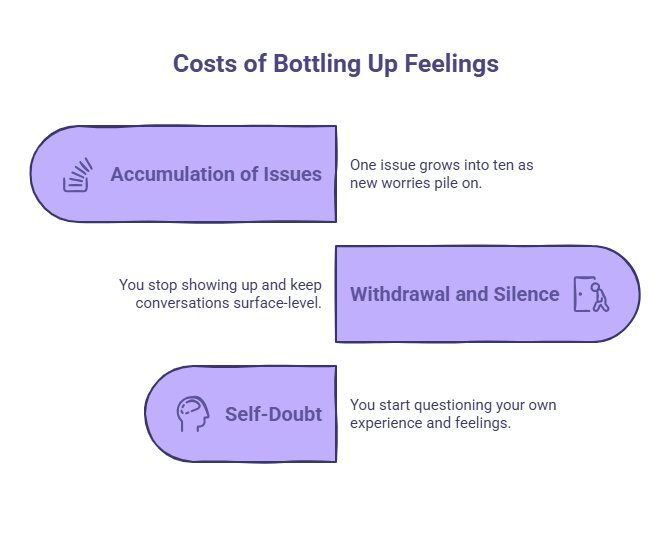
Keeping your feelings bottled up can make it harder to process your emotions and maintain your emotional wellbeing. What starts as a single worry can gradually become more overwhelming, making coping with emotions and mental health challenges feel increasingly difficult.
But ignored feelings rarely disappear. What goes unspoken often stays with you longer than you realise.
1. It started as one thing and is now ten
It often begins with a single moment that stays with you longer than expected. Because you never really talk about it, it remains in the background.
Then life keeps happening. New worries, frustrations, and disappointments start piling on. Before long, you are carrying far more than the original issue, and it all starts to feel heavier than it should.
2. Suddenly, you are the one who stopped showing up
When you feel unheard often enough, it becomes easier to stay quiet. You share less, keep conversations surface-level, and stop bringing up what is really on your mind.
It is not that you do not want emotional support. You are simply tired of opening up and feeling like nobody truly understands what you are trying to say.
3. You start questioning your own experience
The longer you keep something to yourself, the more likely you are to second-guess it. You start wondering whether it was really that important or whether you should have moved on by now.
But if something is still weighing on you, it matters. Feelings do not disappear just because they go unspoken. Sometimes, all you need is someone you can talk to. And after a while, carrying everything by yourself starts to take a toll.
What can you do if no one listens to you?
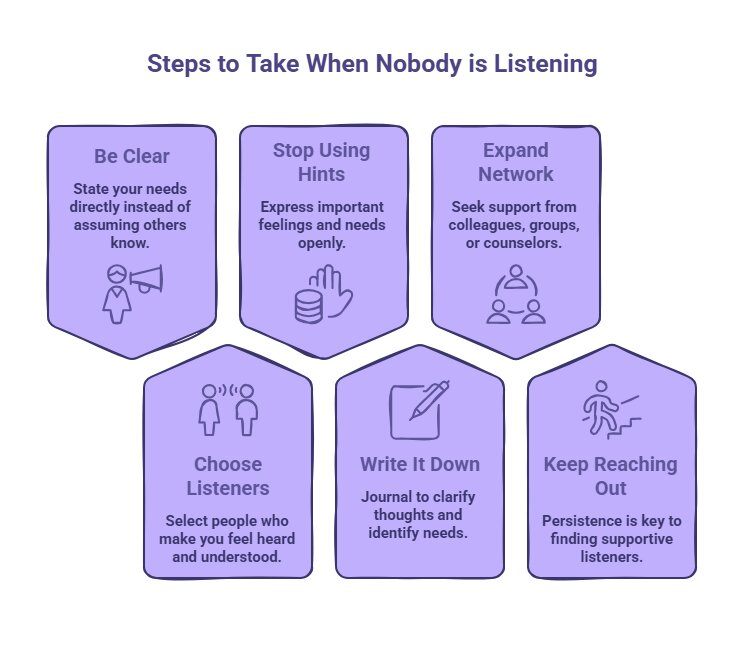
If no one seems to be listening, focus on finding a trusted person or a support system where you feel comfortable sharing your thoughts. The goal isn't to make everyone understand you but to find people who give you the space to be heard.
Feeling unheard can be frustrating, especially when you have tried to open up more than once. While you cannot control how others respond, you can take steps to communicate your needs more clearly and seek support in places where you feel understood. Sometimes you just need someone to listen, not solve your problems or tell you what to do.
1. Be clear about what you need
Many people assume others know what they need, but that is not always the case. If advice is not what you are looking for, say so directly. A simple statement such as, "I just need someone to listen to me right now," can help set expectations and guide the conversation.
2. Choose people who listen well
Not everyone is naturally good at listening. Some people focus on fixing problems, while others struggle to give their full attention. Look for people who make you feel comfortable, heard, and understood when you talk.
3. Stop relying on hints
When something is important, try expressing it clearly rather than hoping someone will notice subtle signs. Being open about what you are experiencing gives others a better chance to respond in a meaningful way.
4. Write down what you want to say
Journaling can help you untangle your thoughts and emotions before sharing them with someone else. It can also help you identify what you need from the conversation, whether that is support, understanding, or simply a listening ear.
5. Expand your support network
Friends and family are valuable, but they are not the only sources of support. You might speak with a trusted colleague, join a support group, connect with a counsellor, or use a platform like Listennr when you just need someone to listen without judgement or pressure.
6. Keep reaching out
One disappointing conversation does not mean nobody cares about you. It may simply mean you have not found the right person to talk to yet. Meaningful support often comes from persistence and finding people who can meet you where you are.
Being heard is not about convincing everyone to understand you. It is about finding the right spaces and the right people who are willing to chat with you. The support you need may not come from the first person you reach out to, but that does not mean it is not out there.
Why do people give advice when you just want someone to listen?
Advice can feel frustrating when what you really need is active listening. Before offering solutions, many people simply want someone who will listen, acknowledge their feelings, and create a judgment-free space to talk.
Here is why advice can sometimes feel unhelpful:
- It shifts the focus away from your feelings. Instead of feeling heard, the conversation quickly becomes about solving the problem.
- It can make you feel misunderstood. When someone jumps straight to advice, it may seem like they have not fully understood what you are trying to say.
- It creates pressure to take action. Sometimes you are not ready for solutions. You may need time to process your thoughts before deciding what to do next.
- It can discourage future conversations. If every conversation turns into advice, you may start keeping things to yourself rather than opening up.
In most cases, people offer advice because they care. They want to help, even if their response misses what you need in that moment. Often, what feels most supportive is not a solution but the opportunity to speak openly without interruption, judgment, or pressure to "fix" things.
That is why many people search for ways to find someone who listens to you, someone who can provide space, attention, and understanding before offering opinions or answers.
How do you know when you need someone to listen?
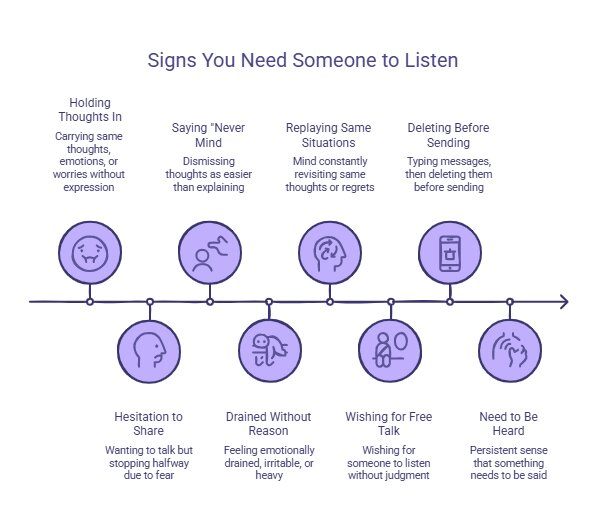
If you keep replaying the same thoughts, hesitate to open up, or feel emotionally drained, it may be a sign that you need someone to listen. Being heard can help you process your emotions and support your mental wellbeing.
Sometimes the need to be heard does not show up as sadness. It can appear as frustration, overthinking and anxiety, emotional exhaustion, or a constant feeling that something is weighing on you.
1. You start conversations but stop yourself halfway
You want to share what is on your mind, but the moment the conversation begins, you hesitate. You worry about saying too much, being misunderstood, or feeling vulnerable, so you hold back instead.
2. You say "never mind" more than you really think
Over time, it can feel easier to dismiss your thoughts than explain them. You may stop sharing because you assume people are busy, uninterested, or unlikely to understand what you are trying to say.
3. You feel emotionally drained without a clear reason
When emotions stay bottled up for too long, they often show up as irritability, exhaustion, or a lingering sense of heaviness. You know something feels off, even if you cannot immediately explain why.
4. You replay the same thoughts and situations
Without an outlet, your mind keeps returning to the same conversations, worries, or regrets. What might have been a passing thought becomes something you revisit repeatedly because it has never been fully expressed.
5. You wish you had someone you could talk to freely
You notice yourself wishing for a person who would simply listen without interrupting, judging, or trying to solve everything. Sometimes the desire is not for advice but for understanding.
6. You type messages and delete them before sending
You start writing what you really want to say, then erase it. The fear of being a burden, saying the wrong thing, or not being understood keeps you from reaching out.
7. You carry a persistent sense that something needs to be said
You may not have the perfect words for what you are feeling. You just know there are thoughts, emotions, or experiences sitting inside you that need space to be acknowledged.
If these experiences feel familiar, it may be a sign that you have been carrying more on your own than you realize. Being listened to does not make problems disappear, but it can make them feel lighter, clearer, and easier to process. Sometimes the first step is simply finding a space where you can speak openly and know that someone is genuinely listening.
Who should you talk to?
Sometimes, the best person to talk to depends on what you need. If you're looking for advice, a trusted friend or family member may be the right choice. If you simply want someone to listen without judgment, an anonymous listening platform like Listennr can offer a safe space to share what's on your mind.
If you need...
Best option
Someone to listen without judgment
Anonymous listener
Advice from someone who knows you
Friend or family member
Help managing ongoing emotional struggles
Counsellor or therapist
A safe place to vent
Anonymous listening platform
Immediate help during a mental health crisis
Local emergency or crisis support services
The right support depends on your situation. Whether you choose a trusted friend, a mental health professional, or an anonymous listening platform like Listennr, speaking openly with someone who genuinely listens can help you feel understood and less alone.
Where can you find someone to listen to you?
You don't have to rely on one person for support. Whether it's a friend, a counsellor, a peer support group, or an anonymous listening platform, the right safe space can help you express your feelings without fear of judgment.
You might worry about:
- Being given advice when you just want to be heard
- Making someone else worry about you
- Having to explain every detail before someone understands
That is where Listennr is different.
Instead of focusing on fixing your problems, Listennr focuses on listening. It creates a space where you can talk openly, without worrying about social expectations, awkwardness, or consequences.
With Listennr, you can:
- Talk anonymously without sharing personal details
- Connect with listeners who understand difficult experiences
- Express yourself honestly without fear of judgment
- Return whenever you need someone to talk to
- Start your first conversation for free
You do not need the perfect words. You do not need a complete explanation. Sometimes, all you need is someone willing to listen.
And that is exactly what Listennr is here for. Download Listennr today and finally say the thing you have been holding in.
What If You Still Need Someone to Listen?
If you've found yourself thinking, "I want someone to listen to me," you're not asking for too much. Wanting to be heard is a natural human need, and having the opportunity to express your feelings can make it easier to process your emotions, gain clarity, and support your emotional wellbeing.
Whether you choose to open up to a trusted person, lean on your support system, join a peer support group, or speak with a mental health professional, the important thing is not to carry everything on your own. And if you don't have someone you feel comfortable talking to, Listennr offers a safe, judgment-free app space where you can share what's on your mind with someone who is there to listen.
Frequently asked questions
Why do I feel like nobody listens to me?
Feeling unheard can happen when people are distracted, quick to offer advice, or don't fully understand what you're experiencing. It doesn't always mean they don't care, but it may mean your emotional needs aren't being met, which can be addressed through comprehensive mental health services and helpline administration.
Is it normal to want someone to listen to me?
Yes. Wanting someone to listen is a natural human need. Being heard helps you process emotions, gain clarity, and feel understood. It does not make you weak or needy, but reminds you that emotional support matters.
Where can I find someone to talk to when I feel alone?
You can talk to a trusted friend, family member, counsellor, support group, or an anonymous listening platform like Listennr. Finding a safe, judgment-free space to share your thoughts can help you feel understood and less alone.
How can I ask my friends or family to listen to me without judging or interrupting?
Tell them clearly that you need someone to listen rather than offer advice or solutions. Setting expectations before the conversation begins helps create a supportive environment where you feel comfortable sharing your thoughts and feelings.
What should I do if no one listens to me?
Start by explaining that you need someone to listen without offering advice. If trusted people cannot provide the support you need, consider reaching out to a counsellor, support group, or anonymous listening platform.
Can I talk to someone anonymously?
Yes. Anonymous listening platforms let you share your thoughts without revealing your identity. They provide a safe, judgment-free space where you can express your feelings openly, especially when you're not ready to talk to someone you know.
When should I seek professional help instead of just someone to listen?
If your emotions become overwhelming or start affecting your relationships, work, sleep, or daily life, consider speaking with a mental health professional. They can provide ongoing guidance, coping strategies, and personalised support.