
How to Find Emotional Support: Who Can You Talk To?

Key highlights
- The person closest to you is not always the right person for every emotional conversation.
- The right support depends on whether you need listening, reassurance, connection, or help with emotional distress.
- Asking clearly for what you need can make supportive conversations more useful, particularly during a tough time.
- Having people around you does not always prevent feelings of loneliness or guarantee that you have somewhere to speak openly.
- Peer support and community resources can provide human connection when your existing relationships cannot meet a particular need.
- Persistent or worsening difficulties require a different level of support, which may include professional care or a free telephone counselling service.
- Listennr connects you with listeners when you want to talk outside your usual personal circle without positioning the conversation as clinical care.
Needing someone to talk to can feel particularly isolating when nobody around you seems like the right person to turn to. You may have friends, family, or a partner and still struggle with how to find emotional support that feels safe, available, and suited to what you need.
Perhaps you worry about burdening someone, expect judgement or unwanted advice, or find that the person you trust is unavailable when you need them. You may not even know how to explain what is wrong. Sometimes, you simply need space to talk openly with someone willing to listen without immediately trying to fix the situation.
Finding the right support starts with working out what you need from the conversation and who can realistically give you that. This guide explains how to make that decision, ask for support, and find other ways to be heard when your usual support network is not enough.
Why can emotional support be so difficult to find?
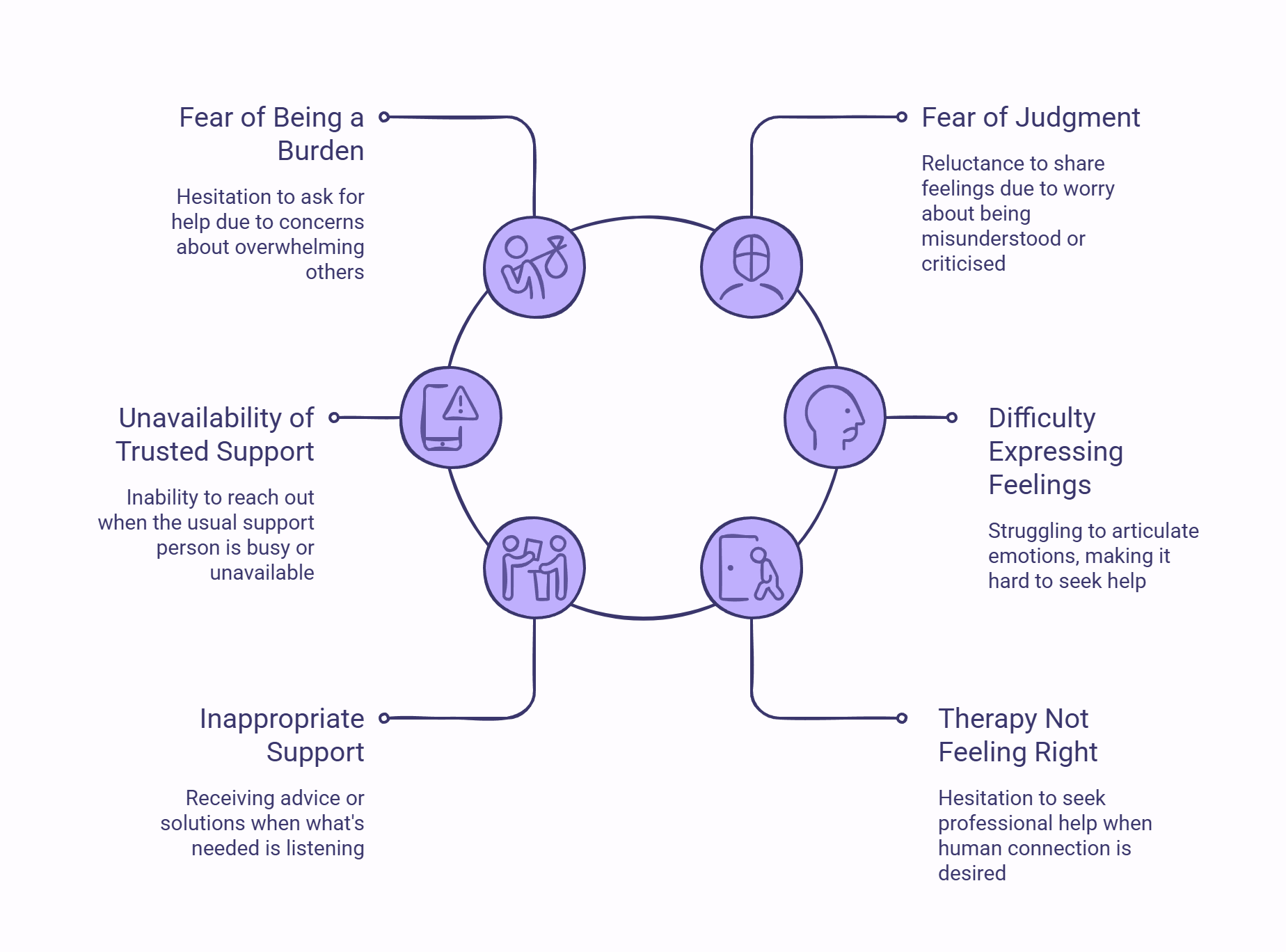
Emotional support depends on more than having people around you. Trust, availability, emotional safety, communication, and another person's capacity to listen all influence whether you feel able to reach out and experience strong feelings of social support. Several barriers can make that support difficult to access.
1. You do not want to feel like a burden
You may hold back because friends or family already have problems of their own. But needing support is different from expecting one person to carry everything. Sometimes, you simply need someone who has the capacity to listen.
2. You are worried about being judged
Fear of being misunderstood, dismissed, criticised, or treated differently afterwards can make you censor what you say. Even when support is available, it may not feel accessible if you cannot speak openly without worrying about the response.
3. The person you trust is not available
The person you usually rely on may be working, asleep, busy, or dealing with their own difficulties. In this case, the problem is not the relationship itself but whether support is available at the moment you need it.
4. You cannot explain what you are feeling
You may feel overwhelmed, lonely, anxious, or emotionally exhausted without knowing exactly why. Feeling unable to explain the problem can make reaching out harder, even though talking may help you organise what you are experiencing.
5. People try to fix the problem
Friends and family may respond with advice, reassurance, comparisons, or solutions when you simply want to be heard. Good intentions do not always provide the right support, particularly when you need space to talk before deciding what to do.
6. Therapy does not feel like the right next step
Professional support can be important when emotional difficulties require clinical care. But not every difficult moment requires therapy. Sometimes, you need a human conversation, emotional validation, or someone outside your immediate circle who is willing to listen.
The real challenge is not simply finding someone to talk to, but finding support that feels safe, available, and appropriate for what you are experiencing. Recognising these barriers can help you make a more informed choice about where to turn for support.
What kind of emotional support do you actually need?
Emotional support is not one specific type of help. What feels useful depends on what you are experiencing and what you need from another person. Understanding why emotional support is important can help you identify whether you need someone to listen, offer reassurance, provide connection, or help you address something more serious.
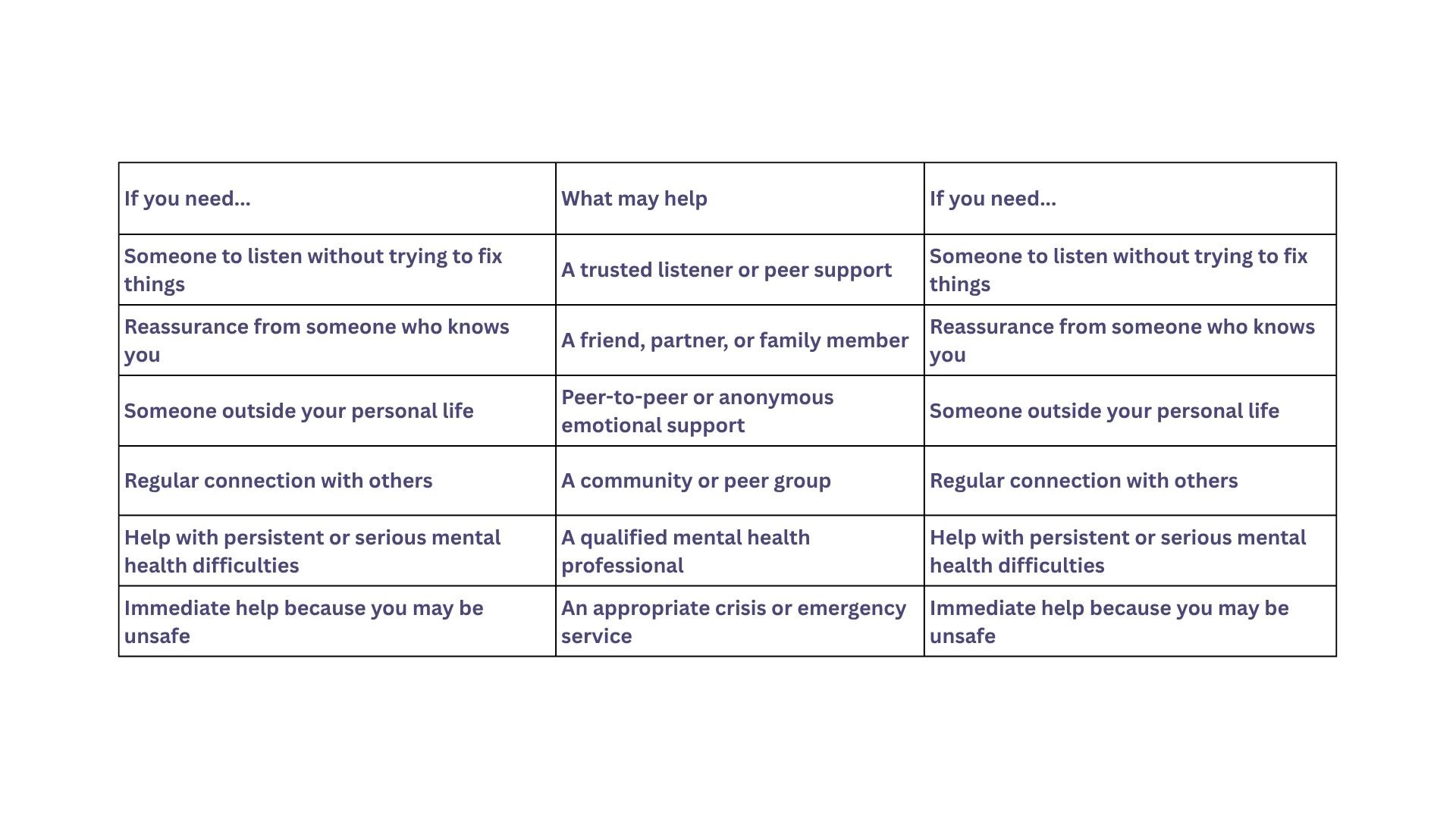
The right source of support should match the need rather than simply be the most convenient option. Listening or connection may be enough in some situations, while persistent difficulties may require professional care. If your immediate safety is at risk, appropriate crisis or emergency support should take priority.
How can you find emotional support that fits what you need?
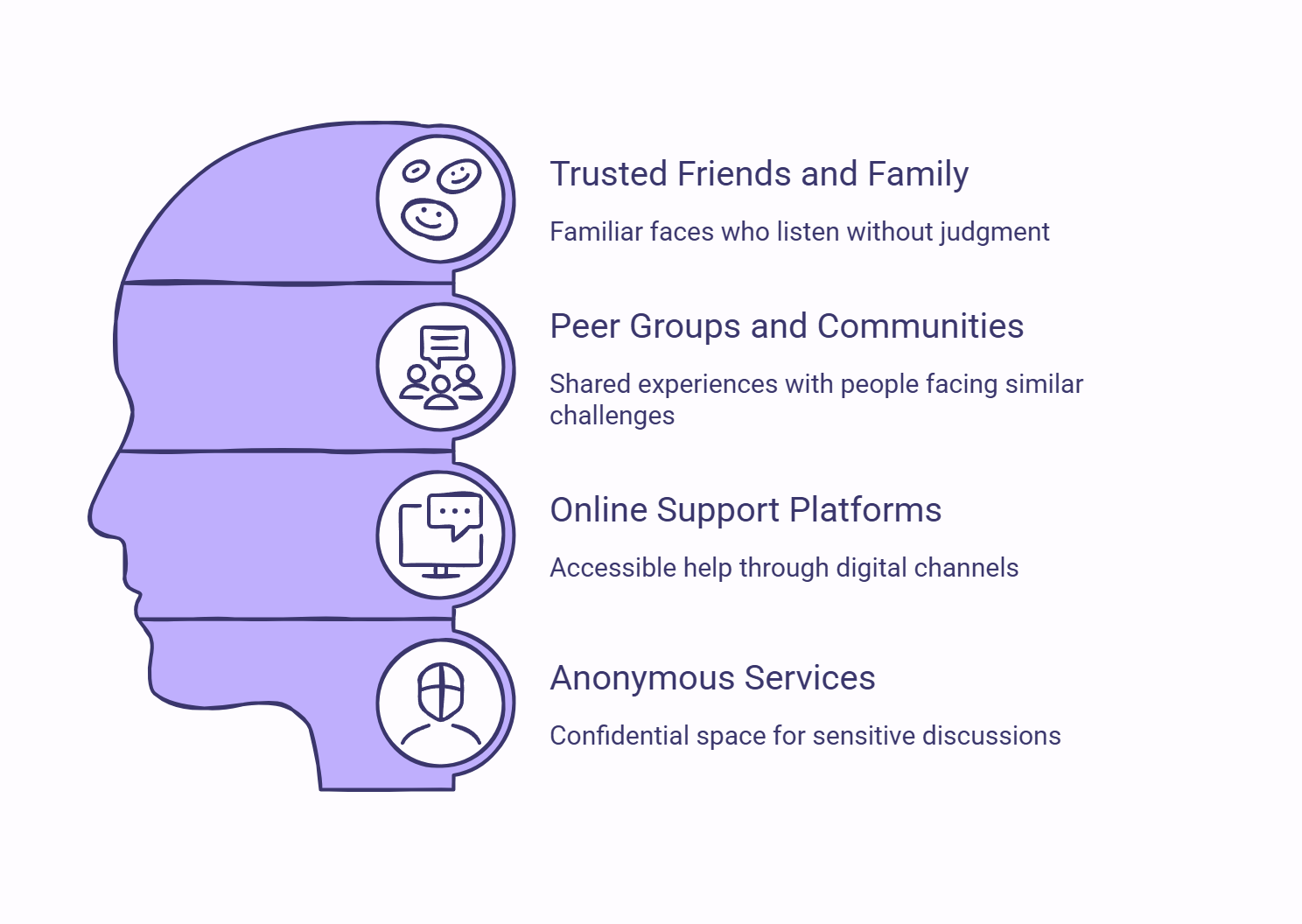
Knowing how to find emotional support starts with choosing a source that matches what you need from the conversation. Consider who you can speak to comfortably, how much privacy you need, and how accessible that support is rather than automatically turning to the person closest to you.
1. Start with people you already feel safe around
Choose someone who listens without dismissing your feelings, respects your privacy and boundaries, and has the emotional capacity to be present. This could be a friend, relative, or partner, but the person closest to you is not necessarily the right person for every conversation.
2. Look beyond your immediate social circle
A peer group, community, or independent listener may be more suitable when the issue involves family, relationships, work, or people you both know. Someone outside the situation can give you space to talk without worrying about how the conversation might affect an existing relationship.
3. Consider online emotional support when access is the problem
Online emotional support can help when geography, scheduling, limited local options, or discomfort with face-to-face conversations makes reaching someone difficult. Before choosing an option, check what type of support it provides, when it is available, and whether the communication format suits you.
4. Consider anonymous emotional support when privacy matters
Anonymous emotional support can make it easier to discuss something you are not ready to share with people in your everyday life. However, anonymity does not automatically make a service suitable for every situation, particularly when your needs require professional mental health care.
The right support should fit both what you need emotionally and what is making it difficult to reach out. This may mean speaking with someone you trust, widening your support network, or choosing a more accessible way to be heard.
How do you ask someone for emotional support without feeling awkward?
Learning how to ask for emotional support becomes easier when you make the request clear rather than expecting the other person to work out what you need. You do not need to explain everything immediately. Start by telling them what kind of conversation would be helpful.
1. Say what you need from the conversation
Decide whether you want someone to listen, offer advice, reassure you, keep you company, or help you think through a decision. Setting that expectation early gives the other person a clearer role and reduces the chance of receiving a response that does not help.
2. Ask whether they have the capacity to listen
Before starting a difficult conversation, check whether the person has the time and emotional capacity for it. This respects their boundaries while giving them an opportunity to be fully present rather than trying to listen when they are distracted or overwhelmed themselves.
3. Be specific about what would help
Tell the person what you need as the conversation develops. If you are not ready for solutions, say so. If you want their perspective, ask for it. Being specific can prevent a well-intentioned conversation from becoming frustrating or moving in the wrong direction.
4. Do not treat unavailability as rejection
Someone may care about you and still be unable to talk at that moment. If they are busy, tired, or dealing with something themselves, ask when they may be available or consider another suitable source of support rather than assuming they do not want to help.
You can keep the request simple: “Do you have time to listen for a few minutes?”, “I don't need advice yet, but I'd like to talk this through”, or “Could I get your perspective on something that's been bothering me?” Clear requests make it easier for both you and the other person to understand what the conversation needs to provide.
What if you have people around you but still feel unsupported?
Having people in your life does not always mean having relationships where you can speak openly about what you are experiencing. If you still feel unsupported, it can help to look at the depth and balance of those relationships rather than the number of people around you.
1. Look at whether your relationships go beyond the surface
Some relationships provide companionship but rarely make room for personal conversations. If someone feels trustworthy, try sharing something more meaningful gradually and notice whether they listen, engage, and make you feel comfortable opening up.
2. Make space for yourself if you are always the listener
If you are usually the person others rely on, you may rarely communicate your own needs. Start being clearer when you need support rather than automatically taking the listener's role. Healthy relationships should allow space for both people to be heard.
3. Do not rely on one person for every emotional need
One person may be good at listening, while another provides reassurance, perspective, or companionship. Building different supportive relationships can reduce pressure on any single connection while giving you more ways to get the support you need.
Having people around you and feeling supported are not the same thing. An incredible feeling of support often comes from building relationships where you can be heard, asking for space when you need it, and not expecting one person to provide everything.
What can you do if friends and family cannot provide the support you need?
Friends and family can care deeply about you without always being the right source of support for every situation. When that happens, the answer is not necessarily to manage everything alone. You can widen your support options beyond your existing relationships, as you may not need to share the whole story with everyone.
1. Recognise the limits of personal relationships
People close to you may be involved in the situation, have their own opinions, or lack the capacity to listen at that moment. These limits do not necessarily reflect the strength of the relationship.
2. Look for support that serves a different purpose
Sometimes, what is missing is not another close relationship but a different kind of conversation. You may simply want someone who can listen without shared history, expectations, or personal involvement shaping the discussion.
3. Consider peer-to-peer support
This is where peer-to-peer emotional support can become relevant. It provides another way to connect with someone when you need human conversation but your personal network does not fit what you need at that moment.
For people considering how to find emotional support beyond friends and family, peer support offers another option worth understanding. The next step is knowing what peer-to-peer support actually provides and when it may be appropriate.understanding, someone to listen, or professional care.
What is peer-to-peer emotional support, and when can it help?
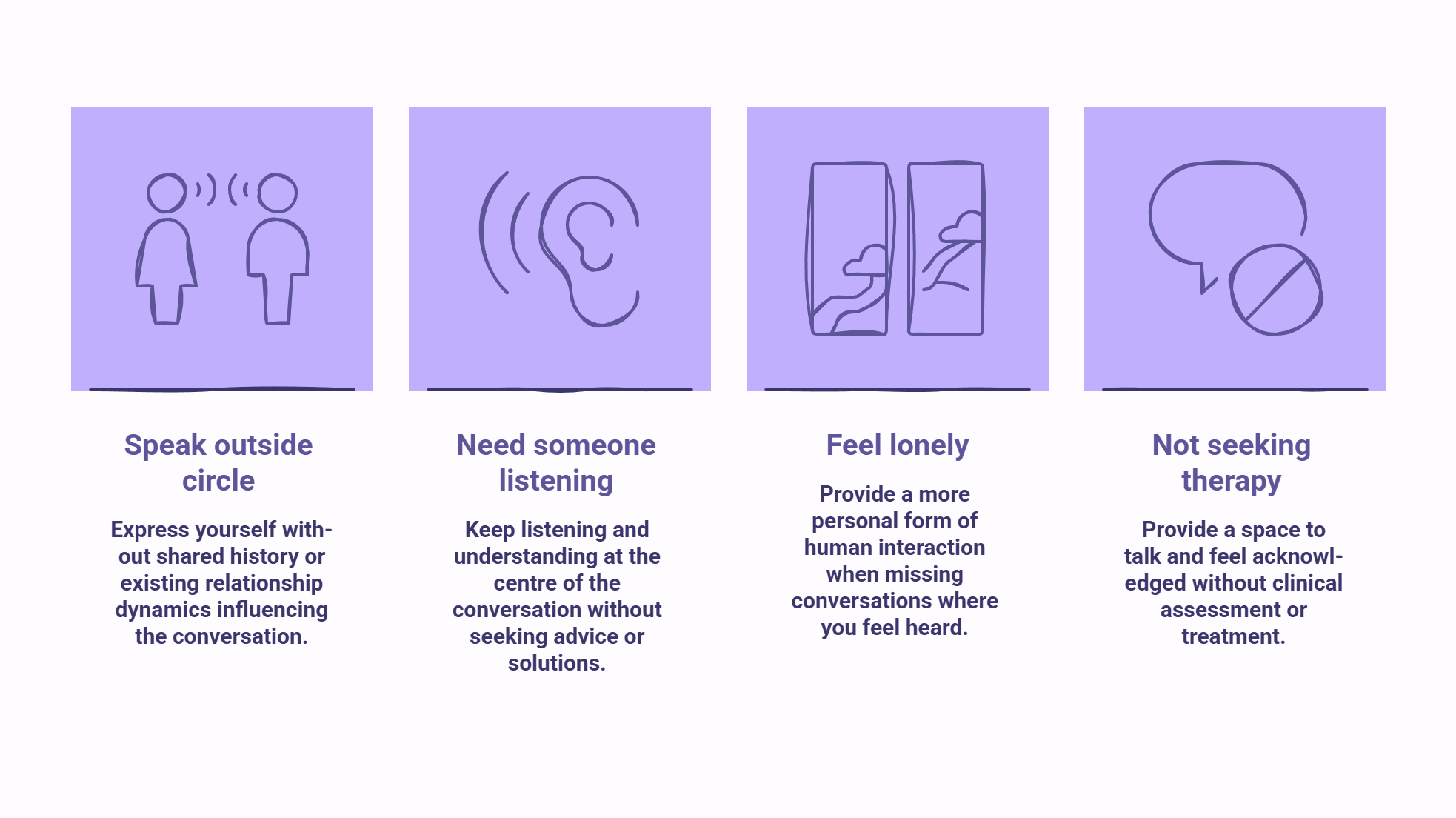
Peer-to-peer emotional support allows you to speak with another person who provides listening, understanding, and human connection rather than clinical diagnosis or treatment. It can be useful when you need space to talk but formal mental health support does not match what you need at that moment.
Peer support may be appropriate when:
1. You want to speak outside your personal circle
Some subjects can feel difficult to discuss with people who know you or are involved in the situation. Speaking with a peer gives you space to express yourself without shared history or existing relationship dynamics influencing the conversation.
2. You primarily want someone to listen
When you feel stressed or overwhelmed, you may not be looking for advice or immediate solutions. Peer support gives you room to express what you are experiencing while keeping listening and understanding at the centre of the conversation.
3. You feel lonely or disconnected
Being around people does not always provide meaningful connection. If you are missing conversations where you feel heard or understood, speaking directly with another person can provide a more personal form of human interaction.
4. You want support but are not looking for therapy
Not every difficult moment requires structured therapeutic support. Peer support can provide a space to talk and feel acknowledged when you need human connection rather than clinical assessment or treatment.
Peer-to-peer support has clear boundaries. It is not psychotherapy, counselling, diagnosis, medical advice, or crisis intervention. If you need clinical treatment, specialist mental health care, or immediate help with your safety, seek an appropriately qualified professional or emergency service.
How do you choose a safe place to talk online?
Not every online emotional support platform provides the same experience. Before sharing something personal, consider how the service handles your information, what kind of support it provides, and whether it is suitable for what you need.
1. Check privacy and anonymity
Review what personal information the platform requires, what is visible to the person you speak with, and what privacy controls are available. If it offers anonymous emotional support, check what anonymity actually covers before starting a conversation.
2. Confirm the type of support provided
Check whether the service provides peer listening, emotional support, counselling, therapy, or something else. It should also be clear what the person you speak with can and cannot provide so you know what to expect.
3. Look for clear support boundaries
A responsible platform should distinguish peer or emotional support from professional mental health care. Be cautious of services that suggest non-clinical listeners can provide diagnosis, treatment, or emergency intervention.
4. Consider accessibility
Check when support is available and whether you need to book, wait, or meet other requirements before speaking with someone. The service should be accessible in a way that works for when you are likely to need it.
5. Choose a communication format that feels comfortable
Consider whether you prefer text, voice, video, or another available format. Feeling comfortable with how you communicate can make it easier to speak openly about something personal.
The best platform is not necessarily the one with the most features. When deciding how to find emotional support online, prioritise clear privacy practices, appropriate boundaries, and support that matches what you actually need.
How can you emotionally support yourself when nobody is available?
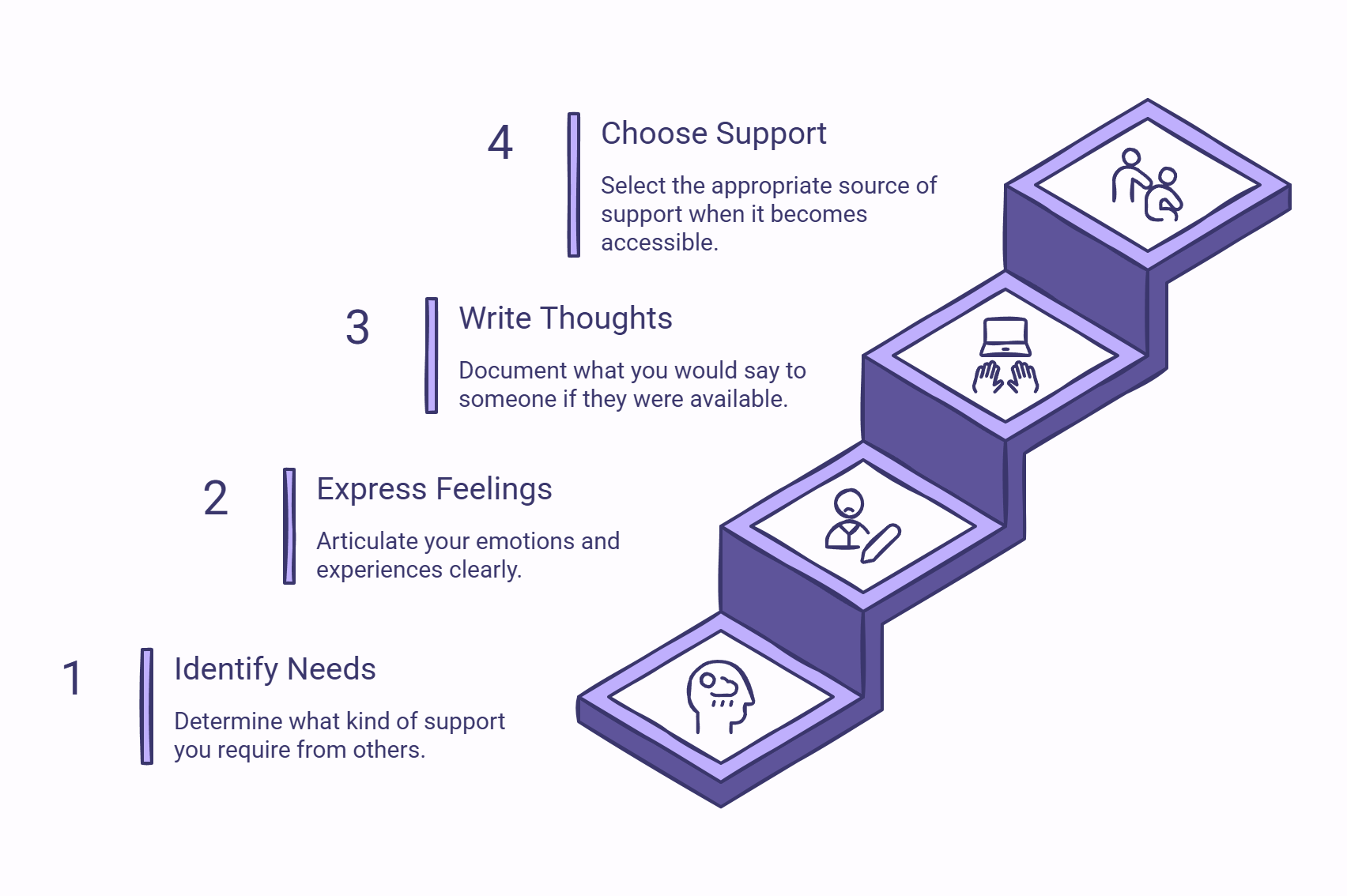
Knowing how to emotionally support yourself can help when you need to talk but nobody suitable is available at that moment. The goal is not to replace human connection, but to understand what you need, make the immediate situation more manageable, and prepare to reach out for meaningful conversations when support becomes accessible.
1. Identify what you need from another person
Ask yourself what you would want from someone if they were available. You might need reassurance, validation, perspective, company, or simply somewhere to express what you are feeling. Identifying that need gives you a clearer idea of what kind of support to seek next.
2. Put what you are feeling into words
Instead of immediately trying to solve the situation, describe what is happening as specifically as you can. Separating what happened, how you feel about it, and what is worrying you most can make an overwhelming experience easier to understand and eventually communicate.
3. Write down what you want to say
If you would normally talk through your thoughts, write down what you would tell someone if they were listening. This can help you capture what feels important while it is fresh and make it easier to begin the conversation later. Treat writing as a bridge to connection rather than a replacement for it.
4. Choose your next source of support
Decide where you will turn once support is available. That might be a trusted person, peer-support option, community, or qualified professional, depending on what you need. Having a specific next step prevents waiting for support from becoming indefinite isolation.
Supporting yourself in the moment can help you manage the period when nobody is available, but it does not mean you have to handle everything alone. The aim is to understand what you need and create a clear route towards appropriate support.
Can you live without emotional support?
Learning how to live without emotional support may seem like the answer when other people have repeatedly disappointed you. But the more useful goal is not learning to need nobody. It is building enough emotional self-reliance to manage difficult moments while still allowing healthy support from others.
1. Build self-support without isolating yourself
Emotional self-reliance means recognising your feelings, managing your responses, and making your own decisions. It can reduce the pressure to depend on someone else for every difficult moment without requiring you to handle everything alone.
2. Treat support as healthy, not as dependence
Reaching out when you need connection, reassurance, or perspective does not automatically make you dependent. Healthy support allows you to accept help while maintaining your own boundaries, judgement, and responsibility for your choices.
3. Avoid expecting one person to provide everything
No single relationship needs to meet every emotional need. A friend may listen well, a family member may offer reassurance, and a peer or professional may provide a different kind of support. Often, our loose ties can serve as different sources of connection, reducing pressure on any one relationship.
Emotional independence and human connection can exist together. The aim is to strengthen your ability to support yourself while keeping appropriate sources of connection available when you need them.
When is emotional support not enough?
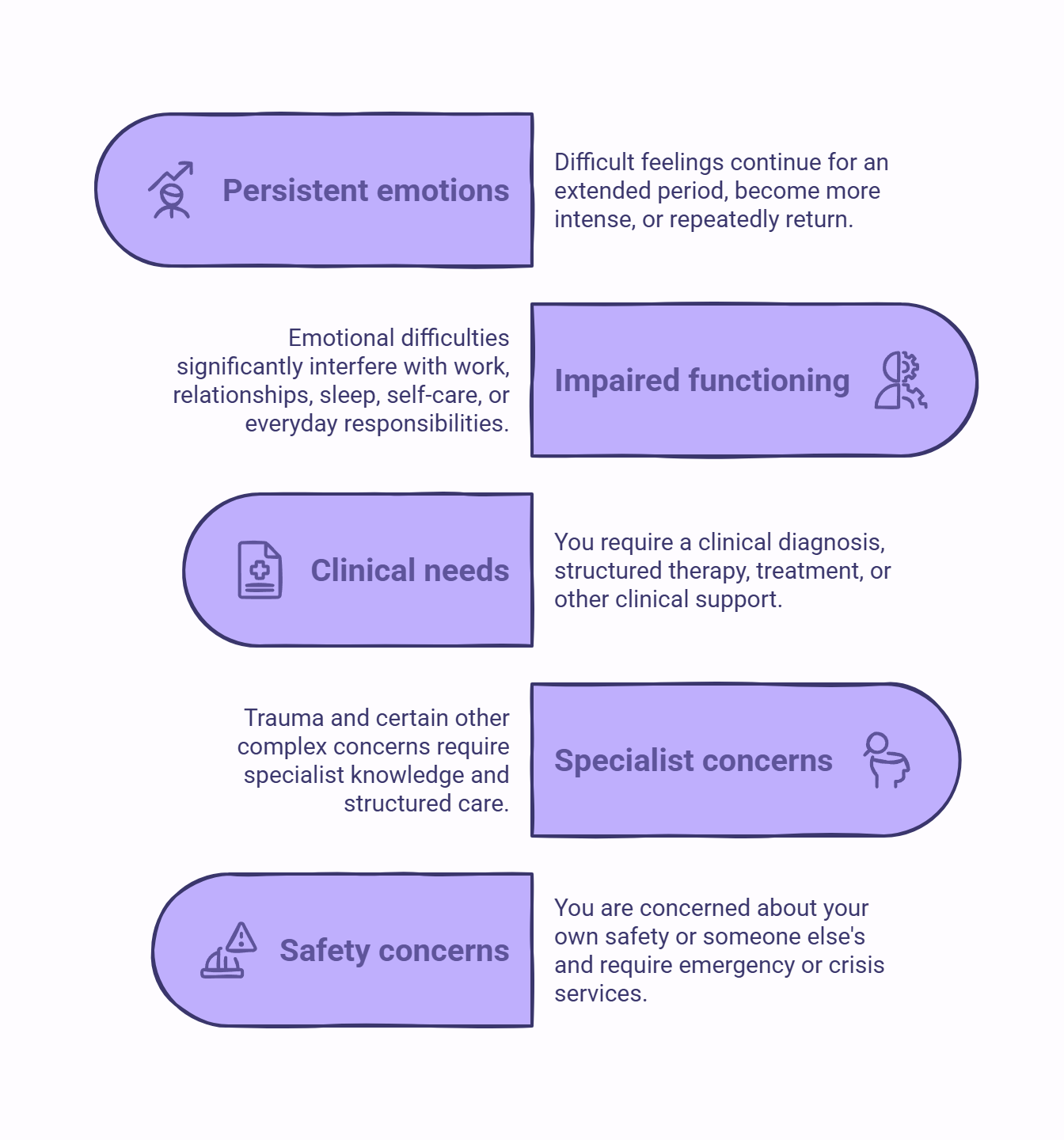
Listening and peer support can provide valuable human connection, but they have limits. Professional support may be more appropriate when what you are experiencing requires expertise or assistance beyond a supportive conversation.
1. Difficult emotions are persistent or worsening
If difficult feelings continue for an extended period, become more intense, or repeatedly return, consider speaking with a qualified mental health professional who can assess what you are experiencing.
2. Everyday functioning is being affected
Professional support may be appropriate when emotional difficulties significantly interfere with your work, relationships, sleep, self-care, or ability to manage everyday responsibilities.
3. You need diagnosis or treatment
A listener or peer cannot provide clinical diagnosis or treatment. If you need an assessment, structured therapy, treatment, or other clinical support, seek an appropriately qualified professional.
4. You are dealing with an issue requiring specialist support
Trauma and certain other complex concerns may require specialist knowledge and structured care. In these situations, supportive listening can complement appropriate professional help but should not replace it.
5. There is an immediate safety concern
If you are concerned about your own safety or someone else's, a peer conversation is not the appropriate level of support. Seek an appropriate emergency or crisis service that can respond to immediate safety needs.
The goal is not to choose between emotional and professional support, but to recognise what your situation requires. Knowing when listening is enough and when specialist or urgent help is needed can help you reach the right source of support at the right time.
How to find emotional support with Listennr?
Sometimes, you do not need advice or solutions. You simply need someone willing to listen. Listennr provides a space to connect with listeners outside your usual personal circle and talk about what you are experiencing.
It can be useful when friends or family are unavailable, you prefer speaking with someone outside the situation, or you want space to express yourself openly.
This gives you another source of emotional support without having to rely entirely on the people already in your life. Listennr focuses on emotional listening and human connection rather than clinical diagnosis or treatment.
Need someone to listen? Connect with a listener on Listennr and start a conversation when you are ready.
The right support makes a difference
The right support depends on what you need at that moment. Sometimes you may want someone to listen, while at other times you may need reassurance, shared understanding, or professional guidance. No single person or type of support has to meet every need.
Having different sources of support gives you more options when friends or family are unavailable or cannot provide what you need. What matters is recognising when to reach out and choosing a very good source of support that is appropriate for what you are experiencing.
Frequently asked questions
What are effective ways to find emotional support when I'm feeling alone?
To learn how to find emotional support, start with close family, a similar group, or community activities in your local area. Prioritise meaningful connections, a sense of community, and a source of social support suited to your specific situation.
Where can I access free emotional support or counselling online?
A free telephone counselling service, telephone counsellor, crisis text line, or phone number of a free resource may offer accessible support. Online services can also provide a broader range of support, including a little bit of human connection during a difficult situation.
What are some tools or strategies for getting emotional support when I have none?
If you are wondering how to get an emotional support, consider peer groups, community activities, or trusted people with relevant life experience. The best sources of support provide much comprehension, human connection, and the kind of help you need rather than stereotypical types of support.
How do I know if I need professional emotional support?
Professional help may be appropriate when painful experiences, strong feelings, mental health struggles, mental health issues, or mental illness persist or interfere with daily life. During a major crisis, professional care may be the first place to seek effective emotional support.
How can I support myself emotionally if I can't access counselling?
Learning how to emotionally support yourself can include identifying your needs, writing down difficult feelings, maintaining physical movement, and challenging a negative expectation. Self-support can be a good idea temporarily, but it should not become your only option for connection.
I need emotional support. What should I do?
If you need support for the first time, start with someone you trust or explore peer support for a little bit of general support. In the modern world, online options can offer loose connections that may develop into more meaningful sources of support.
Are there helplines I can call for immediate emotional support?
Yes. Crisis and emotional support helplines can provide immediate support when you need someone to talk to. If there is an immediate risk to your safety, contact your local emergency service or an appropriate crisis service.