.jpg)
Can You Really Find Someone Who Listens to You?

Key highlights
- The person closest to you may not be the best listener for every conversation.
- Opening up gradually can make difficult conversations feel easier and more manageable.
- Clearly asking to be heard can prevent unwanted advice and keep the conversation focused.
- Friends, anonymous listeners, and therapists provide different levels and types of support.
- Talking to someone outside your usual circle can make sensitive topics easier to discuss.
- Online conversations require careful platform choices, privacy awareness, and clear personal boundaries.
- Listennr provides an anonymous, supportive space to talk openly and feel heard without judgement.
Sometimes, you don't need advice or someone telling you what to do next. You simply need someone who will listen, give you space to explain what you're feeling, and let you speak without judgement. Feeling genuinely heard can help you process what's on your mind and make difficult emotions easier to navigate.
Meaningful connection can have a real impact on our well-being. According to a meta-analysis published in PLOS Medicine, people with stronger social relationships have a 50% greater likelihood of survival than those with weaker social relationships. Yet having people around you doesn't always mean having someone you feel comfortable opening up to.
So, how do you find someone who listens to you when you genuinely need to talk? This guide explains how to recognise a good listener, choose who to approach, ask for the support you need, and explore other options when friends or family aren't the right fit.
Why is it so hard to find someone who listens to you?
Finding someone who listens to you can feel difficult because most people are taught how to respond, not how to listen. Even when people care, they may rush to offer advice, reassurance, or solutions before fully understanding what you are trying to say.
You may have experienced conversations where:
- Someone interrupted before you finished speaking
- The conversation became about their experience
- You were told to "stay positive"
- Advice arrived before understanding
- You walked away feeling just as alone
These responses are rarely intended to hurt. People often want to help, but helping and listening are not always the same thing. When solutions come too quickly, you may feel pressured to move on before you have fully expressed what is bothering you.
That is why people often think, "I just need someone to listen to me." They are not necessarily looking for advice. They want the space to speak honestly without having to explain, defend, or immediately fix what they are feeling.
Do you simply need someone to listen to you?
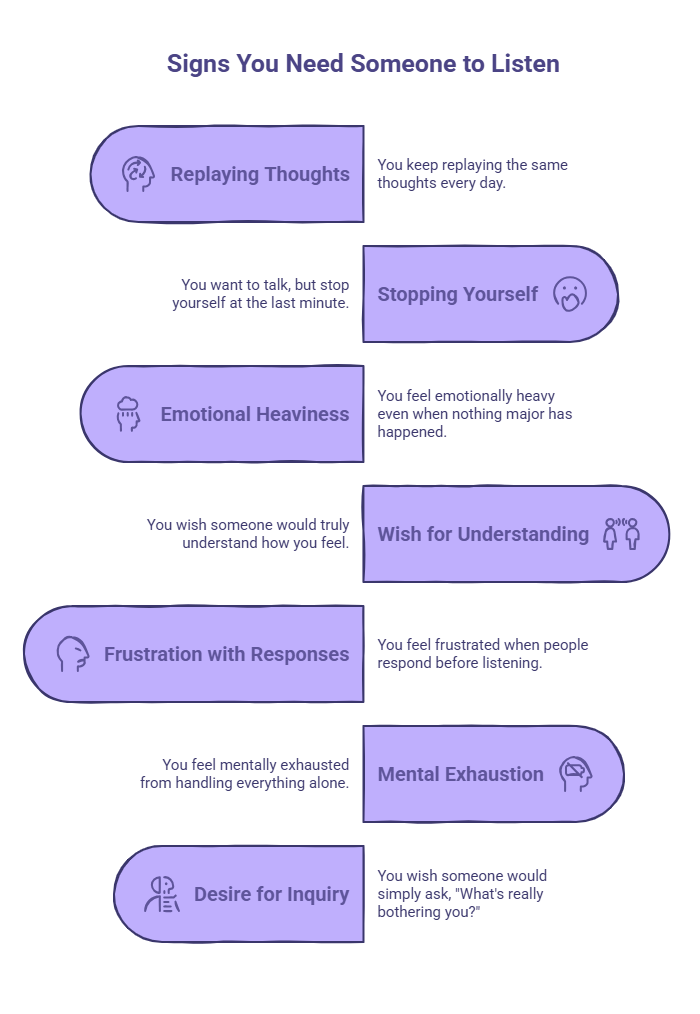
Sometimes, you do not need answers or advice. You simply need someone to listen.
If you feel emotionally tired, keep overthinking, or find yourself holding everything in, it may be a sign that you have been carrying too much alone and need a safe space to talk.
You may just need someone to listen to you if:
- You keep replaying the same thoughts every day
- You want to talk, but stop yourself at the last minute
- You feel emotionally heavy even when nothing major has happened
- You wish someone would truly understand how you feel
- You feel frustrated when people respond before listening
- You feel mentally exhausted from handling everything alone
- You wish someone would simply ask, "What's really bothering you?"
Sometimes, the need to find someone who listens to you is not about solving a problem. It is about finally feeling heard.
How do you find someone who will actually listen to you?
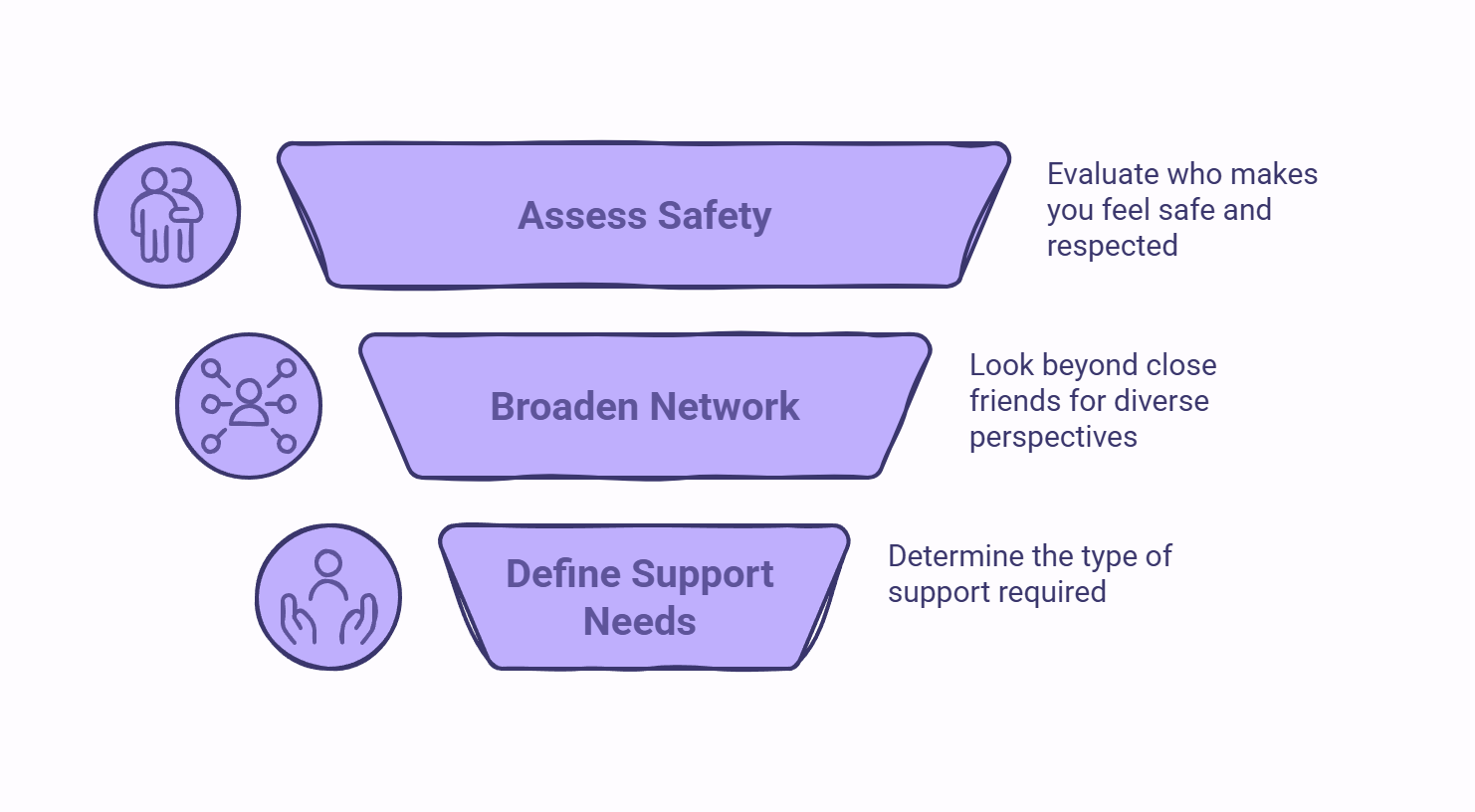
Finding someone who genuinely listens is less about choosing the person you're closest to and more about identifying someone who can offer the kind of conversation you need. Here's how to narrow down the right person.
1. Start with people who've made you feel safe before
Think about who has responded well when you've opened up before. Look for someone who lets you finish, respects your privacy, asks questions without judging, and doesn't immediately offer unwanted advice. You should feel comfortable speaking honestly without having to defend yourself.
2. Look beyond your closest friends
Your closest friend isn't always the best person for every conversation. A colleague, mentor, relative, peer-support group, or trained listener may understand a particular situation better. If you need someone to listen without involving people you know, a neutral listener can provide space to speak openly.
3. Consider what kind of support you actually need
Decide whether you want a listening ear, shared experience, practical advice, or professional guidance. A friend may suit everyday concerns, while a neutral listener can help when privacy matters. If emotional difficulties persist or affect daily life, consider speaking with a qualified mental health professional.
The right person may be different depending on what you're going through. Focus on finding someone who can meet the needs of that particular conversation, whether that's simply listening, understanding your experience, or offering appropriate guidance.
How can you make the first conversation easier?
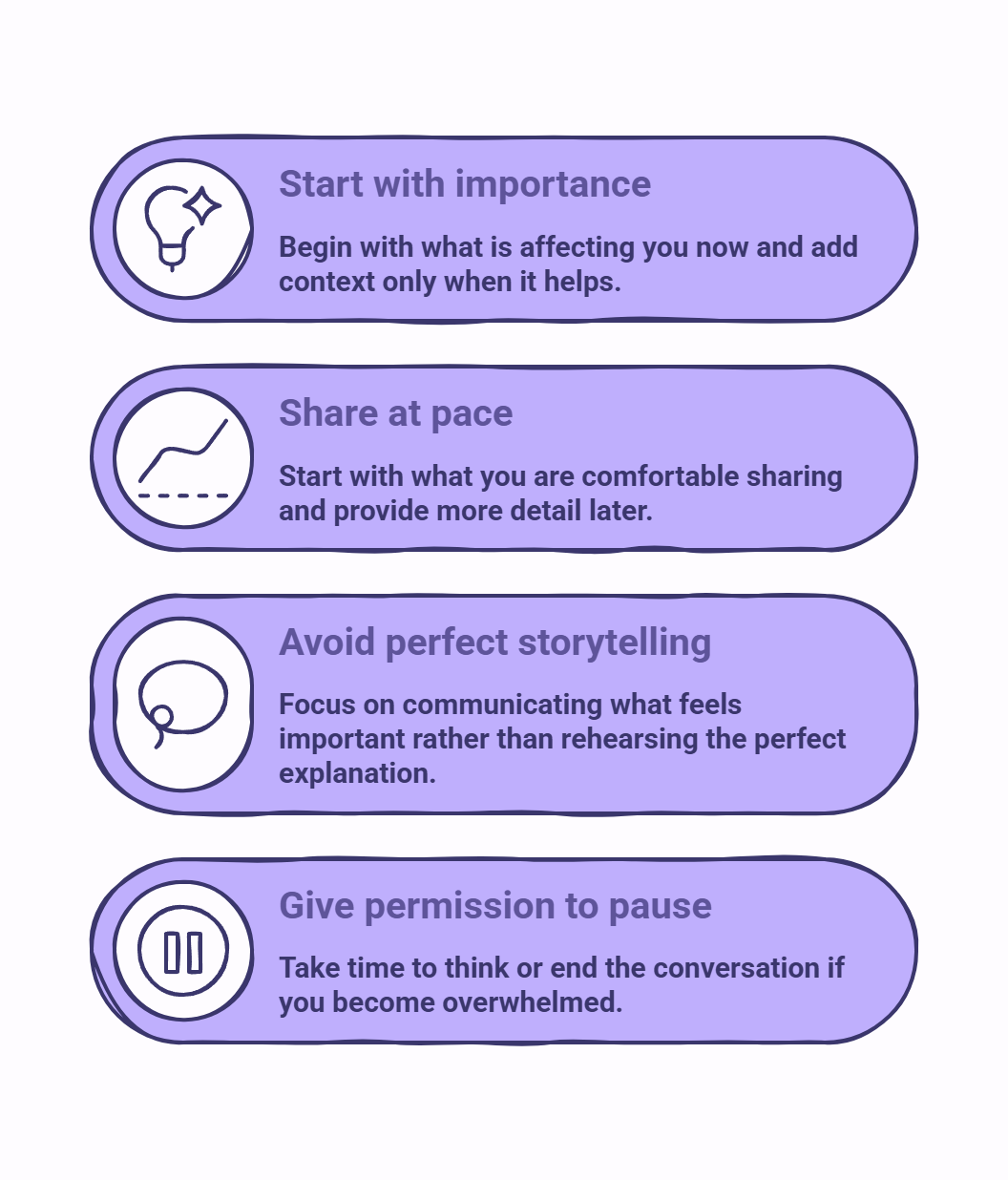
Starting can feel harder than the conversation itself, especially when you have been thinking about something for a long time. You do not need to explain everything at once. A few practical choices can make the first conversation easier to manage.
1. Start with the part that matters most
You do not need to give someone your entire history before reaching the issue. Begin with what is affecting you now, then add context only when it helps. This keeps the conversation manageable and prevents you from getting stuck trying to explain everything perfectly.
2. Share at your own pace
Opening up does not require telling someone everything in one conversation. Start with what you are comfortable sharing and see how the conversation develops. You can provide more detail later, pause, or leave certain things private until you feel ready.
3. Don't worry about telling the story perfectly
Real conversations are rarely organised. You may forget details, change direction, or struggle to describe exactly how you feel. Rather than rehearsing the perfect explanation, focus on communicating what feels important. Clarity can develop as you talk.
4. Give yourself permission to pause
Silence does not mean the conversation is going badly. If you become overwhelmed or need time to think, pause before continuing. You can also say that you need a moment, change the subject, or end the conversation and return to it another time.
The first conversation does not need to resolve everything. Its purpose may simply be to say something you have been carrying and find someone who listens to you without expecting an immediate solution.
How do you ask someone to listen without asking for advice?
People often give advice because they assume that's what you want. Setting expectations early can help. A clear sentence about what you need is often enough to guide the conversation.
1. When you simply want to be heard
"Could I talk something through with you? I don't need advice right now. I just need you to listen."
Being direct removes the pressure to fix the situation and gives you space to explain it in your own way.
2. When you're still processing what happened
"I'm still trying to make sense of this. Can I talk it through with you before we discuss what I should do?"
This gives you time to process what happened before considering solutions or next steps.
3. When you're unsure whether they have the capacity
"Do you have the headspace to listen to something that's been on my mind?"
This lets the other person be honest about whether they can give the conversation their attention or whether another time would be better.
4. When you may want advice later
"Can I explain everything first? Once I've finished, I'd like to hear what you think."
This makes it clear that you value their perspective but want the chance to be heard before discussing solutions.
If advice starts too early, a simple "Can I finish explaining first?" can bring the conversation back to what you need.
What to do when nobody around you feels like the right person?
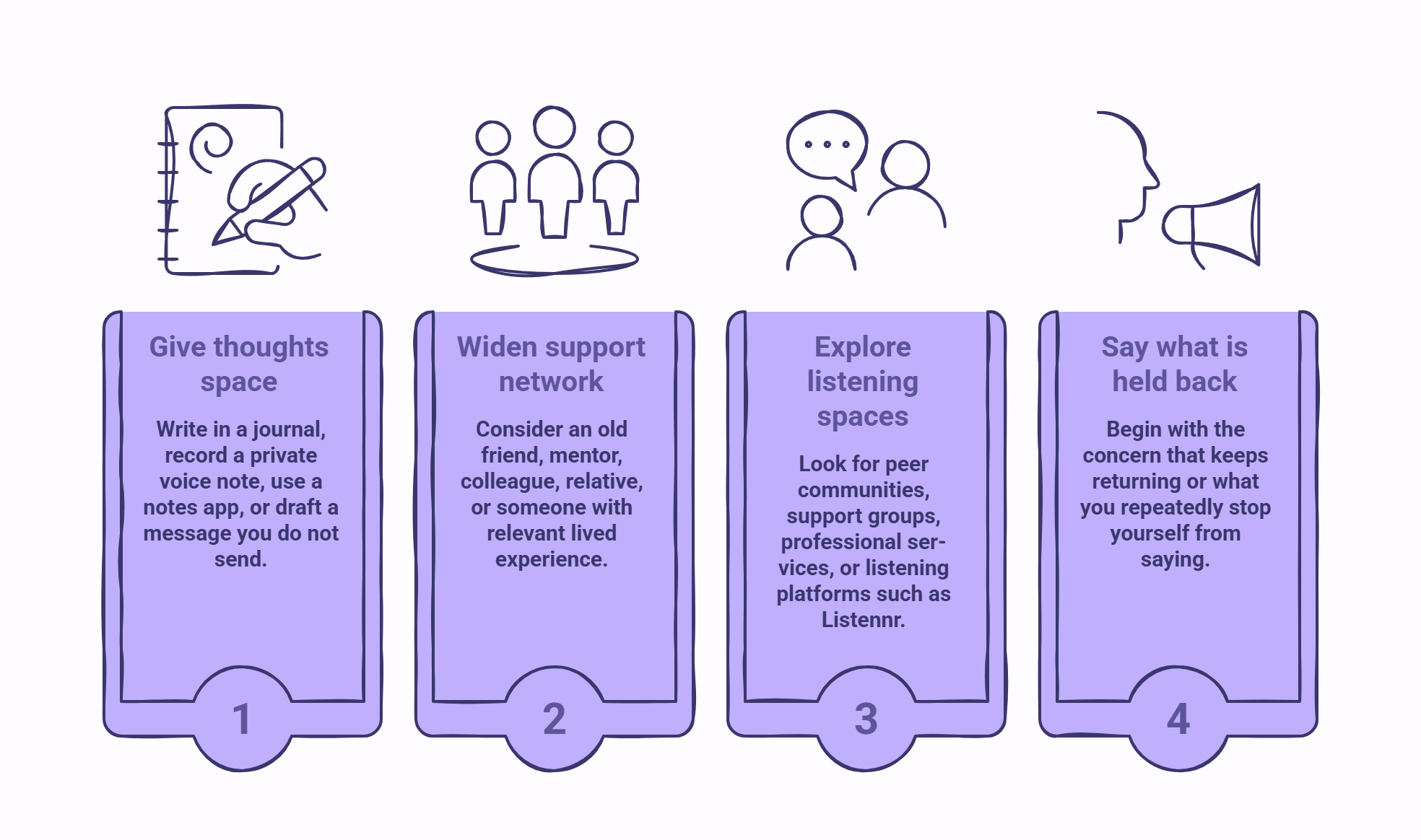
Sometimes, you need to talk but the people around you do not feel like the right people to approach. Rather than forcing a conversation you are uncomfortable having, there are other ways to create space for what you are carrying.
1. Give your thoughts somewhere to land
If you are not ready to talk, start by getting your thoughts out of your head. Write in a journal, record a private voice note, use a notes app, or draft a message you do not send. This can help you identify what is bothering you before deciding whether you want to share it.
2. Widen your idea of who you can talk to
Support does not have to come from the people you normally rely on. An old friend, mentor, colleague, relative, or someone with relevant lived experience may feel easier to approach because they are less involved in the situation. Consider who could offer useful distance without needing to be part of your closest circle.
3. Explore spaces designed for listening
If nobody you know feels suitable, look for spaces created specifically for conversation and support. Depending on what you need, this could include peer communities, support groups, professional services, or listening platforms such as Listennr. Check what type of support each provides before choosing one.
4. Say what you have been holding back
When you eventually find the right space, you do not need to wait until your thoughts are perfectly organised. If the same concern keeps returning or there is something you repeatedly stop yourself from saying, begin there. Putting it into words can be the first step towards processing it.
When your usual circle does not feel right, the goal is not to force yourself to open up to someone simply because they are available. Sometimes, finding someone who listens to you means widening where you look and choosing a space where you can speak more comfortably.
Looking for a place to share what is on your mind without revealing your identity? Explore these apps to talk to strangers anonymously and find supportive conversations without the pressure of being known.
Should you talk to a friend, a listener, or a therapist?
The best option depends less on how serious a problem seems and more on what you want from the conversation. A friend offers familiarity, a listener provides focused space to talk, and a therapist offers professional, structured support. These options serve different purposes and can complement each other.
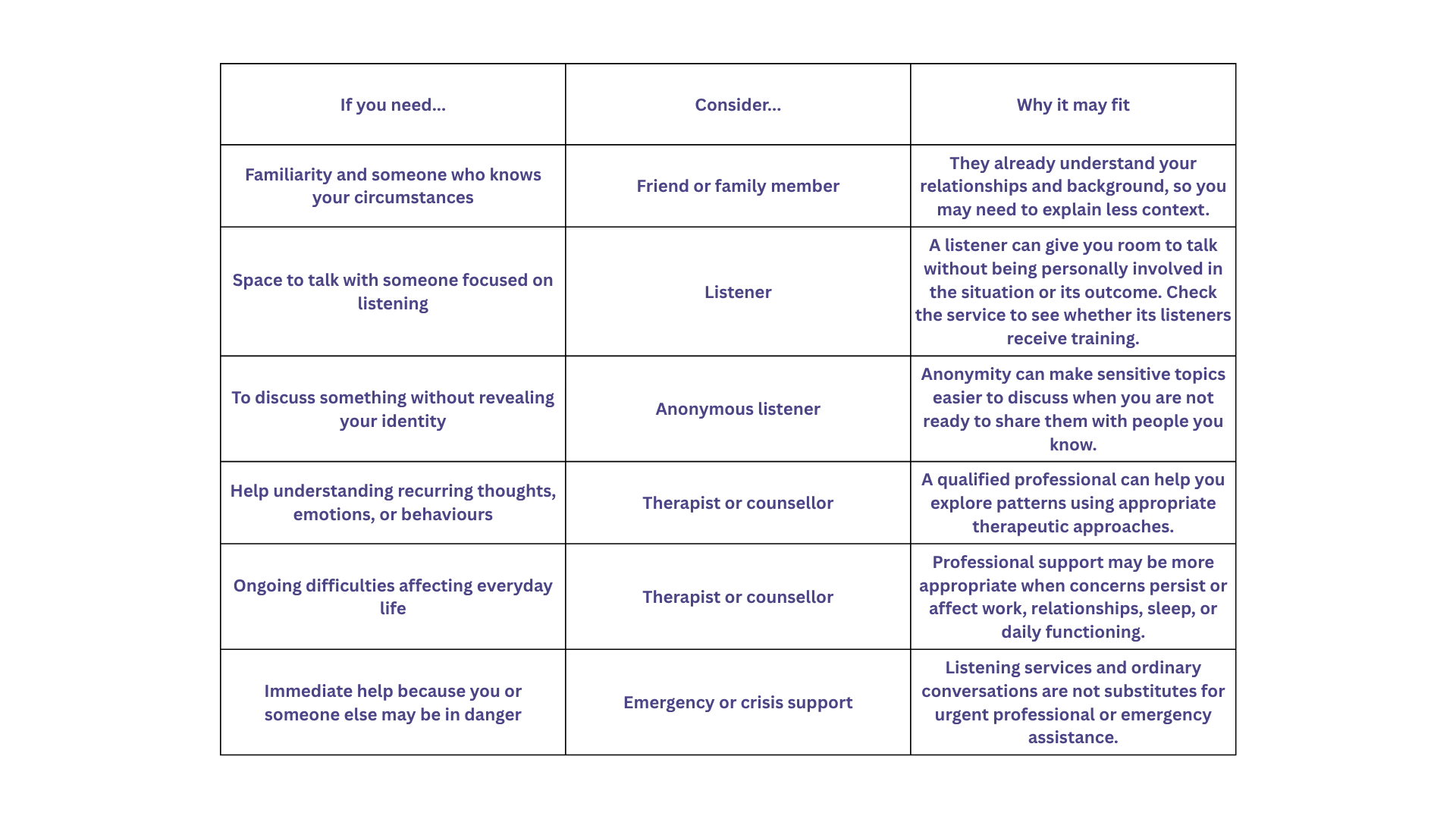
You do not have to choose only one. You might find someone who listens to you for everyday concerns while turning to a therapist for ongoing professional support. Choose the option that matches what you need at the time.
Why can talking to a stranger sometimes feel easier?
Talking to someone you don't know can feel surprisingly comfortable because the conversation carries fewer social consequences. With friends or family, you may worry about being remembered differently, creating tension, or having the subject come up again. A stranger is outside those existing dynamics, which can make certain thoughts easier to express.
Several factors can explain why:
- There is less history to manage: You can explain what is happening from your perspective without navigating years of shared experiences or previous disagreements.
- You may censor yourself less: Sensitive, embarrassing, or complicated thoughts can be easier to express when you are not concerned about changing an existing relationship.
- The conversation can stay focused: Because the other person is not personally involved, there is less chance of the discussion becoming about mutual friends, family dynamics, or past events.
- There is less pressure afterwards: You may not have to wonder how the conversation will affect tomorrow's interactions or whether the person will treat you differently.
- You can start with what matters now: A stranger does not need your entire history to listen. You can focus on the particular situation or feeling you want to talk through.
This doesn't mean a stranger will always be a better listener than someone you know. The advantage is distance. When the relationship itself is one of the reasons you are holding back, talking to someone outside your personal life can remove some of that pressure and make honest conversation easier.
What if you feel like nobody wants to listen?
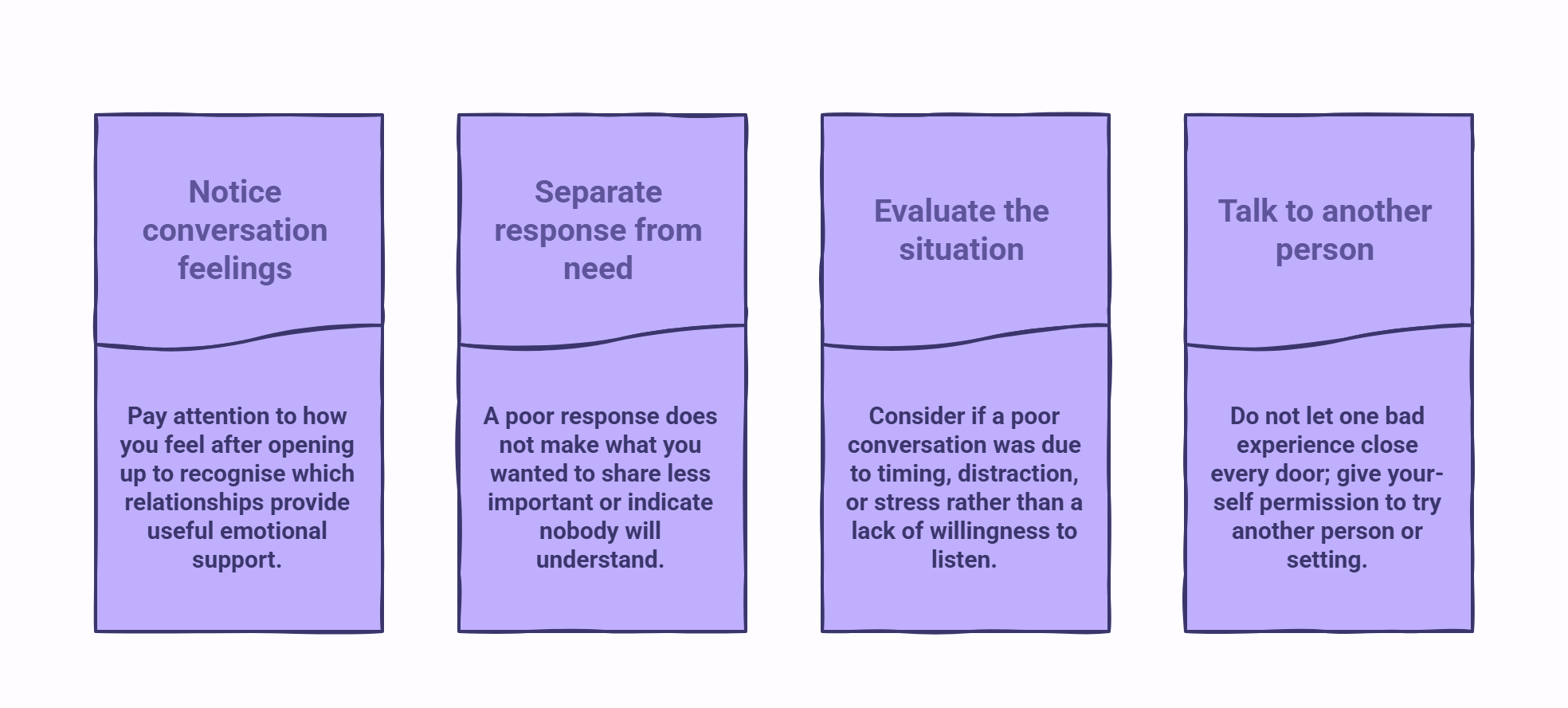
Feeling unheard repeatedly can make you reluctant to open up again. But a disappointing response does not necessarily mean nobody wants to listen. Sometimes, the person, timing, or conversation simply was not the right fit.
1. Notice how different conversations leave you feeling
Pay attention to how you feel after opening up. Some conversations may leave you clearer or more settled, while others leave you dismissed, frustrated, or misunderstood. These patterns can help you recognise which relationships provide useful emotional support and which may not suit certain conversations.
2. Separate a poor response from your need to be heard
Someone interrupting, dismissing what you say, or responding poorly does not make what you wanted to share less important. Try not to use one person's reaction as evidence that nobody will understand. It tells you more about that particular interaction than your ability to be heard elsewhere.
3. Look at the situation, not just the response
Sometimes, a poor conversation is about timing rather than willingness to listen. The other person may have been distracted, stressed, or unsure how to respond. Consider whether the reaction reflects a repeated pattern or simply one conversation that happened at the wrong time.
4. Do not let one bad experience close every door
After an uncomfortable conversation, staying silent can feel safer than trying again. But the next person may respond differently. Give yourself permission to try another person or setting rather than assuming every conversation will end the same way.
Holding everything in can feel heavier than you realize. Learn why people need to vent out their feelings and how expressing emotions can help you feel less overwhelmed and more supported.
How can you stay safe when talking to someone online?
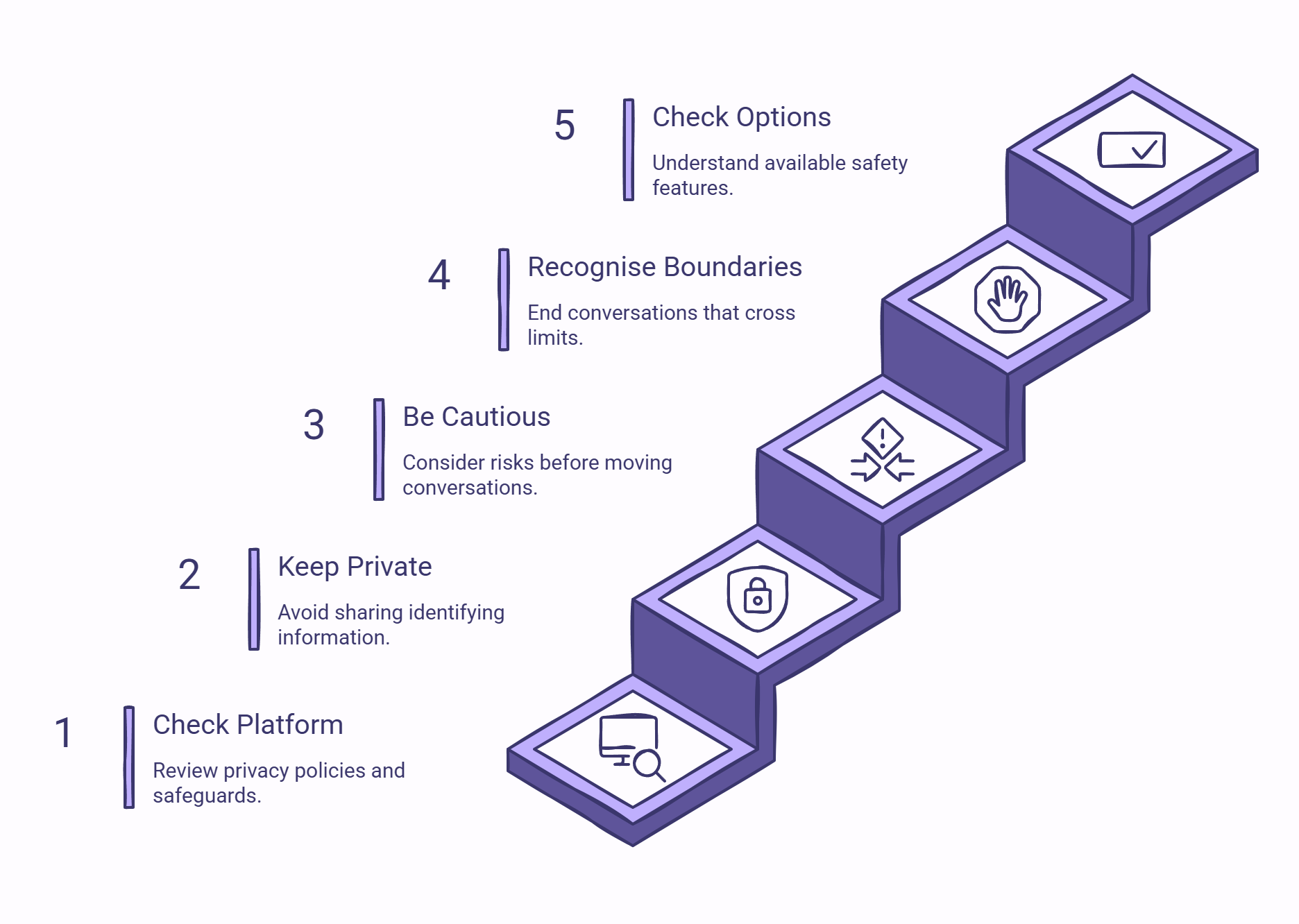
Talking online can make it easier to discuss things you would rather keep separate from everyday relationships. However, privacy and safety practices vary between services. Before starting a conversation, check how the platform works and be deliberate about what you share.
1. Check the platform before opening up
Review who you may be speaking with and what safeguards the service provides. If it describes listeners as screened or trained, check what that means in practice. Read the privacy policy to understand what information is collected, how conversations are handled, and how your data may be used.
2. Keep identifying information private
You can have a meaningful conversation without sharing your full name, home address, workplace, phone number, passwords, financial details, or other identifying information. Share only what you feel is necessary for the conversation.
3. Be cautious about moving conversations elsewhere
If someone asks you to move to social media, personal messaging apps, email, or phone calls, consider what information that could reveal about you. Before continuing elsewhere, think about whether you are comfortable losing the privacy or protections available on the original platform.
4. Recognise behaviour that crosses a boundary
End the conversation if someone pressures you for personal information, money, photos, sexual interaction, or anything you have said you do not want to share. You are free to leave a conversation whenever it makes you uncomfortable.
5. Check what options you have if something goes wrong
Before using an online listening service, find out whether it offers features for ending conversations, blocking users, reporting inappropriate behaviour, or contacting support. These features vary by platform, so check what is actually available before relying on them.
Online conversations can offer useful distance and privacy when you want to find someone who listens to you, but anonymity should not automatically be treated as safety. Check the platform, control what you disclose, and maintain clear boundaries throughout the conversation.
Where can you find someone to listen without judgement?
Sometimes, the hardest part is not what you are carrying. It is finding a place where you feel comfortable talking about it. When friends, family, or the people around you do not feel like the right fit, staying silent can seem easier. But you do not have to keep everything to yourself.
Listennr is built around a simple idea: everyone deserves a space to feel heard. It gives people the opportunity to talk openly, express what is on their mind, and have a conversation without feeling rushed, judged, or pressured to explain everything perfectly.
With Listennr, you can:
- Talk anonymously
- Share what is on your mind at your own pace
- Express yourself without pressure or judgment
- Connect in a supportive listening environment
Sometimes, relief comes from finally saying the thing you have been carrying for far too long. Take the first step today and start the conversation you have been putting off.
You deserve to feel heard
Finding someone who truly listens is not always easy, but that does not mean your thoughts and feelings should stay locked inside. Sometimes, the biggest relief comes from being able to speak honestly without interruption, judgment, or pressure to have everything figured out.
If you have been carrying something on your own, consider this a reminder that you do not have to keep doing it alone. Whether it is a trusted person, a support community, or a listening platform, the right conversation can make everything feel a little lighter.
Frequently asked questions
Why do I keep wanting someone to listen to me?
Wanting to be heard often reflects unmet emotional needs or feelings of loneliness. If you want to find someone who listens to you, a support system can provide emotional support, strengthen social support, and offer a safe place to express difficult thoughts.
Is it normal to want someone to listen without giving advice?
Yes. Active listening is about understanding rather than immediately offering solutions. Someone who gives you full attention can help you work through intense emotions, reduce fear of judgement, and encourage effective communication without pressuring you towards an answer.
What makes someone a good listener?
A good listener pays close attention, avoids unnecessary interruptions, and asks questions to understand. Strong communication skills help them offer support while respecting your perspective, which can contribute to healthy relationships and more open conversations.
How do I know if someone is really listening?
Someone who is genuinely listening responds to what you say rather than simply waiting to speak. They acknowledge your concerns, ask relevant questions, and make understanding an important part of the conversation, supporting clearer communication and personal growth.
Can I find someone who listens to me online?
Yes. Online communities, an online group, and peer support groups can connect you with people beyond your existing support network. Choose moderated spaces with appropriate privacy measures, particularly when discussing personal experiences or mental health struggles.
What should I do if nobody around me feels safe to talk to?
Consider peer support, mental health support, or professional help, depending on what you need. Different forms of support can help when social isolation makes reaching out difficult or your usual relationships do not provide the right space to talk.
What should I do when I need someone to listen to me?
If you’re thinking, “ I want someone to listen to me ” or “ I need someone to listen to my problems ”, reach out to someone you trust, join a peer-support space, or use a listening platform for a judgement-free conversation.