
Can I talk to someone online about my problems?

Key highlights
- Many people search can I talk to someone online about my problems when they need a safe space to share what is on their mind.
- Online conversations can offer privacy, flexibility, and access to emotional support when talking offline feels difficult.
- You do not need a crisis or a major life event to want someone to listen.
- Different online options exist, including listening platforms, peer communities, online chat services, and helplines.
- Listening and advice are different, and many people simply want to feel heard.
- Free and paid options are available depending on the type of support you are looking for.
- Listennr focuses on providing a space where people can talk openly and receive a listening ear.
Yes, you can talk to someone online about your problems. Whether you're feeling overwhelmed, stressed, lonely, or simply need someone to listen, there are safe and accessible ways to find support online. From anonymous listening platforms and peer support communities to online therapy and crisis services, the right option depends on the kind of support you're looking for.
Many people find it easier to open up online than face-to-face. Talking to someone in a private, judgment-free space can help you process your thoughts, reduce emotional stress, and feel less alone. You don't need to be in crisis or have a major life problem to deserve a conversation. Sometimes, simply being heard can make a meaningful difference.
In this guide, you'll learn where to talk to someone online about your problems, the different types of support available, what to expect from an online conversation, and how to choose the option that feels right for you. If you're looking for someone who will genuinely listen without judgment or pressure, you'll also discover how platforms like Listennr can help.
Can I talk to someone online about my problems?
Yes. Many people use online platforms and online chat services to discuss personal challenges, everyday frustrations, and situations they may not feel comfortable sharing elsewhere. The best option depends on whether you want someone to listen, connect with a community, access mental health services, or find crisis support.
Digital communication has changed the way people connect. Many individuals find it easier to start a conversation through a screen than face-to-face, especially when discussing sensitive topics.
Some people are looking for a trusted friend. Others prefer talking to someone outside their personal circle. Some individuals want confidential support because they feel more comfortable discussing private matters anonymously.
The important thing is understanding what kind of conversation you need before reaching out.
Where can I talk to someone online?
You can talk to someone online through anonymous listening platforms, peer support communities, online therapists, counsellors, mental health apps, and crisis helplines. The right option depends on whether you need emotional support, advice, or professional care.
- Listening platforms
- Peer support communities
- Online chat services
- Wellness and support apps
- Employee Assistance Programs (EAP)
- Professional mental health services
- Crisis intervention and helpline resources
Each serves a different purpose, so it helps to know what type of support you are seeking.
How can you tell whether an online support platform is safe?
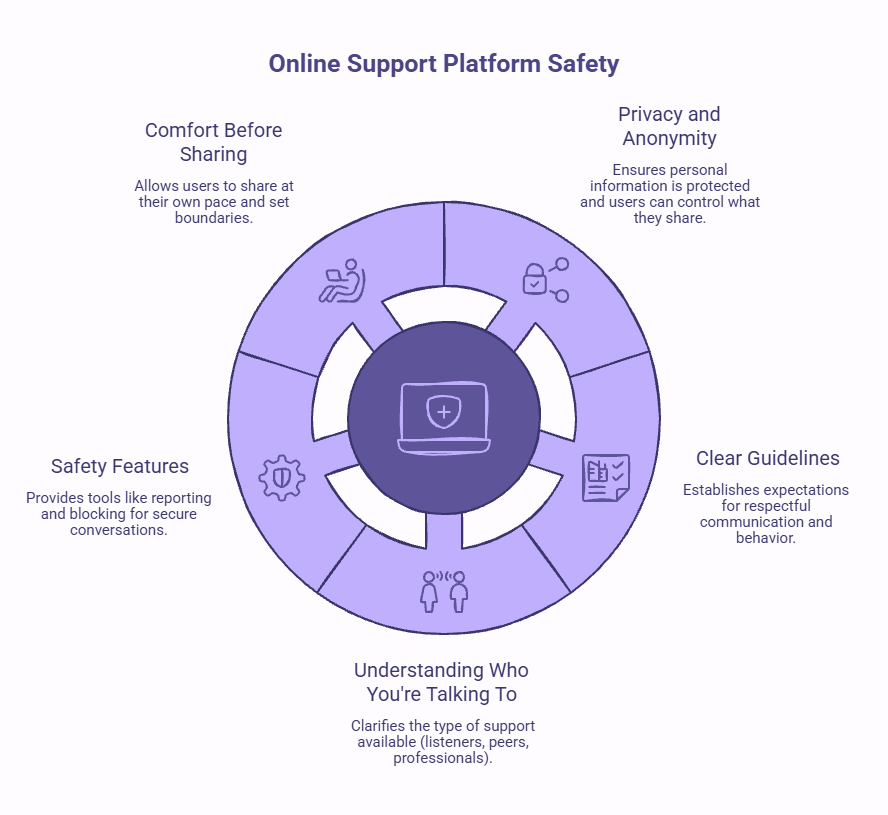
Choosing to talk to someone online often starts with trust. Before sharing personal thoughts or experiences, it is natural to wonder who you are talking to, how your information is handled, and whether the space feels comfortable. A safe online support platform should make those things clear from the beginning.
A few things to consider include:
1. Privacy and anonymity
A trustworthy platform should explain what information is required and how your personal details are protected. Some people feel more comfortable opening up when they can control what they share and avoid revealing details they are not ready to discuss.
2. Clear platform guidelines
Safety often starts with clear expectations. Look for platforms that have guidelines around respectful communication, appropriate behaviour, and ways to report concerns if a conversation does not feel right.
3. Understanding who you are talking ot
Different platforms connect people in different ways. Some may offer conversations with listeners, while others may involve peer communities or professional support. Understanding who is on the other side can help you choose a space that matches what you are looking for.
4. Safety features and support options
Features such as reporting tools, blocking options, moderation, and support resources can make online conversations feel more secure. These tools give users more control if they encounter uncomfortable situations.
5. Feeling comfortable before sharing
A safe conversation should not feel rushed or pressured. You should be able to share at your own pace, set boundaries, and decide what you feel comfortable discussing.
Ultimately, the right online space is one where you feel respected, informed, and in control of your experience. Feeling safe can make it easier to have more genuine conversations.
What kinds of problems do people talk about online?
Many people turn to online conversations when they have thoughts or experiences they do not know how to share elsewhere. These conversations can provide a space to express what is on their mind, organise their thoughts, or simply feel heard without worrying about immediate judgment.
Some common topics people discuss online include:
1. Relationship concerns
Relationships can bring up difficult emotions, questions, and situations that are not always easy to discuss with people close to you. Some people use online conversations as a way to talk through misunderstandings, changes in relationships, or feelings they have been keeping to themselves.
2. Family situations
Family dynamics can sometimes feel complicated, especially when someone does not know how to explain what they are experiencing. Online conversations can offer a neutral space to share thoughts about family challenges, responsibilities, or changes happening in their personal life.
3. Work and career pressures
Work-related stress, career decisions, and uncertainty about the future are common reasons people look for someone to talk to. Sharing these experiences with someone outside their workplace can sometimes make it easier to process what they are feeling.
4. Loneliness and feeling disconnected
There are times when people feel alone even when they have others around them. Online conversations can help create a sense of connection by giving people a place to talk, share their experiences, and have someone listen.
5. Life changes and uncertainty
Major life changes, new situations, or unexpected challenges can leave people with a lot on their mind. Having a conversation online can provide a space to talk through these moments and feel less alone while navigating change.
Not every conversation starts because someone needs an answer or solution. Sometimes, people simply want a place to share what they are going through and know that someone is listening.
Why do people choose to talk to someone online?
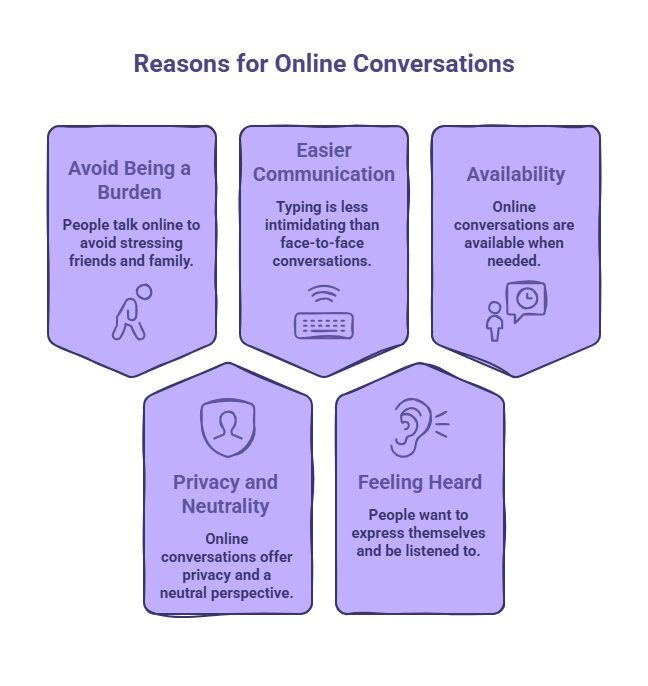
Many people turn to online conversations because they want a space where they can speak openly, feel understood, and share what is on their mind without the pressures that sometimes come with personal relationships. Online conversations can offer privacy, flexibility, and a neutral environment that feels easier to navigate.
1. They want to talk without feeling like a burden
Many people hold back because they worry about adding stress to someone else's day due to the stigma surrounding mental health. Talking to someone outside their personal relationships can feel easier when they do not want to place that responsibility on friends or family.
2. They want privacy and a neutral perspective
Some topics feel easier to discuss when they stay separate from work, family, or social circles. Speaking with someone who is not personally involved can make it easier to share openly without worrying about judgment, assumptions, or taking sides.
3. They find online conversations easier
For some people, typing feels less intimidating than speaking face-to-face. It gives them time to gather their thoughts and explain things at their own pace, especially when discussing sensitive topics.
4. They want to feel heard
Often, people are not looking for solutions. They simply want the opportunity to express what they have been holding in and know that someone is paying attention to what they are saying.
5. They want someone available when they are ready to talk
The desire to talk does not always arrive at the right time or a convenient moment. Online conversations can make it easier to connect when thoughts feel overwhelming or when nobody in their immediate circle is available.
Ultimately, many people turn to online conversations because they want a safe, comfortable space to talk. What they choose to share can vary widely, depending on what is happening in their lives.
Looking for a private way to open up? Explore the best apps to talk to strangers anonymously and find a space where you can share your thoughts without revealing your identity.
Are free or paid online support options better?
Free and paid online support options serve different purposes. The right choice depends on whether you are looking for a casual conversation, a listening space, or a more structured support experience.
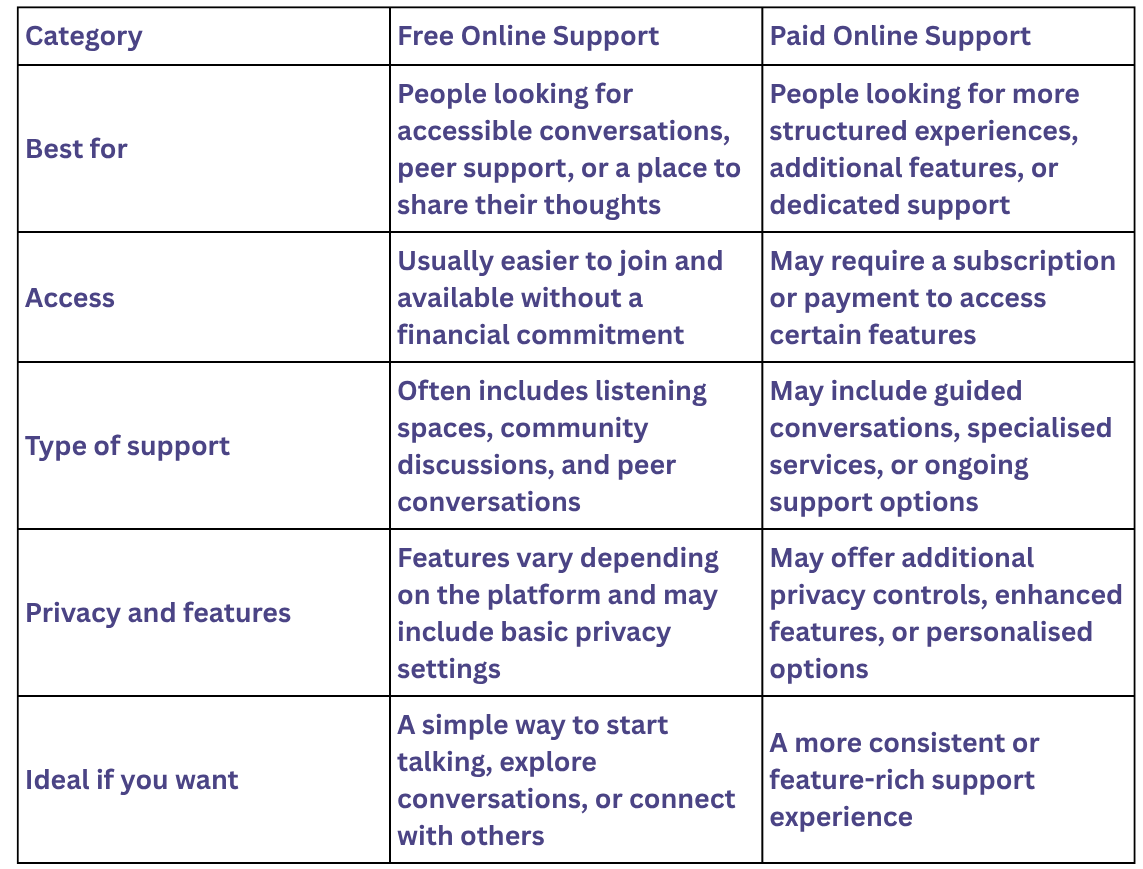
Before choosing an option, consider:
- Your goal: Do you want to share your thoughts, meet people, or receive structured guidance?
- Your comfort level: Does the platform offer privacy and safety features you trust?
- Your expectations: Are you looking for occasional conversations or ongoing support?
The best option is not always the free or paid one. It is the one that matches the kind of conversation you need.
Why do some people prefer talking online?
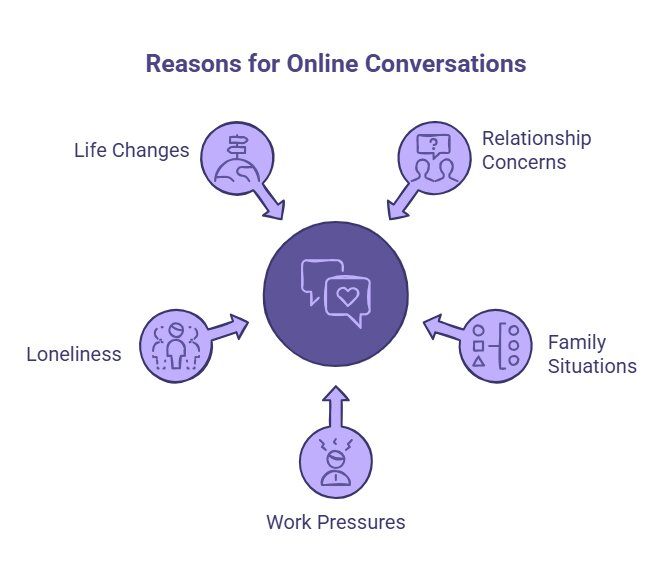
People use online conversations to discuss a wide range of experiences, from everyday frustrations to major life changes. The topic itself is often less important than having a space where they feel comfortable sharing what is on their mind.
1. Relationship concerns
Relationships can bring uncertainty, communication challenges, and difficult decisions. Many people prefer talking through these situations with someone outside their personal circle, especially when they are looking for a neutral perspective rather than opinions from people involved in the situation.
2. Family situations
Family dynamics are often complicated because emotions, expectations, and history are closely connected. Whether it is a disagreement, changing relationships, or an ongoing concern, people sometimes want a place to talk without feeling caught between family members.
3. Work and career pressures
Work can affect many areas of life beyond the office. Career decisions, workplace conflicts, job uncertainty, and professional pressure are common reasons people look for someone to talk to.
4. Loneliness and feeling disconnected
Feeling lonely is not always about being alone. Many people have friends, family, or coworkers around them and still feel disconnected from meaningful conversation. Sometimes, they are not looking to solve a specific problem. They simply want a genuine human connection and a space where they can talk openly about what is on their mind.
5. Life changes and uncertainty
Major transitions often come with questions that do not have immediate answers. Moving, changing jobs, ending relationships, or entering a new stage of life can leave people wanting to talk things through with someone.
No matter the topic, many conversations begin the same way: with something that feels difficult to keep to yourself.
Feeling like you need a conversation but do not know where to start? Learn practical ways to reach out, open up, and find someone to talk to when you need support most.
What happens during an online conversation?
Most online conversations are simple, informal, and guided by what you want to share. There is no expectation that you have everything figured out before you start talking. A typical conversation may involve:
- Sharing what has been on your mind lately
- Talking through a recent situation or concern
- Exploring thoughts that feel difficult to organise
- Expressing feelings you have not shared elsewhere
- Having a conversation without pressure to find immediate solutions
Some discussions are brief, while others go deeper. The conversation usually develops naturally based on what feels important to you at that moment. Often, the hardest part is starting. Once the conversation begins, many people find it easier to say what they have been holding in.
Why should uncertainty not stop you from reaching out?
You do not need to fully understand what is bothering you before starting a conversation. Many people reach out because something feels unresolved, even if they cannot clearly explain why.
It is common to think you should wait until you have the right words or a clear explanation. In reality, uncertainty is often part of the reason people want to talk in the first place.
You might:
- Feel like something is off without knowing exactly why
- Struggle to put your thoughts into words
- Keep replaying the same concerns in your mind
- Feel frustrated, distracted, or unsettled without a clear reason
A conversation does not require complete clarity. Sometimes it begins with a question, a feeling, or simply the acknowledgement that something has been weighing on your mind.
You do not need all the answers before reaching out. Sometimes the conversation begins before the clarity does.
Do my problems need to be serious?
Many people hesitate to talk because they believe their concerns are too small, too common, or not important enough. This often sounds like:
- "Other people have bigger problems."
- "I should be able to handle this myself."
- "This is probably not worth talking about."
- "I do not want to make a big deal out of it."
The reality is that people seek conversations for many different reasons. Not every concern is a crisis, and not every conversation needs to be about a major life event.
Even small frustrations can take up a surprising amount of mental space when they go unspoken. If something has been on your mind long enough that you want to talk about it, that is reason enough to have a conversation.
You do not need to prove that your problem is serious before you deserve to be heard.
What is the difference between someone listening and someone giving advice?
Although listening and advice are often grouped, they serve different purposes. Understanding the difference can help you find the type of conversation that feels most helpful.
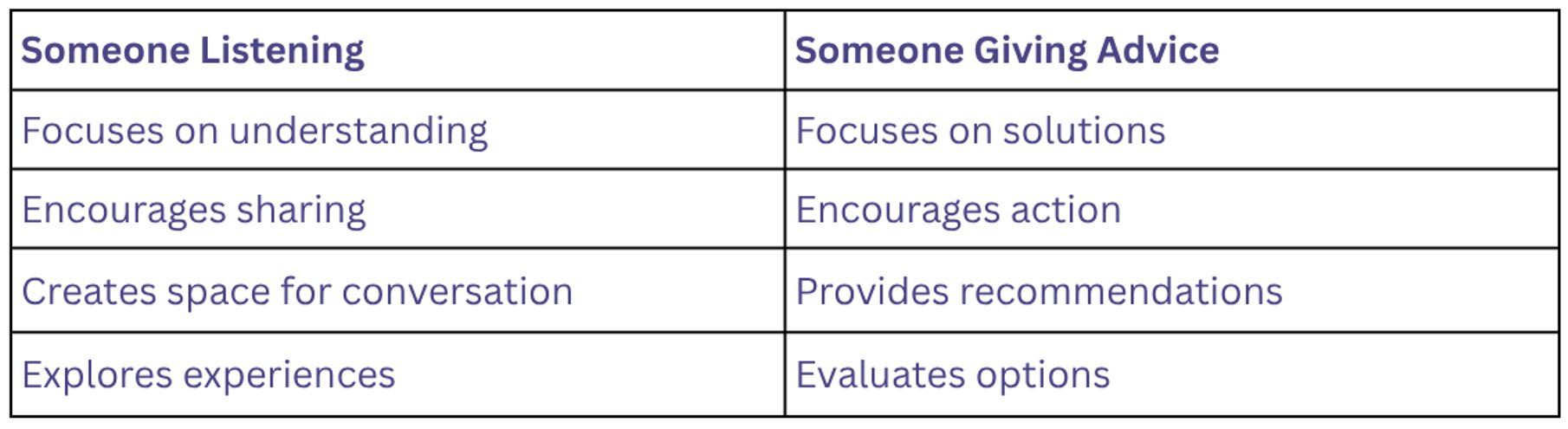
Many people reach out because they want the opportunity to express their thoughts without being immediately guided toward a solution. Others are actively looking for suggestions or direction.
If you are unsure what you need, ask yourself:
"Am I looking for ideas, or do I want someone to hear me out?"
The answer can make it easier to choose the kind of conversation that feels right for you.
Not every conversation needs to solve a problem. Sometimes the goal is simply to feel heard.
Looking for someone to talk to online?
If you have been searching "can I talk to someone online about my problems?", you may not be looking for advice or solutions. Sometimes, you simply want a space where you can talk openly and know that someone is listening.
That is where Listennr can help.
With Listennr, you can:
- Talk about what is on your mind at your own pace
- Connect with listeners who focus on understanding, not fixing
- Share thoughts and feelings without fear of judgment
- Have conversations in a more private and comfortable environment
- Express concerns that feel difficult to discuss with people you know
- Feel heard without the pressure to have all the answers
Sometimes, having someone genuinely listen can make all the difference.
If you are looking for someone to talk to online about your problems, download the Listennr app and start a conversation when you are ready.
You don't have to face your problems alone
Wanting someone to talk to is a normal human experience. You do not need a major crisis, a diagnosis, or a perfectly explained problem to seek conversation. Sometimes you simply want someone to listen.
If you have been wondering, "Can I talk to someone online about my problems?", the answer is yes. Whether you choose an online chat platform, a listening service, mental health resources, a support community, or another option, there are places where meaningful conversations can happen.
You do not have to have everything figured out before reaching out. Sometimes the first step is simply permitting yourself to share what is on your mind.
Frequently asked questions
Where can I find someone to talk to online about my problems?
You can find people to talk to through listening platforms, online chat communities, peer support groups, wellness apps, and other spaces designed for conversation. The best option depends on whether you want active listeners, emotional support, shared experiences, or professional support for more specific mental health concerns.
Can I talk to someone online anonymously?
Yes. Many online platforms allow you to have conversations without sharing personal details like your name or identity. Anonymous or private conversations can make it easier to talk openly about sensitive thoughts, express yourself honestly, and seek support while maintaining control over what you choose to share.
Can I talk to someone online without creating an account?
Yes. Some online platforms allow you to start conversations without creating an account, which can make it easier to reach out when you want privacy or a low-pressure way to talk. However, some platforms may require registration to access additional features, save conversation history, or provide a more personalised experience.
How do I know if I need a therapist instead of someone to listen?
If you need someone to process everyday stress, vent, or feel heard, a listener may help. If emotional difficulties become persistent, overwhelming, or affect your daily life, consider seeking professional help by speaking with a qualified mental health professional, such as those recommended by Mental Health America.
What should I say when I start the conversation?
You don't need to prepare the perfect words before starting. Simply share what's on your mind during a quiet moment, describe how you're feeling, or explain what prompted you to reach out to a mental health charity like Mind. Honest conversations often begin with just a few simple sentences.
Can I talk to someone online any time of day?
Yes. Many online support platforms provide text messaging services and listening services available throughout the day, while others operate 24/7. Availability depends on the platform, so check their hours if you need someone to talk to immediately.