.jpg)
How to Deal With Emotional Breakdown Without Feeling Lost?

Key highlights
- Emotional breakdowns often happen after stress, pressure, or difficult emotions build up for too long.
- Signs can include feeling overwhelmed by small things, withdrawing from others, or struggling with everyday tasks.
- Trying to push through without rest or support can make emotional overwhelm harder to manage.
- Small steps, such as reducing pressure and reaching out to someone you trust, can help you regain stability.
- Recovery is usually gradual and often starts with rebuilding simple routines and giving yourself time.
- Additional support may help if emotional overwhelm is affecting your daily life or is not improving.
- Being heard by a supportive person can make difficult moments feel less isolating and more manageable.
- Feeling heard can make a difficult moment easier to navigate, which is why supportive spaces like Listennr focus on listening rather than fixing.
You tell yourself to get through one more day. One more deadline. One more difficult conversation. One more thing on your to-do list. Then something small happens: a message, a mistake, an unexpected setback, and suddenly you're crying, shutting down, or feeling like you cannot cope anymore.
An emotional breakdown rarely comes out of nowhere. It often happens after weeks or months of carrying stress, worry, disappointment, or pressure without giving yourself much room to slow down. From the outside, you may look like you're managing everything. Inside, it can feel like you're running on empty.
If you're trying to figure out how to deal with an emotional breakdown, you're probably looking for more than a definition. You want to understand why this is happening, what you can do right now, and whether things can feel manageable again. This guide will help you make sense of what may be happening, what to do when everything feels too much, and how to start finding your footing again.
What is an emotional breakdown?
An emotional breakdown is a point at which intense stress, pressure, or difficult emotions feel harder to manage than usual. While it is not a medical diagnosis, many people use the term when they feel emotionally overwhelmed, exhausted, or unable to cope the way they normally would.
What does an emotional breakdown actually feel like?
An emotional breakdown does not look the same for everyone. For some people, it starts with tears they cannot explain. For others, it feels like they have reached a point where even small problems seem harder to handle than they should.
You might notice things like:
- Crying more easily than usual
- Feeling overwhelmed by small setbacks
- Struggling to focus on simple tasks
- Ignoring messages or avoiding conversations
- Neglecting everyday self-care
- Feeling emotionally drained most of the time
- Losing patience more quickly than usual
- Letting everyday tasks pile up because you do not have the energy
One of the hardest parts is feeling unlike yourself. You may find yourself avoiding calls, withdrawing from people, or struggling with things that normally feel manageable. That shift can feel unsettling, especially when you cannot quite explain why everything suddenly feels harder than it used to.
Why do emotional breakdowns happen?
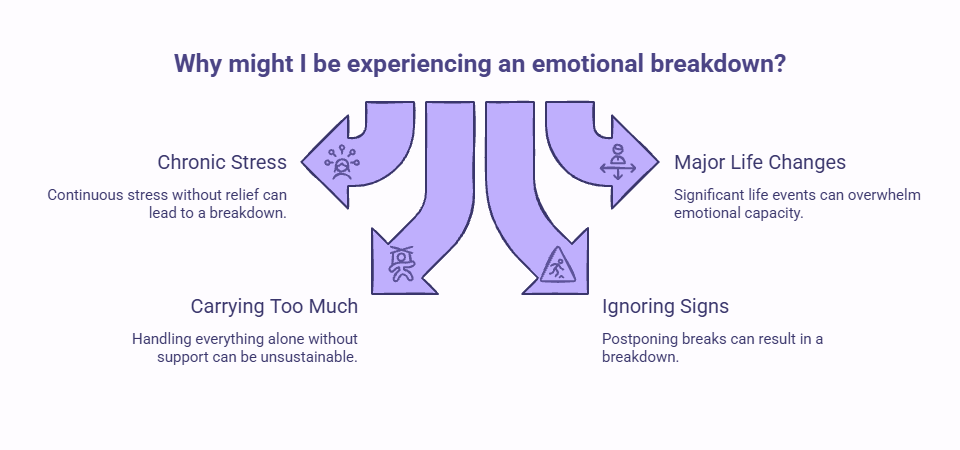
Emotional breakdowns rarely happen because of one bad day. More often, they happen after weeks or months of carrying extreme stress, pressure, or difficult emotions without enough time, support, or space to recover.
1. When stress keeps building without relief
You deal with one problem, then another appears. The to-do list keeps growing, your mind never fully switches off, and even your downtime starts feeling occupied. Over time, the pressure, along with emotional stress, stops feeling temporary and starts feeling constant.
2. Major life changes that leave you emotionally stretched
A breakup, losing someone important, becoming a parent, moving to a new place, or facing an unexpected setback, including a recent traumatic event, can shake your sense of stability. Even positive changes can feel overwhelming when they demand a lot of emotional adjustment.
3. Carrying too much on your own
Some people get used to handling everything themselves. You keep supporting others, meeting responsibilities, and telling people you're fine. Meanwhile, the stress from mental health conditions keeps building because there is no space to talk about what you're carrying, including personal hygiene.
4. Ignoring the signs that you need a break
You tell yourself you'll slow down next week and incorporate a better daily routine that includes adequate hours of quality sleep. Then, after the next deadline. Then, after things settle down. Eventually, your mind and body start pushing back because the rest you've been postponing never arrives.
The challenge is that emotional breakdowns rarely appear overnight. Before reaching a breaking point, many people notice small changes in their emotions, energy, daily habits, and physical symptoms that signal something is no longer working.
What are the signs of an emotional breakdown?
The signs of an emotional breakdown often appear before you realize how overwhelming stress has made you feel. Instead of one dramatic moment, it usually feels like everyday life is becoming harder to manage than it used to be.
You might notice that:
- A small setback feels much bigger than it should.
- You feel close to tears more often than usual.
- You stop looking forward to things you normally enjoy, which are significant behavioural changes.
- Messages go unanswered because replying feels exhausting.
- You keep replaying worries or conversations in your head.
- Simple decisions suddenly take more effort.
- Every day tasks start piling up because you cannot find the energy to do them.
- You feel emotionally drained even after resting.
For some people, these signs show up as strong emotions. For others, they look more like numbness, exhaustion, or withdrawal. Either way, they are often a signal that the stress, pressure, or emotions you've been carrying are becoming difficult to manage alone.
What should you do during an emotional breakdown?
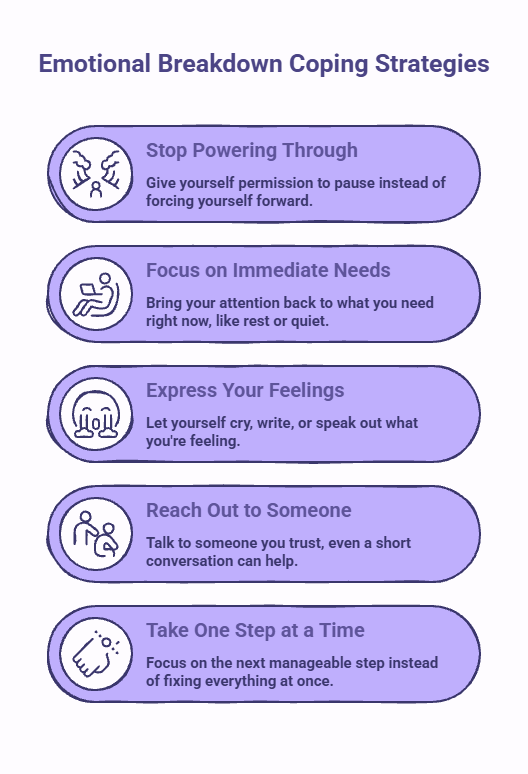
When you're in the middle of an emotional breakdown, the goal is not to solve every problem at once. The goal is to reduce the pressure you're carrying and focus on what helps you feel more stable in the moment by implementing some effective lifestyle changes.
1. Stop trying to power through it
Many people respond to emotional overwhelm by trying harder. They tell themselves to stay productive, keep going, and deal with their feelings later. The problem is that emotional breakdowns often happen because you've already been pushing through for too long.
Instead of forcing yourself forward, give yourself permission to pause. A short break will not solve everything, but it can stop the pressure from building even further.
2. Focus on what you need right now
When everything feels overwhelming, your mind naturally jumps ahead to everything that still needs fixing. That can make the situation feel even bigger.
Try bringing your attention back to what you need right now. Maybe you need rest. Maybe you need a quiet space away from noise and demands. Maybe you simply need ten minutes without having to make another decision. Focusing on immediate needs often feels more manageable than worrying about everything at once.
3. Let yourself express what you're feeling
Many people spend weeks holding things together before they finally reach a breaking point. If you've been pushing emotions aside, giving them some space can help relieve some of the pressure.
That might mean crying, writing down what's on your mind, or saying out loud what you've been trying not to admit. You do not need perfect words. Sometimes acknowledging that you're overwhelmed is more helpful than pretending you're fine.
4. Reach out to someone you trust
One of the most difficult parts of an emotional breakdown is how isolating it can feel. You may withdraw from people because you're exhausted, embarrassed, or unsure how to explain what's happening.
You do not need to share every detail. Even a short conversation with someone who listens without judgment can make a difficult moment feel less lonely and easier to carry.
5. Take one step at a time
An emotional breakdown can make everything feel urgent. Instead of trying to fix your entire situation, focus on the next manageable step.
That step might be getting out of bed, replying to one message, eating something, taking a short walk, or asking for help. Small actions may not solve the whole problem, but they can help you regain a sense of control when everything feels chaotic.
When everything feels overwhelming, small actions often help more than trying to solve everything at once. The next step does not have to be big. It just has to be manageable.
How Can You Help Someone Having an Emotional Breakdown?
When someone you care about is overwhelmed, it is easy to feel like you need to say the perfect thing. In reality, most people do not need perfect words. They need to feel supported, safe, and less alone.
What often helps is:
- Letting them talk without interrupting or immediately offering solutions.
- Staying calm, even if they are crying, angry, or struggling to explain how they feel.
- Asking, "What would help right now?" instead of assuming what they need.
- Reminding them that they do not have to figure everything out today.
- Helping with small practical things if everyday tasks feel overwhelming.
- Checking in again after the difficult moment has passed.
- Encouraging additional support if they seem stuck or unable to cope alone.
What usually helps least is telling them to calm down, look on the bright side, or simply push through it. When someone feels emotionally overwhelmed, feeling heard is often far more valuable than hearing the perfect advice.
What can make an emotional breakdown worse?
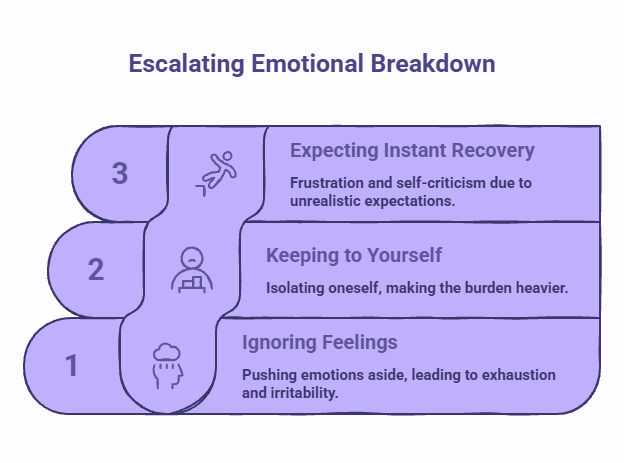
When you're overwhelmed, some reactions feel helpful in the moment but often add even more pressure in the long run. Recognising these patterns can help you respond with more care and less self-judgment.
1. Ignoring what you're feeling
Many people know they're struggling long before they admit it to themselves.
You tell yourself you'll deal with it after this deadline. After the weekend. After things settle down. But something else always takes its place.
The longer you keep pushing your feelings aside, the more likely they are to show up in other ways, through exhaustion, irritability, tears, or feeling like you've suddenly hit a wall.
2. Keeping everything to yourself
When you're overwhelmed, it can feel easier to say, "I'm fine" than explain what's really going on.
You shorten your answers, avoid difficult conversations, and convince yourself you'll handle it alone. The problem is that carrying everything by yourself often makes it feel heavier than it already is.
Even one honest conversation can help break the feeling that you have to manage everything on your own.
3. Expecting instant recovery
After an emotional breakdown, many people become frustrated with themselves for not feeling better quickly enough. You have one difficult day and expect yourself to bounce back the next. When that doesn't happen, it's easy to start criticising yourself or making impulsive decisions just to escape how overwhelmed you feel.
Recovery rarely works like that. Most people start feeling better gradually, through small steps that are easy to overlook while you're focused on getting back to normal.
The more pressure you put on yourself to recover immediately, the harder it often becomes to give yourself the patience and support you actually need.
How do you recover after an emotional breakdown?
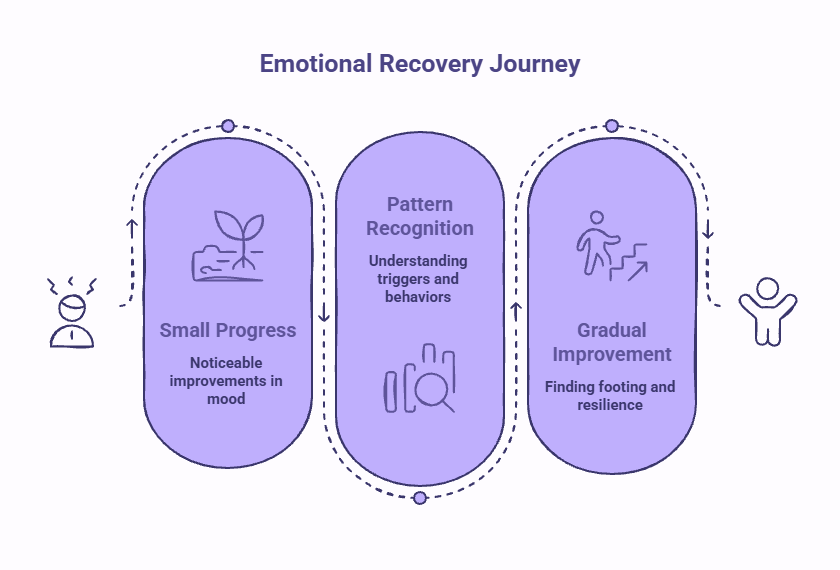
Recovery can be confusing because it rarely happens the way people expect. Many people assume they will feel better and gradually keep improving every day. In reality, recovery is often much less predictable than that.
1. What recovery actually looks like
You may have a good day and think you're finally moving forward, then wake up the next day feeling exhausted again. That can be frustrating, but it does not necessarily mean you're back where you started.
Recovery often looks like:
- Feeling a little less overwhelmed than you did last week
- Getting through everyday tasks with less effort
- Having difficult moments without feeling consumed by them
- Finding it easier to talk about what you're going through
- Recognising stress earlier than you used to
2. Progress is often smaller than people expect
Many people miss signs of recovery because they are looking for dramatic change.
In reality, progress is often quiet. It might be replying to a message you had been avoiding, enjoying a conversation again, or getting through the day without feeling emotionally drained by everything around you.
These moments are easy to overlook, but they are often the first signs that things are starting to feel more manageable again.
3. Recovery is about understanding the pattern
As recovery begins, many people start seeing their experience differently. Things that felt manageable at the time may look very different in hindsight.
Maybe you ignored your own needs. Maybe you kept saying yes when you wanted to say no. Maybe you convinced yourself you would slow down later, only to keep pushing through.
Understanding those patterns can help you recognise the warning signs earlier in the future and respond before the pressure builds to the same point again.
Recovery rarely moves in a straight line. What matters is not whether every day feels better than the last, but whether you're gradually finding your footing again.
When should you seek additional support?
You do not have to wait until everything feels unbearable before talking to someone. If emotional overwhelm is making daily life harder to manage or you feel stuck in the same place week after week, it may help to reach out to someone who can offer a different perspective, join support groups, and help you navigate what you're carrying.
It may be time to talk to someone if:
- You still feel overwhelmed weeks after the breakdown.
- Every day tasks feel harder than they normally do.
- Work, studies, or responsibilities are becoming difficult to manage.
- You're withdrawing from people more than usual.
- You feel stuck and unsure how to move forward.
- The same patterns keep repeating despite your efforts to cope.
- You feel like you're carrying everything on your own.
Reaching out does not mean things have become too much or that you've failed to cope. Sometimes it simply means you've been carrying more than you can comfortably handle by yourself for a long time.
If you feel unsafe or worried about your immediate safety, seek urgent help straight away.
What if you need someone to talk to right now?
When everything feels overwhelming, being alone with your thoughts can make it feel even heavier. Sometimes the most helpful next step is not finding a solution. It is talking to someone who will listen. You do not need the perfect words to start that conversation.
1. Why being heard can help during difficult moments
When you're carrying stress, worry, or difficult emotions on your own, your thoughts can start going around in circles. Talking things through with someone can help you untangle what you're feeling and make the situation feel a little less overwhelming.
Being heard can help you:
- Feel less alone in what you're experiencing
- Make sense of thoughts that feel difficult to organise
- Feel understood without being judged
- See the next step more clearly
Sometimes the first sense of relief comes from knowing someone is willing to listen.
2. How Listennr provides a safe space to talk
At Listennr, the focus is not on fixing you or telling you what to do. It is about giving you a safe space to talk openly, sort through what you're feeling, and feel heard without judgment.
With Listennr, you can:
- Talk about what is on your mind at your own pace
- Connect with compassionate listeners who focus on understanding, not fixing
- Share thoughts and feelings without fear of criticism or judgment
- Have conversations in a private and comfortable environment
- Open up about things you may not feel comfortable discussing elsewhere
- Feel heard without the pressure to have all the answers
Sometimes, having someone genuinely listen can make a difficult moment feel a little less overwhelming. One conversation can help you feel a little lighter, a little clearer, and a little less alone.
If you are looking for someone to talk to online, download the Listennr app and start a conversation when you are ready.
Conclusion
An emotional breakdown can make it feel as though everything has become too much at once. When you're in the middle of it, it is easy to believe you should be coping better or that you need to fix everything immediately. In reality, recovery often begins with something much smaller: acknowledging what you're feeling, reducing the pressure where you can, and focusing on the next manageable step to improve your emotional health.
You do not have to have all the answers today. What matters most is recognising that what you're experiencing deserves attention and care. Whether that means talking to someone you trust or finding a safe space to share what is on your mind, reaching out can be the first step towards feeling more like yourself again.
Frequently asked questions
What are the long-term effects of frequent emotional breakdowns?
Frequent emotional breakdowns can leave you feeling emotionally drained, make stress harder to manage, affect relationships, and reduce your ability to cope with everyday challenges. They may also signal that ongoing pressures or emotional needs, which are often emotional responses, need more attention.
How can I identify when emotional distress requires professional attention?
If emotional distress is not improving, keeps returning, or starts affecting your work, relationships, or daily life, it may be time to seek professional support from a mental health care provider for mental illness. You do not need to reach a crisis point before asking for help.
What steps should I take immediately if I feel overwhelmed emotionally?
If you feel emotionally overwhelmed, focus on the next few minutes rather than everything at once. Step away from immediate pressure, take a few slow breaths, practise relaxation techniques, eat or rest if needed, and talk to someone you trust if feelings of anxiety or severe stress become difficult to manage.
How to deal with a breakdown?
Start by reducing immediate pressure, focusing on basic needs, and taking one step at a time. Talking things through with someone you trust can also help you feel less overwhelmed and more able to cope, especially if they suggest seeking a professional for a mental health diagnosis.
How do you deal with breakdowns when they keep happening?
Support them with patience and without judgment. Listen more than you speak, avoid rushing to fix the problem, and encourage open conversation about mental health treatment options. Sometimes simply being present and offering a listening ear can help them feel less alone.
How to deal with someone having a breakdown?
Focus on listening rather than fixing. Stay calm, avoid judgment, and give them a listening ear and space to talk. Feeling heard and supported can make a difficult moment feel less overwhelming and less isolating.
Is an emotional breakdown the same as a nervous breakdown?
An emotional breakdown and a nervous breakdown are often used to describe a period of intense emotional overwhelm. Neither is a formal medical term, but both may involve uncontrollable crying, exhaustion, and other mental health symptoms of a nervous breakdown.
Can chronic stress lead to an emotional breakdown?
Yes. Chronic stress is one of the most common causes of emotional breakdowns, often revealing an underlying mental health condition. When feelings of stress build up for too long without relief, they can affect your emotions, energy, and ability to cope with everyday challenges.
What are the signs of a mental breakdown?
Common signs of a mental breakdown include feeling overwhelmed by small problems, withdrawing from others, struggling with daily responsibilities, experiencing behavioural changes, and feeling emotionally drained for long periods.