.jpg)
Why Do I Feel the Urge to Talk to Someone Right Now?

Key highlights
- The urge to talk to someone can come from stress, loneliness, unresolved problems, or simply not wanting to carry something alone.
- Wanting someone to talk to does not always mean wanting advice; sometimes you simply want to feel heard.
- Keeping difficult thoughts to yourself can make them harder to sort through and leave you feeling more alone.
- You can reach out to a trusted person, mental health professional, online listener, or anonymous peer-support service.
- Online or anonymous conversations can feel easier when opening up to someone you know feels too personal.
- The right support depends on what you need: listening, professional guidance, another perspective, or space to talk.
- You don't need a perfect explanation to start a conversation; one honest sentence can be enough.
- Listennr offers a low-pressure way to connect with a real person when you want to talk, be heard, and share what's on your mind.
Sometimes the urge to talk to someone arrives quietly. You may be working, scrolling through your phone, or lying awake at night when you suddenly think, “I need someone to talk to.” You may not know exactly why. Something may have happened earlier, a problem may have been sitting with you for days, or you may simply be tired of carrying it alone.
Wanting to reach out doesn't make you needy or dramatic. According to the World Health Organization (WHO), about 1 in 6 people worldwide experience loneliness. Sometimes, you simply need someone who will listen, help you make sense of what you're feeling, or give you space to talk.
But knowing you want to talk and knowing who to talk to are different things. This guide explores why you may feel this urge, what can make reaching out difficult, and where you can find the right kind of support.
Why do I suddenly feel the urge to talk to someone?
The urge to talk can show up when something has been sitting on your mind for a while. Maybe it's a difficult conversation, pressure at work, loneliness, or several smaller things that have quietly piled up. Sometimes, there isn't one clear reason; you just reach a point where you don't want to keep carrying it alone.
You may not even want advice. You might want someone to listen, help you put your thoughts into words, or give you a different perspective. Sometimes, saying “I need someone to talk to” is less about finding an immediate solution and more about wanting another person to understand what you're going through.
If that feeling keeps coming back, it may be worth paying attention to it rather than brushing it aside. You don't need to have everything figured out before reaching out. Sometimes, simply recognising that you don't want to carry something alone is enough to take the first step.
What are you really looking for when you want someone to talk to?
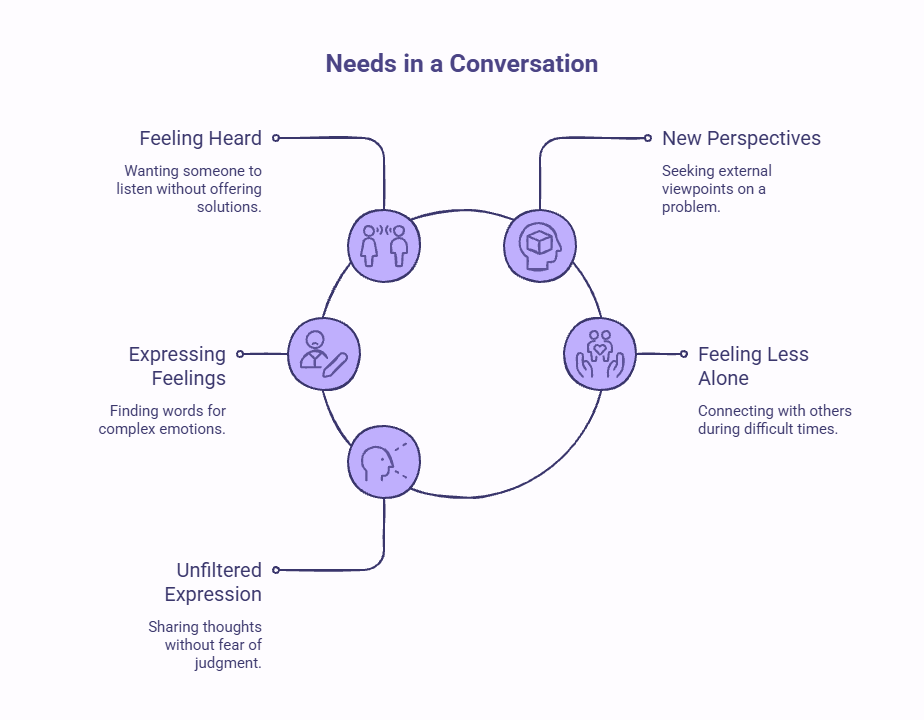
You may not be looking for advice at all. Sometimes you want someone to listen without judging, help you make sense of what you're feeling, or reassure you that your reaction is understandable. Other times, you simply want a real conversation where you don't have to pretend that everything is fine.
What you need can also change depending on the moment. You might want to:
- Feel heard without being told what to do
- Get another perspective when you're too close to a problem
- Put your feelings into words when they feel difficult to explain
- Feel less alone when you're going through something privately
- Let things out without worrying about saying everything perfectly
Knowing what you want from the conversation can make it easier to decide who to reach out to and what kind of support may feel right. You don't have to need a solution to deserve someone who will listen.
What happens when you keep your feelings and problems to yourself?
Keeping everything to yourself can make a difficult situation feel harder to sort through. You may replay the same conversation, go over what happened again and again, or find yourself thinking about it when you're trying to sleep. Over time, something that started as one problem can begin to take up more space in your day.
You might notice:
- The same thoughts keep coming back
- It becomes harder to explain what you're feeling
- You pull away from people instead of reaching out
- You feel more alone with something you wish you could share
This doesn't mean that keeping quiet will automatically cause a mental health condition. But according to PubMed, loneliness and social disconnection are associated with poorer mental health, including higher rates of depression and anxiety.
If what you're carrying is becoming intense, frightening, or difficult to manage, talking to someone can be an important step. You don't have to wait until things feel unbearable before asking for support. And if you're having thoughts of suicide or feel you may be in immediate danger, seek urgent professional or crisis support rather than relying only on an online conversation.
Why is it so hard to reach out when you need someone to talk to?
Reaching out can sound easy until you're the one who has to make the first move. You might worry about being judged, misunderstood, or told that what you're feeling isn't a big deal, especially in today’s world of social media. When you've already been feeling lonely, that hesitation can make you pull back even more.
You may also have too much to say and no idea where to begin. Common thoughts that can get in the way include:
- “I don't want to burden anyone.”
- “Maybe my problem isn't serious enough.”
- “What if they don't understand?”
- “I don't even know how to explain what I'm feeling.”
You don't need to have the whole story figured out before you reach out. Even something as simple as “I have a lot on my mind, and I could use someone to talk to” can open the door to a conversation.
If talking to someone you know feels too difficult, an online or anonymous conversation can offer another starting point. The goal isn't to find the perfect words or the perfect person immediately; it's to find a way of talking that feels safe enough to take that first step.
Who should you talk to when you feel like you need someone?
There isn't one right person to talk to when you need support. The better choice depends on what you need from the conversation and what feels comfortable enough to say out loud.
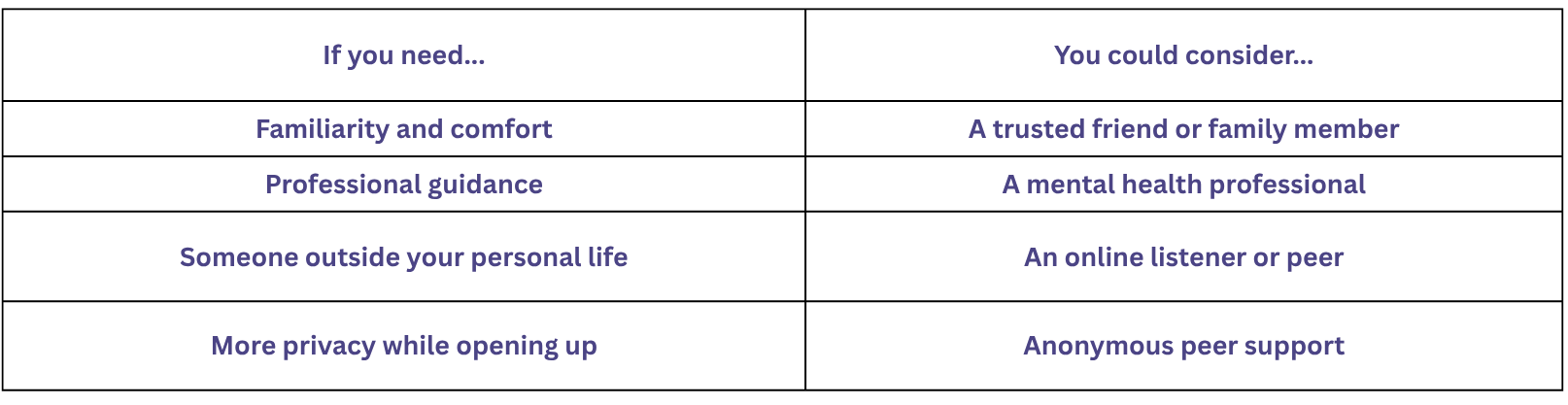
A trusted person can feel reassuring because they already know you. A professional may be more appropriate when you want specialized support. Online or anonymous options can make sense when talking to someone you know feels too difficult or when you want some distance from your everyday relationships.
How do you know which option is right for you?
Ask yourself a few simple questions before choosing:
- Do I want someone I know, or would a stranger feel easier?
- Am I looking for someone to listen, or do I want professional guidance?
- Would I feel more comfortable talking one-to-one or with a group?
- How important is anonymity to me right now?
- Do I want advice, another perspective, or simply a place to talk?
You don't have to choose the “best” option in theory. Choose the one that feels realistic enough for you to actually start talking.
Where can I talk to someone online?
If talking to someone you know feels difficult, you can look for an online space designed specifically for conversation and emotional support. Depending on what you need, that might mean a professional service, a peer-support platform, a one-to-one listener, or an anonymous chat. The important part is choosing a space that feels safe, accessible, and suited to the kind of conversation you want.
What should you look for in an online support option?
Before choosing an online support option, look beyond whether a platform simply lets you chat. Consider:
- Clear privacy practices: Check what information the service collects and how it protects your privacy.
- Real human interaction: If you want to be heard, make sure you're actually connecting with people rather than relying only on automated responses.
- Appropriate moderation: Active moderation can help keep conversations respectful and safer.
- Easy access: Complicated sign-ups or unnecessary barriers can make reaching out feel harder.
- The right type of support: Check whether the service offers professional care, peer support, listening, or something else.
You don't need the most feature-packed platform. You need an option that makes it easier to have the kind of conversation you're looking for.
Can I talk to someone anonymously about my feelings?
Yes. Some online spaces let you talk about your feelings without sharing identifying details. This can feel easier when talking to someone you know feels too personal or exposing. Before choosing a service, check what it means by “anonymous,” what information it collects, and whether you're speaking with a peer, listener, or professional.
1. Why can anonymity make it easier to open up?
Anonymity can take away some of the pressure that comes with being known. You may feel less worried about being judged, having your situation discussed with someone else, or affecting an existing relationship.
It can be especially helpful when you want to talk about something personal but aren't ready to tell a friend or family member.
An anonymous conversation can offer a middle step between keeping everything to yourself and opening up to someone in your everyday life.
2. What should you check before using an anonymous service?
Not every service that uses the word “anonymous” offers the same level of privacy. Before starting a conversation, check:
- What information do you need to provide?
- What does the service mean by anonymous?
- Who will you be talking to?
- Is the conversation peer support, professional support, or general chat?
- Are there clear rules and moderation?
- How is your information handled?
If privacy is one of the reasons you're reaching out, understanding these details beforehand can help you choose a space where you feel more comfortable speaking honestly.
What can I say when I want to talk to someone about my feelings?
You don't need a perfect explanation before you start. If you've been thinking, “I want to talk to someone about my feelings,” one honest sentence can be enough. You could say that you're having a hard time, that something has been bothering you, or simply that you need someone to listen.
You don't need to explain everything at once
Trying to explain everything at the same time can make reaching out feel even harder. Start with the part that feels most important right now. You can share more later if you feel comfortable.
For example, you might begin with:
- What you're feeling: “I've been feeling really overwhelmed lately.”
- What's happening: “Something happened at home, and I can't stop thinking about it.”
- What you need: “I don't need advice right now. I just want someone to listen.”
You don't have to organise your thoughts perfectly before you speak. The conversation can help you work out what you are trying to say.
Are mental health apps effective when you need someone to talk to?
Mental health apps can be useful when they offer the kind of support you actually need. If you want someone to listen, an app that connects you with another person may be more relevant than one focused mainly on exercises, tracking, or self-guided tools. The right choice depends on whether you want human listening, professional care, peer connection, or support you can use on your own.
1. It depends on what kind of support you need
Before choosing an app, start with what you want from the conversation:
- Someone to listen: Look for a service that connects you with a real person rather than relying only on automated tools.
- Professional care: Choose a service that clearly provides access to qualified mental health professionals when you need professional guidance.
- Peer connection: Peer-support services can connect you with people who understand what it is like to go through difficult experiences.
- Self-guided support: Some apps offer exercises, journaling, or other tools you can use independently.
No single option is right for everyone. Instead of asking, “Which app is best?” it may be more helpful to ask, “What kind of support do I need right now?”
2. What should you consider before choosing one?
Once you know what you're looking for, check whether the app actually provides it. Consider:
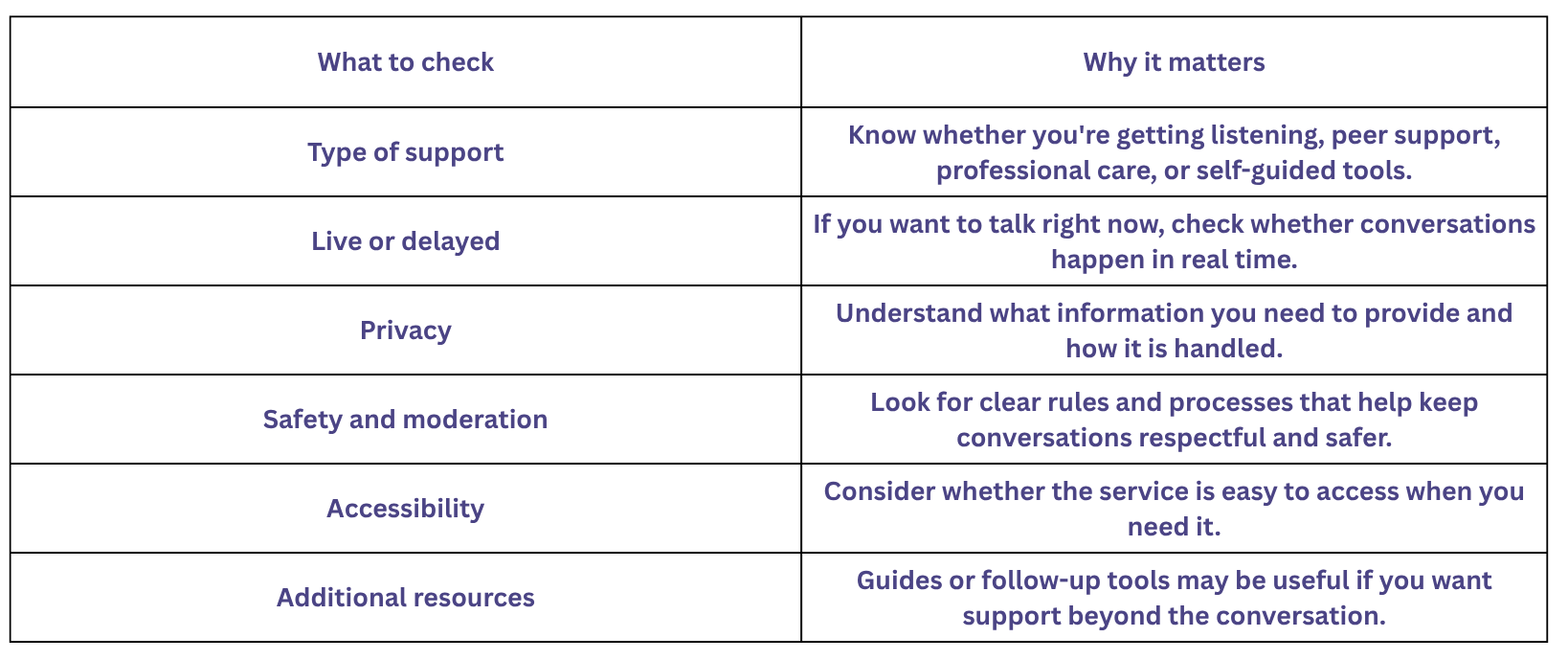
One important distinction is that an app offering peer listening or emotional support should not be presented as a replacement for therapy or professional mental health care. These options serve different purposes, so choosing the right one starts with understanding what kind of support you need. If what you're carrying feels overwhelming, you can also read our guide on dealing with an emotional breakdown for more support.
What should I do if I feel like I need to talk to someone right now?
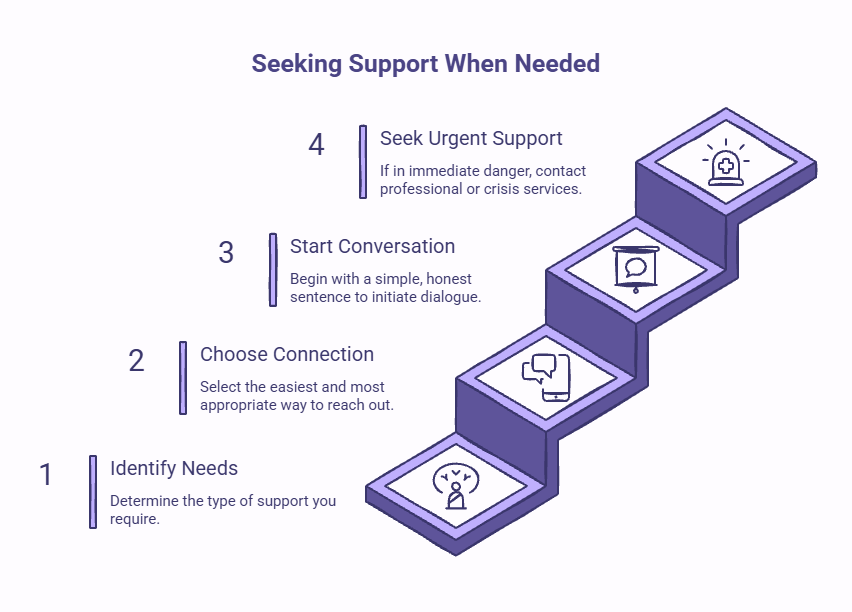
If you need someone to talk to right now, you don't have to figure everything out before reaching out. Start by identifying what kind of support would help, choose the easiest option that feels appropriate, and begin with one honest sentence. If you're in immediate danger or feel you may hurt yourself, seek urgent professional or crisis support instead.
1. Decide what you need
Ask yourself what would help most right now:
- Someone to listen: You want to talk without being given immediate advice.
- Another perspective: You want help looking at a situation differently.
- Professional support: Something feels difficult to manage and you need qualified guidance.
2. Choose the easiest appropriate way to connect
Pick the different options that feel possible right now. You might text someone you trust, choose an anonymous conversation if that feels more comfortable, or speak with a professional when you need specialised support.
3. Start with one sentence
You don't need to explain everything at once. You can simply say:
“I've got a lot on my mind and I could really use someone to talk to.”
That is enough to start the conversation.
4. Know when you need urgent support
If what you're experiencing feels immediately unsafe or you think you may hurt yourself, peer listening alone may not be enough. Seek urgent professional or crisis support instead, because peer support and crisis care serve different purposes.
The goal isn't to find the perfect option immediately. It's about taking the next step that feels safe, appropriate, and possible.
What if you just want someone to listen?
Not everyone has a best friend or someone they feel comfortable talking to when life feels heavy. Friends may be busy, family members may already be involved, and sometimes explaining everything to someone who knows the situation can feel exhausting. You may also not be looking for advice or a solution; you may simply want somewhere to say what you're feeling without worrying about being judged or having to explain yourself perfectly.
That is where Listennr fits.
Listennr is built around a simple idea: you deserve to feel heard. Instead of trying to fix what you're going through, Listennr gives you space to talk with a real person whose role is to listen rather than turn the conversation into advice or treatment. You don't need to arrive with the right words or a clear solution. You can simply start with what you're feeling and let the conversation unfold.
Listennr is not therapy and is not intended to replace professional mental health support when that is what you need. Its purpose is simpler: to make human connection and listening more accessible when you don't want to carry difficult thoughts entirely on your own.
Sometimes, the first step isn't finding the perfect advice. It's finding someone willing to listen. If you've been thinking, “I need someone to talk to,” you can start a conversation with a listener on Listennr when you're ready.
Conclusion
The urge to talk to someone does not always come with a clear explanation. Sometimes it follows a difficult conversation or a pile-up of smaller worries. Other times, you simply realise you're tired of keeping similar struggles and the same thoughts to yourself. What matters is noticing what you're looking for: someone you trust, professional guidance, a private space to talk, or simply a person who will listen without immediately trying to fix the situation.
If you've been thinking, “I need someone to talk to,” you don't have to wait until you can explain everything perfectly. Start with one honest sentence and choose the kind of support that feels right for you. Sometimes the next step isn't finding an answer to everything, especially to your biggest concerns. It's finally saying out loud what you've been carrying and giving yourself the chance to feel heard and supported.
Frequently asked questions
How do anonymous online chat rooms work for people who need to talk?
Anonymous online chat rooms let people discuss the real reasons behind what they're going through, including issues like panic attacks and other mental health issues, without sharing identifying information or details. Depending on the service, you may join a peer-support conversation at the top of the chat, connect one-to-one, or talk with a listener while following privacy and community guidelines.
Are there free online chat services if I need emotional support?
Yes. Some services offer free emotional distress support chats, though features vary. Check whether they provide real-time conversation, privacy, moderation, and peer or professional support. Free emotional support is not the same as therapy or crisis care, making it important to consider a modern replacement if needed.
Where can I find someone to talk to online anonymously right now?
If you want to talk privately without sharing your identity, Listennr offers a space for one-to-one conversations focused on listening and human connection. You can share what's on your mind without needing to explain everything perfectly
What should I expect when I join an online chat for emotional help?
You can usually expect a usual experience during a text chat conversation where you explain what you're going through, listen to others, or talk with a listener or peer through a mobile browser via a live connection. Depending on the service, chats may be one-to-one or moderated group conversations.
How effective is talking to strangers online for emotional support?
Talking to strangers online can feel helpful when you want to share openly in an anonymous place with new people, using the best ways to connect without the pressure of an existing relationship. Its value depends on the service, the person you're talking to, and whether peer support, coming from a helpful perspective, matches what you need.
Is it normal to want to talk to someone online when struggling with depression?
Yes. Wanting to talk to someone online about a relationship problem can be a natural way to seek connection and support. Online conversations may help you feel heard, while professional support is important when depression is persistent or affecting daily life.