%20(2).jpg)
Are You Addicted to Someone? Signs to Recognise

Key highlights
- Feeling addicted to someone often means your emotions have become heavily tied to one relationship.
- Constant overthinking, reassurance-seeking, and phone-checking are common warning signs.
- Emotional dependence can feel like love, but often comes with anxiety and fear of distance.
- One person may gradually become your main source of comfort and emotional security.
- Delayed replies or minor changes in communication can start to affect your mood.
- Healthy love supports your life; emotional dependence can begin to replace it.
- Rebuilding your own routines, friendships, and interests helps restore balance.
- If you're struggling alone, Listennr offers a safe space to talk and feel heard without judgment.
Have you ever told yourself to stop thinking about someone, only to find them back on your mind a few minutes later? Maybe you check your phone hoping to see their name pop up, replay old conversations in your head, or feel unusually affected when they seem distant. When one person starts taking up so much space in your thoughts, it can leave you wondering whether what you're feeling is normal.
For some people, a text message can brighten the entire day. For others, a delayed reply can create hours of overthinking. The connection may feel exciting at first, but over time, it can become difficult to focus on anything else. You may start measuring your mood by their attention, making plans around their availability, or feeling unsettled whenever they are not around. If this sounds familiar, you are far from the only person experiencing it.
Many people describe this experience as being addicted to someone. While it is not a formal diagnosis, it can feel very real when a relationship begins to affect your emotions, routines, and sense of balance. In this article, we'll explore what it means to feel addicted to a person, why it happens, the signs to look for, how it differs from healthy love, and what you can do to build a healthier relationship with both the other person and yourself.
What does it mean to feel addicted to someone?
Feeling addicted to someone usually means the connection has started affecting more than just your feelings. Their attention can shape your mood, their absence can stay on your mind for hours, and your obsessive thoughts may keep returning to them even when you're trying to focus on something else. This emotional dependency can feel as though a large part of your emotional world revolves around one person.
Many people use the word "addicted" because the experience feels difficult to switch off, filled with emotional highs. You may know you're thinking about them too much, yet still find yourself checking your phone, replaying conversations, or wondering what they are doing. The connection can feel exciting and comforting at the same time, which is often why the pattern is hard to recognise at first.
1. Why do people use the word addicted
People often describe this experience as a relationship addiction because it feels repetitive and difficult to control. Even when you decide to focus on something else, your attention keeps drifting back to the same person.
You might notice yourself:
- Checking for messages more often than usual
- Replaying conversations long after they end
- Looking for hidden meaning in small interactions
- Feeling unusually affected by their attention or silence
- Thinking about them when you want to focus on other things
The word itself is not really about the other person. It is often about how much emotional importance the relationship has started carrying in your life.
2. What it often feels like in everyday life
At first, it can feel like excitement. You enjoy talking to them, look forward to hearing from them, and find yourself smiling when their name appears on your screen.
Over time, however, the connection can start affecting other parts of your life.
For example, you may:
- Feel distracted when they have not replied
- Struggle to enjoy time alone
- Lose interest in hobbies or routines you normally enjoy
- Lose your sense of self and spend more time thinking about them than being present in your day
- Feel relieved when they respond and unsettled when they do not
Many people describe feeling caught between enjoying the connection and feeling exhausted by how much space it occupies in their mind. Understanding why this happens can make it easier to recognise the patterns behind it and start creating healthier emotional balance.
Why can someone start feeling addicted to a person?
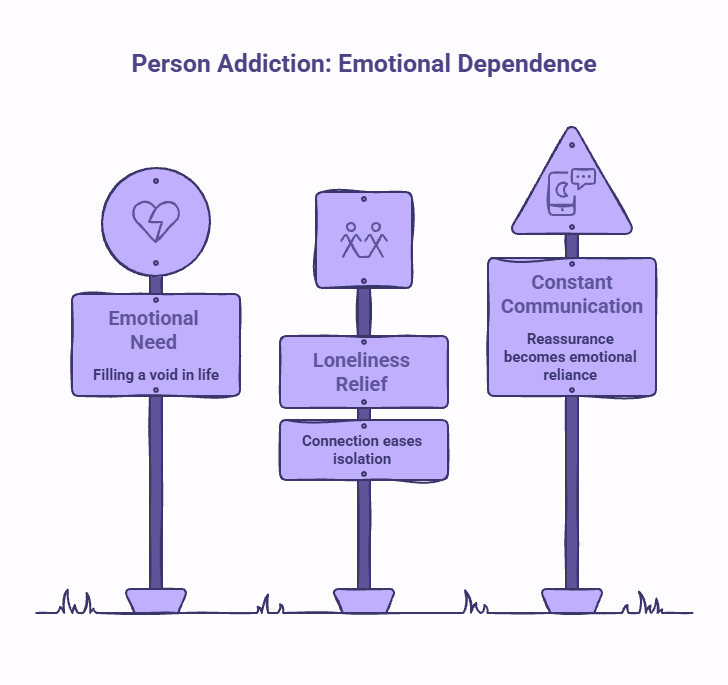
Feeling addicted to someone rarely happens overnight. It often develops when a connection begins to meet emotional needs that are difficult to meet elsewhere in romantic relationships. Over time, one person can become your main source of comfort, reassurance, or relief, making the relationship feel more important than you intended.
1. They fill an emotional need you have been missing
Sometimes a person gives you something that has been missing for a long time. It may be feeling understood, appreciated, supported, or simply having someone who makes you feel important.
At first, this can feel comforting. Over time, however, the relationship may start carrying a more positive emotional weight than it should.
You might notice that:
- Their attention makes you feel more confident
- Their reassurance helps you feel calmer
- Their approval matters more than your own opinion
- Their absence leaves you feeling unsettled
When one person becomes your main source of emotional comfort, the connection can start feeling less like a choice and more like something you depend on.
2. The connection helps you feel less alone
Sometimes the strongest pull is not the person themselves but how you feel when you're with them.
If loneliness has been weighing on you, a close connection can bring relief. Conversations fill quiet moments, messages give you something to look forward to, and the relationship creates a sense of belonging.
The challenge is that other parts of life may slowly receive less attention.
For example, you may:
- Reach out to friends less often
- Spend more time waiting for one person's messages
- Feel disconnected when they are unavailable
- Depend on them to improve your mood
The more emotional support you expect from one relationship, the harder it can feel to create balance elsewhere.
3. Constant communication creates emotional reliance
Regular communication helps people feel connected. However, when conversations become constant, your mind can start treating that contact as reassurance rather than a simple conversation. Sometimes, the addiction is not to the person themselves but to the comfort, validation, or relief that talking to them brings.
A message feels comforting.
A delayed reply creates doubt.
Silence starts feeling bigger than it actually is.
You may find yourself:
- Checking your phone throughout the day
- Feeling distracted while waiting for a response
- Looking for reasons to start another conversation
- Re-reading messages for reassurance
- Feeling uneasy when communication slows down
This is why some people describe an addiction to talking to someone. The conversation becomes a way to feel calmer, less lonely, or more secure. Over time, your mood may become tied to how connected you feel in that moment, turning regular communication into a source of emotional reassurance rather than simple connection.
What are the signs you may be becoming emotionally dependent on someone?
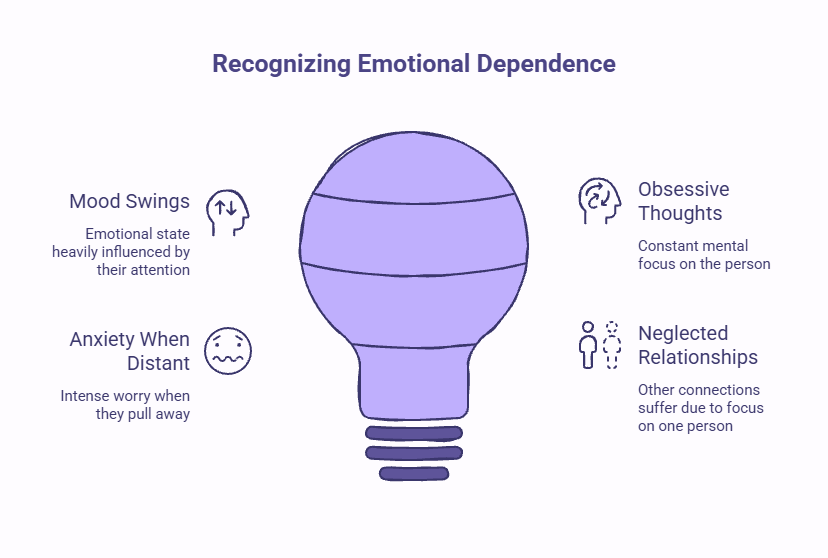
Emotional dependence often develops gradually. What starts as excitement or closeness can slowly become a need for reassurance, attention, or constant connection. The signs are not always obvious at first, but they usually show up in your thoughts, emotions, and daily habits.
1. Your mood depends on their attention
One of the strongest signs is how much their attention affects your emotional state.
A thoughtful message can make your day feel lighter. A delayed reply can leave you distracted, restless, or wondering what changed. Instead of managing your own emotions, you begin looking to them for reassurance.
You might notice:
- You feel relieved as soon as they reply
- Their approval matters more than it used to
- A small change in tone stays on your mind for hours
- You struggle to enjoy your day when they seem distant
The more your emotional balance depends on their attention, the harder it becomes to feel steady without it.
2. You think about them more than you want to
It is normal to think about someone you care about. The difference is when those thoughts start taking over your attention.
You may find yourself replaying conversations, checking old messages, or imagining future interactions, even when you are trying to focus on something else.
For example:
- You think about them during work or study
- You replay conversations before going to sleep
- You keep checking whether they have viewed or replied to something
- Your thoughts keep circling back to them throughout the day
When one person occupies most of your mental space, it can become difficult to stay present in your own life.
3. You feel anxious when they pull away
A little disappointment is normal when someone is busy or unavailable. Emotional dependence often feels different.
A slower reply, a cancelled plan, or a shift in communication can trigger intense worry. Your mind starts searching for explanations, even when there may not be a problem.
You may notice:
- Overthinking small changes in behaviour
- Feeling uneasy when communication slows down
- Worrying that something is wrong without clear evidence
- Needing reassurance more often than before
Instead of feeling secure in the connection, you spend a lot of energy trying to protect it.
4. Other relationships start taking a back seat
When one person becomes the centre of your emotional world, other relationships often receive less attention.
You may spend less time with friends, stop reaching out to people who care about you, or lose interest in activities that once felt important.
Watch for signs such as:
- Choosing their company over everyone else's
- Cancelling plans to stay available for them
- Spending less time with family or friends
- Letting hobbies and routines fall away
Healthy relationships add to your life. If one connection starts replacing everything else, it may be time to step back and look at the bigger picture.
Recognising these signs is important because they often appear long before the pattern becomes obvious. The next step is understanding how emotional dependence differs from healthy love.
Is being addicted to someone the same as being in love?
No, they are not the same. Love can be intense, exciting, and deeply meaningful without taking over your life. Feeling addicted to someone often comes with something else: the sense that your emotional well-being depends on the relationship staying exactly the way you want it to.
The difference is not how much you care about someone. The difference is what happens when they are unavailable, distant, or focused on something other than you.
Love vs emotional dependence: what does it look like in real life?
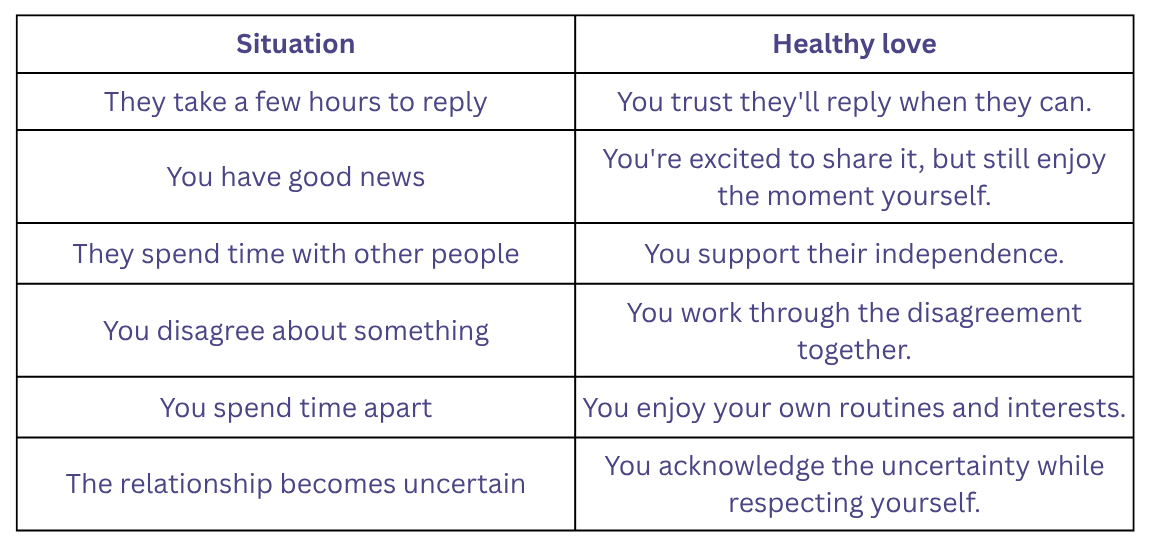
The biggest difference is that healthy love allows room for both connection and individuality. Emotional dependence slowly shrinks that space until the relationship becomes the centre of your emotional world.
Why intense feelings can sometimes feel like love
One reason this can be confusing is that emotional dependence on a specific person often feels incredibly powerful. The highs feel exciting. The connection feels important. The longing feels meaningful.
You may find yourself thinking:
- "I've never felt this strongly about anyone before."
- "If I miss them this much, it must be love."
- "I can't imagine my life without them."
- "Nobody understands me the way they do."
The problem is that intensity and compatibility are not the same thing.
For example, imagine someone has a busy day and doesn't reply for several hours. In a balanced relationship, you might feel disappointed but continue with your plans. When emotional dependence is involved, the same situation can trigger hours of overthinking, checking your phone, replaying conversations, or wondering whether you did something wrong.
That's why strong feelings alone are not always the best measure of love. Sometimes the question is not:
"How much do I care about this person?"
Sometimes the more important question is:
"How much of my happiness depends on this person?"
Understanding that difference can make it easier to recognise whether the relationship is helping you grow or whether it has started taking up more space in your life than it should.
Why does talking to one person start feeling so important?
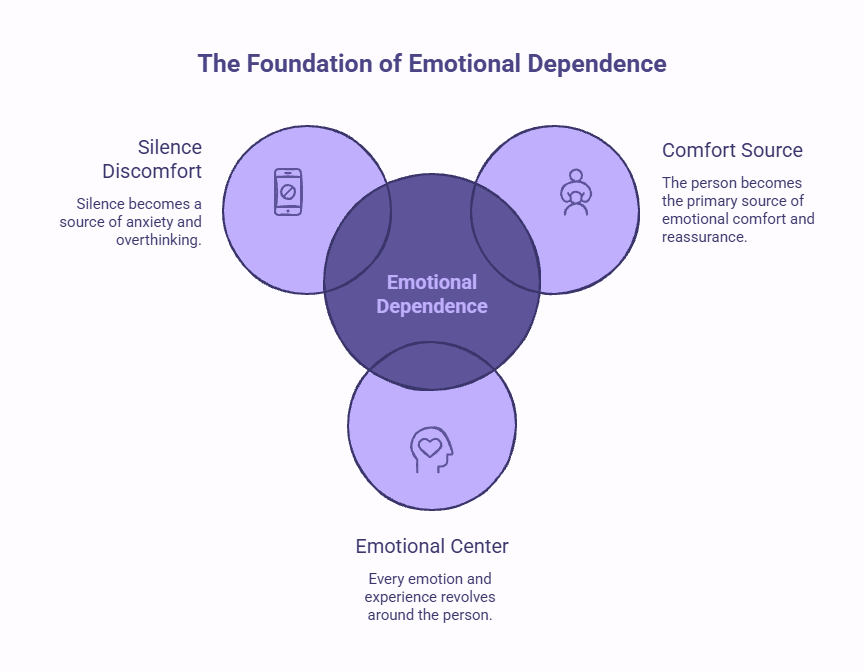
When one person becomes your first call, your first text, and the first person you think about throughout the day, talking to them can start feeling less like something you enjoy and more like something you need. The connection becomes important because it begins to provide comfort, reassurance, and emotional support that may not come from anywhere else.
1. They become your main source of comfort
It is natural to lean on people you trust. The challenge begins when one person becomes the only place you turn to when life feels difficult.
Maybe they are the first person you text when something good happens. Maybe they are the only person you want to talk to after a stressful day. Over time, their attention can start feeling like the fastest way to feel calm, understood, or reassured.
You might notice:
- Their messages instantly improve your mood
- You feel calmer after talking to them
- Difficult days feel harder when they are unavailable
- You struggle to comfort yourself without reaching out
The more emotional comfort comes from one person, the more important that connection can start to feel.
2. Every emotion starts leading back to them
A strong connection naturally becomes part of your life. Emotional reliance develops when it starts becoming the centre of your emotional life.
Think about how often your thoughts return to them.
Had a good day? You want to tell them first.
Something upset you? You want their reassurance.
Feeling lonely, excited, frustrated, or proud? Somehow, your mind keeps returning to the same person.
You may find yourself:
- Wanting to share every detail of your day with them
- Feeling like experiences matter more when they know about them
- Thinking about how they would respond to everything
- Feeling disappointed when you cannot talk to them straight away
When every emotion starts leading back to one person, your emotional world can gradually become smaller without you noticing it.
3. When silence starts feeling uncomfortable
In healthy relationships, conversations naturally come and go. Both people have responsibilities, routines, and lives outside the relationship, which allows for mutual support.
When emotional dependence starts growing, silence can feel very different.
Instead of assuming they are busy, you may start wondering whether something is wrong. A few hours without a reply can trigger overthinking that lasts much longer than the silence itself.
You might notice:
- Checking your phone repeatedly
- Re-reading messages for reassurance
- Feeling distracted while waiting for a response
- Creating worst-case scenarios in your head
The silence itself is rarely the real issue. What matters is how much emotional weight that silence begins to carry. When talking to one person starts feeling essential rather than enjoyable, it often becomes easier to see how a relationship can slowly take up more space in your life than you intended.
What happens when one person becomes your whole emotional world?
When one person becomes your main source of comfort, reassurance, and emotional support, the effects rarely stay limited to the relationship. Your attention, decisions, and emotional energy can gradually start revolving around that connection, making everyday life feel less balanced.
1. You start measuring your day by their attention
One of the first changes is that their attention begins carrying more emotional weight than it should.
You may notice:
- A reply instantly improves your mood
- A delayed response stays on your mind for hours
- You feel relieved when they reach out first
- Your confidence changes depending on how connected you feel to them
Over time, this creates a cycle where your emotional state depends less on your own experiences and more on what is happening between you and that person.
2. Your world starts getting smaller without you noticing
Emotional dependence often narrows your focus.
As more attention goes into one relationship, other parts of life can slowly receive less energy.
Common signs include:
- Spending less time with friends and family
- Losing interest in hobbies you once enjoyed
- Cancelling plans to stay available for them
- Thinking about the relationship during most of your free time
- Struggling to stay present in work, study, or daily routines
The relationship does not just become important. It gradually becomes the center around which everything else is organized.
3. Small relationship changes start feeling much bigger than they are
When a relationship carries most of your emotional security, even minor changes can feel threatening.
For example:
- A shorter message feels unusually personal
- A busy day feels like emotional distance
- A canceled plan feels like rejection
- A change in tone keeps replaying in your mind
Instead of responding to what actually happened, you may find yourself responding to what you fear it means.
That constant state of analyzing, checking, and seeking reassurance can become emotionally exhausting. It is often one of the clearest signs that the relationship has started taking up more space in your life than is healthy.
How do you stop feeling addicted to someone without losing yourself?

You do not have to stop caring about someone to create a healthier relationship with them. The goal is not to feel less. The goal is to make sure one person is not carrying the weight of your entire emotional world. That starts by slowly bringing your attention, energy, and sense of identity back to yourself.
1. Rebuild parts of life that exist outside the relationship
When a relationship becomes your main focus, other parts of life often get pushed aside. One of the most effective ways to create balance is to reconnect with those neglected areas and establish healthy boundaries.
Start small:
- Spend time on an interest that has nothing to do with the relationship
- Set aside time each day that is just for you
- Make decisions based on what you need, not only what keeps the connection comfortable
- Notice when your day revolves entirely around one person's attention
The goal is not distance. The goal is to remember that your life is bigger than one relationship.
2. Reconnect with people, interests, and routines
Emotional dependence often grows when too much emotional weight is placed on one person.
A wider support system creates more balance.
You might:
- Reach out to a friend you have not spoken to in a while
- Restart a hobby that once brought you joy
- Spend more time with family members who make you feel grounded
- Create routines that give structure to your week
The more sources of connection and fulfilment you have, the less pressure any one relationship has to carry.
3. Learn to sit with difficult emotions before reacting
One reason emotional dependence feels so powerful is that it creates an urge to act immediately.
- You feel anxious.
- You check your phone.
- You feel uncertain.
- You send another message.
Instead of reacting straight away, try creating a little space between the feeling and the action.
For example:
- Wait a few minutes before checking for replies
- Write down what you're feeling before reaching out
- Ask yourself what you need in that moment
- Notice whether you're looking for connection or reassurance
Small pauses can help you feel more in control of your emotions rather than controlled by them.
4. Create more balance, not less connection
Many people worry that changing these patterns means caring less. In reality, the opposite is often true.
When your happiness, confidence, and peace of mind do not depend entirely on one person, relationships tend to feel calmer and more enjoyable.
Healthy connection leaves room for:
- Closeness without constant reassurance
- Space without panic
- Support without dependence
- Caring for someone without losing yourself
You do not have to choose between loving someone and maintaining your own identity. The healthiest relationships make room for both.
When might additional support help?
Sometimes it is hard to break the cycle on your own. You may already recognise the patterns but still find yourself checking your phone, overthinking the relationship, or struggling to focus on your own wants and other parts of life and reflect on the consequences of their behaviour.
Additional support may help if:
- The relationship is affecting your sleep, work, or daily routine
- You feel stuck in the same patterns despite trying to change them
- Your anxiety around the relationship feels overwhelming
- You cannot imagine feeling okay without that person
You do not need to wait until things feel unbearable. If the relationship is taking up more emotional space than you want it to, talking things through with someone you trust can be a helpful next step.
What if you're tired of carrying these feelings on your own?
Realising that you've become emotionally dependent on someone can feel confusing. You may understand what's happening, but still find yourself replaying conversations, checking your phone, or wondering why this one person has so much influence over your emotions, often tied to underlying family dynamics.
Sometimes the hardest part is talking about it. Friends may not understand why it feels so intense. Family members may tell you to move on. Even when people mean well, it can be difficult to explain what you're actually experiencing.
This is exactly the kind of space Listennr is built for.
- Talk to a real person who listens without judgment
- Share what's on your mind without worrying about how it sounds
- Explore your thoughts before acting on them
- Feel heard during moments when you would normally spiral alone
- Connect anonymously and at your own pace
You do not need to have all the answers before reaching out. Sometimes talking things through is what helps you find them. And if you're looking for a place to be heard, Listennr is just a conversation away.
Conclusion
Feeling addicted to someone does not necessarily mean your feelings are not real. It often means one relationship has started carrying more emotional weight than it should, making your mood, thoughts, and sense of emotional stability depend too heavily on that connection.
The goal is not to care less. It is to create enough balance so that your happiness, identity, and peace of mind do not rely on a single person or become overwhelmed by mental health challenges caused by unhealthy attachment. With awareness, support, and small changes over time, it is possible to build healthier connections without losing yourself in the process.
Frequently asked questions
Can you truly be addicted to someone, or is it just strong love?
While people often describe it as being addicted to someone, the experience is usually closer to emotional dependence than healthy love. The key difference is that your mood, thoughts, and sense of security start depending heavily on the relationship.
Are there treatments or helplines for people addicted to a person in India?
Yes. Therapists, counsellors, and emotional support services in India can help you understand unhealthy relationship patterns, manage emotional dependence, and address potential mental health disorders to rebuild balance. Seeking support can be helpful if the relationship is affecting your well-being or daily life.
Why do some people become addicted to specific individuals?
People often become emotionally attached to specific individuals because those relationships provide comfort, validation, connection, or a sense of security. Over time, the person may start meeting important emotional needs, making the relationship feel difficult to step away from or imagine life without.
How does being addicted to someone affect your daily life?
Being emotionally dependent on someone can affect your mood, focus, relationships, and daily routines. You may spend excessive time thinking about them, struggle to concentrate, neglect other parts of life, or feel emotionally unsettled when the connection feels distant.
What are the common signs that you might be addicted to a person?
Common signs of love addiction include constantly thinking about the person, needing frequent reassurance, feeling anxious when they are unavailable, checking for messages repeatedly, and allowing the relationship to affect your mood, focus, or other important parts of life.