.png)
How to Talk to a Person With Anxiety and Listen Better?

Key highlights
- Anxiety can make it difficult for people to express what they are feeling.
- Listening without judgment often helps more than offering advice.
- Calm, low-pressure conversations make it easier for people to open up.
- Avoid dismissive comments or comparisons that minimise someone's experience.
- Small, consistent acts of support build trust over time.
- Encourage professional help when anxiety starts affecting daily life.
- Healthy emotional boundaries help you support others without burning out.
- When talking in person feels difficult, platforms like Listennr offer a safe space to be heard.
Supporting someone with anxiety is not always straightforward. You may notice they seem overwhelmed, cancel plans at the last minute, avoid certain situations, or withdraw from conversations. When you care about someone, it is natural to want to help. At the same time, you may worry about saying the wrong thing or making the situation worse.
Many people assume they need the perfect advice or solution, but that is rarely what someone with anxiety is looking for. Often, they need someone who will listen without judgment, take their concerns seriously, and create space for an honest conversation. Small moments of understanding can sometimes feel more meaningful than trying to fix the problem immediately.
Knowing how to talk to a person with anxiety starts with understanding what they may be experiencing. The words you choose, the way you listen, and how you respond can help someone feel supported instead of misunderstood, especially during difficult moments.
What should you understand about anxiety before starting a conversation?
If someone you care about seems different lately, it can be hard to know what is really going on. Maybe they take longer to reply, cancel plans more often, or seem distracted even when you're talking to them. It is easy to assume they are pulling away, upset with you, or simply not interested in talking. Anxiety can sometimes make ordinary interactions look that way, even when the person values your support.
The challenge for listeners is that anxiety is not always visible. Someone may look calm on the outside while overthinking every word they want to say. They might want to talk but worry about being judged, misunderstood, or becoming a burden. As a result, conversations can feel slower, shorter, or more guarded than usual.
Understanding this can help you approach the conversation with more patience and less frustration. Instead of focusing on getting them to open up immediately, focus on creating a space where they feel safe enough to talk when they are ready.
How can you tell if someone may need a conversation?
People rarely come out and say, “I’m struggling with anxiety.” More often, you notice that something feels different.
Maybe a friend who usually shares everything has become unusually quiet. A family member who always joins conversations now seems distracted or withdrawn. Nothing dramatic has happened, but you can sense that something is weighing on them.
1. What changes should listeners pay attention to?
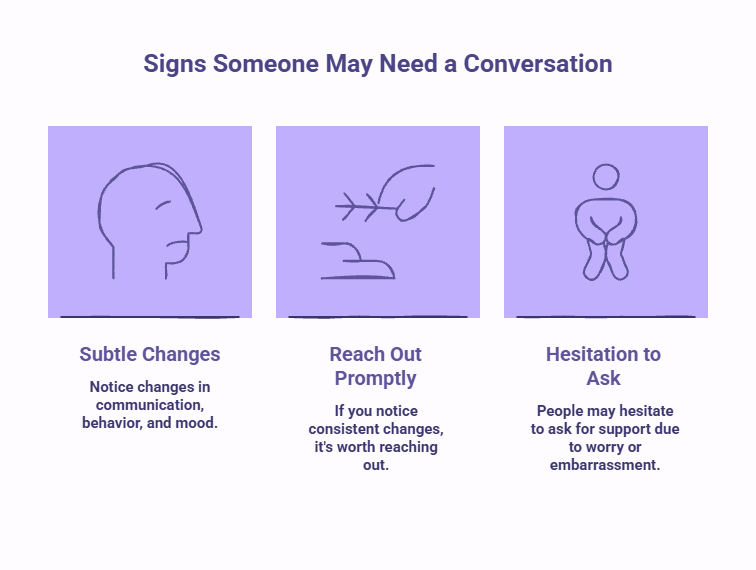
The signs are often subtle. You may notice that conversations feel shorter than they used to. Someone who normally talks openly may start giving one-word answers or stop sharing what's happening in their life.
You might also notice changes in their behaviour. They seem more worried than usual, cancel plans more often, or overthink situations that never used to bother them. On their own, these changes may not mean much. When several appear together, they can be a sign that someone is struggling silently.
2. When should you reach out instead of waiting?
Many people wait for a clear sign before checking in. The challenge is that anxiety does not always look obvious from the outside.
If you keep noticing changes in someone's mood, communication, or behaviour, it is usually worth reaching out. You do not need the perfect words. A simple, "You've seemed a little quieter lately. How have you been?" can open the door without putting pressure on them to explain everything.
3. Why people rarely ask for support directly
Even when someone wants support, they may hesitate to ask for it. They might worry about being a burden, feel embarrassed about what they are experiencing, or assume other people will not understand.
That is why someone may say they are fine even when they are overwhelmed. Sometimes they are protecting themselves. Sometimes they are still trying to make sense of their own feelings. Knowing this can help you respond with patience rather than frustration when they do not open up right away.
You do not need to know exactly what someone is going through to check in. Often, noticing that something feels different and reaching out with genuine care is enough to start a conversation that might otherwise never happen.
Why does feeling heard matter when someone has anxiety?
When someone talks about anxiety, they are not always looking for answers. Often, they are trying to share something that feels difficult, confusing, or overwhelming. How you respond in that moment can shape whether they feel comfortable opening up again.
1. Why feeling heard matters
Many people with anxiety worry that others will dismiss their concerns or tell them they are overreacting. When you listen without judgment, you send a different message: what they are feeling matters.
You do not need perfect words. Simple responses such as "That sounds really difficult" or "I'm glad you told me" can help someone feel understood instead of dismissed.
2. What happens when someone feels understood?
Feeling understood does not make anxiety disappear. What it can do is make someone feel less alone with what they are carrying.
A conversation often changes when a person feels safe. They may become more open, explain what they are experiencing more clearly, or simply feel relieved that they no longer have to keep everything to themselves.
3. Why listening is not the same as fixing
It is natural to want to solve the problem, especially when you care about someone. But jumping straight into advice can sometimes make a person feel rushed or misunderstood. Listening is not about having the right solution. It is about understanding what the other person is experiencing before deciding whether they even want help solving it. Sometimes the most supportive response is not advice at all. It is simply staying present and letting them know they do not have to face it alone.
When people feel heard rather than judged, they are often more willing to keep the conversation going, which is why the way you start that conversation matters just as much as your willingness to listen.
How do you start a conversation without making them feel pressured?
Many people worry about saying the wrong thing when someone they care about is experiencing anxiety. You do not need the perfect opening. What matters most is creating a conversation that feels safe, patient, and free from pressure.
A gentle conversation often starts with an observation rather than an assumption.
For example:
- "I've noticed you seem a little overwhelmed lately."
- "You don't have to talk if you don't want to, but I'm here if you need me."
- "I've been thinking about you. How have things been recently?"
If they say they are fine, avoid pushing for more. Someone experiencing anxiety may need time before they feel comfortable opening up.
Instead:
- Let them know you're available whenever they're ready.
- Check in again another day without making them feel guilty.
- Continue treating them normally instead of making every conversation about anxiety.
When anxiety is high, the conversation itself can feel overwhelming. These approaches often make it easier:
- Ask one question at a time instead of several at once.
- Give them extra time to answer without filling the silence.
- Avoid rapid follow-up questions that can feel like pressure.
- Don't mistake silence or hesitation for rejection.
- Accept short answers if they don't have the energy to explain more.
The goal is not to get immediate answers. It is to help the other person feel safe enough to talk at their own pace.
What should you avoid saying to someone with anxiety?
Most people do not say the wrong thing because they do not care. They say it because they want the anxiety to go away.
When someone you care about is overwhelmed, it is natural to look for reassurance, advice, or a quick way to make them feel better. The problem is that anxiety rarely responds to simple solutions.
1. Common phrases that can feel dismissive
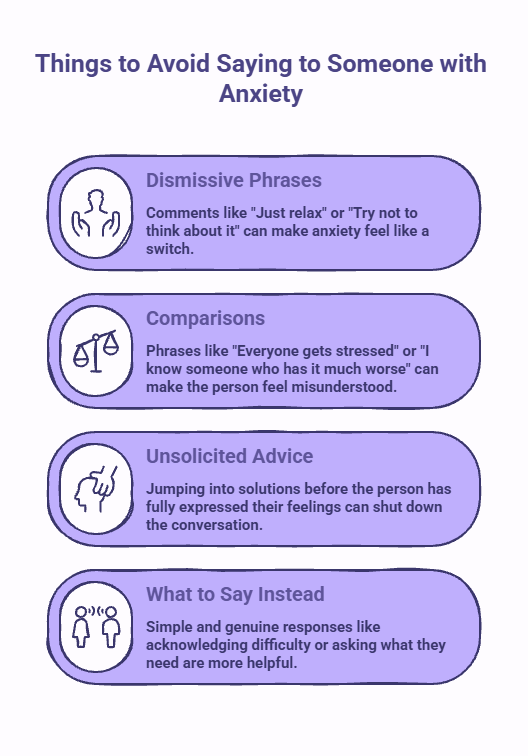
Comments like "Just relax" or "Try not to think about it" are usually meant to help. But when someone is already struggling, these phrases can make them feel as though their anxiety is something they should be able to switch off.
Even well-intentioned reassurance can sometimes miss the mark if it skips over what the person is actually feeling.
2. Why comparisons rarely help
When people do not know what to say, they often reach for perspective.
"Everyone gets stressed."
"I know someone who has it much worse."
The intention is usually to make the problem feel smaller. Instead, it can make the person feel misunderstood. Anxiety is not a competition, and most people are not looking for proof that their struggle is justified. They want to know that someone is willing to listen.
3. Why advice is not always helpful
Advice works best when someone is ready for it.
If a person is still trying to explain what they are feeling, jumping straight into solutions can accidentally shut the conversation down. Instead of feeling supported, they may feel like they need to defend why they are struggling in the first place.
Sometimes the most helpful thing you can do is stay with the conversation a little longer before trying to solve it.
4. What can you say instead?
You do not need perfect words. In most situations, simple and genuine responses are enough. Acknowledging that something feels difficult, asking what they need, or simply letting them know you are there can help someone feel more supported than advice or reassurance given too quickly. People rarely remember the exact words you used. They remember whether they felt judged, dismissed, or genuinely heard.
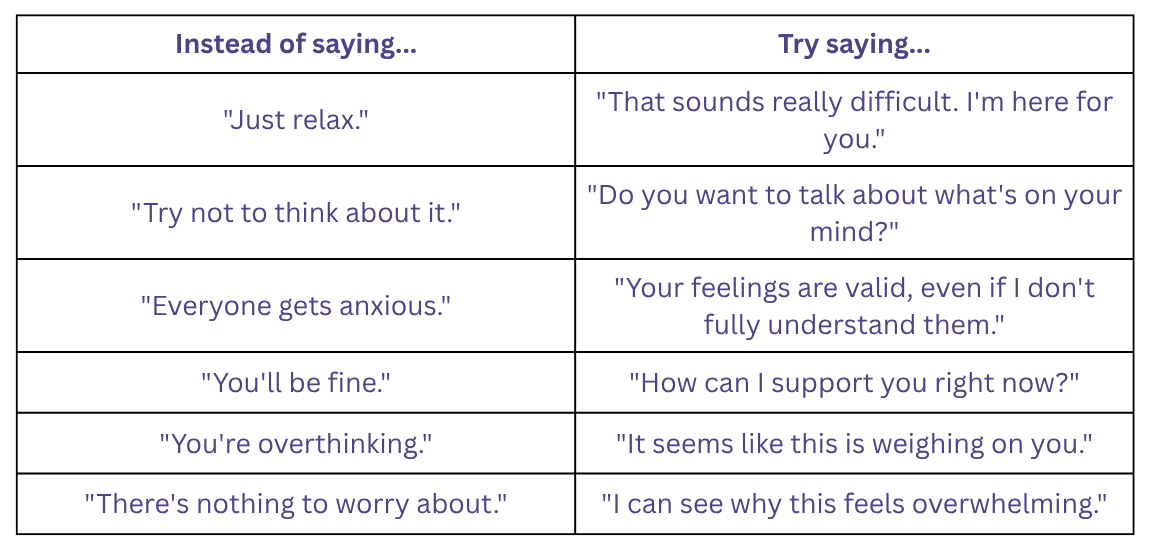
You do not have to say everything perfectly. Often, the difference between a helpful conversation and a frustrating one is whether the other person feels understood before they feel advised.
Why might someone find it difficult to talk about anxiety?
Talking about anxiety is often harder than it looks. Some people struggle to explain how they feel, while others worry about being judged, misunderstood, or becoming a burden to someone they care about. Even when they want support, putting anxious thoughts into words can feel overwhelming.
You may notice someone pausing mid-sentence, changing the subject, or saying they are "fine" even when they are clearly struggling. That does not always mean they are avoiding the conversation. They may still be trying to understand what they are experiencing.
Common reasons someone may find it difficult to talk about anxiety include:
- Racing thoughts make it difficult to explain how they feel clearly.
- Fear of saying the wrong thing or worrying that others will not understand.
- Emotional overwhelm, where talking about anxiety feels as exhausting as experiencing it.
- Difficulty identifying their own emotions, making it hard to describe what is wrong.
Giving someone time to think, speak, and even pause without interruption can make conversations feel much less overwhelming. Patience often helps people feel safe enough to open up at their own pace.
How can you be here for someone without having all the answers?
Supporting someone with anxiety is not about always knowing the right thing to say. Often, the most meaningful support comes from small actions that show you care, even when there is nothing to fix.
Consistency matters more than grand gestures. Simple, thoughtful actions can help someone feel supported without putting pressure on them to talk before they are ready.
1. Small ways to show support
You don't have to solve someone's anxiety to make a difference. Consider:
- Remembering important dates, appointments, or stressful events.
- Following up after a difficult day or therapy session.
- Inviting them to spend time together without expecting them to say yes.
- Respecting cancelled plans instead of making them feel guilty.
- Offering practical help, such as running errands or accompanying them somewhere if they ask.
2. Support their needs, not your expectations
Some days they may want to talk. Other days, they may simply appreciate knowing someone is thinking about them. Giving people space while remaining consistently present often builds more trust than trying to help in every moment.
Being supportive is not about having expert advice. It is about showing up in ways that make someone feel accepted, respected, and less alone.
How do you support someone with depression and anxiety?
Sometimes anxiety and depression happen at the same time. When they do, a person may seem worried, overwhelmed, withdrawn, or exhausted, often all at once. That combination can make it harder for them to talk about what they are feeling or ask for support.
As a listener, your role does not change. Focus on listening without judgment, checking in consistently, and keeping expectations realistic. Some days they may want to talk. Other days, they may not.
What often helps most:
- Being patient when conversations feel difficult
- Respecting their pace
- Offering support without pressure
- Encouraging additional help when needed
You do not need to understand every detail of what they are experiencing. Sometimes knowing someone is willing to listen can make difficult days feel a little less isolating.
How can you support someone without neglecting your own well-being?

Caring about someone with anxiety does not mean putting your own needs on hold. Many listeners focus so much on supporting another person that they stop noticing their own stress, exhaustion, or emotional limits. Supporting someone is often easier to sustain when you look after yourself too. Healthy boundaries help you stay present without feeling responsible for solving everything.
1. When does supporting someone start affecting you?
Sometimes the signs appear gradually. You may find yourself worrying about them constantly or feeling guilty whenever you are unavailable.
Pay attention if you:
- Feel emotionally drained after every conversation
- Struggle to switch off or relax
- Neglect your own needs and responsibilities
- Feel responsible for managing their emotions
Recognising these signs early can help prevent emotional burnout.
2. Who can you talk to for support?
Supporting someone should not mean carrying everything alone. Having your own support system can help you process difficult emotions and maintain perspective.
You might talk to:
- A trusted friend or family member
- A counsellor or mental health professional
- A support group for carers or loved ones
Seeking support for yourself does not take away from the person you care about. It helps you continue showing up in a healthy way.
3. How can you avoid emotional burnout?
Looking after yourself does not require a complete lifestyle change. Small habits can make a meaningful difference.
Consider:
- Taking breaks after emotionally heavy conversations
- Making time for activities that help you recharge
- Maintaining healthy routines around sleep, food, and movement
- Being honest about what support you can realistically provide
Supporting someone is not about being available every moment. It is about offering care in a way that is sustainable for both of you, so that your support can remain steady when it is needed most. And if you need a space to share your own thoughts or feel heard without judgment, platforms like Listennr can provide supportive conversations for listeners, too.
When should you encourage additional support?
Sometimes listening and checking in are no longer enough on their own. If anxiety is affecting someone's daily life or causing ongoing distress, additional support may help.
Encouraging professional support is not about replacing your support. It is about helping someone access more tools and guidance when they need it.
1. Signs that additional support may help
You might consider encouraging additional support if:
- Anxiety is affecting work, school, or daily routines
- Panic or overwhelm is becoming more frequent
- They seem stuck despite ongoing support
- They are struggling to cope on their own
- You are concerned about their safety or well-being
These signs do not mean something is wrong with the person. They simply suggest that more support may be helpful.
2. How can you suggest support without sounding forceful?
Keep the conversation gentle and low-pressure. The goal is to offer an option, not make a decision for them.
It can help to:
- Focus on concern rather than criticism
- Mention support as a possibility, not a requirement
- Respect their right to choose
- Keep the conversation open
People are often more receptive when they feel supported rather than persuaded.
3. What if they refuse?
Not everyone is ready to accept help straight away. If they say no, try not to argue or push.
Instead:
- Acknowledge their feelings
- Keep checking in when appropriate
- Leave the door open for future conversations
- Continue offering support where you can
Sometimes the most helpful thing you can do is plant the seed and allow them time to consider it. Knowing when to encourage additional support is part of supporting someone well. Sometimes helping them take the next step is one of the most caring things you can do.
Can talking online help someone living with anxiety?
For some people, talking face-to-face about anxiety feels more overwhelming than the anxiety itself. They may worry about being judged, becoming emotional, or not knowing how to explain what they are feeling. Because of that, opening up online can sometimes feel like a more comfortable first step.
Writing or speaking to someone outside your personal circle can reduce some of the pressure. It allows people to share what is on their mind at their own pace, without worrying about awkward silences or finding the perfect words.
If someone you care about feels more comfortable talking online, a listening platform such as Listennr can provide a private, supportive space where they can:
- Talk anonymously in a safe environment.
- Share thoughts and feelings without pressure.
- Connect with compassionate listeners.
- Open up at their own pace.
- Feel heard without fear of judgment.
Sometimes, the hardest part is simply starting the conversation. If talking face-to-face feels overwhelming, exploring a supportive online space can be a gentle first step toward opening up. If anxiety has been making it difficult to open up, Listennr can provide a safe space to start the conversation. Download The App!
Conclusion
Supporting someone with anxiety is not about having the perfect response. It is about listening with patience, showing understanding, and creating a space where they feel safe enough to share what they are going through.
While you cannot take anxiety away for someone else, you can help them feel less alone. And when opening up feels difficult, supportive spaces like Listennr can provide a safe, judgement-free place to talk, feel heard, and connect with compassionate listeners who are ready to listen.
Frequently asked questions
What phrases should I avoid when talking to someone with anxiety?
Avoid phrases like "Just calm down," "You're overthinking," "There's nothing to worry about," or "Everyone feels anxious sometimes." These comments can feel dismissive and make someone less likely to open up.
How can I encourage someone with anxiety to share their feelings?
Encourage them gently without pressure. Ask open-ended questions, listen without judgment, and let them know you are there whenever they feel ready to talk. Sometimes, feeling safe matters more than finding the right words.
When is it right to suggest professional help for anxiety?
It may be time to suggest professional help when intense anxiety is lasting, getting worse, affecting daily life, relationships, work, or sleep, or causing significant distress. Approach the conversation with care and focus on concern rather than pressure.
Are there any ground rules for communicating with someone who has social anxiety?
Yes. Be patient, avoid putting them on the spot, respect their pace, and listen without judgment. The most important thing is to give them time to respond, avoid pressuring them to speak, and focus on creating a calm, comfortable conversation.
What are some helpful conversation starters for discussing anxiety with a loved one?
You could say, "I've noticed you've seemed stressed lately. How have you been feeling? Have you considered any coping strategies for young people?", "Is there anything on your mind you'd like to talk about regarding your coping strategies?", or "I'm here to listen if you want to share what's been going on with your coping strategies." These openings feel caring without creating pressure.
How can I support a friend who is experiencing anxiety during a stressful moment?
Stay calm, listen without judgment, and avoid rushing to solve the problem. Offer reassurance, help them focus on the present moment, and ask what kind of support would feel most helpful for the person’s feelings right now.