.jpg)
How to Talk to Someone With Depression and Anxiety: What Helps?

Key highlights
- Depression and anxiety can make it difficult for someone to communicate, even when they need support.
- Changes in behaviour often reveal more than words when someone is struggling emotionally.
- Starting a calm, low-pressure conversation can make it easier for someone to open up.
- Listening without judgment is often more helpful than offering immediate advice or solutions.
- Small changes in language can help conversations feel more supportive and less dismissive.
- Professional support may be needed when emotional struggles begin affecting daily life.
- Listennr helps create meaningful conversations by connecting people with compassionate listeners.
If you have ever worried about saying the wrong thing to someone experiencing depression or anxiety, you are not alone. Many listeners, friends, family members, and supporters want to help but feel unsure how to start the conversation. It can be difficult to know what to say when someone seems withdrawn, overwhelmed, or unlike themselves.
The challenge is that depression and anxiety do not always look the way people expect. Someone might seem distant, cancel plans more often, withdraw from conversations, or insist they are fine when they clearly are not. As a listener, it can be frustrating to watch someone struggle while feeling unsure how best to support them.
The good news is that you do not need perfect words to make a difference. Often, what helps most is being present, listening without judgment, and creating a space where someone feels safe enough to talk. Whether you are unsure how to talk to someone with depression and anxiety or simply want to be more supportive, this guide will help you start meaningful conversations and respond with confidence and care.
What should you understand about depression and anxiety first?
Before deciding what to say, it helps to understand why someone with depression or anxiety may communicate differently than usual.
Messages may go unanswered, conversations may feel one-sided, or attempts to help may be met with silence. While this can be frustrating, it does not necessarily mean support is unwanted. Depression and anxiety can make communication far more difficult than it appears from the outside.
Why do depression and anxiety make communication difficult?
Depression and anxiety can create barriers that make conversations feel harder than they appear from the outside.
- Emotional exhaustion: Even simple interactions can require significant mental energy.
- Difficulty explaining feelings: Someone may know they are struggling but find it difficult to put their emotions into words.
- Overthinking: Anxiety can lead to constant second-guessing about what to say and how it will be received.
- Fear of judgement: They may worry about being misunderstood, criticised, or seen differently if they open up.
These challenges can make communication feel overwhelming, even when someone wants support.
Why might someone resist support?
People do not always reject support because they do not want it. Sometimes they reject it because accepting support feels difficult.
They may:
- Worry about becoming a burden.
- Feel embarrassed about what they are experiencing.
- Believe they should handle things on their own.
- Feel unsure whether others will understand.
When considering how to talk to someone with depression and anxiety, it helps to remember that hesitation is not always rejection. Sometimes it reflects fear, uncertainty, or the difficulty of asking for help.
How can you tell if someone may need a conversation?

Not everyone will tell you when they are struggling. In fact, many people try to carry their stress, anxiety, or low mood privately for as long as possible. That is why it helps to pay attention to noticeable changes in behaviour rather than waiting for someone to openly ask for support.
What changes should listeners pay attention to?
Not everyone will openly say that they are struggling. In many cases, the first signs appear in the way they communicate and interact with the people around them.
As a listener, pay attention to changes such as:
- They stop initiating conversations: Someone who usually checks in may become noticeably quieter.
- They reply with one-word answers: Conversations may feel shorter or less engaged than usual.
- They avoid calls but still respond to texts: Talking may feel more demanding than messaging.
- They stop sharing updates about their lives: Personal stories, opinions, or everyday details become less common.
- They cancel plans more often: Social interactions may start to feel overwhelming or exhausting.
- They seem unusually worried or distracted: Conversations may reveal increased stress, worry, or difficulty concentrating.
These changes do not automatically mean someone is experiencing depression or anxiety. However, if they represent a noticeable shift from the person's usual behaviour, it may be worth checking in rather than waiting for them to ask for support.
When should you reach out instead of waiting?
Many people assume that someone who needs support will ask for it. In reality, people struggling with depression or anxiety may stay silent because they do not want to burden others, are unsure how to start the conversation, or do not fully recognise how much they are struggling.
A key part of how to talk to someone with depression and anxiety is knowing when to reach out rather than waiting for certainty. If you have noticed a meaningful change in someone's behaviour, a simple check-in can often provide support long before a situation becomes overwhelming.
What happens when people feel genuinely heard?
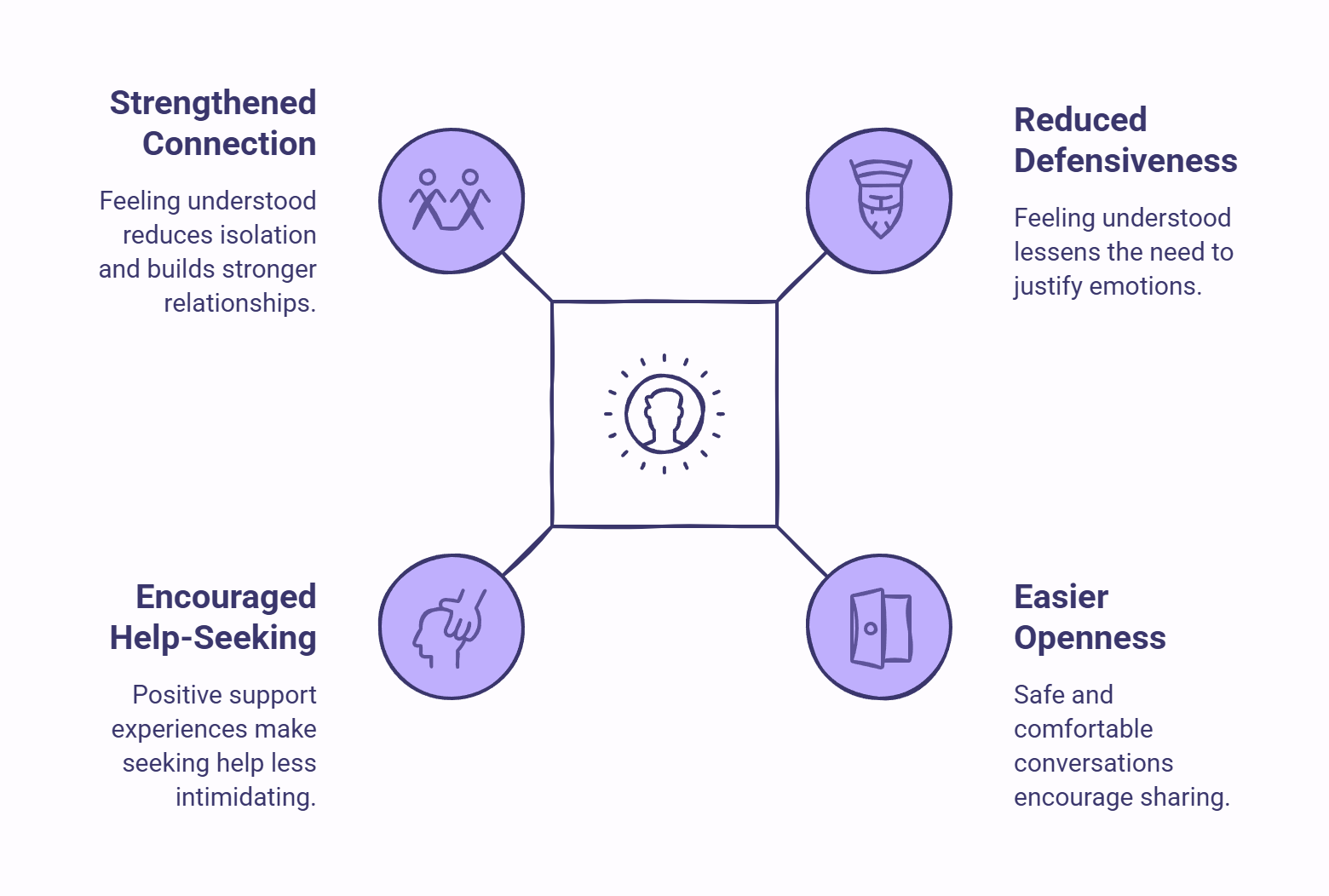
When someone is struggling, listening may not feel like enough. However, research suggests that feeling heard can have a meaningful impact on emotional well-being.
A study published in the Journal of Personality and Social Psychology found that high-quality listening helps people feel more understood, less defensive, and more open when discussing personal experiences.
For someone dealing with depression or anxiety, feeling genuinely heard can:
- Reduce defensiveness: They feel less pressure to justify or explain their emotions.
- Make it easier to open up: Conversations often feel safer and more comfortable.
- Encourage help-seeking: Positive experiences with support can make future conversations feel less intimidating.
- Strengthen connection: Feeling understood can reduce the sense of isolation that often accompanies emotional struggles.
Listening does not solve every problem. However, it can create the conditions for more honest conversations, stronger relationships, and a greater willingness to seek support when needed.
When someone you care about is struggling, listening may not feel like enough. However, research suggests that feeling heard can have a meaningful impact on emotional well-being.
If you believe in the power of compassionate conversations, download the Listennr app and join a community dedicated to helping people feel heard, understood, and less alone.
How do you start a conversation without making them feel pressured?
Starting a conversation about depression or anxiety can feel uncomfortable, especially if you are worried about saying the wrong thing. The goal is not to get immediate answers. It is to create a space where the other person feels comfortable talking if they choose to.
1. What can you say to open the conversation?
You do not need a carefully rehearsed script to begin. A simple observation or gentle question is often enough to open the door to a conversation.
Conversation starters that feel natural
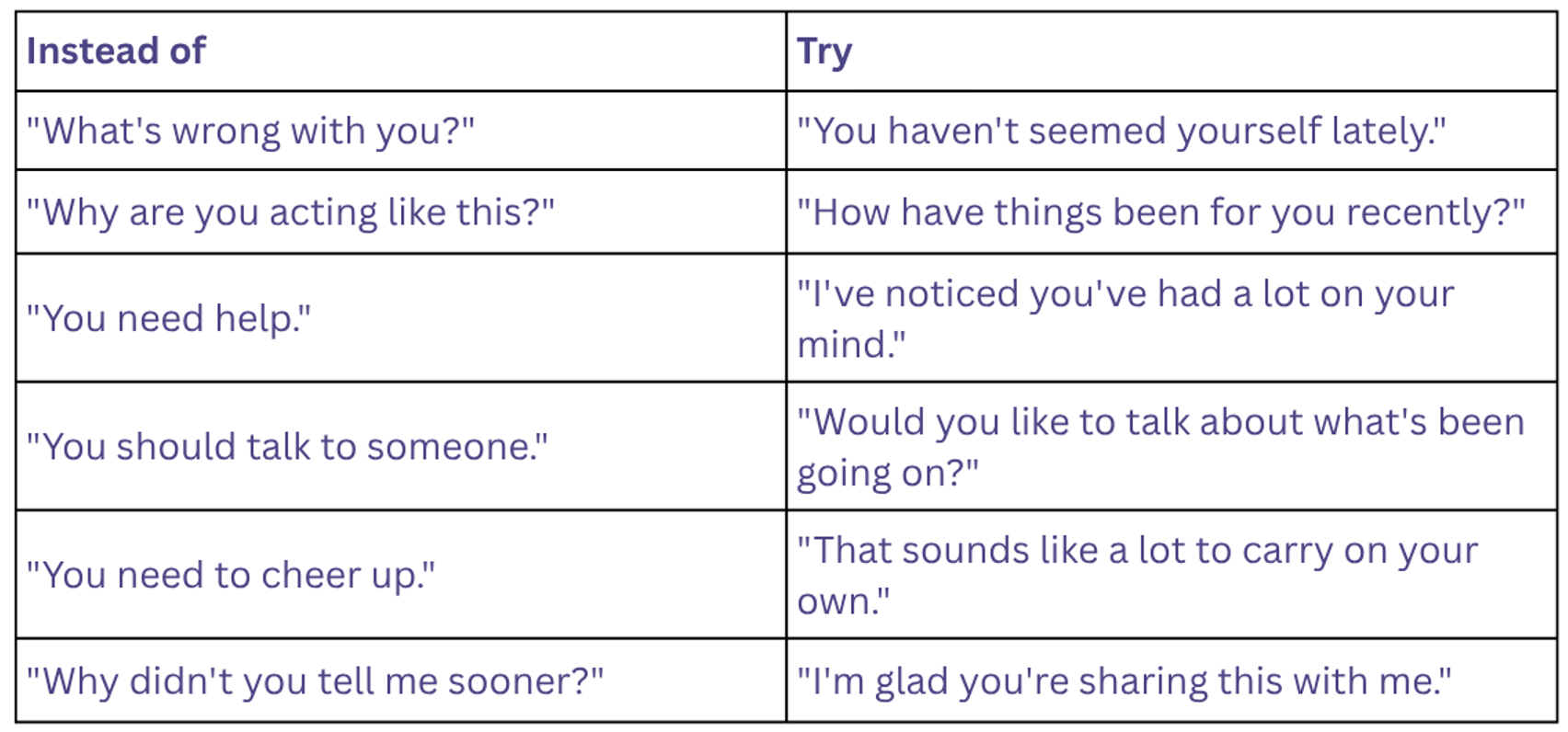
Timing matters too. Whenever possible, choose a calm, private moment rather than bringing up sensitive concerns during an argument, a stressful situation, or in front of other people.
2. What if they say they are fine?
Many people are not ready to talk the first time someone checks in. Rather than pushing for more information, let them know the conversation can happen whenever they feel comfortable.
You could say:
"That's okay. I just wanted to check in. If you ever want to talk, I'm here."
A supportive conversation is often built over multiple interactions rather than a single discussion.
3. Listen more than you speak
If they choose to open up, focus on listening rather than planning your response. Active listening means giving them your full attention, allowing them to finish their thoughts, and showing that you are engaged in what they are saying.
Simple responses such as:
- "That sounds really difficult."
- "I'm glad you told me."
can help someone feel heard without shifting the focus away from their experience.
4. Focus on understanding rather than fixing
Many people instinctively move into problem-solving mode. However, someone talking about depression and anxiety often needs understanding before advice.
Instead of immediately suggesting solutions, try asking:
- "What has been the hardest part recently?"
- "How long have you been feeling this way?"
- "What would be helpful right now?"
It is also important to be comfortable with pauses. Giving someone time to gather their thoughts can make the conversation feel less pressured.
Your role is not to become their therapist. Your role is to help them feel heard. Sometimes the most supportive thing you can do is listen without trying to fix the situation.
What should you avoid saying to someone who is struggling?
A common challenge with how to talk to someone with depression and anxiety is resisting the urge to immediately make the person feel better. Even well-intentioned comments can sometimes make someone feel dismissed rather than supported.
Phrases to avoid
Some common responses can unintentionally minimise what the other person is experiencing, such as:
- "Just think positive."
- "Everyone feels like this sometimes."
- "You have nothing to be anxious about."
- "Things could be worse."
- "You're overthinking it."
- "Cheer up."
- "You need to be stronger."
These comments are often intended to reassure, but they can make someone feel unheard rather than understood.
What can you say instead?
Simple, supportive responses are often more helpful than advice or reassurance. Consider responses such as:
- "That sounds really difficult."
- "I can see this is affecting you."
- "I'm sorry you're going through this."
- "I'm here with you."
- "I'm glad you told me."
- "You don't have to go through this alone."
- "Tell me more about what's been on your mind."
- "How can I support you right now?"
The goal is not to find the perfect response. Focus on acknowledging their experience rather than trying to immediately change how they feel. A person is more likely to feel supported when their experience is acknowledged, not explained away.
What if they cannot talk much due to anxiety or depression?
Some people struggle to talk about what they are feeling, even when they want support. If someone cannot talk too much due to anxiety or depression, it does not necessarily mean they are rejecting help. Often, the challenge lies in expressing what they are experiencing.
Why might talking feel difficult?
Several factors can make conversations feel overwhelming:
- Emotional exhaustion: When someone is already struggling, even a short conversation can feel mentally draining.
- Fear of judgement: They may worry about being misunderstood, criticised, or seen as a burden.
- Difficulty organising thoughts: Strong emotions can make it harder to clearly explain what they are feeling.
- Anxiety about saying the wrong thing: They may overthink their words or worry about how others will react.
How can you support them?
Try reducing the pressure rather than increasing it:
- Sit with them without expecting a conversation.
- Ask short, simple questions.
- Accept brief answers without pushing for more.
- Check in consistently instead of waiting for them to reach out.
- Offer text-based conversations if talking feels difficult.
Support does not always have to come through deep discussions. Sometimes a message, a regular check-in, or simply being present can be just as meaningful. A meaningful connection does not always require a long conversation. Focus on staying available rather than trying to get someone to open up immediately.
Every meaningful conversation has the potential to change someone's day, perspective, or sense of connection. Read real stories from the Listennr community and discover how compassionate listening has helped people feel heard, supported, and understood.
How can you be there for someone without having all the answers?
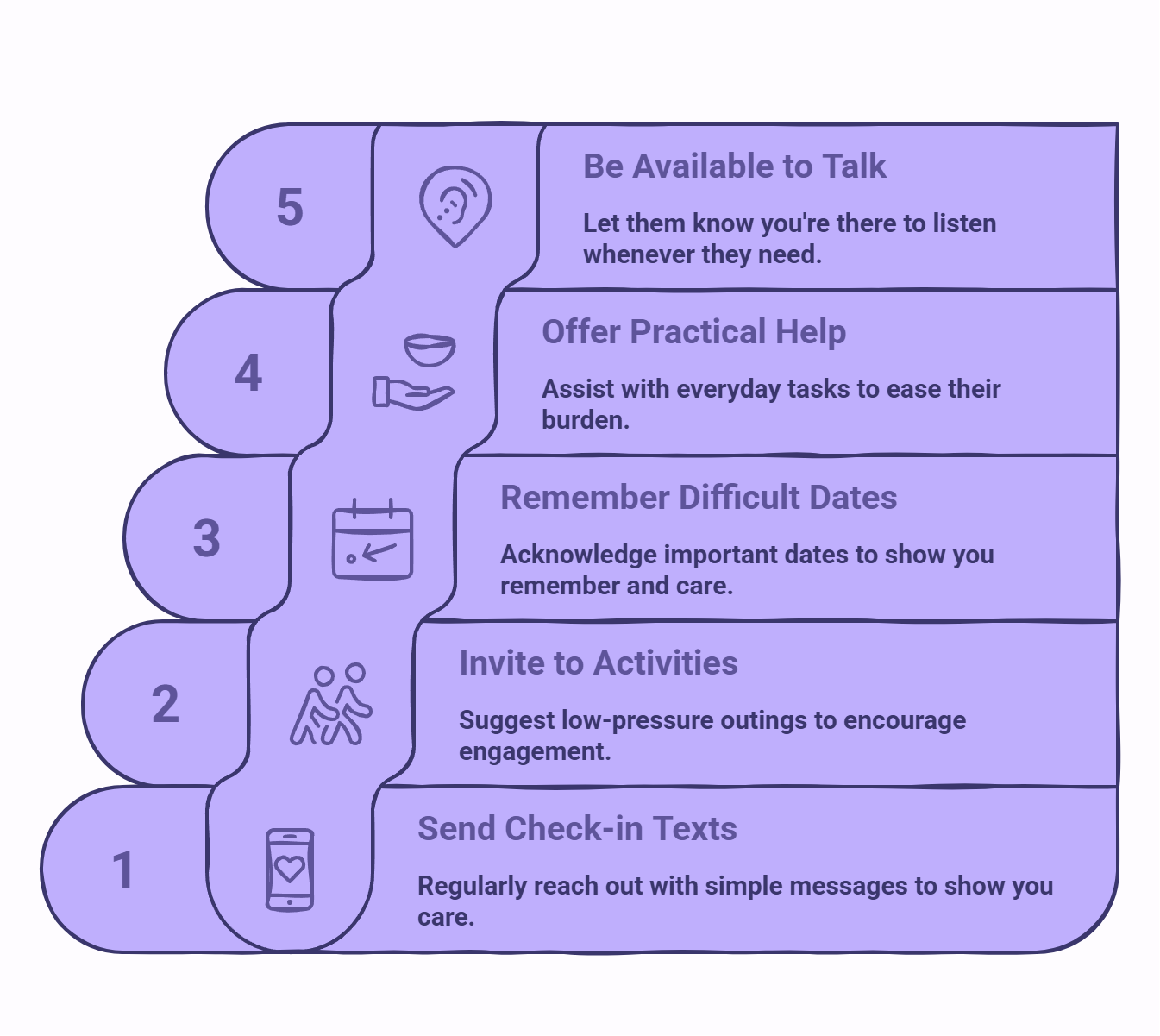
Supporting someone with depression or anxiety can feel overwhelming, especially when you are unsure whether you are helping. However, meaningful support often comes from consistent actions rather than perfect words.
Focus on what you can do consistently:
- Sending a simple check-in text.
- Inviting them for a walk or a low-pressure activity.
- Remembering difficult dates or anniversaries.
- Offering practical help with everyday tasks.
- Letting them know you are available when they need to talk.
As a listener, remember:
- You are not responsible for fixing what they are going through.
- Progress may be slow and difficult to notice.
- Small conversations can still be meaningful.
Many people focus so much on how to talk to someone with depression and anxiety that they overlook something equally important: being present. Consistency, patience, and a willingness to stay connected often matter more than having the perfect response. That is why a listening-first approach matters.
The ability to listen with empathy can have a lasting impact on someone's well-being. If you'd like to use those skills to support others, become a listener with Listennr and help provide the understanding and human connection that so many people are looking for.
How can you support someone without neglecting your own well-being?
Supporting someone through depression or anxiety can be emotionally demanding, particularly if they regularly rely on you for support. While being there for someone matters, it is equally important to protect your own well-being so that your support remains healthy, sustainable, and effective.
When does supporting someone start affecting your own well-being?
There is no single point at which support becomes too much. However, it may be time to step back and assess your own needs if you find yourself:
- Constantly worrying about the other person's well-being.
- Feeling emotionally drained after every conversation.
- Neglecting your own responsibilities or relationships.
- Feeling responsible for their mood or progress.
- Struggling to switch off from their problems.
Recognising these signs is not selfish. It is an important part of offering sustainable support.
Who can you talk to?
If you are wondering who to talk to about anxiety and depression while supporting someone else, consider reaching out to:
- Trusted friends who can offer perspective and emotional support.
- Family members who understand your situation and can share the emotional load.
- Support communities where others have experience supporting loved ones through similar challenges.
- Counsellors or mental health professionals who can help you navigate complex emotions and set healthy boundaries.
The goal is not to discuss someone's private struggles in detail. It is to make sure you have appropriate support for your own emotional well-being.
How can you avoid emotional burnout?
Supporting someone becomes more sustainable when you recognise your role clearly.
- Accept that you cannot control another person's choices or recovery.
- Set realistic expectations for what support can achieve.
- Continue making time for your own interests, relationships, and responsibilities.
- Take breaks when needed without feeling guilty.
- Ask for support when you need it.
You can be a valuable source of support without carrying everything on your own. Looking after your well-being is not separate from helping someone else. It is part of helping them effectively.
When should you encourage professional help?
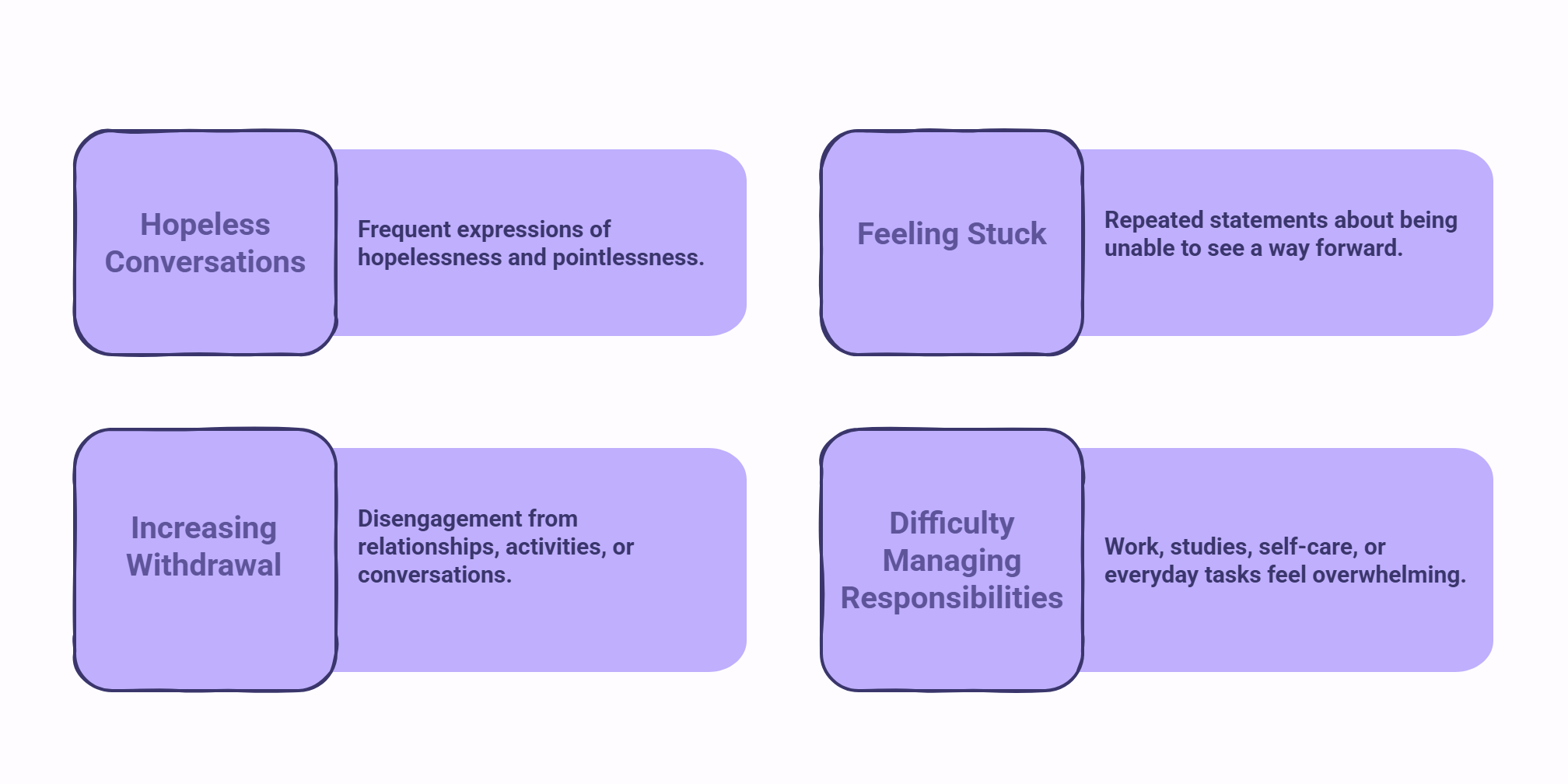
While friends, family members, and listeners can provide valuable emotional support, there are situations where additional help may be beneficial. Knowing when to encourage professional support can help ensure that someone has access to the resources they need.
Signs that additional support may be needed
As a listener, you may notice signs that suggest someone could benefit from additional support, such as:
- Conversations are becoming increasingly hopeless: They frequently express that nothing will improve or that things feel pointless.
- Repeated statements about feeling stuck: They seem unable to see a way forward despite ongoing support.
- Increasing withdrawal: They disengage from relationships, activities, or conversations over time.
- Difficulty managing daily responsibilities: Work, studies, self-care, or everyday tasks begin to feel overwhelming.
You do not need to diagnose their condition. Instead, focus on whether their difficulties appear persistent, severe, or increasingly difficult to manage alone.
How can you suggest professional help without sounding forceful?
Present professional support as an option rather than an instruction.
For example:
- "Have you thought about talking to someone who specialises in this?"
- "You don't have to carry all of this on your own."
- "Would it help to explore some additional support?"
A supportive, non-judgemental approach is often more effective than pressure.
What if they refuse help?
Not everyone will be ready to seek support immediately. If they are not interested:
- Respect their decision.
- Continue offering support.
- Check in occasionally.
- Let them know help remains available.
Patience can help preserve trust and keep the conversation open.
When does a situation become urgent?
Take immediate action if someone talks about self-harm, suicide, or feeling unable to stay safe. In these situations:
- Stay calm and listen.
- Encourage immediate support from a trusted person or professional.
- Do not leave them alone if there is an immediate risk of harm.
- Contact emergency services if necessary.
How can listeners continue building their listening skills?
Becoming a better listener is an ongoing process. The more you practise listening with empathy, patience, and curiosity, the more confident you become in supporting people through difficult conversations.
One way to develop those skills is by spending time in environments where meaningful conversations are encouraged. Having opportunities to listen, learn from others, and reflect on different experiences can help strengthen your ability to support people without judgment.
How Listennr supports listeners
Listennr provides a space where listeners can:
- Practise compassionate, judgement-free listening.
- Connect with a community that values meaningful conversations.
- Develop active listening and communication skills.
- Support people who are looking for understanding and connection.
- Make a positive difference through everyday conversations.
Learning how to talk to someone with depression and anxiety often starts with learning how to listen. Through consistent practice and real conversations, listeners can build the confidence and skills needed to help others feel heard, understood, and less alone.
Ready to make a difference?
Supporting someone does not always require advice or solutions. Sometimes, it starts with creating a safe space to listen. Learn how Listennr works and see how the platform helps listeners and talkers connect through meaningful conversations.
Being there matters more than being perfect
Supporting someone with depression or anxiety is not about having the perfect words or knowing exactly what to do. It is about being willing to listen, noticing when someone may be struggling, and creating a space where they feel comfortable talking. While you cannot solve another person's challenges for them, your presence and support can make difficult moments feel less isolating.
Sometimes, a simple conversation is enough to help someone feel understood, stay connected, and take the next step towards getting the support they need.
Frequently asked questions
How to talk to someone with depression and anxiety?
Start with a calm, non-judgmental conversation. Listen more than you speak, avoid dismissing their feelings, and focus on understanding rather than fixing their problems. Simple, supportive questions can help them feel comfortable opening up at their own pace.
What are the key differences between anxiety, stress, and depression?
Stress is usually triggered by specific life pressures. Anxiety involves ongoing worry and symptoms of anxiety, such as restlessness or an increased heart rate. Depression is characterised by persistent sadness, hopelessness, or a loss of interest in daily activities.
What are the best TED Talks about depression and anxiety?
Some of the most recommended TED talks about depression and anxiety include presentations by Johann Hari, Guy Winch, and Olivia Remes. Each TED Talk on depression and anxiety topics offers valuable insights into emotional struggles, resilience, and support.
Can anxiety cause panic attacks?
Yes. People with anxiety disorders may experience panic attacks, which can involve intense fear, a racing heart, dizziness, or shortness of breath. While distressing, panic attacks are a recognised symptom of anxiety and can be managed with support.
Why do some people hide their mental health struggles?
Many people hide their mental health struggles because they fear judgement, do not want to burden others, or feel embarrassed about what they are experiencing. Some also struggle to put their emotions into words, making it harder to open up.
Can depression and anxiety affect physical health?
Yes. Depression and anxiety can affect physical health as well as emotional well-being. Common effects include fatigue, sleep difficulties, changes in appetite, headaches, and difficulty concentrating, especially when symptoms persist over an extended period.