.jpg)
How to Talk to Someone With Depression Without Pressure?

Key highlights
- Depression can make it difficult for someone to explain what they are feeling or ask for support directly.
- Listening without judgement often helps more than rushing to offer advice or reassurance.
- Gentle, low-pressure conversations can make it easier for someone to open up when they feel ready.
- Avoid dismissive phrases, comparisons, or comments that minimise their experience.
- Consistent check-ins and small acts of support can help someone feel less alone.
- Encourage additional support if depression begins affecting daily life, relationships, or overall well-being.
- Looking after your own well-being is an important part of supporting someone else.
- For those who find it difficult to open up in person, supportive spaces like the Listennr can provide a safe way to feel heard and connected.
If someone you care about seems withdrawn, distant, or unlike themselves, knowing how to start a conversation can feel surprisingly difficult. You may want to help, but worry about saying the wrong thing, making them uncomfortable, or pushing them away.
That uncertainty is common. Depression can affect how a person communicates, responds to support, and engages with the people around them. As a result, friends, partners, and family members are often left wondering how to check in without adding pressure.
Learning how to talk to someone with depression is not about finding the perfect words. It is about understanding what they may be experiencing, knowing how to approach the conversation with care, and creating space where they feel comfortable opening up if they choose to.
What should you understand about depression before starting a conversation?
If someone you care about seems distant, withdrawn, or harder to reach than usual, it is natural to wonder whether you should say something. Before starting that conversation, it helps to understand that depression can affect how people communicate, respond to support, and connect with others.
You might notice things like:
- Replying less often or giving short answers
- Cancelling plans or avoiding social situations
- Seeming emotionally distant or distracted
- Struggling to explain how they feel
- Turning down support or help
- Withdrawing from conversations they would normally engage in
These changes can be confusing, especially when you are trying to help. It is easy to assume someone is upset with you, does not want support, or prefers to be left alone. In many cases, that is not what is happening. Depression can make communication feel exhausting, even with people a person trusts and cares about.
These reactions do not necessarily mean they do not appreciate your support or want you in their life. Understanding that difference can help you approach the conversation with more patience, less self-doubt, and a greater willingness to listen.
How can you tell if someone may need a conversation?
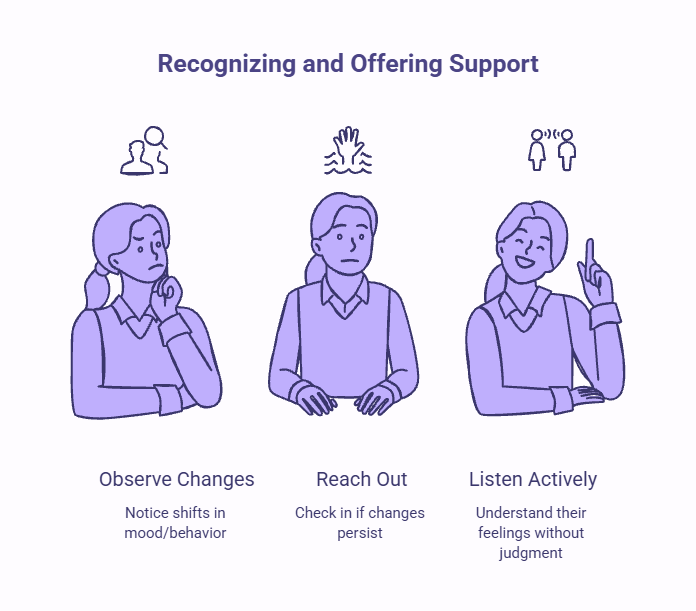
People do not always tell others when they are struggling. Often, the signs appear through changes in mood, behaviour, or daily routines long before someone asks for help. Paying attention to these shifts can help you recognise when a caring conversation may be needed.
1. What changes should listeners pay attention to?
You do not need to diagnose someone to notice that something feels different. Depression often affects how people engage with others, manage daily responsibilities, and take care of themselves. Watch for changes such as:
- Withdrawing from friends, family, or social activities
- Losing interest in hobbies or routines they once enjoyed
- Sleeping much more or much less than usual
- Changes in appetite or eating habits
- Seeming unusually hopeless, irritable, or emotionally flat
- Struggling with motivation or everyday tasks
These signs do not automatically mean depression, but they may indicate that someone is having a difficult time and could benefit from support.
2. When should you reach out instead of waiting?
Many people hesitate because they are afraid of saying the wrong thing. However, if noticeable changes continue for several weeks or seem to be affecting someone's daily life, it is usually better to check in than stay silent. A simple conversation can help someone feel seen and supported before they become more isolated or overwhelmed.
3. Why do people rarely ask for support directly?
People do not always ask for help when they need it. Depression can make someone feel like a burden, doubt whether others will understand, or struggle to put their feelings into words.
Sometimes the most meaningful conversations begin because someone chose to check in rather than wait to be asked.
Can listening really make a difference?
When someone is struggling with depression, it is natural to want to help. Many people look for advice, solutions, or the right thing to say. Yet in many conversations, support begins with listening rather than problem-solving.
1. Why Does Listening Matter?
Depression can make it difficult for people to talk about what they are experiencing. They may be unsure where to start, worry about being misunderstood, or find it exhausting to explain what they are feeling.
A patient listener can make those conversations feel easier. Giving someone space to talk without rushing them can help reduce the pressure they may already be carrying.
2. Why Is Listening Not the Same as Fixing?
One of the most common mistakes people make is moving too quickly into solutions. While the intention is good, advice is not always what someone needs in the moment.
Instead of trying to solve the problem immediately, focus on understanding what the person is experiencing first.
It can help to:
- Listen without interrupting
- Avoid jumping straight to solutions
- Ask questions instead of making assumptions
- Let the person set the pace of the conversation
You do not need to have the answers to make a conversation meaningful. Often, being willing to listen is what makes it easier for someone to keep talking.
How do you start a conversation without making them feel pressured?
Starting a conversation about depression can feel uncomfortable, especially when you are worried about saying the wrong thing. The goal is not to get someone to open up immediately. A good place to start is to create a safe, low-pressure space where they know support is available whenever they feel ready to talk.
1. What can you say to open the conversation?
You do not need a perfect script to start a meaningful conversation. Focus on what you have noticed, express your concern, and leave room for them to respond in their own way.
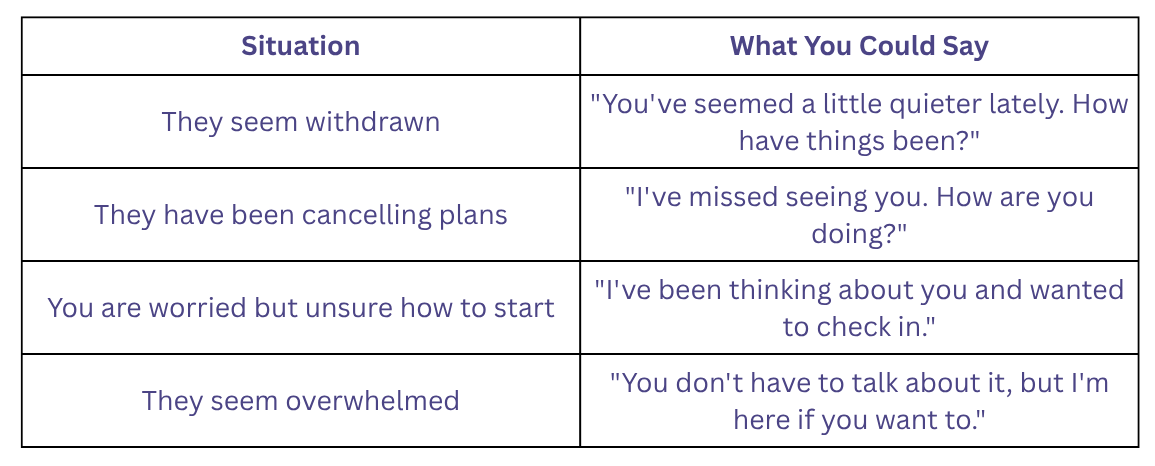
The goal is not to get someone to open up immediately. It is to let them know they do not have to handle everything alone.
2. What if they say they are fine?
Many people do not open up the first time someone asks. They may not feel ready, know how to explain what they are experiencing, or feel comfortable discussing it yet. Instead of pushing for answers, let them know you are available and check in again another time. Consistent support often matters more than one conversation.
3. Listen more than you speak
Once someone starts talking, resist the urge to fill every silence or offer immediate advice. Open-ended questions such as "How have things been lately?" or "What has been weighing on you?" can encourage them to share more. The more space you give them to speak, the more supported they are likely to feel.
4. Focus on understanding rather than fixing
It is natural to want to make things better, but depression, including severe depression, is not something that can be solved with the right words. Instead of searching for solutions, focus on understanding their experience. Simple responses such as "That sounds really difficult" or "I can see why that feels overwhelming" often help people feel heard and supported.
The way you respond can shape how safe someone feels continuing the conversation. Just as important as what you say is knowing what comments and reactions may unintentionally cause harm.
What should you avoid saying to someone who is struggling?
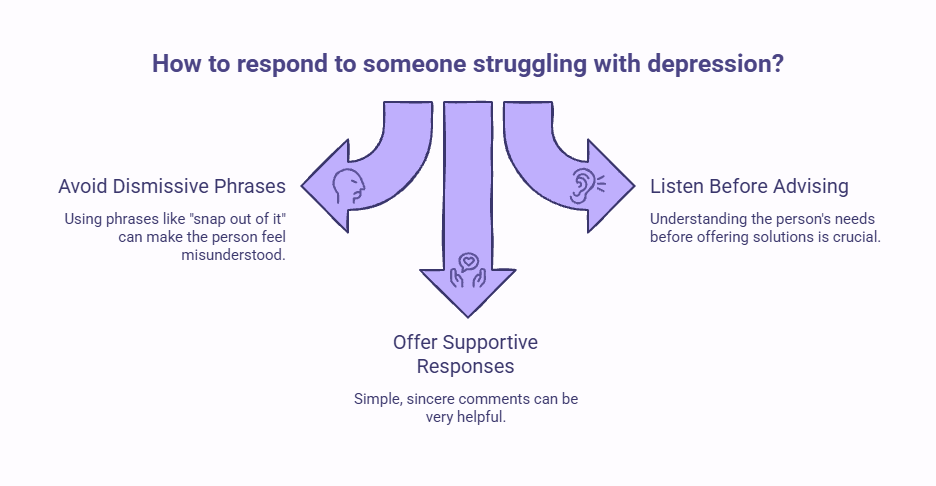
Good intentions do not always translate into helpful conversations. Some comments that sound encouraging can feel dismissive to someone living with depression. When people feel judged, compared, or pressured to "get over it," they may become less willing to open up about what they are experiencing.
1. Common phrases that can feel dismissive
Depression is not something people can simply switch off. Comments that minimise what someone is going through can make them feel misunderstood or reluctant to keep talking.
Avoid phrases such as:
- "Just snap out of it."
- "Everyone goes through tough times."
- "Try to look on the bright side."
- "You have so much to be grateful for."
- "Other people have it worse."
Instead of helping, these comments can make someone feel as though their struggles are being dismissed rather than acknowledged.
2. Why advice is not always helpful
When someone first opens up, they are often looking for understanding rather than solutions. Jumping straight into advice can make the conversation feel rushed or one-sided. Listening first gives you a better understanding of what they need and whether they are looking for suggestions or simply a space to talk.
3. What can you say instead?
Supportive responses do not need to be perfect. Often, the most helpful comments are simple and sincere.
Try saying:
- "I'm glad you told me."
- "That sounds really difficult."
- "I'm here to listen."
- "You do not have to go through this alone."
- "What kind of support would feel helpful right now?"
These responses acknowledge what the person is experiencing without minimising their feelings or trying to fix the situation immediately.
The words you avoid matter, but so does the way you respond. Creating a supportive conversation often starts with understanding why someone may find it difficult to talk about what they are going through.
What if they cannot talk much due to depression?
Not everyone experiencing depression can talk openly about what they are feeling. Some people struggle to find the words, while others simply do not have the energy for long conversations. If someone seems quiet, withdrawn, or unable to explain what is wrong, it does not mean they do not value your support.
1. Why do some people struggle to explain what they are feeling
Depression can affect concentration, energy, and emotional awareness, making it difficult for someone to put their experiences into words. They may know they are struggling but find it hard to explain exactly what they are feeling. Instead of expecting detailed answers, reassure them that they do not need perfect words for you to listen and care.
2. What if they only give short answers?
Short answers are common when someone is experiencing feelings of sadness, feeling emotionally overwhelmed or exhausted. Rather than pushing for more information, focus on keeping the conversation comfortable and manageable. A simple check-in can be more helpful than a deep discussion if that is all they have the energy for at the moment.
3. How can you stay supportive without pushing them?
Support does not always have to come through conversation. Small actions can remind someone that they are not alone, even when they do not feel like talking.
You can try:
- Sitting with them quietly
- Sending a short message to check in
- Inviting them for a walk or coffee without pressure
- Offering help with a practical task
- Letting them know you are available whenever they feel ready
Sometimes, knowing that someone is still there can be just as meaningful as having a long conversation.
When someone is struggling to talk, your presence often matters more than your words. Understanding how to offer steady support over time can help them feel less alone, even on the days when conversation feels difficult.
How can you be there for someone without having all the answers?
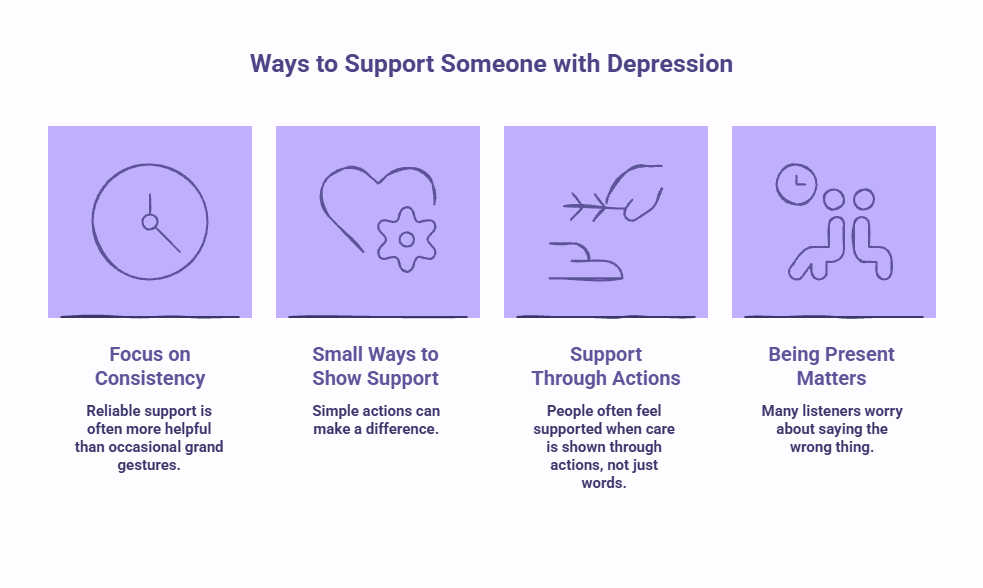
Supporting someone with depression does not require expert knowledge or perfect advice. In many cases, what people remember most is who continued showing up, even when they did not know exactly what to say.
1. Focus on What You Can Do Consistently
Reliable support is often more helpful than occasional grand gestures. Instead of trying to solve every problem, focus on small actions you can realistically maintain.
For example:
- Checking in every few days
- Following through when you offer help
- Remembering important conversations
- Being available when you say you will be
Consistency helps people know they can rely on you.
2. Small Ways to Show Support Between Conversations
Support does not always have to be a serious conversation.
Simple actions can make a difference, such as:
- Sending a quick "thinking of you" message
- Inviting them for a walk, coffee, or meal
- Offering help with errands or daily tasks
- Remembering appointments, exams, or important dates
- Sharing something that made you think of them
These small moments often remind people that they have not been forgotten.
3. What Makes People Feel Supported Over Time?
People often feel supported when care is shown through actions, not just words.
This might look like:
- Checking in after a difficult week
- Following up on a previous conversation
- Respecting their pace when they are not ready to talk
- Staying in touch even when they decline invitations
Support tends to feel more meaningful when it is steady rather than reactive.
4. Why Being Present Matters More Than Being Perfect
Many listeners worry about saying the wrong thing. In reality, people rarely expect perfect responses.
They are more likely to remember:
- Who listened without judgment
- Who stayed patient when conversations were difficult
- Who continued showing up over time
You do not need to have all the answers to make a difference. Often, consistent care and genuine presence are what people remember most.
How can you support someone without neglecting your Own well-being?
When someone you care about is struggling with depression, it is easy to focus so much on their needs that you stop noticing your own. Supporting someone matters, but so does protecting your own well-being.
When Does Supporting Someone Start Affecting Your Well-Being?
You may need to pause and reassess if:
- You are constantly worrying about them
- Their mood is affecting your daily life
- You feel responsible for fixing things
- You struggle to switch off and rest
Supporting someone is important, but carrying their recovery alone is not sustainable.
Who Can You Talk To?
Supporting someone can feel emotionally heavy at times. Having a trusted friend, family member, or professional to talk to can help you process your own thoughts and feelings.
You do not have to carry that responsibility alone.
How Can You Avoid Emotional Burnout?
Burnout often happens when support becomes your only focus. It helps to remind yourself that:
- You cannot talk someone out of depression
- You are not responsible for every outcome
- Taking a break does not mean you care less
- Other people can help provide support
- Your well-being matters too
Looking after yourself is not separate from supporting someone. It is what helps you stay patient, present, and supportive over time.
When should you encourage professional support?
Sometimes listening and checking in are no longer enough on their own. If depression is making daily life harder to manage or your concerns continue to grow, it may be time to encourage additional support.
1. What are the signs that someone may need professional support?
Pay closer attention if you notice:
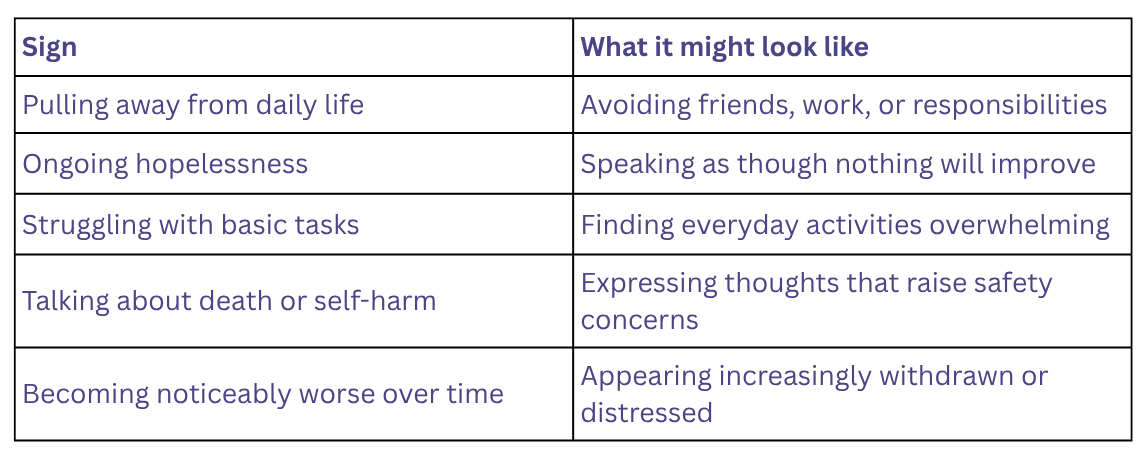
These signs do not mean you need to have all the answers. They may simply suggest that more support is needed.
2. How can you suggest professional help without sounding forceful?
Focus on concern rather than persuasion. Instead of telling them what they should do, share what you have noticed and ask whether they would be open to additional support.
You might say:
- "I've been worried about how much you're carrying lately."
- "You don't have to handle this on your own."
- "Would you be open to speaking with someone who supports people through situations like this?"
3. What if they refuse help?
Not everyone is ready to accept help immediately. If they are not open to it right now, avoid turning the conversation into an argument. Keep checking in, continue offering support, and revisit the topic later if concerns remain. If their safety becomes a concern, seek urgent support rather than waiting for them to change their mind.
Recognising when additional support may help is not about replacing your role. It is about making sure someone has access to the care they may need when the situation becomes bigger than one conversation.
How should you respond if someone talks about suicide or self-harm?
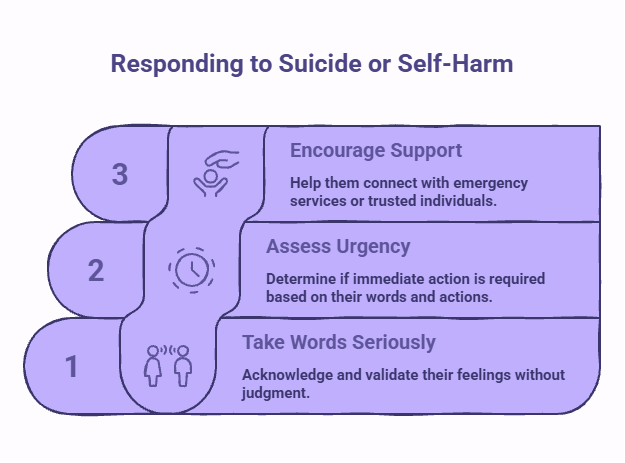
Hearing someone talk about suicide or self-harm can feel frightening, especially if you are unsure what to say next. In that moment, your role is not to solve the situation on your own. The most important thing is to take what they are saying seriously and focus on their immediate safety.
1. Taking Their Words Seriously
Many people hesitate to talk about suicidal thoughts because they fear being judged, dismissed, or misunderstood. If someone chooses to share those thoughts with you, try to stay calm and acknowledge what they are saying.
Simple responses such as:
- "I'm glad you told me."
- "Thank you for being honest with me."
- "I'm here with you."
can help show that you are listening without minimising their experience.
It is also important to avoid responses that may make the situation worse. Try not to:
- Argue about whether they really mean it
- Challenge or dismiss their feelings
- Promise to keep suicidal thoughts a secret
- Leave them alone if there is an immediate risk to their safety
The goal is not to have the perfect response. It is to take their words seriously and help them feel supported in that moment.
2. When Does the Situation Become Urgent?
Some situations require immediate action rather than ongoing conversation.
Pay closer attention if someone:
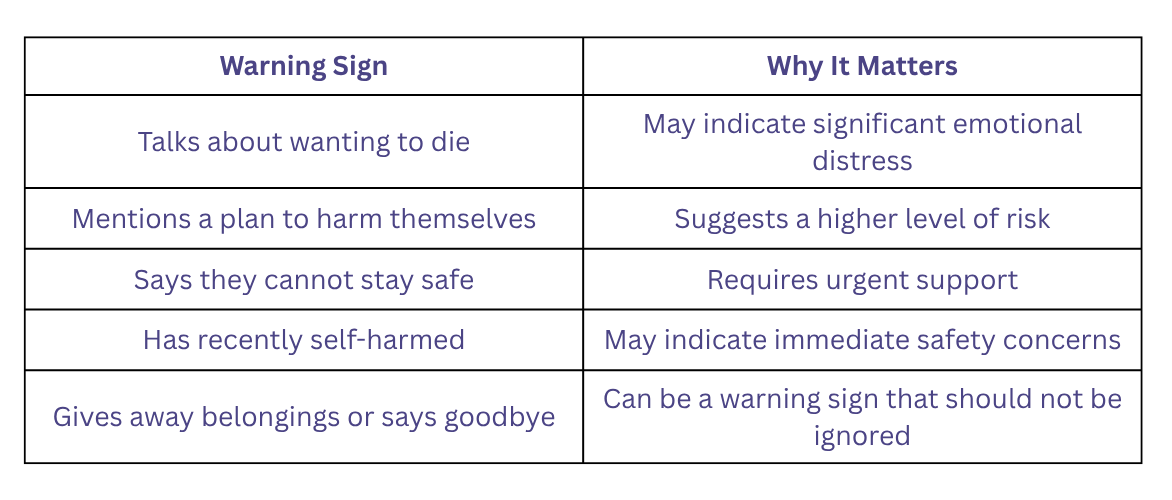
If you believe there is an immediate risk to their safety, seek emergency or crisis support without waiting.
3. Encouraging Immediate Support
You do not need to handle a crisis alone. Let the person know that their safety matters and help them connect with appropriate support as soon as possible.
If the risk feels immediate:
- Stay with them if you can
- Contact emergency or crisis services
- Reach out to a trusted family member or support person when appropriate
- Encourage professional support without delay
When someone talks about suicide or self-harm, listening remains important, but safety must come first. Taking their words seriously and acting when needed can make a critical difference.
Can talking online help someone living with depression?
For some people, talking online can feel like a more comfortable first step than having a face-to-face conversation. When depression makes social interaction feel overwhelming, online spaces can offer a lower-pressure way to connect with others, share feelings, and access support without leaving home.
Why do some people find it easier to open up online?
Depression can make conversations feel emotionally draining, especially when someone is worried about being judged or does not know how to explain what they are feeling. Online conversations often feel less intense because people can respond in their own time, gather their thoughts, and share only what they feel comfortable discussing.
How can anonymous conversations reduce pressure?
Some people hesitate to talk about depression because they feel embarrassed, fear being misunderstood, or worry about how others might react. Anonymous conversations can remove some of those concerns by creating a greater sense of privacy. When there is less fear of judgment, people may feel more comfortable speaking honestly about difficult thoughts and emotions.
Exploring support options together
If someone feels unsure where to begin, exploring support options together can make reaching out feel less overwhelming. Rather than pushing them towards a specific choice, focus on helping them find an option that feels comfortable and accessible.
Some people may feel more comfortable starting with:
- Online listening platforms
- Emotional support helplines
- Peer support communities
- Professional mental health services
Sometimes, taking the first step is the hardest part. Exploring options together can make that step feel more manageable and remind someone that support is available in more than one form.
For some people, a conversation with a friend is where support begins. For others, opening up through a safe and supportive platform such as Listennr may feel like a more comfortable way to start feeling heard.
What does supportive listening look like on Listennr?
Not everyone feels comfortable opening up to people they know. Some people worry about being judged, becoming a burden, or struggling to explain what they are going through. When that happens, talking to someone outside their immediate circle can feel easier.
For some people, support starts with:
- Online listening platforms
- Peer support communities
- Anonymous conversations
- Professional mental health support
The right option depends on what feels comfortable and accessible to the individual.
One option is Listennr, a platform designed for people who want a supportive space to talk and be heard. Rather than focusing on fixing problems or providing therapy, Listennr connects people with compassionate listeners who offer patience, understanding, and a non-judgmental ear.
Through Listennr, people can:
- Talk anonymously if they prefer
- Share thoughts at their own pace
- Connect with supportive listeners
- Feel heard without pressure to have all the answers
For someone who is not yet ready to talk to friends, family members, or a professional, a listening space can sometimes make the first conversation feel a little less difficult. Can Download the Listennr App!
Conclusion
Supporting someone with depression is not about having the perfect words. It is about creating a space where they feel safe, understood, and able to talk without fear of judgment or pressure. Often, listening with patience can be more helpful than trying to fix the problem.
While you cannot take depression away from someone else, you can help them feel less alone. And for those who find opening up difficult, supportive spaces like Listennr can provide a safe space to be heard and connected.
Frequently asked questions
How can I help someone who refuses to talk about their depression?
Offer support without pressure. Let them know you care, check in regularly, and respect their boundaries. Sometimes, consistent presence and gentle reminders that you're available to listen can feel more supportive than pushing them to talk.
Where can people in India find free mental health support?
People in India can access free mental health support through government helplines, crisis services, NGOs, community organisations, and trusted online support platforms that provide emotional support and guidance
What are some helpful things I can say to someone experiencing depression?
You could say, "I'm glad you told me," "I'm here to listen," "That sounds really hard," or "You don't have to go through this alone. If needed, I can help you find a social worker or crisis lines to talk to." Simple, caring responses often feel more supportive than advice.
How can I help when someone is depressed?
Listen with patience, check in regularly, and avoid trying to fix everything. Simple, consistent support can help someone feel less isolated and more comfortable opening up.
How do I know if my friend with depression needs professional help?
If depression is lasting, getting worse, affecting everyday life or causing hopelessness, withdrawal, self-harm, or suicidal thoughts in young people, professional support may be needed. Trust your concerns and encourage them to seek help if you notice these signs.
How Do You Talk to Someone Who Is Depressed and Suicidal?
Take their words seriously. Stay calm, listen without judgment, and focus on their immediate safety. If there is a risk of harm, seek emergency or crisis support and do not leave them alone.
Are there any signs I should look for when someone is struggling with depression?
Common signs include withdrawing from friends, losing interest in usual activities, changes in sleep or appetite, the physical symptoms of depression such as low energy, hopelessness, irritability, and difficulty managing everyday tasks. These changes may suggest someone is struggling and could benefit from support.