
What to Do When You Need Someone to Talk To?

Key highlights
- Feeling alone is more common than it seems, often affecting mental health even in socially connected environments.
- Recognising emotional distress early helps you understand when you need support or someone to talk to.
- Simple grounding steps can reduce overwhelm before reaching out for emotional support or conversation.
- Support can come from friends, professionals, peer groups, or anonymous listening spaces when emotions feel heavy.
- Anonymous chat and online support platforms, like Listennr, offer safe, judgment-free ways to express feelings freely.
- You don't need to handle everything alone; reaching out is a healthy step toward emotional well-being.
If you need someone to talk to, you don't have to deal with everything on your own. Whether you're feeling overwhelmed, emotionally drained, or simply need someone to listen, reaching out can help you feel supported and gain clarity. You might choose to talk to a trusted friend, family member, support group, mental health professional, or an anonymous listener online.
If you're not sure where to start, this guide will show you what to do when you need someone to talk to, who you can reach out to, where to find anonymous emotional support, and practical steps to help you feel heard. Whether you're looking for immediate support or simply someone who will listen without judgment, you'll find options that can help.
According to the World Health Organisation (WHO), nearly 1 in 6 people globally experience loneliness, making it a widespread public health concern rather than an isolated emotional feeling. Loneliness has also been linked to serious mental and physical health risks, highlighting how deeply human connection impacts overall well-being. This growing gap between connection and isolation explains why so many people struggle to open up, even when they desperately want to.
Why do you feel like you need someone to talk to?
Feeling disconnected doesn't always mean you are physically alone. Many people experience feelings of loneliness and a lack of companionship even while being surrounded by friends, family, or colleagues. In today's fast-paced world, mental health concerns, emotional distress, and lack of deep social interaction have become increasingly common, making it harder for people to express what they feel openly.
Work pressure, digital overload, and limited emotional support systems often lead to long-term emotional silence. Over time, this can impact overall mental health and create a sense of isolation that feels difficult to explain.
The truth is, needing someone to talk to is not rare; it's part of being human, especially when coping with stress, mental health problems, or life transitions.
Signs you need someone to talk to
If you're unsure whether you need support, here are some common signs that talking to someone might help:
- You often feel emotionally overwhelmed without a clear reason.
- You find it hard to share your thoughts with friends or family.
- You experience ongoing feelings of loneliness, even in social settings.
- You feel mentally exhausted or constantly overthinking small situations.
- Your sleep, focus, or daily routine feels affected by stress.
- You prefer staying silent rather than expressing how you feel.
- You feel like no one truly understands what you're going through.
- You're looking for a safe space to simply talk without judgment.
Sometimes, simply expressing what’s on your mind, through chat, text messages, or peer support, can make things feel lighter and more manageable.
What are the signs you need someone to talk to?
Sometimes, you may realize that you are struggling emotionally but still wonder whether you actually need to reach out. Certain changes in your thoughts, feelings, or daily routine can be signs that talking to someone could provide useful support.
You may benefit from talking to someone if:
- You feel emotionally overwhelmed: Your feelings seem difficult to manage, or you don't know how to process them.
- You keep everything to yourself: You regularly avoid sharing your thoughts because you don't know how others will respond.
- You feel lonely around others: You may have people around you but still feel emotionally disconnected or misunderstood.
- You cannot stop overthinking: You repeatedly replay conversations, situations, or worries in your mind.
- Stress is affecting your routine: Your sleep, concentration, work, studies, or everyday activities are becoming harder to manage.
- You find yourself withdrawing: You avoid conversations, social situations, or people you would normally interact with.
- You feel like nobody understands you: You want to share what you're experiencing but don't feel you have someone who will genuinely listen.
- You simply want someone to listen: You don't necessarily need advice or solutions; sometimes, you just need space to express what you're feeling.
You don't have to wait until your emotions become unbearable to reach out. Recognizing that you need someone to talk to can be a meaningful first step toward getting the support and connection you need.
Who can you talk to when you feel alone?
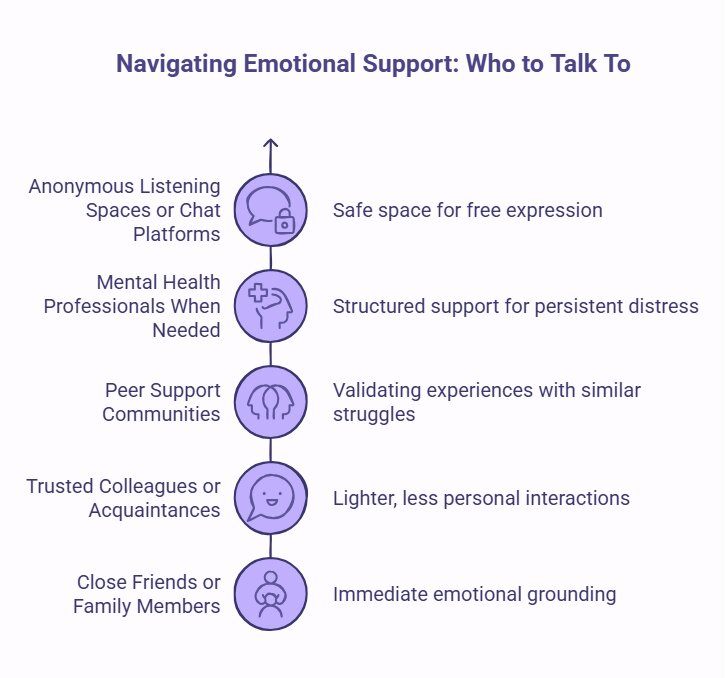
1. A close friend or family member
Someone you already trust can provide comfort and reassurance when you're having a difficult time. You don't have to explain everything at once. Simply saying, “I'm having a hard time and could use someone to talk to,” can be enough to start the conversation.
2. A trusted colleague or acquaintance
If talking to someone close feels difficult, a trusted colleague or acquaintance may feel easier to approach. Even a simple conversation can provide connection and help you feel less isolated.
3. A peer support group
Peer support groups connect you with people who have experienced similar challenges. Sharing experiences with others can help you feel less alone and provide a sense of understanding that may be difficult to find elsewhere.
4. A mental health professional
If difficult emotions persist or begin affecting your daily life, relationships, work, or ability to cope, consider speaking with a qualified mental health professional. They can provide structured support and help you work through ongoing concerns.
5. An anonymous listener
If you want to talk but don't feel comfortable opening up to someone you know, an anonymous listening space like Listennr can provide another option. You can share what you're experiencing without having to explain your personal background or worry about burdening someone close to you.
The focus is usually on emotional support and being heard rather than advice or judgment.
What to do immediately when you need someone to talk to?
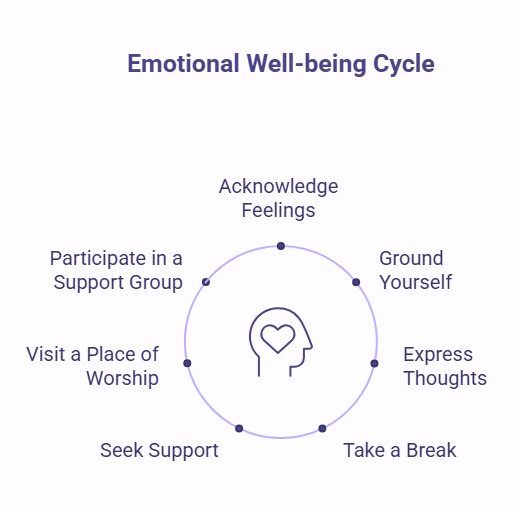
There are moments when the thought I need someone to talk to right now hits suddenly, whether you’re feeling overwhelmed, emotionally drained, or just stuck in your head. In those moments, instead of pushing the feeling away, a few simple steps can help improve your social connections and help you feel more grounded before you reach out for support.
1. Pause and acknowledge what you're feeling right now
Instead of pushing difficult emotions away, take a moment to identify what you're experiencing. You might feel lonely, overwhelmed, frustrated, anxious, or simply unsure of what you need. Naming the feeling can make it easier to decide whether you need someone to listen, offer advice, or simply give you some company.
2. Try grounding yourself before reaching out
If your thoughts are racing, try a simple grounding exercise before starting a conversation. Slow your breathing, notice five things around you, or focus on how your feet feel against the ground.
These small steps can help you feel more present and make it easier to think about what you want to say.
3. Write or speak your thoughts out loud first
If you know you need someone to talk to but don't know where to start, write your thoughts down first. You can use a journal, notes app, or voice note.
You don't need to organise everything perfectly. Getting your thoughts out can help you understand what is bothering you and make the conversation easier to start.
4. Take a short break from triggers and overstimulation
When you're already emotionally overwhelmed, constant notifications, social media, or other distractions can make it harder to process what you're feeling. Take a short break from your screen or other triggers. A few quiet minutes can give you enough space to decide who you want to reach out to and what you need from the conversation.
5. Remind yourself that you don't have to handle everything alone
Feeling like you have to manage everything yourself can make difficult emotions feel even heavier. Reaching out to a trusted person, a support group, a mental-health professional, or an anonymous listening space can give you another way to process what you're experiencing. Asking for support is not a sign that you cannot cope. It can simply mean that you don't want to carry everything alone.
6. Visit a place of worship
For some people, a place of worship or another familiar, peaceful space can provide comfort during difficult moments. Prayer, reflection, or simply spending time somewhere quiet may help you process your emotions.
This may not replace a conversation, but it can give you some mental space before deciding what support you need.
7. Participate in a support group
Support groups can connect you with people who have experienced similar challenges. They can provide an opportunity to listen, share your experiences, and realize that you are not alone. Depending on your situation, you might consider a peer support group, online community, or another structured support space.
Taking the first step toward support can make difficult emotions feel more manageable, even if you are not ready to explain everything at once.
What if you have no one to talk to?
Sometimes, the hardest part is not deciding to reach out but feeling like there is no one you can turn to. You may worry about being judged, burdening someone, or being misunderstood. In that situation, you still have options for finding support.
If you feel like you have no one to talk to, you can:
- Write your thoughts down. Journaling or recording a voice note can help you process what you're feeling before talking to someone.
- Join a support group. Connecting with people who have faced similar experiences can help you feel less isolated and provide a space to share openly.
- Try an anonymous listening service. If talking to someone you know feels uncomfortable, an anonymous listening platform can give you another way to express what you're experiencing.
- Consider professional support. If difficult feelings persist or begin affecting your daily life, relationships, or ability to cope, a qualified mental-health professional can provide appropriate guidance.
Not having someone to talk to right now does not mean you have to stay alone with what you're feeling; support can come from different places, and finding the right one may take time.
Should you talk to a friend, listener, or therapist?
The right person to talk to depends on what you are experiencing and the kind of support you need. Consider what feels most comfortable and whether you need personal connection, someone to simply listen, or professional guidance.
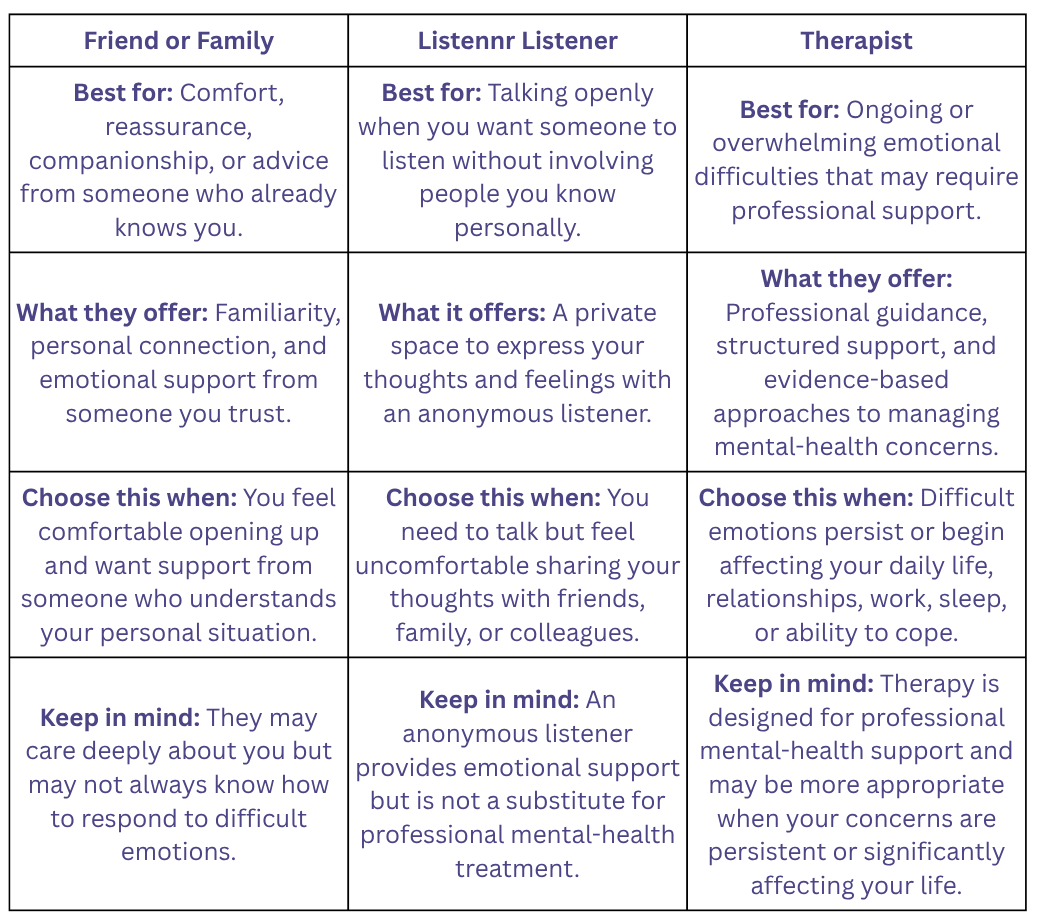
There isn't one right choice for everyone. The important thing is finding the kind of support that matches what you're going through. If you simply need someone to listen, an anonymous platform like Listennr can provide a private, compassionate space where you can talk openly and feel heard.
How do anonymous listening platforms help emotionally?
Thoughts like I need someone to talk to anonymously or I feel alone and need someone to talk to can feel heavy, but not everyone is ready to open up to friends or family. This is where anonymous listening platforms create a unique emotional bridge between silence and support.
These platforms work by offering a safe space where you can express feelings without fear of judgment, social consequences, or the pressure of explaining your life history.
Unlike traditional conversations, anonymous listening focuses less on advice and more on emotional support through active listening. This helps users process feelings, reduce overthinking, and feel less isolated during moments of stress. Over time, even short conversations through online chat or text messages can support healthier coping and emotional regulation.
Where can you turn when you just need to be heard?
When you’re searching for what to do when you need someone to talk to, not every platform offers the same kind of experience. Many apps focus on quick chats or random interactions, but what people often need is calm, meaningful listening.
Listennr is designed around that exact idea: providing a private, judgment-free space where you can talk openly and be heard without pressure. Instead of overwhelming social features or distractions, it focuses on real human conversations that support emotional clarity and comfort.
It’s especially helpful when you want to:
- talk without revealing personal identity
- express emotions during stressful or lonely moments
- feel heard without fear of judgement
- access support through simple, direct conversations
In moments when everything feels too much, having a place where you can just speak freely can make things feel a little lighter, and sometimes, that’s exactly what you need. Try Listennr now!
Disclaimer: Listennr is a platform for emotional support and meaningful conversations. It is not a crisis intervention service and should not be used in situations involving severe mental health emergencies, suicidal thoughts, or immediate safety concerns. If you are in crisis, please contact local emergency services or a qualified mental health professional.
How to ask someone to just listen
Sometimes, people offer advice because they want to help, even when all you really need is someone to listen. Being clear about what you need can make the conversation more supportive.
You could try saying:
- "I don't need advice right now. I just need someone to listen."
- "Can I vent for a few minutes? I'm not looking for solutions yet."
- "It would really help if you could just hear me out."
- "I'm trying to process my thoughts, so I'd appreciate it if you could just listen."
Most people want to support you but may not know what you need unless you tell them. Setting expectations at the beginning of the conversation can help you feel heard and reduce the chance of unwanted advice.
Steps for approaching emotional support services when you feel nervous
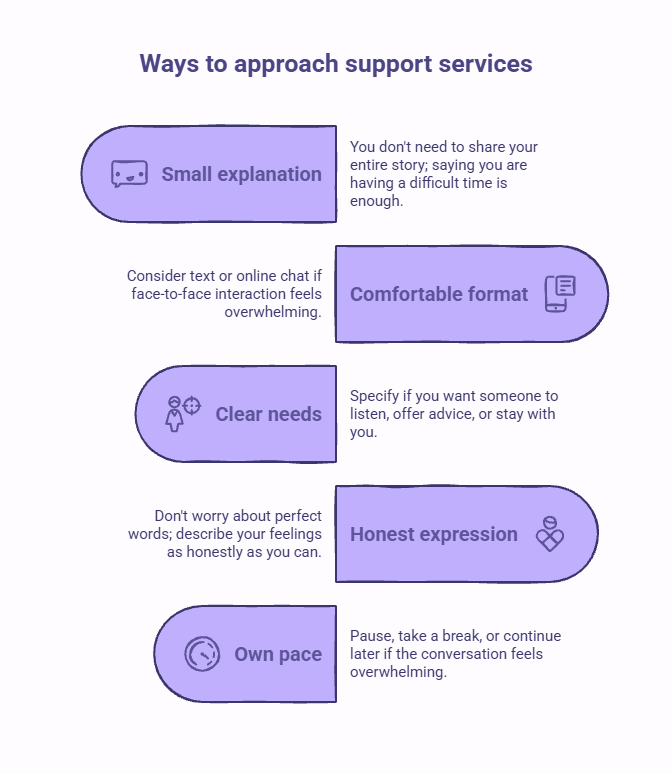
Reaching out for support can feel intimidating, especially when you're already overwhelmed or unsure how someone will respond. You don't need to have everything figured out before asking for help. Starting with a small, manageable step can make the process feel easier.
Here are a few ways to approach support when you're feeling nervous:
- Start with a small explanation. You don't need to share your entire story. Saying “I'm having a difficult time and need someone to talk to” can be enough to begin.
- Choose a format that feels comfortable. If speaking face-to-face feels overwhelming, consider starting with text, online chat, or another format that gives you more time to express yourself.
- Be clear about what you need. Let the person know whether you want someone to listen, offer advice, or simply stay with you while you process your thoughts.
- Don't worry about finding perfect words. Describe what you're feeling as honestly as you can. You can always explain more as the conversation continues.
- Take the conversation at your own pace. You can pause, take a break, or continue later if the conversation starts to feel overwhelming.
You don't have to feel completely ready before reaching out; sometimes, simply saying “I need someone to talk to” is enough to take the first step.
How can Listennr help when you need someone to talk to?
Sometimes, you don't need someone to solve your problems. You just need a place where you can say what's on your mind without worrying about being judged, misunderstood, or told what you should do next.
That can be difficult when the people around you are busy, when opening up to friends or family feels uncomfortable, or when you simply don't want to turn a personal struggle into a conversation with someone you know. In those moments, having access to someone who is willing to listen can make reaching out feel a little easier.
That's where Listennr comes in.
Listennr gives you a space to have meaningful conversations with compassionate listeners when you need to talk. You can share what you're going through at your own pace without needing to have the perfect words or explain your entire story before someone hears you.
Why Might Listennr Be Helpful?
With Listennr, you can:
- Talk anonymously: Share what's on your mind without having to reveal personal details.
- Find someone willing to listen: Have a conversation when you need to express thoughts or feelings.
- Talk at your own pace: You don't have to organise everything perfectly before starting.
- Share without immediately looking for solutions: Sometimes being heard is what you need first.
- Reach out when talking to someone you know feels difficult: An anonymous conversation can feel like a more comfortable first step.
Try Listennr and give yourself a space to be heard.
If you’re feeling overwhelmed and just need someone to talk to, take a moment to reach out in a safe, private space where you can simply be heard. Start your free trial with Listennr and experience judgment-free conversations at your own pace.
You don't have to face it alone
Feeling like you need someone to talk to is not a rare experience; it's a deeply human response to stress, loneliness, and emotional overload. What matters most is recognising that support can come in many forms, whether through trusted people, professional help, peer spaces, or anonymous conversations.
Instead of holding everything inside, small steps like grounding yourself, expressing your thoughts, or reaching out early can make a meaningful difference. You don’t need the perfect words or the perfect situation to ask for help. Sometimes, simply showing up and speaking is enough to begin feeling lighter.
In the end, emotional well-being is not about handling everything alone; it’s about knowing when and where to reach out.
Frequently asked questions
Can I talk to someone online about my problems?
Yes. Many online platforms connect older people with trained listeners, peer communities, or professionals. Whether you are dealing with relationship issues, life changes, or social isolation, online conversations can provide emotional support when you need someone to talk to.
What should I do when I need someone to talk to?
Start by reaching out to someone you trust, such as a friend or family member. If that isn't possible, consider a support group, an anonymous listening service, or a mental health professional. You don't have to handle difficult emotions alone.
What if I have no one to talk to?
If you feel like you have no one to talk to, try journaling, joining a support group, or using an anonymous listening platform, or consider joining a book club. If your feelings persist or affect daily life, consider speaking with a mental health professional.
Is it okay to just want someone to listen?
Yes. It's completely normal to want someone to listen without offering advice or solutions. Being heard with empathy can reduce emotional stress, help organize your thoughts, and make difficult feelings feel easier to manage.
Who should I talk to when I'm feeling overwhelmed?
Choose the person based on your needs. A trusted friend can offer comfort, an anonymous listener provides a safe space to vent, while local support groups and a mental health professional can help if your mental illness symptoms become persistent or overwhelming.
Can talking to someone really help?
Yes. Talking about your thoughts and feelings can reduce emotional pressure, improve mental clarity, and help you feel less isolated. Even one meaningful conversation about cognitive behavioural therapy (CBT) can provide reassurance and make difficult situations feel more manageable.
Where can I find someone to talk to online?
You can connect with online support groups, anonymous listening platforms, or licensed mental health professionals. Choose an option that feels safe, private, and appropriate for your situation, comfort level, and emotional support needs.
When should I seek professional mental health support?
Consider professional support if your emotions persist for several weeks, become overwhelming, or begin affecting your relationships, work, sleep, or daily life. A mental health professional can provide personalised guidance and effective coping strategies.
What's the difference between an anonymous listener and a therapist?
An anonymous listener offers emotional support by listening without judgment, while a therapist is a licensed mental health professional trained to assess, diagnose, and treat mental health conditions through evidence-based therapeutic approaches.
What is the difference between a warmline and a crisis hotline?
A warmline provides emotional support for everyday struggles and non-urgent concerns. A crisis hotline is designed for immediate support during emergencies, severe emotional distress, or situations involving safety risks that require urgent intervention.