
Do Men Need Emotional Support More Than We Think?

Key highlights
- Men’s mental health often suffers when emotional needs are ignored or dismissed.
- Emotional support helps men build emotional resilience during stress, divorce, burnout, and other life challenges.
- Many men hide pain because stigma and old ideas about masculinity still shape how they respond.
- Support groups and trusted relationships can reduce loneliness and create a safe space for healing.
- Better listening, empathy, and communication skills support personal growth and healthier relationships.
- Emotional support can help men face mental health issues before they become more serious.
- Platforms like Listennr offer men a chance to feel heard, supported, and less alone when they need someone to listen.
There are times when you keep moving through your day as usual, but something feels heavier than it should. You handle work, family responsibilities, relationships, and everything else on your plate, yet there are moments when you feel exhausted from carrying it all on your own.
For many men, talking about those feelings is not easy. Some have spent years convincing themselves they should deal with problems alone. Others are unsure how to bring up what they are going through without feeling uncomfortable or judged. As a result, stress, frustration, and loneliness often stay unspoken for longer than they need to.
The reality is that emotional support is not about having someone solve your problems. It is about having a space where you can be honest about what is going on and feel understood. In this guide, we'll explore why emotional support matters for men, why opening up can feel difficult, and what healthy support can look like in everyday life.
What does emotional support mean for men?
Emotional support means having people in your life who make it easier to talk about what you're going through. It involves feeling heard, understood, and accepted during difficult moments rather than feeling like you have to deal with everything on your own.
For many men, emotional support provides reassurance, connection, and the confidence to be honest about challenges they may otherwise keep to themselves. It is not about having someone solve every problem. It is about knowing you do not have to carry those problems alone.
1. What emotional support looks like
Emotional support often shows up in small moments rather than serious heart-to-heart conversations.
For example:
- A friend notices you've been quieter than usual and asks if everything is okay.
- A partner listens after a difficult day without immediately trying to fix the situation.
- A family member checks in after a stressful life event and gives you space to talk.
- Someone remembers a challenge you mentioned and follows up a few days later.
- A trusted person sits with you through a difficult moment instead of rushing you to move on.
These interactions may seem simple, but they can make it easier for men to open up and feel supported when life feels overwhelming.
2. Why listening matters more than solutions
When someone opens up about a difficult situation, they are not always looking for answers straight away. Sometimes they need a chance to talk through what they are feeling before they can think clearly about what comes next. Good listening creates that space. It allows people to express frustrations, worries, and emotions without feeling rushed towards a solution. Often, being able to say something out loud helps make it feel more manageable.
Feeling heard can also strengthen trust. It shows someone that their experiences matter and that they do not have to explain, defend, or justify what they are going through. In many cases, understanding comes before advice, which is why listening can be one of the most valuable forms of support.
3. Emotional support vs therapy
Emotional support and therapy can both play valuable roles, but they serve different purposes. Emotional support usually comes from people you trust and helps you feel connected during everyday challenges. Therapy provides professional guidance and structured support when emotional difficulties become harder to manage alone.
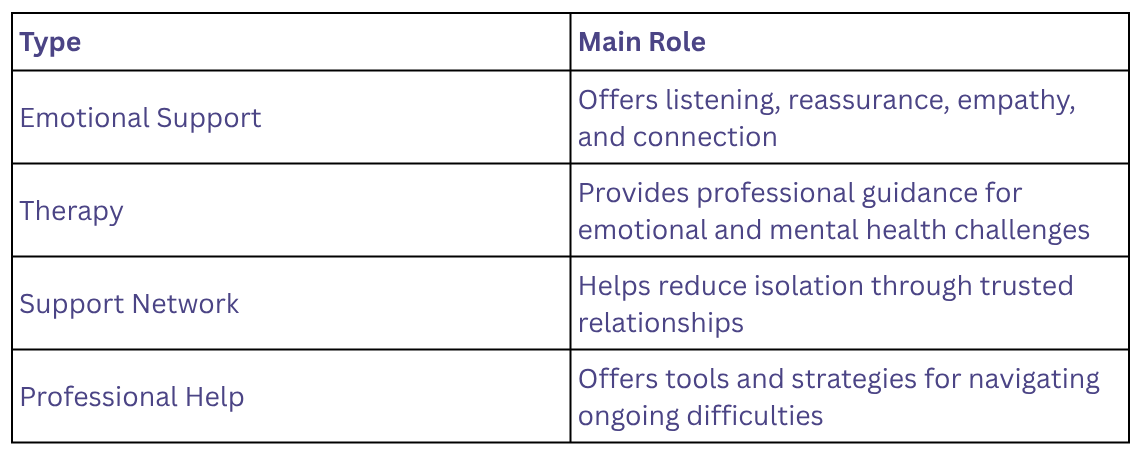
Many men benefit from both. Trusted relationships can provide comfort and understanding in daily life, while professional support can offer additional guidance when deeper challenges arise.
Do men need emotional support?
Yes, men need emotional support because they experience stress, grief, uncertainty, and relationship challenges just like anyone else. While many are taught to stay strong and handle problems on their own, carrying everything alone can take a toll over time.
Emotional support can help men:
- Feel less isolated during difficult periods
- Manage stress in healthier ways
- Build stronger relationships
- Talk more openly about challenges
- Gain perspective during overwhelming situations
Support is not about avoiding problems or depending on others. It is about having people and spaces that make difficult moments easier to navigate. Feeling heard and understood can make a meaningful difference, especially when life feels heavier than usual.
Why do men often hide their emotions?
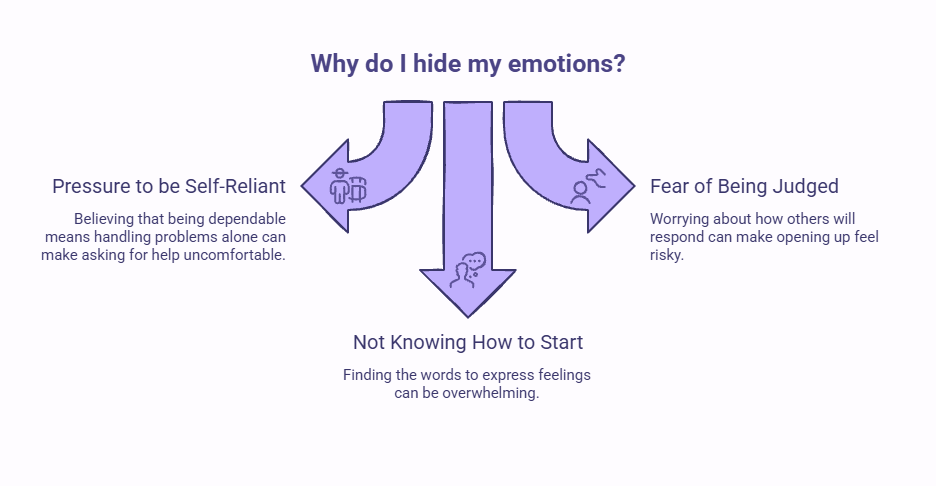
Many men want support but still find it difficult to talk about what they're feeling. Sometimes it's easier to say "I'm fine" than explain what's really going on. Over time, habits, expectations, and fear of judgment can make opening up feel much harder than it should.
1. The pressure to be self-reliant
Many men grow up believing that being dependable means handling problems alone. Asking for help can feel uncomfortable because it seems to conflict with the role they have always tried to play.
You might be the person friends turn to when they need advice. The person who stays calm during difficult situations. The person others describe as strong. Yet being seen as strong does not mean you never need to support yourself.
2. Fear of being judged
Opening up can feel risky when you are unsure how someone will respond. Some men worry that their feelings will be dismissed. Others fear being seen differently by friends, family members, or even their partners.
When that fear is present, staying quiet can feel safer than being vulnerable. The problem is that silence rarely makes emotional pressure disappear. It often means carrying it alone for longer than necessary.
3. Not knowing how to start the conversation
Sometimes the biggest challenge is not the emotion itself but finding the words to express it. When talking about feelings is unfamiliar, even starting the conversation can feel overwhelming.
A simple opener is often enough:
- "I've been dealing with a lot lately."
- "Can I talk to you about something?"
- "I'm not sure how to explain this, but I've been struggling."
You don't need the perfect words. You just need a place to start.
These barriers can make opening up feel difficult, but staying silent often comes at a cost. Understanding what happens when men do not receive emotional support can help explain why reaching out matters.
What happens when men don't receive emotional support?

The effects of missing emotional support are not always obvious at first. Many men continue showing up for work, family, and daily responsibilities while quietly carrying more than they realise. Over time, keeping everything to themselves can affect how they cope with challenges, communicate with others, and respond to everyday pressures.
1. Keeping struggles private for longer
Without a supportive outlet, many men delay talking about what they are going through. Problems that could have been shared early often stay unspoken until they feel much harder to manage.
This can look like:
- Saying "I'm fine" when something is clearly bothering them
- Avoiding conversations about personal challenges
- Keeping worries to themselves, even around trusted people
- Downplaying issues that are causing stress
- Waiting until a situation becomes overwhelming before asking for help
2. Increased stress and overthinking
When worries stay bottled up, they often grow louder rather than quieter. Without an outlet, the same thoughts can keep circling for days or even weeks.
Some common signs include:
- Replaying conversations repeatedly
- Overthinking decisions
- Struggling to switch off after work
- Difficulty sleeping because the mind won't slow down
- Feeling constantly under pressure
Talking to someone does not remove every problem, but it can make those problems feel less overwhelming.
3. Relationship challenges and disconnection
Emotional distance often affects relationships before men realise it.
You might notice:
- Shorter conversations with loved ones
- More misunderstandings than usual
- Frustration is building over small issues
- Avoiding difficult discussions
- Feeling misunderstood by people who care about you
When feelings stay unspoken, distance tends to grow. Emotional support creates opportunities for honest conversations before that distance becomes harder to bridge.
Support does not remove every challenge, but it can make communication easier. When people feel comfortable talking about what they are experiencing, problems are less likely to build up beneath the surface.
What are the signs a man may need emotional support?
Not every man who needs support will ask for it directly. Often, the signs show up through changes in behaviour rather than words.
Some signs to look out for include:
- Pulling away from friends, family, or social activities, he usually enjoys
- Becoming unusually irritable over small issues
- Staying constantly busy to avoid slowing down
- Struggling to sleep despite feeling exhausted
- Losing interest in hobbies or activities that once mattered
- Saying "I'm fine" when something is clearly bothering him
- Finding it difficult to talk about what he is feeling
- Seeming emotionally distant or distracted
While any one of these signs may not mean much on its own, noticing several together can suggest that someone is carrying more than they are letting on and may benefit from support.
Why do married men seek emotional help?
Marriage does not automatically mean a man feels emotionally supported. Some men struggle because they feel unheard during difficult periods. Others stop sharing their worries because they do not want to add more stress to such things in their partner's life. Over time, those unspoken thoughts can start creating emotional distance.
Common reasons married men seek emotional help include:
- Feeling like they have to handle stress alone
- Struggling to talk openly about personal challenges
- Feeling misunderstood during conflicts
- Coping with work, financial, or parenting pressures
- Wanting emotional connection without fear of judgment for a more fulfilling life.
- Navigating major life changes or relationship difficulties
Seeking emotional help does not necessarily mean something is wrong with the marriage. In many cases, it reflects a desire to feel heard, understood, and more connected during challenging periods.
Should men ask women for emotional help?

Yes, men can ask women for emotional help. Many do because they feel comfortable opening up to people they trust. The important thing is not who provides support, but making sure one person is not expected to carry every emotional need.
1. Why do many men turn to women for support?
For many men, conversations about emotions happen more naturally with a partner, sister, mother, or close female friend. These relationships may feel safer because trust and openness already exist.
2. Why one person cannot be your entire support system
Relying on one person for every emotional need can create pressure for both people. A stronger support system usually includes:
- A partner
- Trusted friends
- Family members
- Supportive communities
- Professional support when needed
3. Building support beyond romantic relationships
Healthy support does not have to come from one relationship. Friendships, men's groups, mentors, and community spaces can all provide opportunities for honest conversations and meaningful connections.
What does healthy emotional support for men look like?
Healthy emotional support is steady, respectful, and calm. It does not shame feelings or demand instant openness. Instead, it creates a safe space where men can speak honestly and know they will be treated with empathy. In healthy relationships, support helps men build emotional intelligence rather than hide behind silence, anger, or overwork.
Partners and loved ones can help by practising a few simple habits:
- Listen without interrupting or fixing too soon
- Validate stress and ask clear, kind questions
- Respect pauses and do not force disclosure
- Keep private conversations private
- Notice effort, not just outcomes
These behaviours meet emotional needs in practical ways. They help men feel secure enough to be real, which is where trust and connection deepen.
Where can men find healthy emotional support?
Healthy emotional support can come from different places. The goal is not to rely on one person but to build a support system that fits your needs.
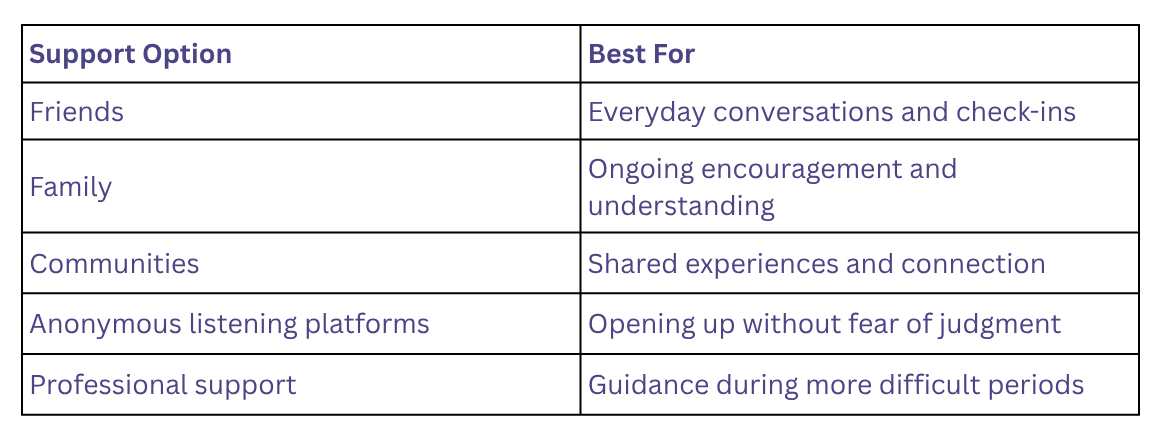
Different sources of support serve different purposes. Friends and family can offer everyday encouragement, communities provide connection through shared experiences, and professional support can help during more difficult periods. For men who find face-to-face conversations challenging, anonymous listening platforms can be a comfortable first step.
How can men start opening up about their feelings?
For many men, opening up feels difficult because they assume they need to explain everything clearly before they say anything at all. They wait until they can make sense of what they are feeling, find the right words, or work out the solution first.
In reality, most honest conversations do not start that way. You do not need to tell your entire story. You do not need to have everything figured out. Often, opening up starts with acknowledging that something has been weighing on you.
Some simple ways to begin include:
- Saying, "I've been dealing with a lot lately."
- Letting someone know you've been feeling stressed or overwhelmed
- Talking to one trusted person instead of several people at once
- Being honest about the kind of support you need
- Joining a group or community if one-to-one conversations feel difficult
The goal is not to say everything perfectly. The goal is to stop carrying everything by yourself. Many men find that once the first conversation happens, the next one becomes a little easier.
When you need someone to listen
Not every man feels comfortable opening up to friends, family, or people he sees every day due to societal expectations and societal norms. You may worry about being judged, becoming a burden, or having to explain feelings you do not fully understand yourself.
That is where Listennr can help.
Listennr gives you a private space to talk about what is on your mind with someone whose role is to listen. There is no pressure to appear strong, have the right words, or turn the conversation into problem-solving before you are ready.
With Listennr, you can:
- Talk openly at your own pace
- Share thoughts and feelings without fear of judgment
- Connect with listeners who focus on understanding, not fixing
- Express concerns that feel difficult to discuss with people you know
- Feel heard without the pressure to have all the answers
Sometimes the hardest part is saying the first thing out loud. When you're ready, Listennr gives you a space to start that conversation.
Conclusion
Many men are taught to handle challenges on their own, but that does not mean they have to carry everything alone. Consider online therapy as an option. Developing higher emotional intelligence is not about having all the answers. It is about having a space where you can be honest about what you are feeling and know that someone is willing to listen with compassion.
Whether support comes from a friend, family member, community, or safe listening space, one conversation can be a meaningful first step towards feeling more understood, connected, and supported.
Frequently asked questions
Why do men need emotional support in their lives?
Connect with experienced family lawyers across India for legal consultation, legal consultancy, and representation. From divorce and child custody to maintenance and property disputes, VakeelSaab provides convenient online access to personalised legal support.
Why do many men rely on women for emotional support?
Many men are taught to suppress emotions or avoid vulnerability with friends and family, which can hinder their emotional control and lead them to rely heavily on women for emotional support, understanding, and a safe space to express their feelings.
How does the male community contribute to emotional support for men?
The male community can support men through friendship, shared experiences, mentorship, and open conversations that encourage emotional expression, reduce isolation, and create a sense of belonging and understanding.
What are the main emotional needs of men in relationships?
Many men value emotional support, trust, respect, appreciation, open communication, and a sense of acceptance, helping them feel understood, valued, and emotionally secure within the relationship.
What are common misconceptions about men and emotional support?
A common misconception is that men need less emotional support or are naturally less emotional. In reality, many men seek understanding, connection, and emotional validation to recognise their emotional patterns, providing clarity on their needs but may express these needs differently.
Why do some men find it difficult to provide emotional support to others?
Some men may struggle to provide emotional support because they were not encouraged to discuss emotions openly, making it harder to recognize, express, or respond to emotional needs effectively.