.jpg)
Is There an App Where I Can Share My Feelings?

Key highlights
- The best feelings-sharing app depends on whether you want private conversations, peer support, or anonymous expression.
- Listennr focuses on one-to-one conversations for people who want a space to talk and feel heard.
- Anonymous features can make it easier to open up about personal thoughts and emotions.
- Privacy, safety, and moderation are just as important as app features.
- Some platforms offer tools such as journaling, mood tracking, and guided reflection alongside conversations.
- You do not need the perfect words to start sharing what you are feeling.
- Even a small conversation can make difficult thoughts feel less heavy to carry alone.
There are times when you want to talk about what you are feeling, but reaching out to someone you know does not feel easy. You might worry about being judged, misunderstood, or receiving advice when all you really want is a space to express yourself honestly. Sometimes, even typing out a message to a friend can feel harder than keeping everything to yourself.
That is why many people search for an app where they can share their feelings. Whether you are dealing with loneliness, relationship stress, work pressure, or simply need to get something off your chest, the right platform can make it easier to open up. Some apps connect you with listeners, some offer anonymous communities, and others provide a private space to reflect on your emotions.
The challenge is knowing which app is right for you. While some people prefer anonymous conversations with strangers, others are looking for supportive communities or one-on-one emotional support. In this guide, we compare the best apps to share your feelings, what they offer, and how to choose the option that matches your needs.
Why do people look for an app to share their feelings?
Opening up is not always as simple as sending a message or making a phone call. Sometimes, the hardest part is knowing how someone will respond. You may worry about being judged, dismissed, or becoming a burden to people you care about. Even when you want to talk, finding the right person can feel difficult.
That is why many people turn to apps where they can share their feelings. Whether it is a breakup, relationship conflict, loneliness, work stress, family pressure, or thoughts they do not feel comfortable discussing elsewhere, these platforms can create a space that feels easier to step into than a face-to-face conversation. The option to stay anonymous can make a difference when embarrassment, fear, or uncertainty is getting in the way.
For many users, the goal is not necessarily advice or solutions. It has a place to express what they are carrying without feeling rushed, questioned, or misunderstood. You may not be ready for therapy or a formal support service, but you may still need someone to listen. In that gap, a feelings-sharing app can become a first step towards connection, clarity, and feeling less alone.
Quick comparison of the best apps to share your feelings
Different apps offer different types of emotional support, from anonymous conversations to peer communities and private chats. This comparison highlights their key features and who they are best suited for.
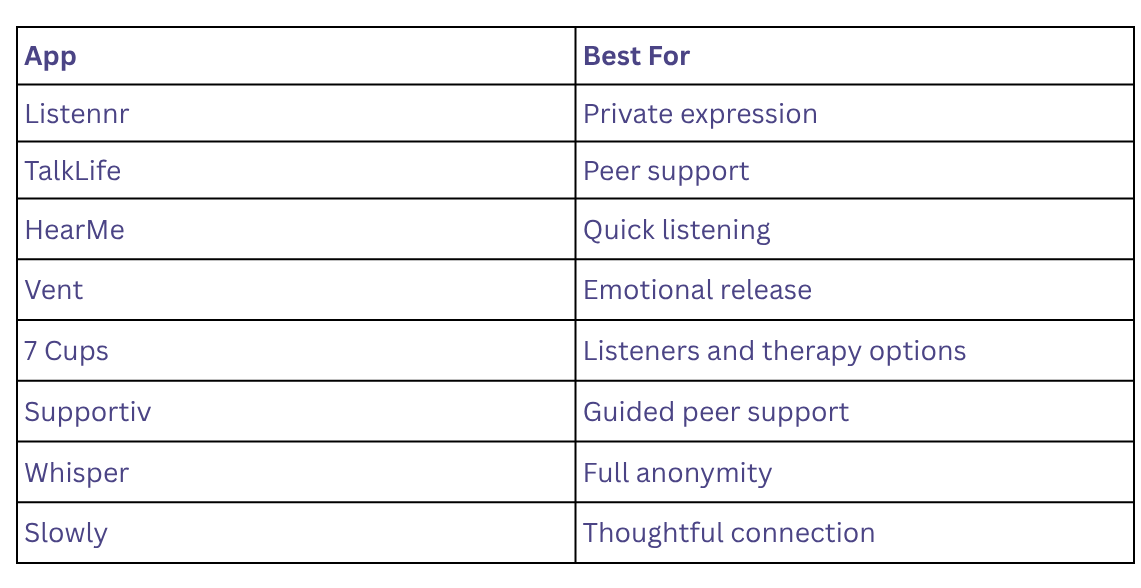
Each platform offers a different experience. The following sections explore these apps in more detail, including who they are best suited for, their strengths, and potential limitations
What are the 8 best apps where you can share your feelings?
The best apps for sharing your feelings offer different types of support. Some focus on private conversations, while others provide community discussions, anonymous posting, or peer support networks. The right choice depends on whether you want someone to listen, a place to express yourself freely, or a community that understands what you are going through.
1. Listennr
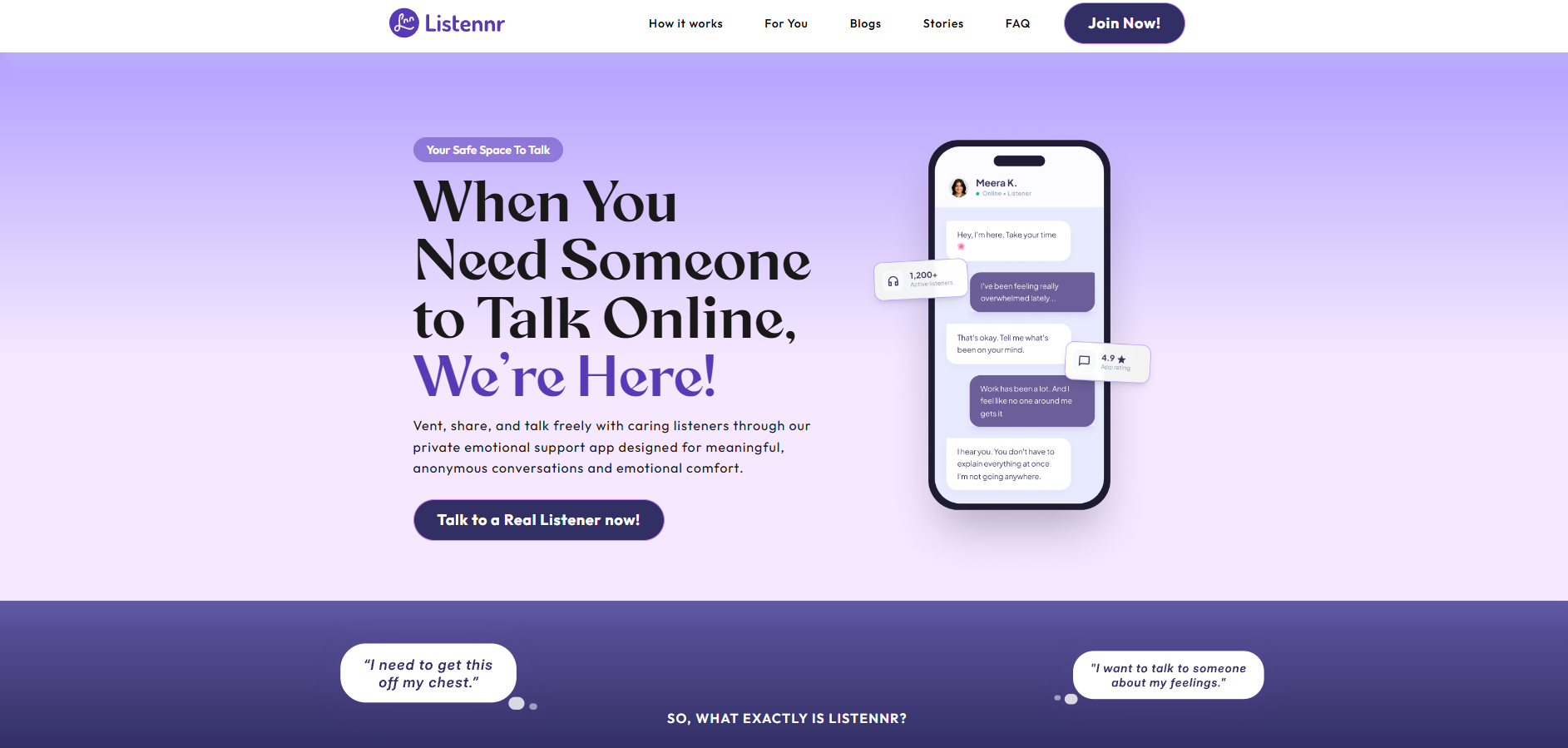
Sometimes stress builds up because there is no easy place to talk about it. You may not want to post on social media, ask friends for advice, or explain every detail of what is bothering you. In those moments, having someone from a supportive community willing to listen can make a difference.
Listennr is built around private conversations rather than public discussions. Instead of scrolling through large communities or discussion threads, users can connect in a more personal setting and talk about what is on their mind at their own pace. Whether it is work pressure, relationship frustrations, daily worries, or simply having too much on your mind, the platform focuses on conversation rather than commentary.
This approach makes Listennr different from many apps on this list. While meditation apps help people slow down and tracking apps help people monitor habits, Listennr focuses on something simpler: giving people a place to talk when they do not want to keep everything to themselves.
Services Offered
- One-to-one conversations
- Private and low-pressure interactions
- Listening-focused support
- Easy access through a digital platform
Key Strengths
- More personal than public discussion forums
- Suitable for people who prefer private conversations
- Focuses on conversations rather than guided exercises, tracking tools, or perfectionism
- Simple and easy to use
Considerations
- Not designed for community discussions
- Focuses on conversations rather than guided exercises or tracking tools
- Best suited for people looking for a human connection and listening
Best Fit
Listennr is a good option for people who prefer talking things through rather than using meditation sessions, journals, or tracking tools. It is particularly useful when you want a private conversation without the pressure of sharing in a public space.
2. TalkLife
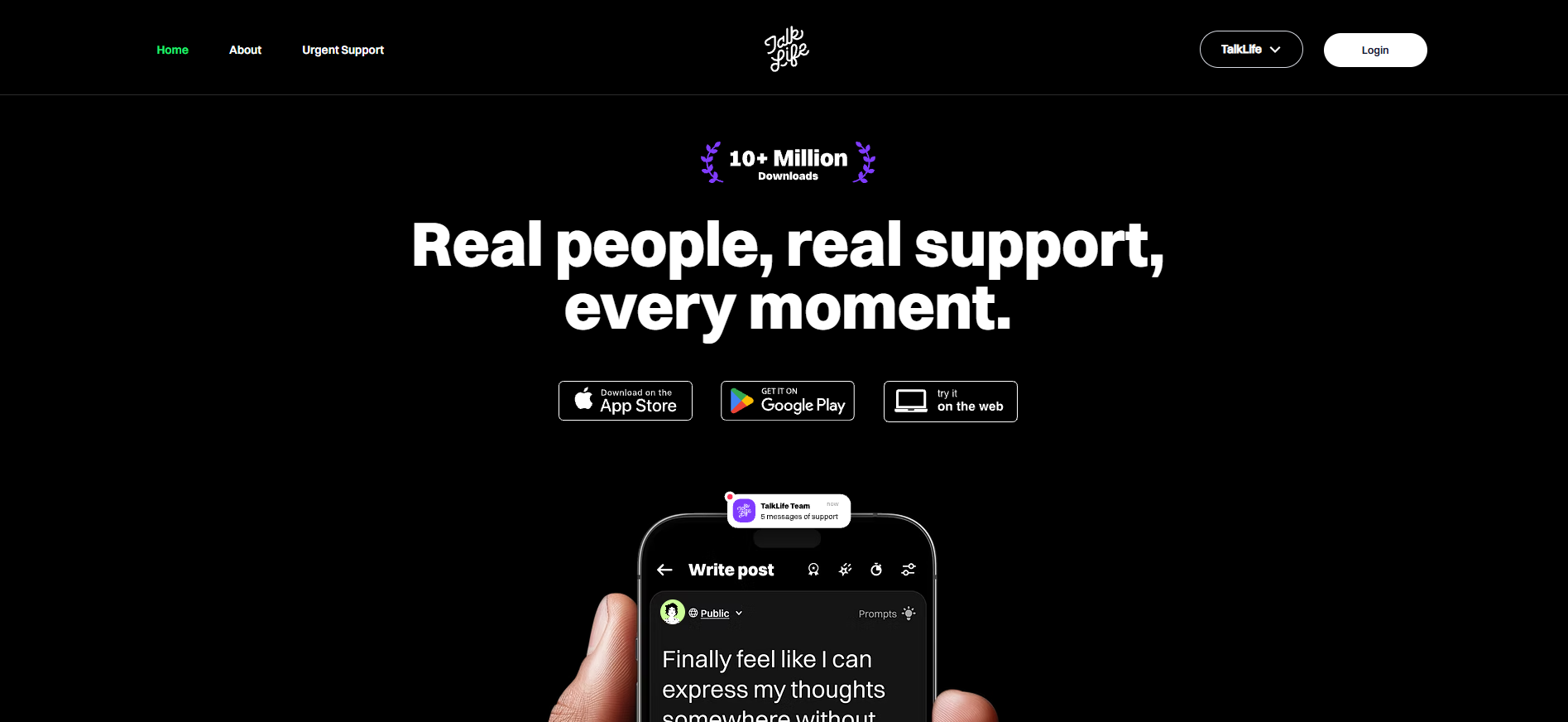
TalkLife is one of the most popular peer-support platforms for people who want to talk openly about what they are going through. Instead of focusing on one-to-one conversations, it allows users to share experiences, post updates, and receive encouragement from others facing similar challenges.
The platform is built around community interaction, making it useful for people who feel isolated and want to connect with others who understand what they are experiencing. Users can discuss topics such as anxiety, loneliness, relationships, stress, and everyday emotional struggles.
Key Features
- Anonymous community posts
- Peer-to-peer emotional support
- Topic-based discussions
- Ability to share updates and receive responses
- Active user community across different experiences
Where It Might Not Be Suitable
- People who prefer private one-to-one conversations
- Users looking for professional therapy services
- Those who feel overwhelmed by public discussions or multiple opinions
Best For
- People looking for peer support
- Users who want to connect with others facing similar challenges
- Individuals who feel less alone when sharing experiences within a community
3. HearMe
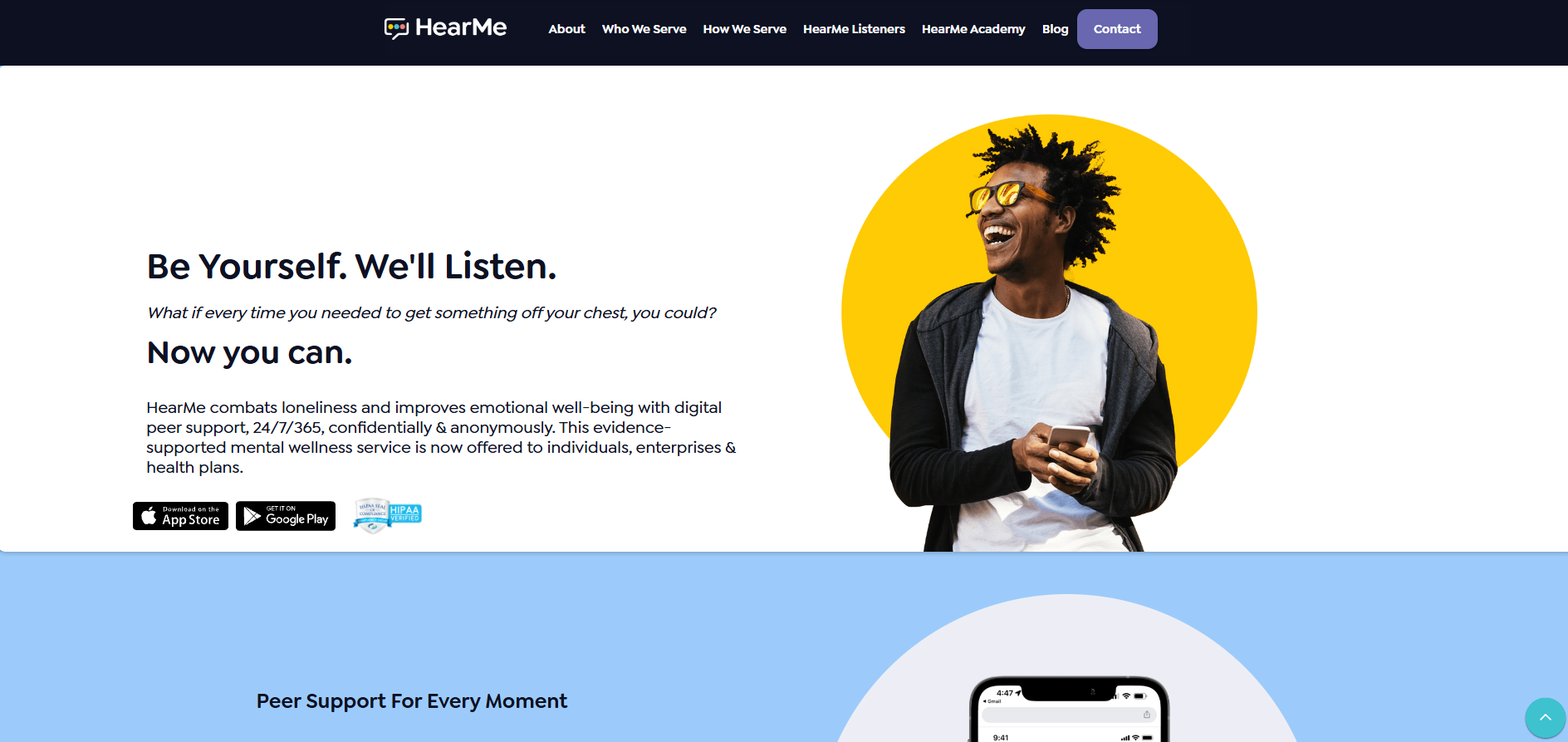
HearMe is designed for people who want to talk to someone in the moment rather than post in a community or wait for responses on a forum. The platform connects users with trained listeners through one-to-one conversations, making it a practical option when you need immediate emotional support.
Unlike community-driven apps, HearMe focuses on direct interactions. This can be helpful if you are dealing with stress, loneliness, relationship concerns, workplace pressure, or other situations where you would rather have a private conversation than share your feelings publicly.
Key Features
- One-to-one conversations with trained listeners
- On-demand emotional support
- Private and confidential chats
- Focus on active listening rather than advice-giving
- Easy access through a mobile app
Where It Might Not Be Suitable
- People looking for large peer-support communities
- Users who enjoy public discussions and group conversations
- Those seeking long-term therapy or clinical mental health treatment
Best For
- People who need someone to talk to right away
- Users who prefer private conversations over community posts
- Individuals looking for a listening-focused experience
- Those dealing with everyday stress, loneliness, or emotional overwhelm
4. Vent
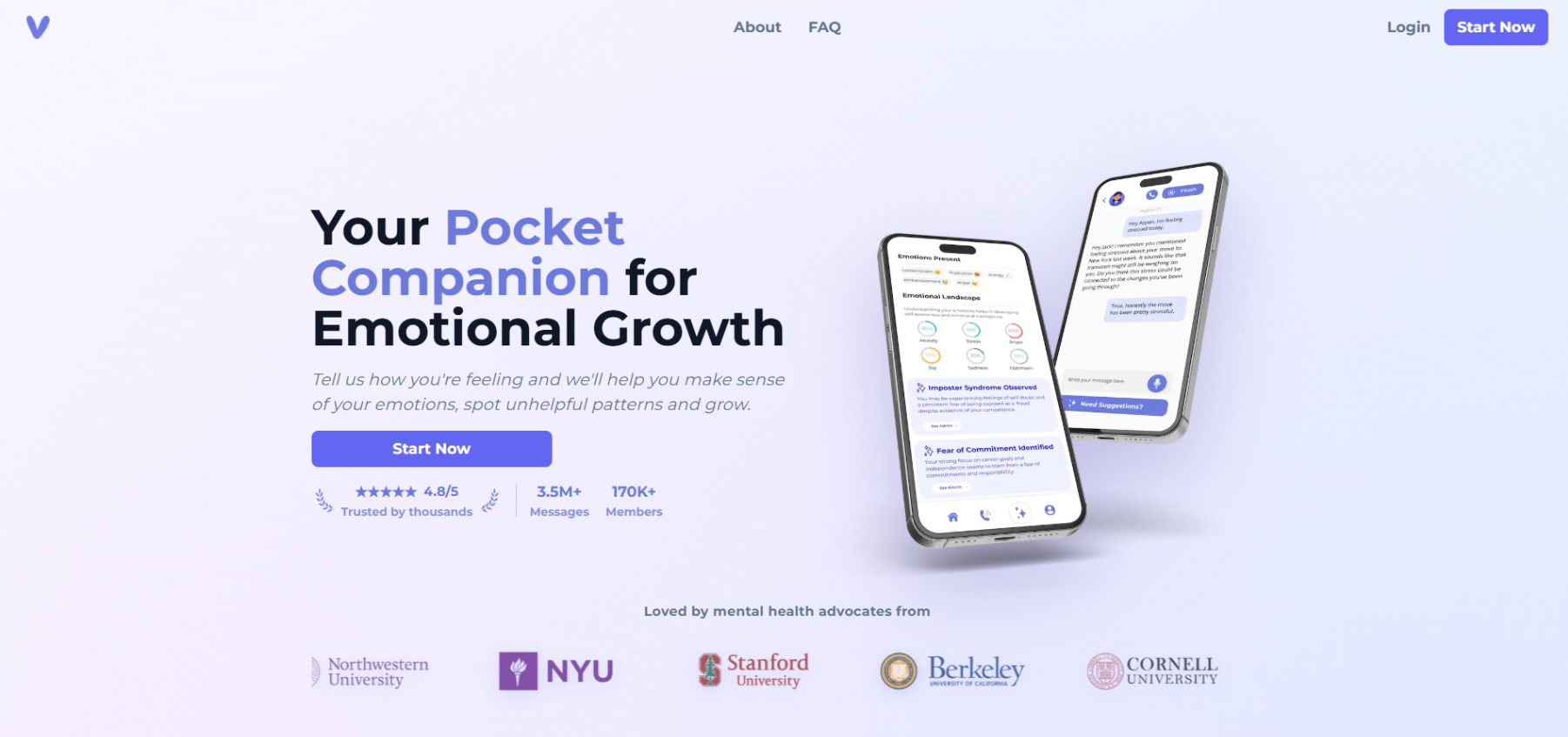
Vent is built for people who want a place to express their feelings without worrying about how friends, family, or followers might react. The platform functions like a social space for emotions, allowing users to share thoughts, frustrations, and personal experiences with others who may relate to what they are going through.
Unlike apps that focus on one-to-one conversations, Vent encourages users to post their feelings and interact with a wider community. This can make it easier to release emotions, gain perspective from others, and realize that many people experience similar struggles.
Key Features
- Anonymous emotional sharing
- Community-based support and reactions
- Emotion tagging and mood categories
- Ability to interact with people facing similar situations
- Mobile-friendly platform designed for emotional expression
Where It Might Not Be Suitable
- People who prefer private one-to-one conversations
- Users looking for professional therapy or clinical support
- Those uncomfortable sharing personal experiences with a wider audience
- Individuals seeking immediate real-time conversations
Best For
- People who want an outlet for emotional expression
- Users who feel better sharing thoughts with a community
- Individuals looking for validation from others with similar experiences
- Those who prefer posting and interacting rather than direct conversations
5. 7 Cups
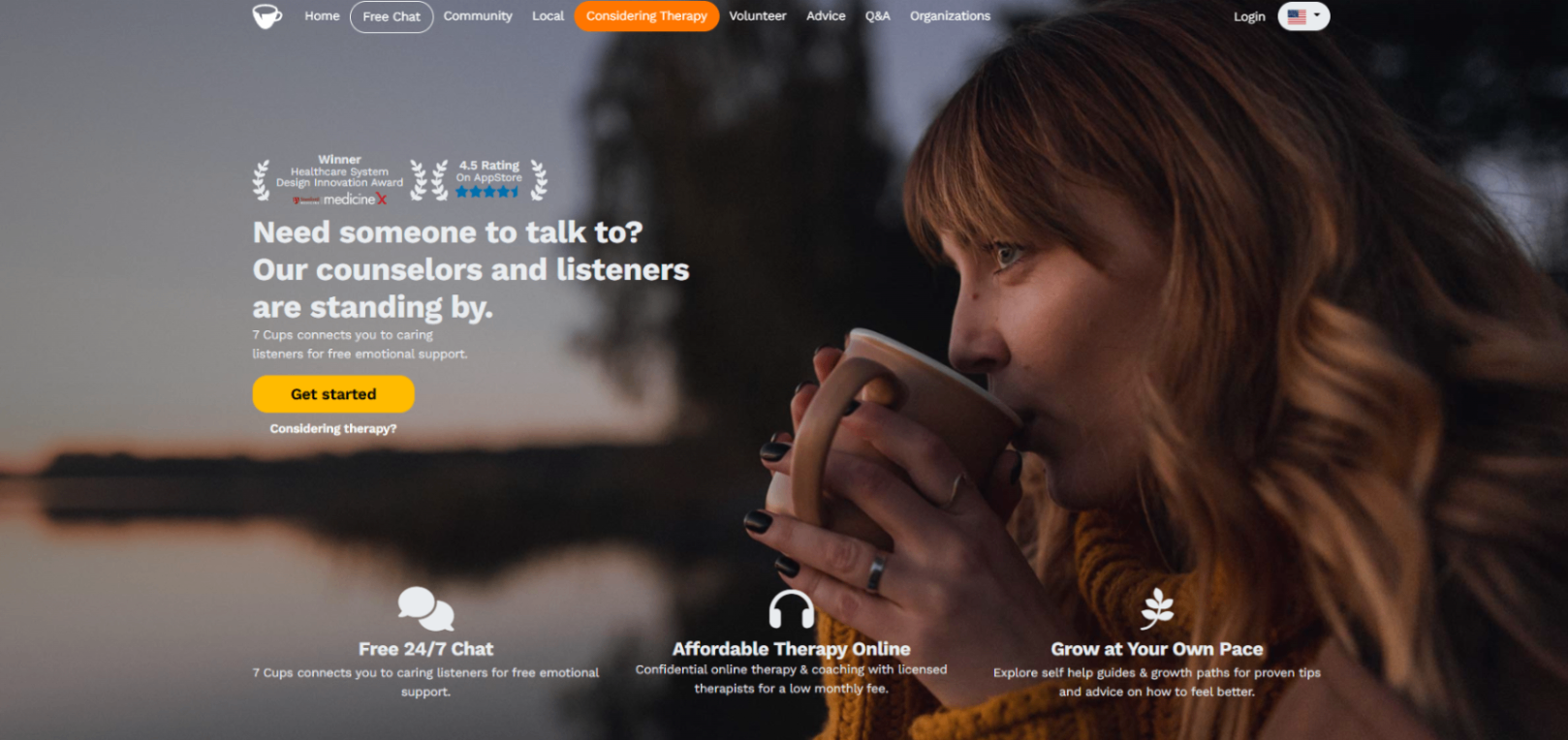
7 Cups is one of the most established emotional support platforms, offering a mix of trained listeners, community support, and professional therapy options. Unlike apps that focus only on peer conversations, it gives users multiple ways to seek support depending on what they are comfortable with.
7 Cups homepage showing free emotional support chat, online therapy options, and self-help resources for people seeking someone to talk to
- Anonymous conversations with trained listeners
- Supportive community discussion forums
- Self-help guides and emotional wellness resources
- Option to connect with licensed therapists
- Available through web and mobile platforms
Where It Might Not Be Suitable
- People looking exclusively for private one-to-one conversations
- Users who prefer smaller, more personal platforms
- Those who may feel overwhelmed by multiple support options
- Individuals seeking immediate crisis intervention services
Best For
- People exploring emotional support for the first time
- Users who want access to both listeners and community support
- Individuals looking for self-help resources alongside conversations
- Those who may eventually want professional therapy options within the same platform
6. Supportiv
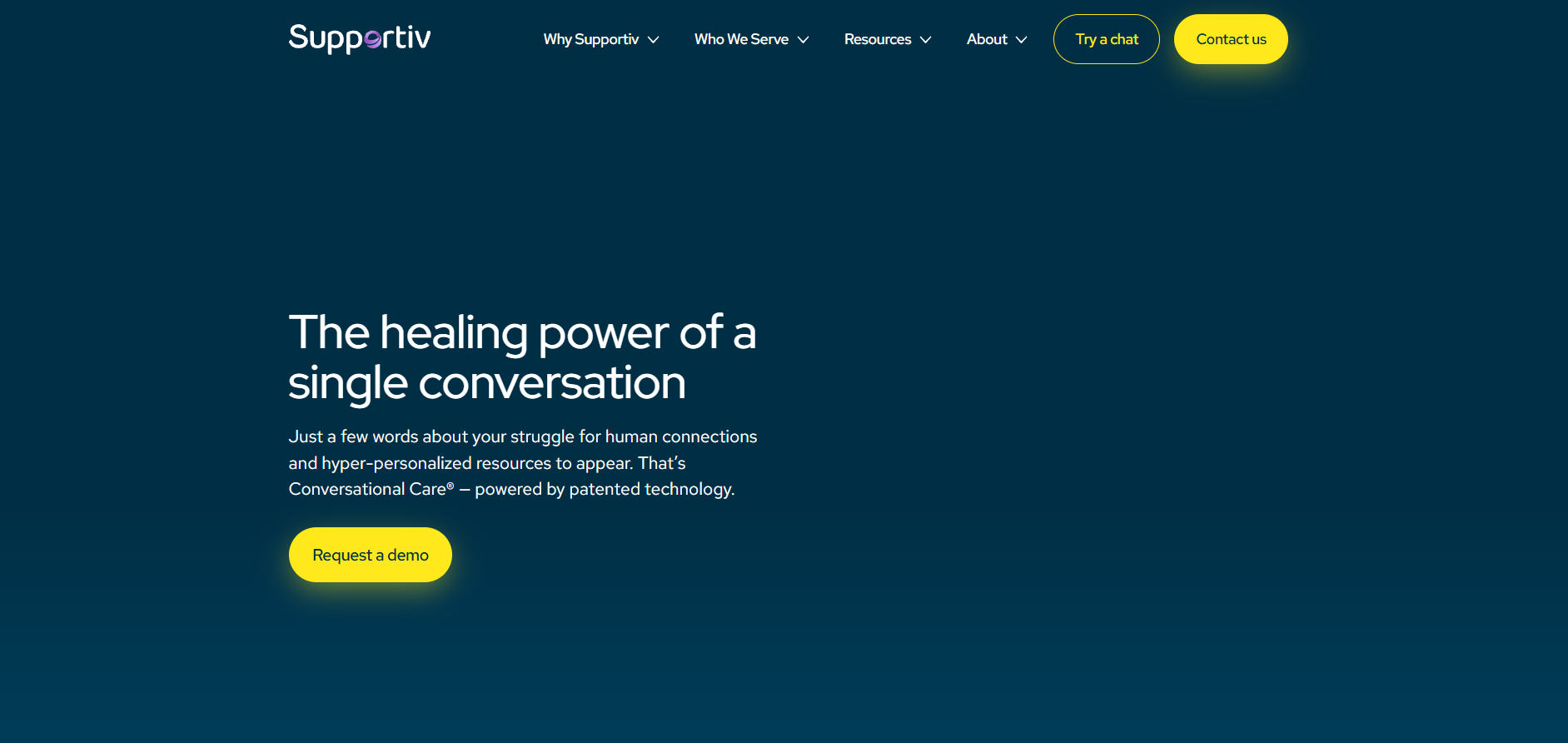
Supportiv is an online emotional support platform that combines peer support with moderated group conversations. Instead of connecting users with a single listener, it places them in real-time chats with people discussing similar challenges, creating a space for shared experiences and encouragement.
The platform is designed around specific topics such as stress, anxiety, loneliness, relationships, work pressure, and life transitions. Active moderation helps keep conversations respectful and supportive, which can make it feel safer than unmoderated discussion forums.
Key Features
- Real-time moderated group chats
- Topic-based emotional support discussions
- Anonymous participation
- Supportive peer-to-peer conversations
- AI-assisted matching to relevant support groups
Where It Might Not Be Suitable
- People who prefer private one-to-one conversations
- Users looking for long-term relationships with the same support person
- Those seeking professional therapy or mental health treatment
- Individuals who feel uncomfortable sharing in group settings
Best For
- People who want support from others facing similar challenges
- Users who prefer guided discussions over open forums
- Individuals looking for anonymous emotional support
- Those who value moderated and structured conversations
7. Whisper

Whisper is designed for people who want to share thoughts, feelings, and personal experiences without attaching them to their real identity. The platform allows users to post anonymously and interact with others through replies and conversations, making it easier to discuss topics they might hesitate to share elsewhere.
Many people use Whisper when they want an outlet for emotions that feel difficult to discuss with friends, family, or people they know. Whether it is loneliness, relationship concerns, insecurities, or everyday frustrations, the anonymous format can make opening up feel less intimidating.
Key Features
- Anonymous posting and conversations
- No requirement to use a real identity
- Community responses and interactions
- Topic-based discussions
- Mobile-friendly platform
Where It Might Not Be Suitable
- People looking for private one-to-one conversations
- Users seeking professional therapy or clinical support
- Those who prefer smaller, moderated communities
- Individuals wanting long-term support relationships
Best For
- People who value anonymity above everything else
- Users who want to express thoughts without revealing personal details
- Individuals looking for community feedback and perspectives
- Those who feel more comfortable sharing emotions anonymously
8. Slowly
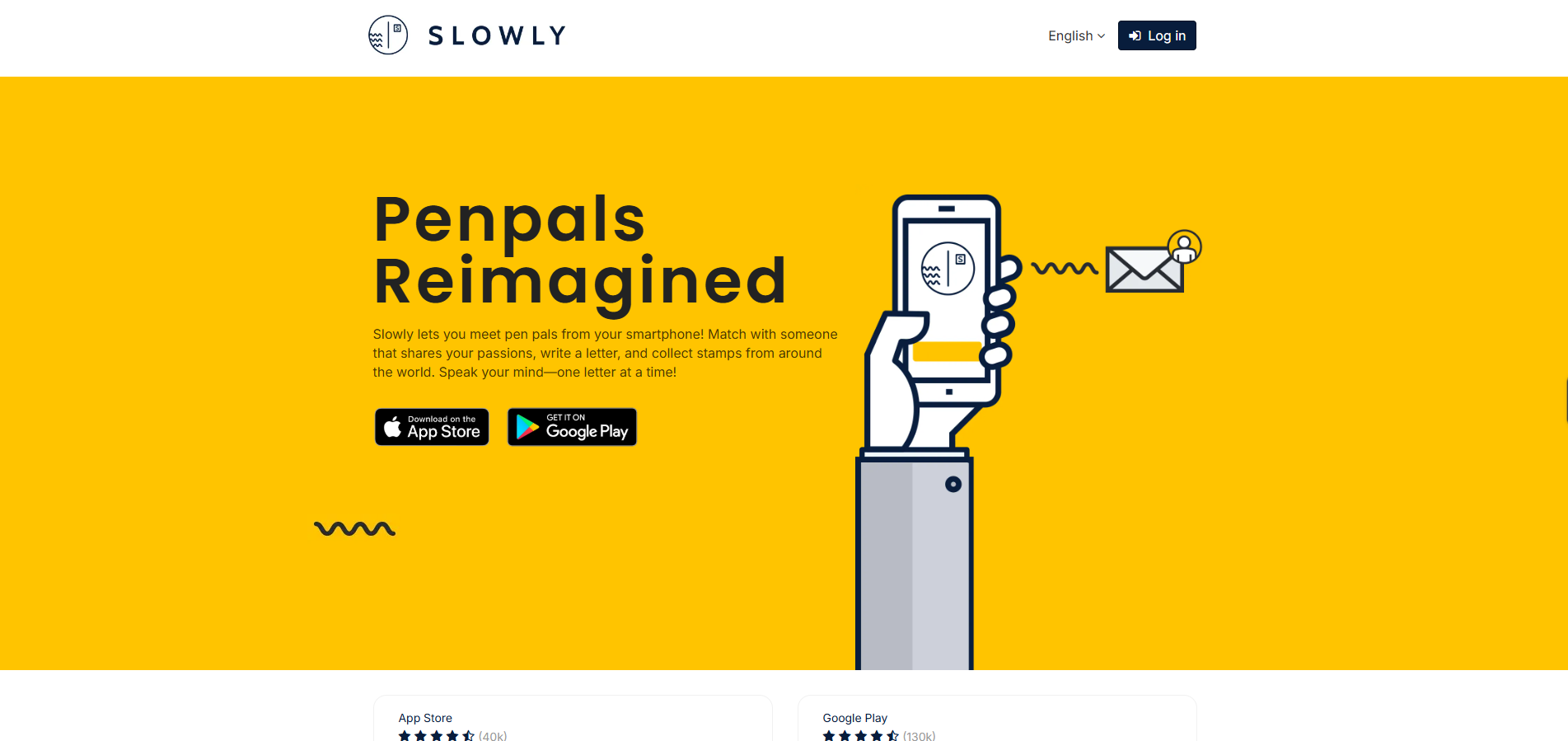
Slowly takes a different approach from most emotional support apps. Instead of real-time chats, it encourages users to connect through digital letters that arrive after a delay, similar to traditional pen-pal communication. This slower pace can create more thoughtful and meaningful conversations.
Many people use Slowly when they are looking for genuine connections rather than instant replies. The platform gives users time to reflect on what they want to say, which can make it easier to discuss personal experiences, emotions, and life challenges in greater depth. For some, this feels less overwhelming than fast-moving chats or social feeds.
Key Features
- Letter-style messaging inspired by pen-pal exchanges
- Global community of users
- Interest-based matching
- Encourages deeper and more thoughtful conversations
- Focus on meaningful connections rather than instant communication
Where It Might Not Be Suitable
- People looking for immediate emotional support
- Users who prefer real-time conversations
- Those seeking professional therapy or crisis support
- Individuals who want quick responses and active discussions
Best For
- People who enjoy long-form conversations
- Users looking to build meaningful connections over time
- Individuals who prefer thoughtful communication to instant messaging
- Those who value reflection and deeper emotional discussions
There is no single app that works for everyone. The right choice depends on whether you prefer private conversations, community support, or professional guidance. The most important thing is finding a space where you feel comfortable expressing yourself and seeking support.
What makes a good feelings-sharing app?
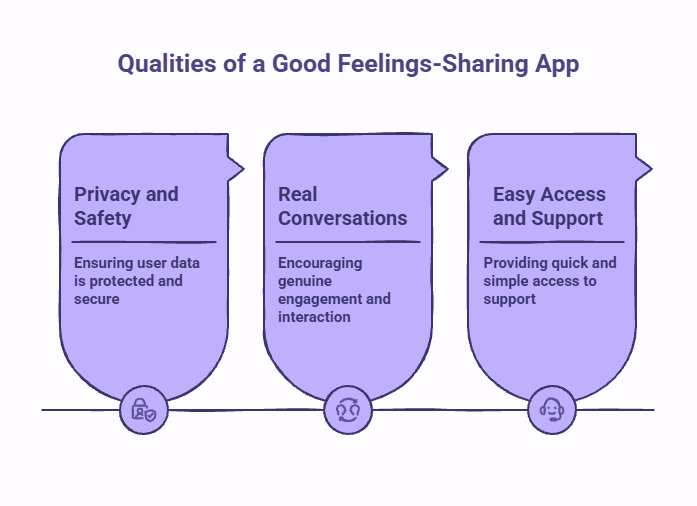
The right app should make it easier to express yourself, connect with others, and find support when you need it. While features vary, the best feelings-sharing apps typically share four qualities.
1. Privacy and safety
When sharing personal feelings online, it's important to understand who can see your posts, how your information is protected, and what safeguards the platform has in place. Features like anonymous posting, moderation, reporting tools, and clear community guidelines can help create a safer experience.
Consider:
- Can I share without using my real identity?
- Who can see my posts or conversations?
- Does the platform moderate harmful content?
- Are reporting and blocking tools available?
2. Real conversations
Sharing your feelings is more valuable when people genuinely engage with what you say. Some apps focus on community discussions, while others offer one-to-one conversations or listener-based support.
Look for:
- Active responses rather than empty comment sections
- Opportunities for one-to-one conversations
- Communities that encourage thoughtful interaction
- Support that continues beyond a single message
3. Easy access and support options
The best support tools are easy to use when emotions feel overwhelming. Simple navigation and quick access to conversations can make reaching out feel less intimidating.
Helpful features include:
- Fast access to conversations
- Text, voice, or video options
- Simple navigation
- Journaling or mood-tracking tools
The best feelings-sharing app is not necessarily the one with the most features. It is the one that makes you feel comfortable expressing yourself, supports meaningful conversations, and gives you access to the kind of help you are looking for when you need it most.
How do you choose the right app for your needs?
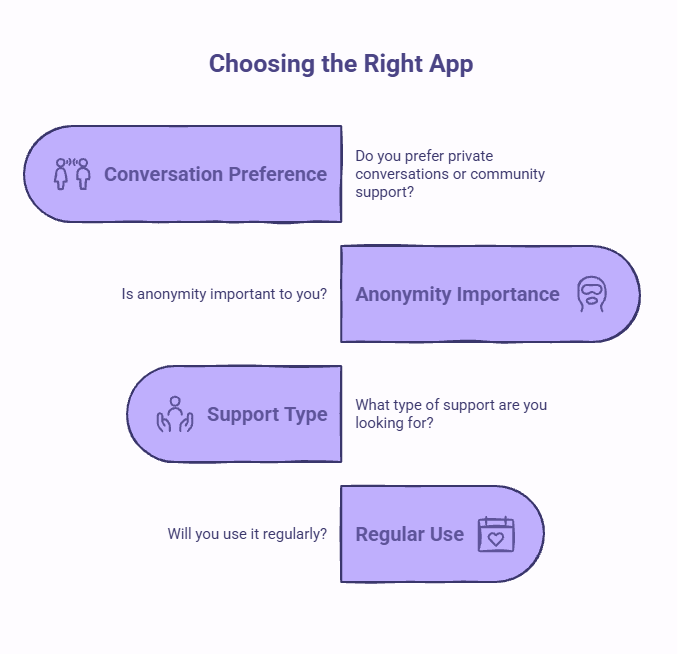
The right platform depends on how you prefer to share your feelings and the type of support you are looking for. Before choosing an app, consider what will make you feel most comfortable opening up.
1. Do you prefer private conversations or community support?
Different people feel comfortable in different environments. Some prefer one-to-one conversations because they can speak openly without worrying about other opinions or reactions. Others find comfort in communities where people share similar experiences and understand what they are going through. Thinking about where you feel most comfortable expressing yourself can help you choose a platform that feels supportive rather than overwhelming.
2. Is anonymity important to yuou?
Many people find it easier to talk about difficult emotions when they know their identity is protected. If you are worried about being recognised, judged, or sharing personal details, anonymity may be an important feature to look for. Platforms that offer private conversations or anonymous interactions can help remove some of the pressure that often makes opening up feel difficult.
3. What type of support are you looking for?
Not every platform is designed for the same purpose. Some focus on emotional support and active listening, while others are built around peer communities, self-help resources, or professional mental health services. Before choosing an app, consider whether you want someone to listen, a community that relates to your experiences, or access to more structured support and guidance.
4. Will you use it regularly?
The best platform is often the one that feels easy to come back to. Even the most feature-rich app may not be helpful if it feels complicated, uncomfortable, or difficult to use when you are struggling. A platform that feels approachable, supportive, and easy to access is more likely to become a consistent source of support when you need it most.
Choosing a platform that matches your preferences can make it easier to talk openly, seek support, and build a habit of reaching out when life feels difficult.
What should you consider before sharing personal feelings online?
Before sharing personal feelings online, consider:
- Privacy: Can you control who sees your posts and personal information?
- Safety: Does the platform have moderation, reporting tools, and community guidelines?
- Type of support: Are you looking for peer conversations, one-to-one listening, or professional help?
- Comfort level: Do you prefer anonymous posting, private chats, or community discussions?
Choosing a platform that matches your needs can help you feel more comfortable, supported, and confident when sharing your feelings.
What if you do not know how to express what you are feeling?
Many people struggle to describe their emotions, especially when they feel overwhelmed, stressed, or unsure why something feels wrong. Not having the right words does not mean your feelings are invalid.
Tools such as mood trackers, journaling prompts, or one-to-one conversations can make it easier to identify what you are experiencing. Instead of trying to explain everything at once, start with a simple observation about what has been on your mind or how you have been feeling lately.
On platforms like Listennr, you do not need to arrive with a clear explanation. Sometimes talking through your thoughts with someone who listens can help you better understand your emotions and put them into words.
How can sharing your feelings online help?
Sharing your feelings can help reduce emotional pressure, organise your thoughts, and make difficult emotions feel easier to understand. Even when a situation cannot be changed immediately, talking about it can help you feel less isolated and more supported.
Sharing can help you:
- Process thoughts that feel overwhelming
- Gain perspective on difficult situations
- Feel heard when you are not ready to talk to friends or family
- Better understand your emotions
- Reach out before stress, anxiety, or loneliness begin to build
For people who are uncomfortable with public posting, Listennr offers a more private way to share what is on your mind. Instead of broadcasting your feelings to a community, you can connect through one-to-one conversations focused on listening and emotional support.
If you are looking for a safe place to express your thoughts, explore how Listennr can help you start meaningful conversations and feel more understood. Download the Listenrr App!
Conclusion
The best app to share your feelings is the one you'll actually use when you need support. Whether you prefer anonymous conversations, supportive communities, or one-to-one chats, choose a platform that feels safe, comfortable, and easy to return to.
If you're unsure where to start, try one app that matches your needs and use it consistently for a few days. Sometimes, expressing what you're feeling, even in a short message, can be the first step toward feeling more understood and less alone.
Frequently asked questions
Can I stay anonymous while sharing my feelings on these apps?
Yes, many feelings-sharing apps allow anonymous posting or private conversations. However, privacy features vary, so check what information is visible, how data is handled, and whether you can control your anonymity settings.
Do any of these apps offer free emotional support?
Yes, several apps offer free emotional support. Platforms such as 7 Cups, TalkLife, HearMe, Supportiv, and Listennr provide free ways to connect with listeners, peers, or supportive communities, though features and support levels vary by platform.
Which app is most suitable for sharing feelings in India?
There is no single best app for everyone in India. If you want private emotional support, Listennr may be a good fit. For peer discussions, TalkLife and Reddit communities are popular options, while 7 Cups offers free listener-based support.
Which app is safe for sharing my personal thoughts and feelings online?
Apps with strong privacy settings, moderation, and clear community guidelines are generally safer. Before sharing, check who can see your content, whether conversations are private, and how the platform protects user information.
What features should I look for in an app to share my emotional state?
Look for privacy controls, anonymous options, active moderation, responsive conversations, and a supportive environment. Features such as journaling, mood tracking, or one-to-one listening can also make it easier to express your feelings.
Can you share your feelings online anonymously?
Yes, many platforms allow you to share your feelings anonymously. Anonymous apps can make it easier to open up, but it's still important to understand the platform's privacy settings, moderation policies, and safety features