.jpg)
No One Gets It? Who to Talk to When You Feel Alone?

Key highlights
- Feeling lonely in a crowd is common; it's about connection quality, not how many people surround you.
- Connection quality matters more than the number of people around
- Stigma, fear of judgment, and guilt keep most people silent
- Friends, family, and partners can be the first step forward
- Anonymous listeners offer support without history, judgment, or pressure
- One honest message is often enough to shift how isolation feels
- Talking about feelings brings clarity, relief, and stronger connections over time
- Professional help isn't just for crises; it's for everyday struggles too
There are plenty of reasons you might feel lonely. Maybe you're physically alone a lot, or your closest people live far away. But that's not the whole picture. Sometimes it's being in a room full of people and still feeling like nobody really gets you. Or going quiet for a few days and wondering if anyone would even notice.
That feeling doesn't need a reason to be valid. It can show up after a tough week, a falling out, a move, or just a long stretch of keeping things to yourself. And when it does, it can leave you feeling low, a bit anxious, and maybe even a little envious of people who seem to have it all figured out socially.
If you're sitting with that feeling right now, this blog is here to help with the practical part, who to talk to when you feel alone, and how to actually start that conversation, whether it's with someone close, a stranger, or somewhere in between.
Why does it feel like nobody understands what you're going through?
It usually comes down to the quality of connection, not the number of people around you. You can be surrounded all day, replying to messages, sitting in meetings, having dinner with family, and still feel like you're going through everything on your own. That's because connection isn't just about presence. It's about feeling truly known by someone.
When there's no space to talk about how you're actually doing, things build up quietly. And after a while, even the people closest to you can start to feel unreachable.
That doesn't mean something is wrong with you. It just means the support you need and the connections around you aren't currently lining up.
What are the signs you might be feeling lonely?
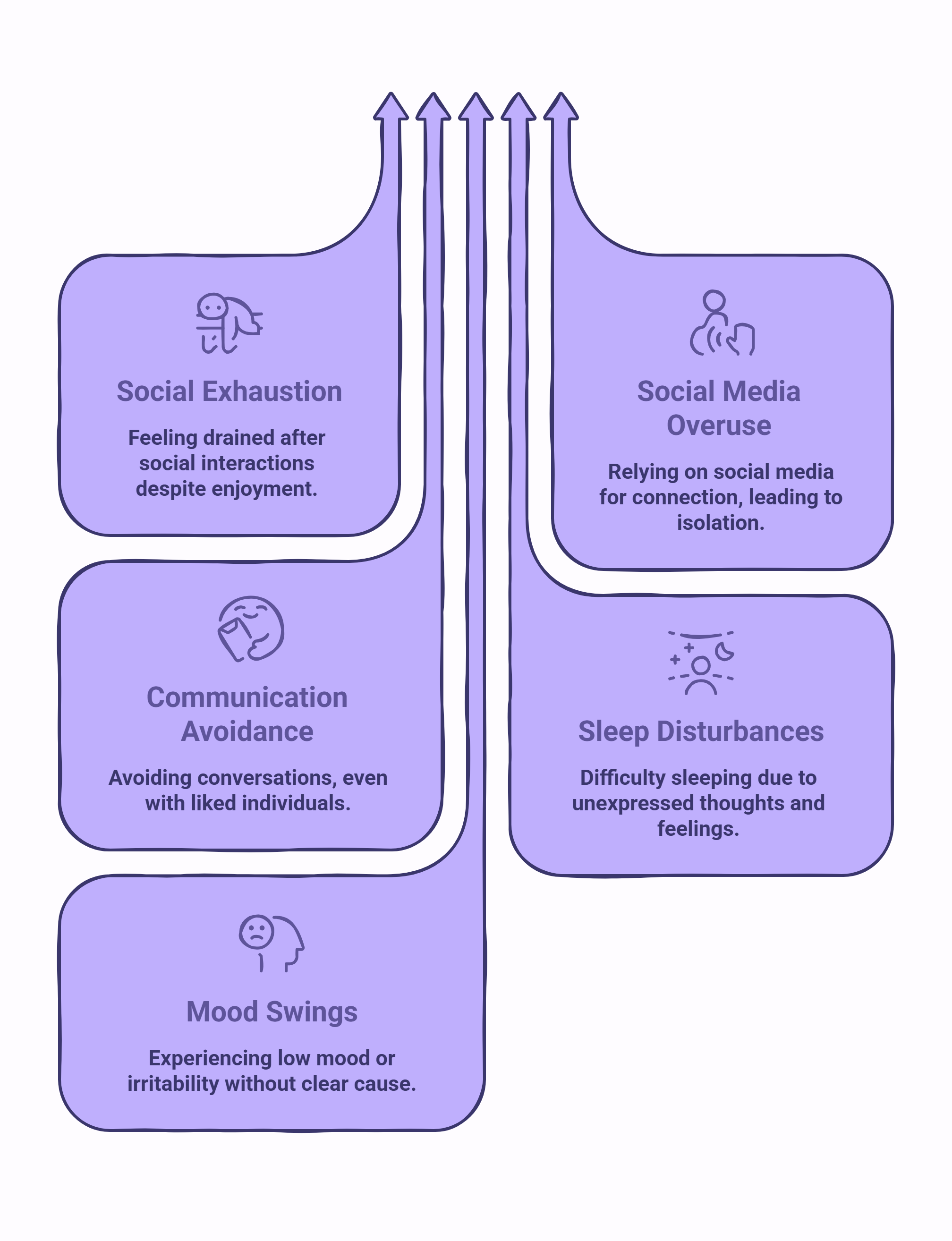
Loneliness is the feeling of lacking meaningful emotional connection, even when other people are around. It is more about feeling understood and supported than simply being physically alone.
1. Feeling drained even being with people
You spend time with close friends and people, maybe even people you genuinely like, and afterwards you feel more tired than before. Not because anything went wrong, but because the types of connections you have didn't quite land. It's a small thing, but it adds up, and it's one of the quieter signs that something deeper is going on.
2. Over-reliance on social media
You find yourself scrolling more than usual, hoping it'll fill the gap somehow. But instead of feeling better, you end up feeling even more distant from everyone, comparing your evening to everyone else's highlight reel. It's not about willpower; it's often just your mind looking for a connection in the easiest place to reach, highlighting the effects of loneliness on your emotional state.
3. Avoiding conversations, even from people you want to talk to
Messages sit unread, calls go unanswered, not because you don't care, but because even a simple reply feels like more than you can manage right now. If you've noticed yourself pulling away from people you actually like talking to, that's worth paying attention to, not ignoring.
4. Trouble sleeping at night
The day keeps you busy enough that you don't think too much. But at night, when things go quiet, your mind tends to catch up on everything you didn't have space for earlier. If you're lying awake more often, with thoughts you haven't said to anyone, that's often loneliness finding its moment.
5. Feeling low or irritable without a clear reason
Some days just feel heavier, and you can't quite point to why. Small things annoy you more than usual, or you feel flat for no obvious reason, similar to what many people experience. This can lead to a sense of isolation, making it easy to brush this off, but it's often a sign that something's been sitting unspoken for a while.
If a few of these felt a bit too familiar, that's okay. Recognising them is actually a useful first step; it means you're not just feeling something vague and unexplainable, you're noticing a pattern that can reduce feelings of isolation.
Why does it feel so hard to talk about loneliness in the first place?
Even once you've named the feeling, actually saying it out loud is a whole other hurdle. Most people don't stay quiet because they don't want help. They stay quiet because of three things:
- Stigma: There's a quiet cultural message most of us absorbed growing up that needing support means something is wrong with you. So admitting "I feel alone" can feel uncomfortably close to admitting you've failed at friendships, at family, at just being okay.
- Fear of judgement: "What will people think?" is a real concern, not a dramatic one. Worrying that opening up will change how someone sees you can significantly impact your quality of life and is enough to keep most people silent for a long time.
- Fear of burdening others: This one is especially common. You don't want to drop your problems on someone else, so you convince yourself it's not that serious, or that they've got enough going on already.
All three of these are understandable. But none of them are true enough to keep you stuck.
Asking "who can I talk to?" isn't a sign that something is wrong with you. It's the first honest step toward feeling less alone.
Find out more in our blog on wanting someone to listen, and why that's never too much to ask.
What can you do when you feel alone?
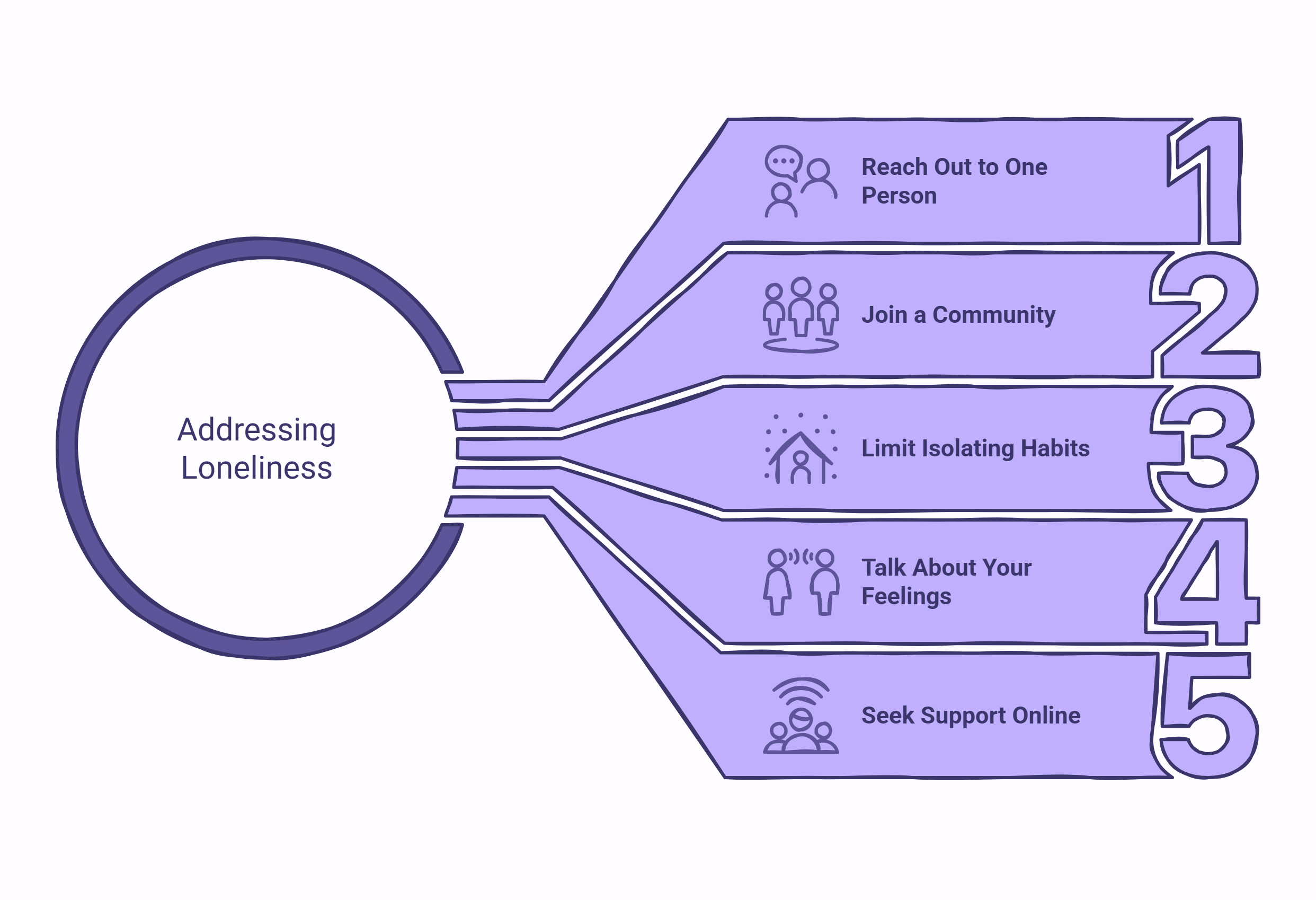
When you feel alone, the most important thing is to take one small step towards connection. You don't have to do everything at once. Even the smallest action can shift how the day feels.
1. Reach out to one person
You don't need to rebuild your whole social life overnight. Choose one person, a friend, a sibling, even an old colleague, and send a simple message.
Example: "Hey, been thinking about you" or "Been a weird week, how are you?" is enough. One small conversation can shift how isolated the day feels.
2. Join a community
A class, a walking group, a local club, anything that meets at the same time each week in your daily life. You don't need to make friends instantly. Just showing up around the same people repeatedly builds familiarity, and familiarity is where connection usually starts.
Example: Join a weekend badminton group. You don't have to make friends in week one. By week four, you're the person who waves when you walk in, and someone saves you a spot. That's the connection starting.
3. Limit isolating habits
If scrolling tends to leave you feeling worse, try swapping ten minutes of it for something that involves real interaction and quality time. Reply to a message, call instead of text, and comment properly instead of just liking.
It doesn't have to be a big change to matter. Even stepping away from your phone for a short while can give your mind some room to breathe. The less time you spend comparing your life to a screen, the more space you create for real connection.
4. Talk about your feelings
Sometimes you don't even know what you're feeling until you say it out loud. You don't need a big confession. An honest sentence to your best friend or someone you trust, "I've been feeling pretty alone lately," is enough to start.
If talking feels like too much right now, write it down first. A note on your phone or a message draft you never sent can still help get it out of your head.
5. Seek support online
If you're not ready to open up to someone you know, online support is a real option. Anonymous listening platforms like Listennr let you talk to someone without revealing your identity. There are also apps for talking to strangers anonymously if you want somewhere private to start.
If you're ready to talk but unsure how, this guide covers practical ways to reach out and find someone to talk to when support matters most.
None of these needs to happen all at once. Pick whichever feels the least overwhelming today. Even one small step is enough to start loosening that feeling of being on your own at your own pace.
Who can you talk to when you feel alone?
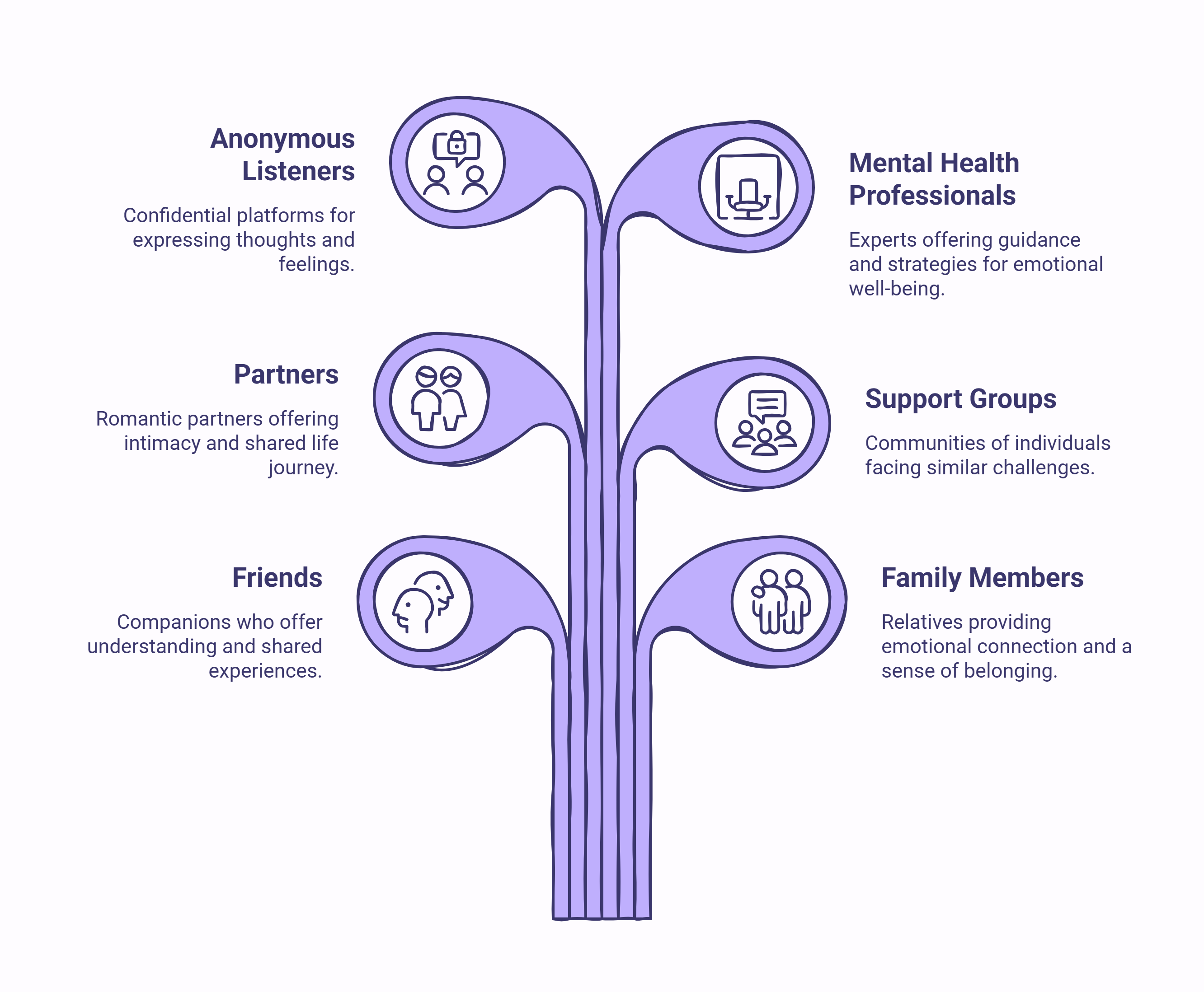
The problem is, when you're in that lonely headspace, even the people right in front of you can feel unreachable. You second-guess yourself. Will they get it? Will they judge me? Am I being too much? You're not too much. You just haven't found the right person yet, or the right moment.
Here's who you can actually turn to.
1. Friends
Not every friend needs to be a deep emotional anchor. But most people have at least one friend who, when you're really honest with them, shows up to make new friends. The tricky part is that we rarely give them the chance.
You don't need to launch into a big conversation. A simple "hey, I've been feeling off lately, can we talk?" is enough to open the door. Try opening up to your most trusted one first, even if it feels uncertain.
2. Family members
Sometimes the people who've known you the longest are the ones who can sense something's off without you even having to say much.
Think about the one person in your family you've always felt a little more at ease around. A parent, a sibling, a cousin, an aunt. That's your person.
You don't need to explain everything at once. Start small. Sometimes just being in the same room with someone who loves you, even without saying a word, can make the weight feel a little lighter.
3. Partners
If you're in a relationship, your partner is often the last person you tell when you're struggling. The closest person becomes the hardest to be vulnerable with.
But loneliness inside a relationship is one of the most painful kinds. And it rarely gets better on its own. Telling your partner, "I've been feeling disconnected, and I don't know why", is not a weakness. It's actually one of the bravest things you can do for both of you.
4. Support groups
There's something quietly powerful about sitting in a room, physical or virtual, with people who are going through something similar. You stop feeling like the only one.
Support groups exist for grief, anxiety, depression, life transitions, chronic illness, and loneliness itself. You don't need a diagnosis or a crisis to join one. Feeling like you're struggling is enough of a reason.
5. Anonymous listeners
Sometimes you don't want advice. You don't want someone who knows you. You just need to say it out loud to another human being.
That's what anonymous listening platforms are for. No history, no judgment, no follow-up questions you're not ready for. Just a real person on the other end, listening.
Example: Listennr connects you with real, empathetic listeners who are there purely to hear you out, no advice unless you ask for it.
Keeping everything to yourself can feel exhausting. Sometimes, talking to someone online is the easiest first step towards feeling heard and a little less alone.
6. Mental health professionals
A therapist isn't just for when things fall apart. They're for exactly this, the low-grade, hard-to-explain feeling that something is off and you can't shake it.
What makes a therapist different from everyone else on this list is that they're trained to help you untangle not just what you're feeling, but why. That "why" tends to be the quiet driver behind everything.
The right person to talk to is simply the one you feel even slightly safe with. Start there. You don't need the perfect conversation. You just need to begin one.
What are the benefits of talking about your feelings?
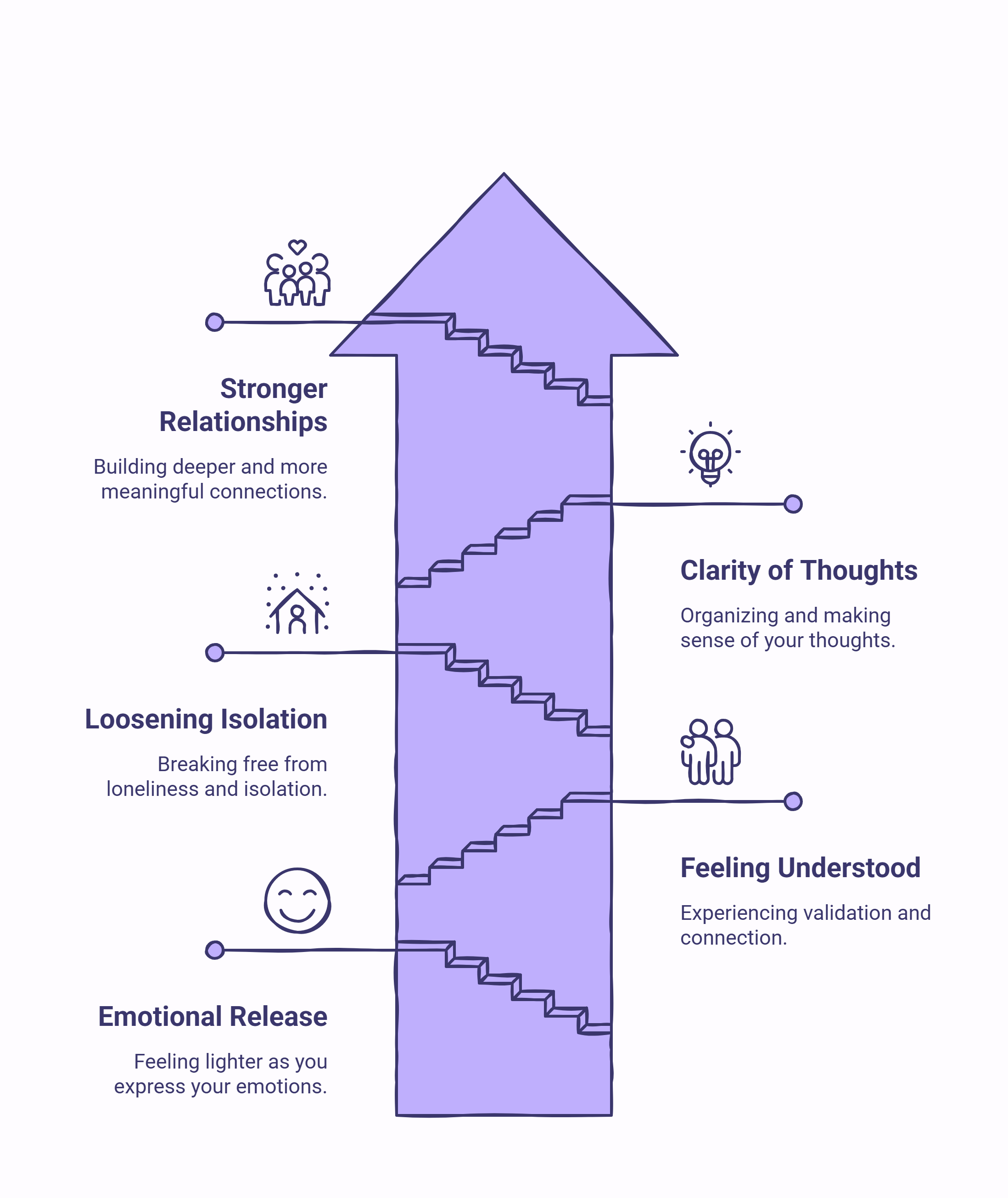
Most of us were never really taught how to talk about what's going on inside. We were taught to get on with it, to be strong, and not to make a fuss. So when things feel heavy, the default is to go quiet, which can impact your mental well-being. But here's what actually happens when you let it out.
1. You feel emotionally lighter
Talking about what you're feeling, even briefly, makes things a little easier to carry. You're not just sad or anxious, you're also working overtime to hold it all in.
Talking about what you're feeling, even just once, to even just one person, releases some of that pressure. It doesn't fix everything. But it makes the load feel more bearable.
2. You feel understood, maybe for the first time in a while
There's a difference between someone listening and someone truly getting it. A lot of the time, it's about feeling like no one truly sees what you're going through.
When someone listens, really listens, without jumping to fix it or dismiss it, something shifts. You stop feeling invisible. That feeling of being understood is one of the most quietly healing things a person can experience.
3. The isolation starts to loosen its grip
When you're struggling in silence, the mind has a way of convincing you that you're the only one who feels this way. That everyone else is fine and you're the odd one out.
Talking breaks that illusion. The moment someone responds with "I understand how you're feeling," the isolation comes down a little. You realise you were never as alone as it felt.
4. Your thoughts start to make more sense
Sometimes you don't even know what you're feeling until you try to put it into words. Talking out loud, or even writing it down first, helps you organise what's going on inside your head.
You might start a conversation feeling like a tangled mess and end it with a clearer sense of what's actually bothering you. That clarity alone can point you towards what you need next.
5. Your relationships grow stronger
Vulnerability, as uncomfortable as it feels, is what deepens connection. When you let someone in, even a little, it changes the dynamic. They trust you more. You trust them more.
The relationships that matter most in your life are rarely built on small talk. They're built on the moments where someone said something real and the other person stayed, fostering meaningful relationships.
Talking about your feelings isn't a sign that something is wrong with you. It's a sign that you're paying attention to yourself. And that's always worth doing.
There's a reason talking it out feels better. Read our blog on why people need to vent out their feelings.
What if you don't have anyone close enough to talk to?
You don't need a deep support system overnight. Online communities built around shared experiences can be a quieter, lower-pressure way in. And peer support platforms, including listening spaces like Listennr, aren't just a backup option; they're often exactly where people start when they feel like they have no one else to turn to.
This is exactly the kind of space Listennr is built for.
- You're talking to real people, not a chatbot pretending to care.
- Safe and anonymous. Share as much or as little as you want, with no pressure to explain yourself.
- Every chat and call is encrypted and confidential, so it stays just between you and the listener.
- Judgment-free support. A space to be honest without worrying about how it sounds.
- Available anytime. Late nights, overwhelming days, whenever you need to talk, someone's there.
If the idea of opening up to someone you know feels like too much right now, starting with a stranger isn't a lesser option; it's often a gentler one. And if you'd like to try it, Listennr is just a conversation away whenever you're ready.
Conclusion
Feeling alone, even when people surround you, isn't a sign that something's wrong with you. It usually just means there's a gap between how connected you look from the outside and how supported you actually feel on the inside, which impacts your physical health. That gap can be closed, even a little at a time.
If you take one thing from this blog, let it be this: you don't need a perfect plan or the "right" person lined up. The next time you're figuring out who to talk to when you feel alone, take a small step and seek extra support. That's not a small step; it's actually the hardest part, and you've already got everything you need to take it.
Wherever you're at tonight, this feeling won't stay this heavy forever. Reaching out, in whatever way feels manageable right now, is enough.
Frequently asked questions
How do single adults cope with loneliness?
A small, consistent connection helps most; regular check-ins with friends; joining a class or group with a set schedule; and being honest about how you feel rather than staying busy to avoid it. Even one regular conversation a week can make a real difference over time.
Where do I go when I have no one to talk to?
Start with online communities built around shared experiences, or peer-support and listening platforms like Listennr, where you can talk to someone without a prior relationship. These spaces are often where people begin, not a last resort.
Who to speak to when lonely?
It depends on what you need: a friend or family member for familiarity, emotional support, a therapist for ongoing support, or a helpline for late-night moments when you need to talk to someone right away to improve your social skills.
Where can I turn when I feel alone?
You can turn to people close to you, online peer communities, or online support groups and helplines for immediate support, whichever feels least overwhelming. There's no single "right" place, just somewhere that lets you say how you're feeling without judgment.
I feel alone, and I am depressed. How do I reach out for help?
Start by telling one person, a friend, family member, or a professional like a doctor or counsellor, that you've been feeling low and alone for different reasons. Even one honest sentence to someone you trust can be the first step toward feeling supported, and don't forget to treat yourself by dancing to your favourite song afterwards.