.png)
What to Do When You Feel Like No One Will Understand?

Key highlights
- Feeling misunderstood can make it harder to open up, even when you genuinely need support.
- Past dismissal or emotional invalidation can make vulnerability feel unsafe.
- You do not need to explain your feelings perfectly for them to deserve care and attention.
- Finding the right listener can matter more than receiving immediate advice or solutions.
- Writing down your thoughts can make difficult emotions easier to communicate.
- Not everyone has to understand you completely for a conversation to be supportive.
- Anonymous listening platforms such as Listennr can offer another way to feel heard when opening up feels difficult.
You replay conversations in your head. You type out messages, then delete them because explaining your feelings suddenly feels exhausting. Maybe you smile through the day, say “I’m fine,” and quietly convince yourself that no one will understand anyway. When you feel misunderstood, even simple conversations can start to feel heavy.
Sometimes, it is not about being alone. It is about feeling emotionally unseen. You may want support, empathy, or simply someone who listens without interrupting, judging, or trying to dismiss what you are feeling. After enough disappointing conversations, staying silent can start to feel safer than risking another misunderstanding. According to the U.S. Surgeon General’s Advisory published on PubMed on loneliness and isolation, social connection is a fundamental human need that affects overall health and well-being.
If you have ever thought, “Nobody understands me,” you are not alone. Understanding where this feeling comes from can help you find better ways to express what you need, build safer connections, and seek support when talking feels difficult. This guide explores why you may feel misunderstood and what you can do when you feel like no one understands your feelings.
Why does it feel like no one will understand me?
Feeling misunderstood does not always mean people do not care. Sometimes, the disconnect happens because your emotions are difficult to explain, your needs are not being recognised, or past experiences have made opening up feel difficult.
You may feel misunderstood when:
- You struggle to explain your own emotions: You know something feels wrong but cannot find the right words to describe it.
- Others do not see the impact of what you are going through: Your feelings may feel significant to you, but others may not realise how deeply they affect you.
- You have learned to hide your emotions: You appear fine on the outside, while keeping difficult thoughts and feelings to yourself.
- Past experiences made opening up harder: Being dismissed or judged before can make you hesitant to share again.
- You need empathy but receive advice instead: Sometimes you want someone to listen, not immediately fix the situation.
- You feel disconnected even when people are around: Having people in your life does not always mean feeling truly understood.
Understanding this distinction matters. You may not need everyone to completely understand your experience. Sometimes, what you need is someone willing to listen, ask questions, and give you space to express what you are going through.
Why do many people stop opening up altogether?
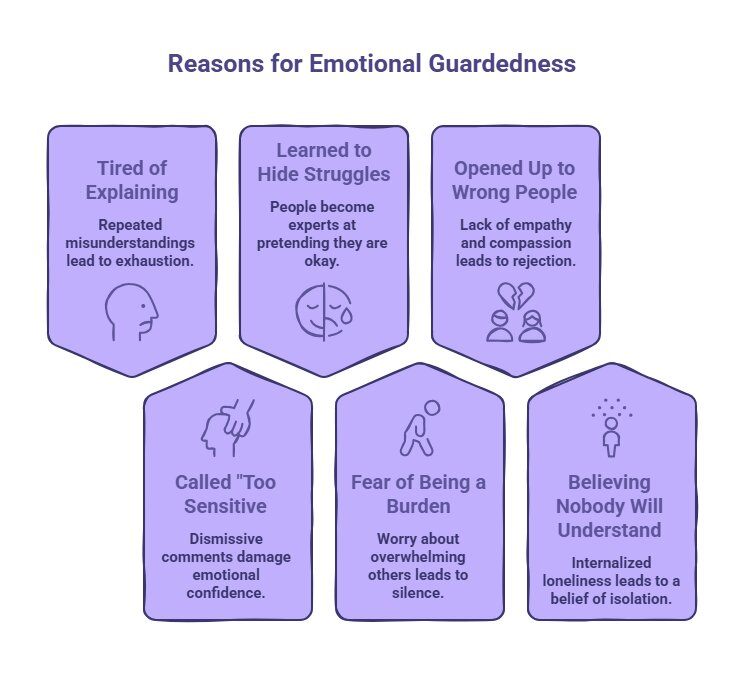
When someone repeatedly feels misunderstood, they may slowly start withdrawing from conversations. After several experiences of feeling dismissed, judged, or unheard, staying quiet can begin to feel safer than trying to explain themselves again.
This withdrawal cycle can happen when:
1. You get tired of repeating yourself
When you explain your feelings multiple times but still feel misunderstood, you may start believing that sharing will not change anything. Over time, you may stop bringing up what is bothering you.
2. You start questioning your own feelings
Repeated comments like “you are overthinking” or “it is not that serious” can make you doubt whether your emotions are worth sharing. Instead of reaching out, you may begin keeping things to yourself.
3. You hide more of what you are going through
After feeling misunderstood, you may become more careful about what you share. You might continue with your daily routine, smile, and say you are fine while keeping difficult emotions private.
4. You begin to fear being a burden
When past conversations have not gone well, you may worry that opening up will overwhelm others or create problems. This can make you minimize your feelings instead of asking for support.
5. You become more hesitant after sharing with the wrong person
If someone responds by dismissing your feelings, changing the subject, or immediately giving advice, you may associate opening up with disappointment. This can make you less likely to try again.
Over time, this cycle can create more emotional distance. The less you share, the harder it can become for others to understand what you need. You do not have to open up to everyone, but finding even one person who listens with patience can be a meaningful first step toward feeling connected again.
What happens when you keep everything inside?
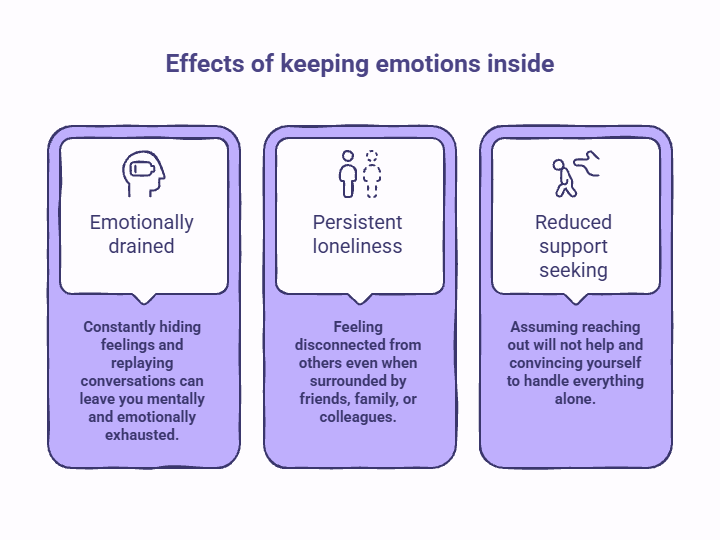
Keeping difficult emotions to yourself may feel safer in the short term, especially if previous attempts to open up ended badly. But when silence becomes your only way of dealing with difficult feelings, including feelings of loneliness and social isolation, it can affect your emotional health and how you experience yourself and your relationships.
1. You may feel increasingly emotionally drained
Constantly hiding what you are feeling can take effort. You may spend a lot of time thinking about what happened, replaying conversations, or deciding whether it is safe to tell someone honestly how you really feel.
Over time, this can leave you feeling mentally and emotionally exhausted.
2. You may feel lonely even around other people
Being surrounded by friends, family, or colleagues does not always prevent loneliness, especially for young people and their hobbies. If you feel unable to share what is really happening inside, you may still feel disconnected from the people around you.
This is often what makes emotional loneliness particularly difficult: people may be present, but you do not feel truly heard or understood.
3. You may become less likely to ask for support
After repeatedly feeling dismissed or misunderstood, you may start assuming that reaching out will not help. You might keep problems to yourself, avoid difficult conversations, or convince yourself that you should handle everything alone.
But keeping everything inside does not mean you have to stay silent forever. Finding one person who listens without immediately judging or trying to fix your feelings can be a small but meaningful step toward reconnecting with others.
What to do when you feel like nobody understands you?
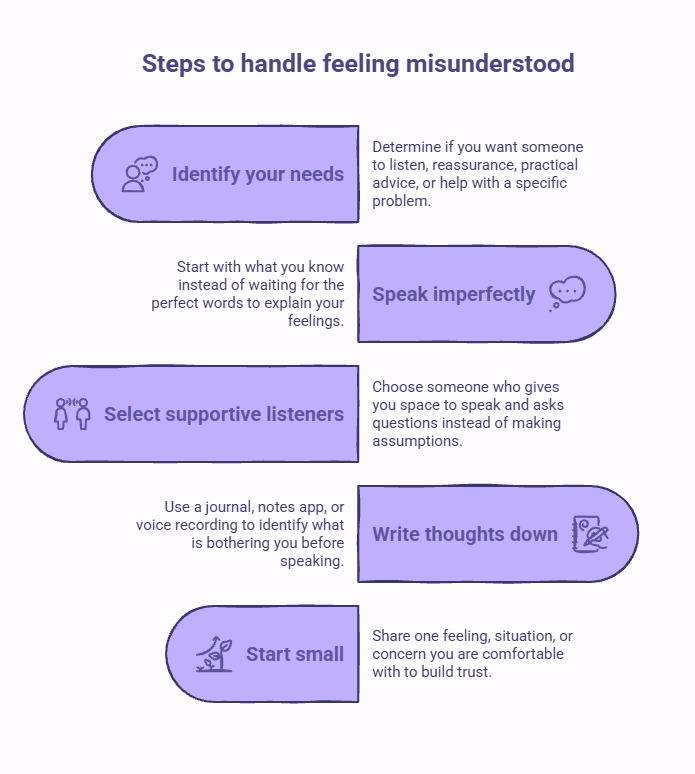
Feeling misunderstood can make you want to withdraw, but you do not have to figure everything out on your own. The goal is not to make everyone understand you perfectly. Instead, focus on communicating what you need for your wellbeing, choosing people you feel safe with, and finding support that works for you.
1. Figure out what you need from the conversation
Before opening up, ask yourself what would actually help right now. Do you want someone to listen, reassurance, practical advice, or help with a specific problem?
Knowing what you need can make the conversation easier.
You could say:
- “I don't need advice right now. I just need someone to listen.”
- “Can I talk through something without you trying to fix it?”
- “I would appreciate some advice about what I'm dealing with.”
2. Stop trying to explain everything perfectly
You do not need the perfect words before you can talk about how you feel. If you are struggling to explain yourself, start with what you know.
Try saying:
- “I don't completely understand what I'm feeling yet.”
- “Something has been bothering me, but I don't know how to explain it.”
- “I have been feeling overwhelmed lately, and I need to talk.”
Starting imperfectly is often better than staying silent because you cannot find the right words.
3. Choose someone who knows how to listen
Not everyone will respond to vulnerability in the same way. Look for someone who gives you space to speak, asks questions instead of making assumptions, and does not immediately dismiss or minimize your experience.
A supportive listener does not have to agree with everything you say. They should, however, be willing to understand what you are trying to communicate.
4. Write down your thoughts first
If speaking feels overwhelming, write down what you want to say before starting the conversation. You can use a journal, notes app, voice recording, or even an unsent message.
You do not have to share everything you write. The process can simply help you identify what is bothering you and what you want the other person to understand.
5. Start with one small,honest conversation
You do not have to tell someone everything at once. Choose one feeling, situation, or concern that you are comfortable sharing.
For example:
“I've been feeling more alone lately, and I wanted to tell someone instead of keeping it to myself.”
Small conversations can make it easier to build trust and understand how someone responds when you are vulnerable.
6. Look for support when talking to people you know feels difficult
Sometimes, opening up to friends or family can feel too uncomfortable, particularly if you are worried about judgment or misunderstanding. In those situations, a support group, a qualified mental health professional, or an anonymous listening platform may give you another way to talk about your mental health experiences and develop coping strategies to connect with others who have experienced similar feelings.
7. Recognize when someone is not the right person to open up to
Not every person will be able to give you the kind of support you need, and that does not automatically mean you are explaining yourself badly. If someone repeatedly dismisses your feelings, mocks your vulnerability, interrupts you, or refuses to listen, you may need to choose a different person to talk to.
You can care about someone while recognizing that they may not be the right person to support you through a particular situation. Instead of repeatedly trying to convince someone to understand, consider whether another trusted person, family members, support group, or qualified mental-health professional may be better suited to what you need.
You do not need to wait until you can explain everything perfectly before asking for support. Platforms like Listennr give people a space to talk honestly with compassionate listeners when they feel emotionally alone or unheard. Sometimes, simply feeling listened to without pressure or advice can help ease the weight you have been carrying internally.
When you feel like nobody truly listens, try Listennr!
Sometimes, you are not looking for advice or a solution. You simply want someone to listen while you work through what you are feeling. When talking to friends or family feels difficult, an anonymous listening platform can provide a great way to express yourself.
Listennr is designed to help people have conversations with compassionate listeners who are good listeners in a private, anonymous setting. You can share what is on your mind, talk through difficult emotions, and have a conversation without needing to explain everything perfectly.
With Listennr, you can:
- Talk anonymously with a listener
- Share what you are going through at your own pace
- Have a conversation when you need someone to hear you
- Connect with people who are willing to listen without immediately offering solutions
If you have been keeping your feelings to yourself because you are worried about being misunderstood, talking to someone can be a small first step. Try Listennr and give yourself a space to be heard.
Final thoughts: You do not need everyone to understand you
Feeling misunderstood can make you want to withdraw, but you do not have to keep everything to yourself. You also do not need perfect words to explain what you are going through, and you certainly do not need external validation. What matters is finding a space where you feel comfortable expressing yourself and where your feelings are met with compassion, patience, and understanding.
You do not need someone to understand every detail of your unique experiences. Sometimes, having someone listen without judgment, take your feelings seriously, and give you space to speak can be enough to help you feel less alone. Whether it is someone you know or a supportive listening space, taking a small step toward sharing what you feel can help you reconnect with yourself and others.
Frequently asked questions
Is it normal to feel like no one understands you?
Yes. Feeling misunderstood is a common experience, especially when emotions are difficult to explain or past conversations have left you feeling dismissed. It can happen when people around you care but do not fully understand the kind of support you need, which makes it essential to seek out those who have gone through similar experiences.
Can therapy help if I feel like no one understands me?
Yes. Therapy can provide a supportive space to explore difficult emotions, improve communication, and understand patterns that may affect your relationships. A qualified professional can help you express your feelings and feel heard while working through challenging experiences.
What should I do if someone dismisses my feelings?
Try explaining what you need from the conversation, whether that is listening, reassurance, or support. If someone repeatedly dismisses, minimises, or ignores your feelings, consider sharing your thoughts with someone who creates a safer and more understanding space.
How can I find someone who understands me?
Look for people who listen without interrupting, judging, or immediately trying to fix the situation. A supportive connection does not require someone to have the same experiences as you, but they should be willing to understand and respect what you feel.
What should I do when no one understands my feelings?
Start by identifying what you are feeling and sharing one small part of your experience, including feelings of rejection. Writing your thoughts down, talking with someone you trust, or finding a supportive listening space can help you express yourself without feeling overwhelmed.