
Why Sometimes It’s Okay To Be Not Okay?

Key highlights
- It's okay not to be okay means accepting difficult emotions instead of hiding or judging them.
- Many people struggle to admit they're not okay because of fear, guilt, or the pressure to stay strong.
- Suppressing emotions may provide temporary relief but can become emotionally exhausting over time.
- The phrase encourages honesty, not giving up or staying stuck in difficult emotions.
- Small acts of self-compassion can help you navigate challenging moments without expecting immediate solutions.
- Reaching out for support doesn't require a crisis; sometimes, simply being heard is the first step toward feeling less alone.
- Listennr provides a safe space to share your feelings and feel heard without judgment.
There are days when you almost tell someone how you're really feeling, but instead, you say, "I'm just tired." It feels easier than explaining why you've been emotionally drained, why your mind won't slow down, or why even small things suddenly feel overwhelming. After a while, pretending you're okay becomes so automatic that you barely notice you're doing it.
That is what makes the phrase Sometimes It’s Okay To Be Not Okay so powerful. It isn't simply about accepting difficult emotions. It's about challenging the belief that you always have to keep everything together, have the right answers, or hide your struggles until they disappear. For many people, that's easier to understand than it is to believe.
If you've ever wondered what "It's okay not to be okay" really means, or why those words feel comforting yet difficult to live by, you're not alone in asking. In this article, we'll explore the meaning behind the phrase, why accepting your emotions can feel uncomfortable, and how giving yourself permission to acknowledge them can be the first step toward feeling more understood.
What does sometimes it’s okay to be not okay really mean?
At its core, "It's okay not to be okay" is a reminder that you don't have to pretend everything is fine when you're struggling. It encourages you to acknowledge difficult emotions without judging yourself and recognize that having a hard day doesn't make you weak.
Rather than encouraging you to stay stuck, the phrase reminds you that accepting your emotions is often the first step toward understanding yourself and moving forward.
The phrase encourages you to:
- Accept difficult emotions instead of pretending they don't exist.
- Let go of the pressure to always appear strong or positive.
- Recognise that asking for support isn't a sign of failure, but rather a sign of strength.
- Treat yourself with the same compassion you would offer someone you care about.
- Understand that bad days don't define who you are.
The message isn't that you should stay "not okay." It's that you don't have to hide your emotions or face them alone. Giving yourself permission to acknowledge how you feel can make it easier to take the next step, whether that's practicing self-compassion or opening up to someone you trust.
Why is it so difficult to accept that you're not okay?
Knowing that "it's okay not to be okay" and believing it are often two different things. Many people don't hide their emotions because they want to; they hide them because they've learned that embracing vulnerability and being "strong" means carrying everything quietly, sometimes even when they feel like they need God's support.
Some of the most common reasons include:
- Fear of being judged for appearing weak or emotional.
- Not wanting to worry family or friends by sharing what you're going through.
- Feeling guilty for struggling when others seem to be coping.
- Believing you should solve everything on your own before asking for support.
- Comparing your reality to other people's highlight reels makes your struggles feel like personal failures.
Over time, these beliefs can make it difficult to acknowledge your own emotions, even when they're asking for attention. Instead of accepting that you're having a hard day, you may convince yourself to keep going, stay quiet, or wait until things somehow feel easier on their own.
What happens when you keep hiding how you feel?

Every time you tell yourself, “I'll deal with it later,” those emotions don't disappear; they often grow heavier, making it harder to think clearly, connect with others, or feel like yourself.
1. Pretending everything is fine can become a habit
At first, saying "I'm fine" may feel like the easiest way to avoid uncomfortable conversations about mental health problems and the stigma that surrounds them. Over time, however, it can become your default response, even when you know you're struggling. The longer you hide your emotions, the harder it can feel to acknowledge them, both to yourself and to others.
You may notice that you:
- Say "I'm okay" before checking how you actually feel.
- Keep yourself busy to avoid thinking about difficult emotions.
- Brush off your struggles because you believe others have it worse.
- Find it easier to support everyone else than ask for help yourself.
These habits often develop as a way to cope, not because you're weak. The problem is that they can leave you feeling increasingly disconnected from what you truly need.
2. Unspoken emotions rarely disappear on their own
Emotions that aren't acknowledged usually don't fade away; they often resurface in different ways. You might find yourself overthinking small situations, feeling emotionally drained for no apparent reason, or becoming less patient with yourself and those around you. When difficult feelings remain unspoken, they can quietly shape your daily life.
Over time, you may experience:
- Feeling emotionally exhausted even after getting enough rest.
- Overthinking conversations or replaying situations in your mind.
- Pulling away from people you care about without meaning to.
- Believing you have to carry everything on your own.
Recognizing these patterns isn't about judging yourself; it's about understanding that your emotions deserve attention rather than silence. Giving yourself permission to acknowledge how you feel is often the first step toward responding with greater self-compassion and deciding what kind of support you need.
What "it's okay not to be okay" doesn't mean

The phrase encourages emotional honesty, not emotional surrender. It doesn't ask you to stay stuck in difficult feelings or ignore life's responsibilities. Instead, it reminds you that accepting your emotions is the first step toward understanding them and moving forward.
1. It doesn't mean giving up
Accepting that you're struggling isn't the same as giving up. It means recognizing that something feels difficult instead of pretending everything is fine. Being honest about your emotions allows you to respond to them with care rather than ignoring them.
You can:
- Admit you're having a difficult day without seeing yourself as a failure.
- Ask for support while continuing to move forward.
- Accept your emotions without letting them define your future.
- Take one small step instead of expecting immediate solutions.
2. It doesn't mean staying stuck forever
Feeling overwhelmed today doesn't mean you'll always feel this way. Emotions change, circumstances change, and healing often happens gradually. Giving yourself permission to not be okay simply acknowledges where you are today; it doesn't determine where you'll be tomorrow, and embracing resilience and our imperfections can be a vital part of this journey.
Remember that:
- Difficult emotions are temporary, even when they feel overwhelming.
- Progress often happens through small, consistent steps.
- Healing doesn't follow the same timeline for everyone.
- Every step forward, no matter how small, still counts.
3. It doesn't mean ignoring your responsibilities
Being kind to yourself doesn't mean avoiding your responsibilities. It means recognizing your limits while finding healthier ways to manage them. Looking after your emotional well-being can help you respond to life's challenges with greater clarity instead of pushing yourself until you're overwhelmed.
A balanced approach might include:
- Prioritising what truly needs your attention.
- Setting realistic expectations for yourself.
- Taking breaks before exhaustion takes over.
- Asking for help when responsibilities feel too heavy to manage alone.
4. It doesn't mean you have to face everything alone
Accepting that you're not okay doesn't mean carrying those feelings by yourself. Reaching out to someone you trust or seeking professional help can make difficult emotions feel less isolating and help you process what you're experiencing without fear of being judged.
You don't need to have all the answers before talking to someone. Sometimes, simply being heard can make the next step feel a little easier.
How can you take care of yourself when you're not okay?
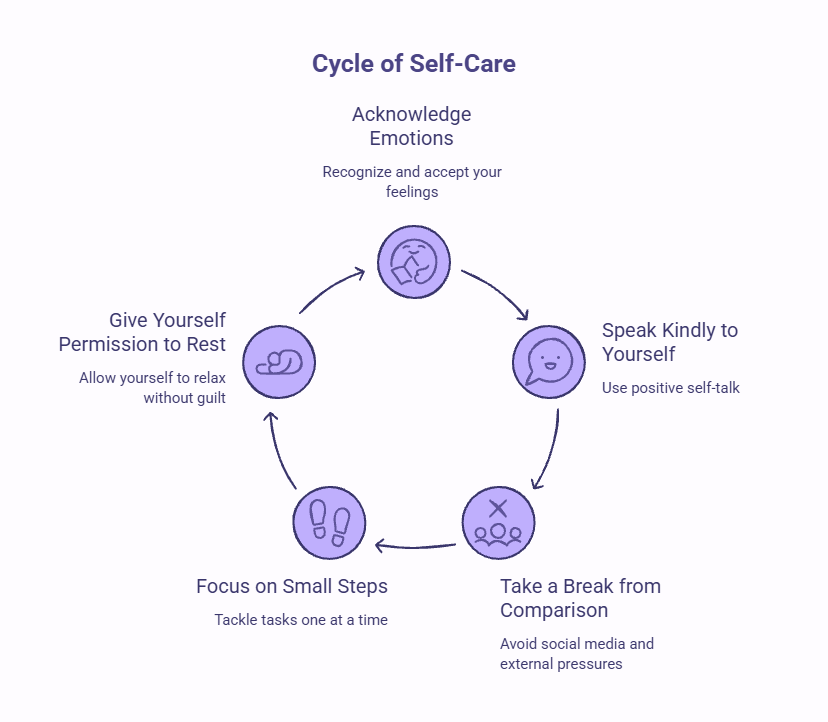
Taking care of yourself doesn't mean fixing everything at once. It means responding to difficult emotions with patience instead of pressure and giving yourself permission to take one small step at a time. When you're struggling, even simple actions can feel overwhelming. Instead of expecting yourself to have all the answers, focus on what feels manageable today.
You can start by:
- Acknowledge your emotions instead of pushing them aside
- Speak to yourself with kindness, just as you would someone you care about.
- Take a break from constant comparison, especially if social media or advertisements leave you feeling worse.
- Focus on one small, achievable step instead of trying to solve everything at once.
- Give yourself permission to rest without feeling guilty for slowing down.
Self-care isn't about pretending everything is okay. It's about recognising what you need in this moment and responding with compassion instead of self-criticism. Sometimes those small acts of care can help you feel more grounded and make it easier to decide what you need next.
When should you talk to someone about how you're feeling?
You don't have to wait until everything feels overwhelming before talking to someone. If your emotions feel too heavy to carry on your own or you're finding it difficult to cope with everyday life, that's reason enough to reach out.
You may find it helpful to talk to someone if you:
- Keep saying "I'm fine" even when you know you're not.
- Feel emotionally drained for days without understanding why.
- Struggle to switch off because your thoughts keep circling back to the same worries.
- Pull away from people because explaining how you feel seems too difficult.
- Wish someone would simply listen without judging or trying to fix everything.
Opening up doesn't mean you need to have the right words or immediate solutions. Sometimes, saying "I'm not okay" is enough to begin understanding what you're feeling. Sharing that emotional weight with someone you trust can make difficult moments feel less lonely and remind you that you don't have to carry everything by yourself.
Looking for someone who will simply listen?
Knowing it's okay not to be okay doesn't always make opening up any easier. Fear of judgment or feeling like a burden can make sharing your emotions difficult.
Listennr offers a safe, judgment-free space where you can talk to someone who simply listens. Whether you're dealing with stress, relationship challenges, or emotions you've kept to yourself, you can express yourself at your own pace and feel heard without pressure or advice.
Why people choose Listennr
- Talk to a real person who listens without judgment.
- Share what's on your mind anonymously and at your own pace.
- Feel heard without the pressure to explain everything perfectly.
- Express your thoughts before they become too overwhelming.
- Find a safe space whenever you need someone to listen.
Sometimes, the biggest step isn't finding the right advice, it's finding someone who will genuinely listen. If you're looking for a safe place to share what's on your mind, start an anonymous conversation on Listennr whenever you're ready and experience the comfort of being truly heard.
What happens when you accept it's okay to be not okay
Everyone has moments when life feels heavier than usual. Acknowledging those moments isn't a sign of weakness; it's the first step toward understanding what you need and treating yourself with compassion.
If you're finding it hard to carry those feelings alone, you don't have to wait until they become overwhelming before reaching out. Sometimes, simply talking to someone who genuinely listens can make difficult moments feel a little lighter and remind you that you don't have to face them alone.
Frequently asked questions
What is the real meaning of "it's okay not to be okay"?
The phrase means it's normal to experience difficult emotions and that you don't have to hide how you're feeling. Accepting your emotions isn't about giving up; it's about acknowledging them with honesty and self-compassion.
Why is it so hard to admit that I'm not okay?
Many people fear being judged, burdening others, or appearing weak. Over time, these beliefs can make it difficult to acknowledge difficult emotions, even when they're affecting daily life.
Does accepting my emotions mean I'm giving up?
No. Accepting your emotions means recognising how you feel instead of pretending everything is fine. It gives you the opportunity to understand what you need and take healthy steps forward.
Is it normal to pretend you're okay when you're struggling?
Yes. Many people hide their emotions to avoid uncomfortable conversations or worrying others. While it may feel easier in the moment, regularly suppressing your feelings can become emotionally exhausting over time.
How can I start taking care of myself when I'm not okay?
Start with small, manageable steps. Acknowledge how you're feeling, practise self-compassion, reduce unnecessary pressure, and focus on what feels achievable today instead of trying to fix everything at once.
When should I talk to someone about how I'm feeling?
You don't have to wait until you're overwhelmed by mental illness. If your emotions are becoming difficult to manage, affecting your daily life, or you're finding it hard to cope on your own, talking to someone you trust can help you feel heard and supported.