.jpg)
Why Is Listening With Understanding and Empathy Important?

Key highlights
- Listening with understanding and empathy means focusing on someone's experience instead of preparing your response.
- People often stop sharing when they feel judged, rushed, or pushed toward solutions too quickly.
- Empathy is not about having the perfect words. It is about helping someone feel understood.
- Small habits, such as allowing pauses and reflecting on feelings, can make conversations feel safer and more open.
- Many listening mistakes happen when we assume we already know what someone means.
- People who feel heard often stop defending their feelings and speak more honestly.
- Practising empathy starts with curiosity, patience, and a willingness to understand before fixing.
- On Listennr, listeners create space for honest conversations by listening without judgment or pressure.
A friend starts telling you about a difficult week. Before they finish, you jump in with advice. A family member says they're overwhelmed, and you immediately try to find a solution. The intention is good, but the conversation often ends with the other person feeling just as alone as they did before they started talking.
Many people open up because they want to feel understood before they receive advice. They need space to process what happened, express difficult emotions, and know that someone is genuinely listening.
Listening with understanding and empathy means paying attention to both the story and the emotions behind it. In this guide, you'll learn what empathetic listening looks like, why it matters, and how small changes in the way you listen can help people feel genuinely heard.
What does listening with understanding and empathy mean?
Listening with understanding and empathy means focusing on someone's experience before thinking about your response. Instead of trying to solve the problem immediately, you take time to understand what the person is feeling and why it matters to them.
Think about the last time someone opened up to you. Maybe they were talking about:
- A difficult week at work
- A relationship problem
- A situation they could not stop thinking about
- Something that left them feeling frustrated or overwhelmed
While they were speaking, were you fully listening, or were you already preparing advice, reassurance, or a solution?
Empathy adds another layer to listening. It helps you pay attention to the emotions behind the words, such as:
- Frustration
- Disappointment
- Uncertainty
- Relief
- The person may be struggling to express their emotions
Instead of steering the conversation toward an answer, you stay with the person's experience long enough to understand what they are really trying to share.
How can you listen with understanding and empathy?
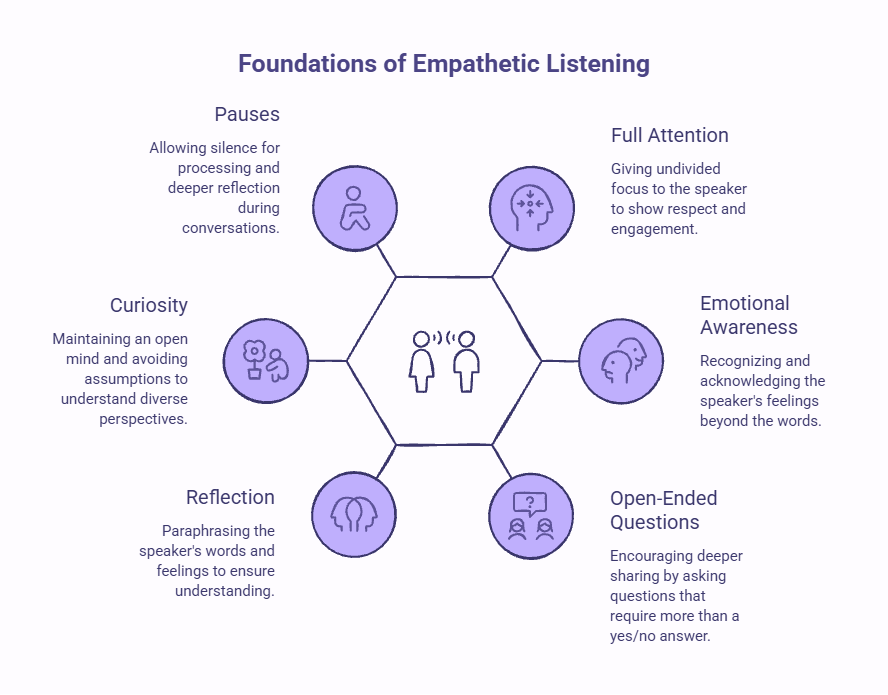
Listening with understanding and empathy means paying attention to both what someone says and how they feel. The goal is not to fix the problem immediately but to help the person feel heard and understood.
1. Give your full attention
People rarely say, "You're not listening." Instead, they start sharing less.
When someone feels like they are competing with their phone, distractions, or thoughts, they often become more guarded. Giving your full attention shows that what they are saying matters.
2. Listen for emotions, not just facts
Most conversations contain two layers:
- What happened
- How it affected the person
Empathetic listeners pay attention to both. They notice frustration behind a complaint, disappointment behind a joke, or exhaustion hidden behind "I'm fine."
3. Ask open-ended questions
Open-ended questions encourage people to share more about their experience.
Examples include:
- What was the hardest part about that?
- How did that affect you?
- What has been on your mind the most?
These questions show that you are interested in understanding, not just responding.
4. Reflect back what you hear
People often repeat themselves when they are not sure they have been understood.
Simple responses such as:
- "It sounds like you felt disappointed."
- "That seems like it was really difficult for you."
can help someone feel heard and encourage them to keep sharing.
5. Stay curious instead of making assumptions
It is easy to assume you already understand what someone means, especially if their situation sounds familiar.
Curiosity helps you stay open to their perspective. Even similar experiences can feel very different from one person to another.
6. Allow pauses without rushing to respond
Silence is not always a problem. Sometimes people need a moment to process what they are feeling or find the right words. Giving someone a few extra seconds can create space for a more honest and meaningful conversation.
When people feel understood, they are more likely to speak openly about what is really on their mind. That is why empathetic listening matters, not because it solves every problem, but because it creates the kind of understanding-first conversations that Listennr is built around.
Why do people often stop sharing during conversations?
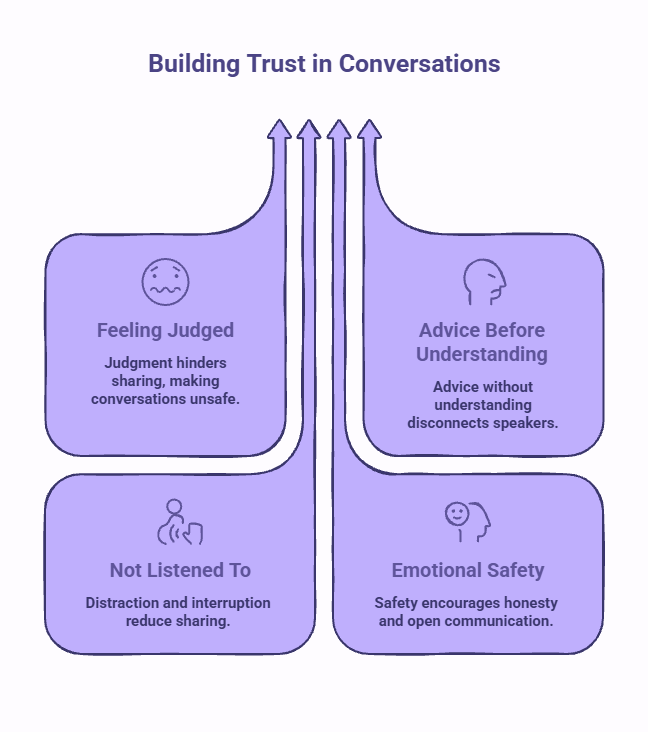
People are more likely to withdraw from a conversation when they feel judged, rushed, or misunderstood. Most people do not stop sharing because they have nothing to say. They stop sharing because the conversation no longer feels safe enough to continue.
1. They feel judged instead of understood
Imagine telling someone about a mistake you regret and immediately hearing, "You should have known better." Even if the intention is helpful, responses like these can make people feel criticised rather than understood.
People are usually more willing to open up when they feel accepted before they feel evaluated. You do not have to agree with everything someone says, but showing curiosity instead of judgment helps create trust.
2. Advice arrives before understanding
Many people respond with advice because they want to help. The problem is that advice often comes before the speaker feels heard.
When someone says, "I've been struggling lately," they may not be asking for solutions. They may be trying to explain what they are experiencing. A response like, "That sounds exhausting," often creates more connection than immediately suggesting what they should do next.
3. They do not feel fully listened to
Most people can tell when someone is distracted, waiting for their turn to speak, or already thinking about a response.
Small behaviours such as checking a phone, interrupting, or quickly changing the subject can make someone feel like their thoughts are not important. When people feel they have to compete for attention, they often start sharing less.
4. Emotional safety is missing
Think about the people you find easiest to talk to. They are not always the people with the best advice. More often, they are the people who make you feel comfortable being honest. Emotional safety comes from knowing you can share something difficult without being mocked, dismissed, or pressured to move on. When people feel safe, they are far more likely to speak openly about what is really on their mind.
When people feel safe from judgment, they are far more likely to share what is really on their mind. Creating that kind of safe place is at the heart of empathetic listening and the approach that guides conversations on Listennr, which emphasizes effective listening.
Why does empathetic listening matter when someone opens up to you?
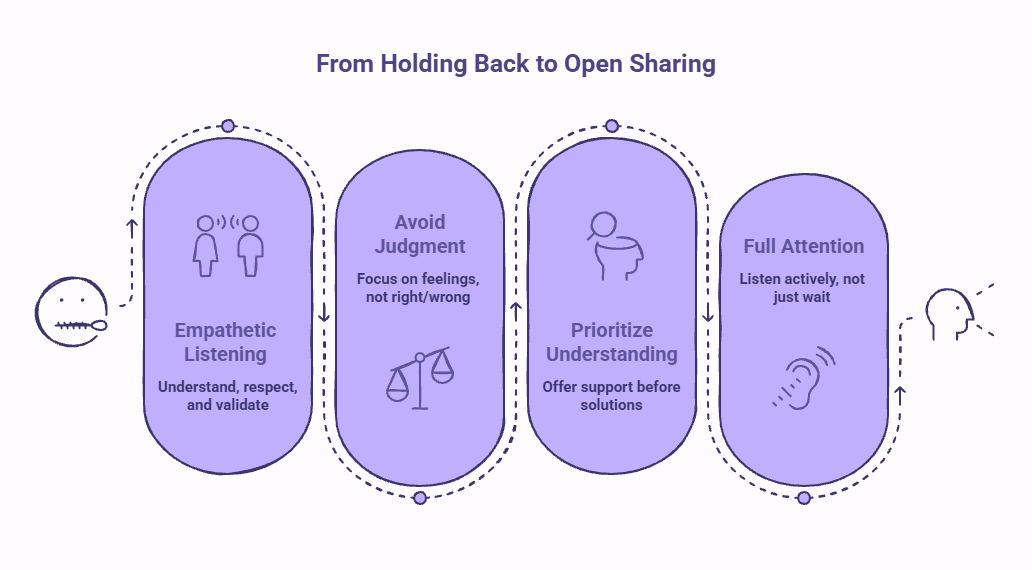
When someone opens up, they are often sharing something they do not discuss with everyone. How you respond in that moment can influence whether they continue talking or start holding back. Empathetic listening matters because it helps people feel understood, respected, and safe enough to express the speaker’s point of view, as well as what they are really thinking and feeling in their personal lives.
1. They feel judged instead of understood
Most people can tell when they are being evaluated rather than listened to. It does not always come from obvious criticism. Sometimes it sounds like:
- "You're overthinking it."
- "That wouldn't bother me."
- "You should just move on."
These responses focus on whether the person's reaction is right or wrong instead of understanding why they feel that way. When people feel judged, they usually become more careful about what they share next.
2. Advice arrives before understanding
One of the easiest mistakes listeners make is trying to help too quickly.
When someone shares something difficult, the natural instinct is to solve it. The problem is that people often want understanding before solutions. If they are still trying to explain what happened or how they feel, advice can make them feel rushed rather than supported.
Sometimes a simple response, such as "That sounds really difficult," keeps the conversation open far better than an immediate solution.
3. They do not feel fully listened to
Have you ever caught yourself thinking about your response while someone was still talking?
Most people do it.
The challenge is that the other person can often sense it. They notice when the conversation starts moving toward your opinion, your experience, or your answer. As soon as they feel they are competing for attention, they usually start sharing less.
4. The conversation moves away from what matters most
People often hesitate before saying something vulnerable. They pause, change their wording, or circle around the point before finally getting there.
Those moments are easy to miss.
A quick change of subject, a rushed reassurance, or an interruption can steer the conversation away from the very thing they were trying to talk about. Sometimes, the most supportive thing a listener can do is stay with the difficult part long enough for the other person to finish saying what they need to say.
When people feel understood rather than judged, they are more likely to speak honestly and openly. That is why empathetic listening is often less about having the right response and more about creating the right space for someone to be heard.
What does empathy actually sound like in a conversation?
Empathy in conversation involves responding in ways that acknowledge a person's feelings before offering advice. It focuses on understanding their experience, helping them feel heard, supported, and comfortable sharing more.
1. Responses that help people feel understood
When people open up, they are often trying to answer a question for themselves: "Does anyone understand what this feels like?"
The most supportive responses do not rush to solve the problem. They acknowledge the experience behind it.
Examples include:
- "That sounds really difficult."
- "I can see why that would be upsetting."
- "It sounds like you've been carrying a lot on your own."
- "That must have been frustrating."
- "I can understand why you're feeling that way."
These responses work because they focus on understanding before solutions. They tell the speaker they do not need to defend or justify their emotions.
2. What to say instead of giving immediate advice
Many conversations become less meaningful the moment advice arrives too early.
Imagine someone is explaining why they feel overwhelmed. Before they finish, they hear:
"You should just..."
The listener wants to help, but the speaker often feels unheard because the conversation has moved to solutions before understanding.
Instead of jumping straight into advice, try responses that keep the conversation open:
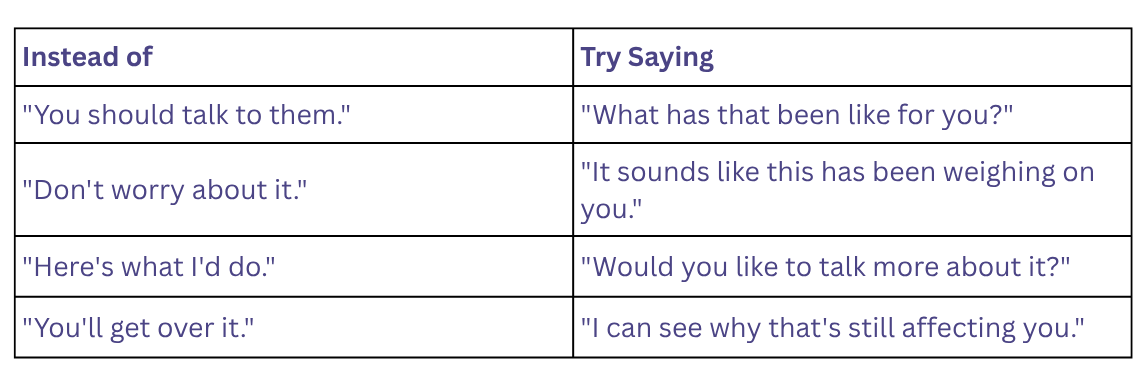
Notice the difference. One response directs the conversation. The other invites the person to keep sharing.
3. Examples of empathetic listening in everyday conversations
Empathy is not only useful during major life events. It often matters most in everyday moments when someone wants to feel understood rather than fixed.
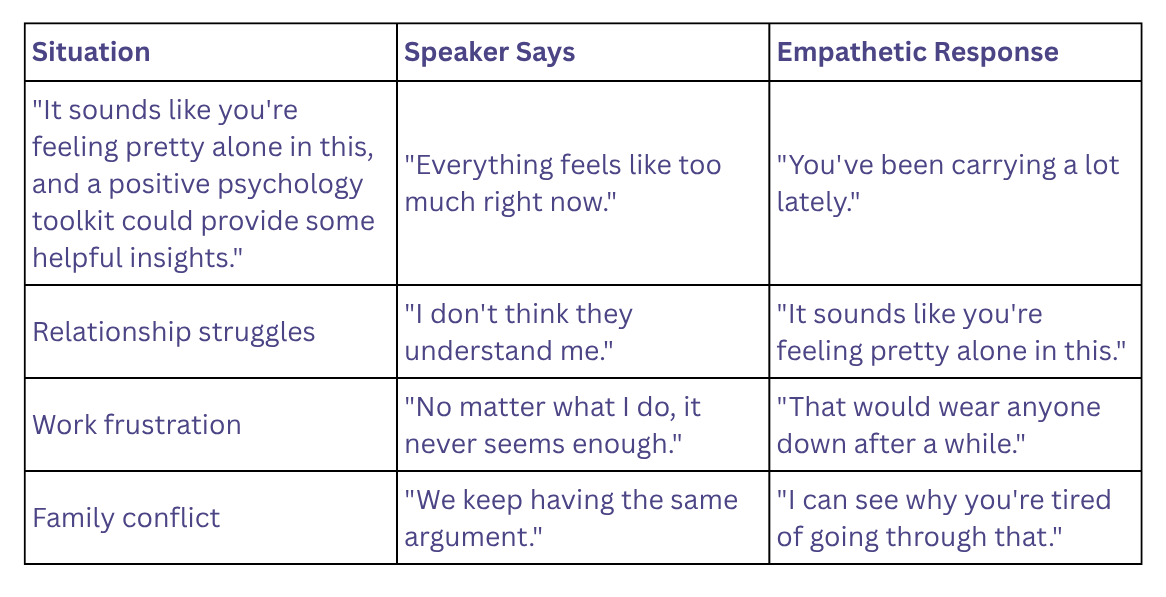
What these responses have in common is that they stay close to the person's experience. They do not argue, analyse, or rush to fix. They simply communicate: "I'm listening, and I'm trying to understand."
Sometimes, feeling understood matters more than finding a solution. That's the kind of listening-first experience Listennr aims to create.
What mistakes make people feel unheard?
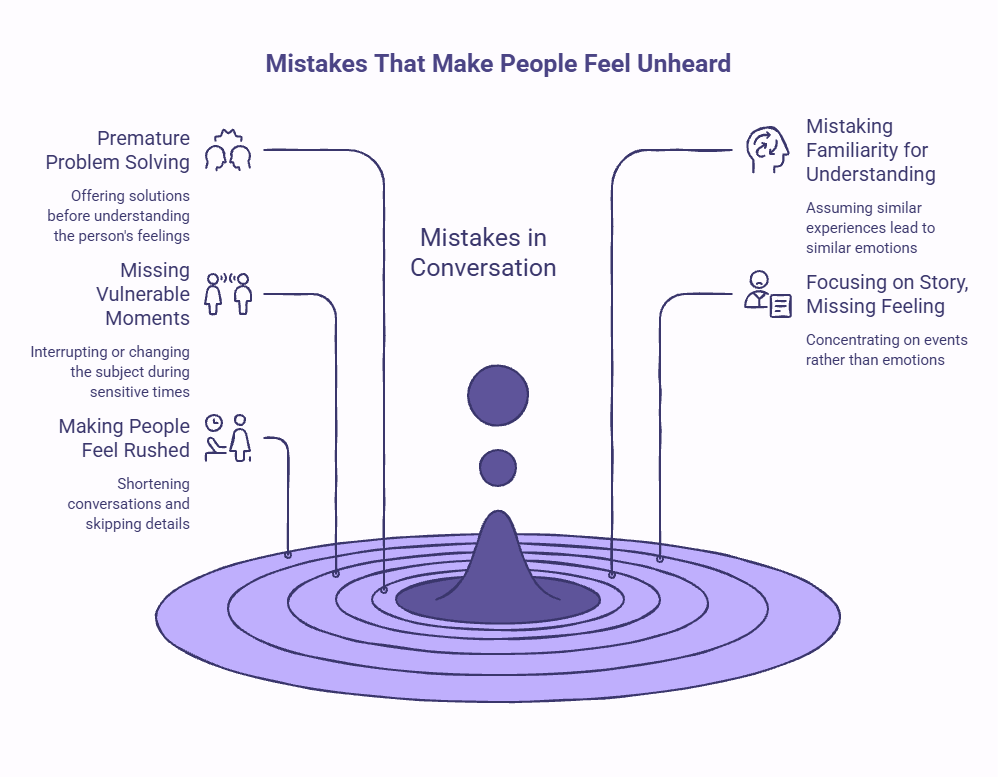
People rarely stop sharing all at once. More often, small moments in a conversation make them feel less understood, less comfortable, or less willing to keep opening up.
1. Solving the problem before understanding the person
Many people assume support means finding answers. In reality, people often want to feel understood before they receive advice.
You might notice this when someone:
- Is still explaining what happened
- Repeats the same concern in different ways
- Seems frustrated after receiving suggestions
When advice arrives too early, people can feel like the conversation skipped over what mattered most to them.
2. Mistaking familiarity for understanding
It is easy to hear a familiar situation and think, "I know exactly how they feel."
The problem is that similar experiences do not always create the same emotions. What felt manageable to one person may feel overwhelming to another.
Instead of assuming, try to stay curious about:
- What this situation means to them
- How it has affected them
- What emotions are they carrying
People often feel more understood when they can explain their experience in their own words.
3. Missing the moment someone becomes vulnerable
People rarely start with the hardest part of the story. They often test the waters first.
You might notice:
- Longer pauses
- Hesitation
- Changes in tone
- Careful wording
A quick interruption or change of subject can make that moment disappear. Sometimes the most supportive response is simply giving the conversation a little more space.
4. Focusing on the story and missing the feeling
Most conversations contain two layers:
- What happened
- How it felt
Many listeners focus only on the events. Empathetic listeners pay attention to the emotions underneath.
For example:
- An argument may be about feeling hurt
- A stressful day may be about feeling overwhelmed
- A disappointment may be about feeling let down
People often feel heard when someone understands the feeling behind the story, not just the details.
5. Making people feel rushed
Meaningful conversations usually unfold gradually. People share a little, see how it is received, and then decide whether to share more.
When a conversation feels rushed, people often:
- Shorten their answers
- Skip important details
- Keep personal thoughts to themselves
Giving someone time to speak can make a bigger difference than finding the perfect response, especially when considering the importance of effective communication skills.
People feel heard when they have space to express what they really mean. That understanding-first approach is what guides conversations on Listennr.
What activities can help you practice empathetic listening?
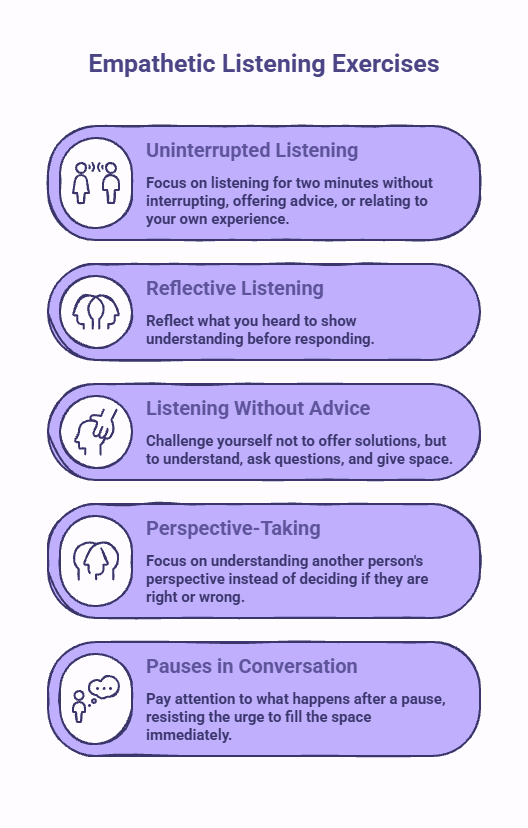
Empathetic listening improves through practice. Simple exercises can help you stay present, understand emotions more clearly, and create conversations where people feel comfortable sharing openly.
1. The two-minute uninterrupted listening exercise
Many people think they are good listeners until they try not speaking.
Ask someone to talk about something on their mind for two minutes while you focus only on listening.
During the exercise:
- Do not interrupt
- Do not offer advice
- Do not relate it back to your own experience
Afterwards, notice how often you felt the urge to jump in. Many people discover that uninterrupted attention feels more meaningful than they expected.
2. Reflective listening practice
Reflective listening helps people feel understood before the conversation moves forward.
Instead of responding immediately, try reflecting on what you heard:
- "It sounds like that really affected you."
- "You seem more disappointed than angry."
- "That must have been difficult to carry on your own."
The goal is not to repeat someone's words exactly. It is to show that you are trying to understand their experience.
3. The listening-without-advice challenge
For one conversation, challenge yourself not to offer solutions.
Instead, focus on:
- Understanding what the person is experiencing
- Asking thoughtful questions
- Giving them space to explore their thoughts
This exercise helps you notice how often advice appears before understanding.
4. Perspective-taking conversations
Empathy becomes easier when you focus on another person's perspective instead of deciding whether they are right or wrong.
Ask yourself:
- What are they most worried about?
- What feels difficult for them right now?
- What part of the situation are they struggling to understand?
The goal is not agreement. The goal is understanding.
5. Pay attention to what happens after a pause
Some of the most important parts of a conversation happen after a moment of silence.
When someone pauses, resist the urge to fill the space immediately.
Instead:
- Stay present
- Give them time to think
- Allow them to continue when they are ready
Often, what comes after the pause is what they most wanted to say.
These exercises help build the habits that make people feel heard, understood, and comfortable sharing more openly.
How do you know someone feels heard?
You can often tell a conversation is helping when the other person becomes more open, less guarded, and more comfortable sharing what is really on their mind.
1. They stop searching for better ways to explain themselves
People sometimes repeat the same point in different ways because they are trying to make sure their message lands.
When that effort fades, conversations tend to flow more naturally. They spend less time clarifying and more time sharing what matters.
2. They stop trying to justify their feelings
When people think they might be judged, they often explain why their reaction makes sense. They add examples, provide context, or defend their perspective.
As the conversation progresses, the need to justify themselves often becomes less important. They focus more on exploring their experience than proving it.
3. They share the part they were hesitant to say
Most people do not start with the most personal part of the story.
Instead, they reveal it gradually. A sign that the conversation is going well is when they move beyond surface details and share something they were initially unsure about discussing.
4. The conversation becomes more natural
People who feel uncertain often choose their words carefully and hold back parts of their thoughts.
As trust develops, conversations usually become less filtered. They speak more freely and spend less energy managing how they come across.
5. They seem more at ease by the end
Not every conversation changes the situation itself.
However, many people leave feeling calmer, clearer, or less weighed down after talking things through. Sometimes that shift is the strongest sign that your listening made a difference.
Meaningful conversations are not measured by how quickly problems are solved. They are often shaped by how comfortable people feel expressing what matters most to them.
What does empathetic listening look like on Listennr?
On Listennr, conversations are built around listening first. Rather than rushing toward answers, listeners focus on giving people the opportunity to express what is on their mind in their own way.
Empathetic listening on Listennr often looks like:
- Giving someone time to speak without interruptions
- Asking thoughtful questions instead of making assumptions
- Paying attention to emotions as well as events
- Allowing conversations to unfold at the speaker's pace
- Respecting different experiences and perspectives
- Responding with patience rather than quick solutions
Many people use Listennr when they want a supportive conversation, the option to remain anonymous, and the freedom to talk openly without pressure. If you're looking for a place to share what's on your mind, download the Listennr app and start a conversation when you're ready.
Conclusion
Listening with understanding and empathy is not about finding the perfect words. It is about incorporating active listening exercises to help someone feel comfortable enough to share what they really mean. When people feel understood instead of judged, conversations often become a more honest, meaningful, and supportive tool for connection.
Small listening habits can make a big difference. By staying curious, listening before fixing, and creating space for others to open up, you can help people feel genuinely heard. On Listennr, this understanding-first approach helps create conversations where people feel safe, supported, and less alone, making it a positive psychology resource for effective communication, supported by positive communication exercises.
Frequently asked questions
How can I develop better skills for listening with understanding and empathy?
Practice giving people your full attention, listening for emotions as well as words, asking open-ended questions, and reflecting back what you hear while showing the importance of empathy and genuine concern from different perspectives. Over time, these habits can help you understand others more deeply and respond with greater empathy.
What are the main barriers to empathetic listening, and how do I overcome them?
Common barriers include interrupting, making assumptions, and rushing to give advice. Overcome them by staying present, listening with curiosity, allowing pauses, and focusing on understanding the speaker before responding.
How is empathic listening different from regular listening?
Empathic listening techniques go beyond hearing words. It focuses on understanding the speaker's feelings and experiences, including their body language, not just the information they share. Regular listening may focus on responding, while empathic listening techniques prioritise understanding and fostering an emotional connection before reacting.
What does it mean to listen with understanding and empathy in everyday conversations?
Listening with understanding and empathy means paying attention to both what someone is saying and how they are feeling, which is essential for developing emotional intelligence. It involves staying present, monitoring your own thoughts, avoiding judgment, and responding in a way that helps the other person feel heard and understood.
What does it mean to listen with your heart? You will understand.
This phrase suggests that genuine understanding comes from empathy, not just hearing words. When you listen with care, patience, and compassion, it becomes easier to understand what someone is truly experiencing, including their nonverbal communication, especially when asking the right questions at the right time.
How can you listen and respond with empathy?
Listen carefully, acknowledge emotions, and respond with understanding rather than judgment. Simple responses such as "That sounds difficult" or "I can see why you feel that way" can help people develop better social skills and feel supported using positive psychology tools.
What does it mean to listen with an intent to understand?
Listening with the intent to understand means focusing on the speaker's perspective rather than preparing your response. It involves maintaining eye contact, curiosity, patience, and a genuine effort to understand their thoughts and feelings, which are essential active listening techniques that also enhance conflict resolution skills.
Do you know how to listen with empathy?
Listening with empathy means focusing on understanding someone's feelings and experiences without judgment, and putting yourself in another person’s shoes. It involves being present, practising empathic listening skills, listening carefully, and responding in a way that helps the other person feel heard and supported.