
How Can We Get Peace of Mind When Life Feels Too Much?

Key highlights
- Peace of mind grows through small, steady habits in daily life, not one quick fix.
- Your state of mind often improves when you return attention to the present moment.
- Mindful breathing, journaling, and movement can support mental clarity in stressful periods.
- Letting go of limiting beliefs can make inner peace feel more realistic and reachable.
- Nature, solitude, and simple routines can calm the nervous system and restore balance.
- Acceptance, self-care, and gratitude help you protect peace of mind during life’s harder days.
- When it matters most, Listennr connects you with a real person who listens.
There is a kind of restlessness that follows you everywhere. Into conversations, into quiet evenings, even into sleep. Nothing is falling apart, but nothing feels fully okay either.
That in-between space is where many people live right now, and most of them are too busy to stop and ask why. If you have found yourself wondering how to get mental peace, you are already asking the right question.
This article is here to meet you where you are. It covers what is really behind that restlessness and how we can get peace of mind without having to overhaul our lives to find it completely.
What is inner peace?
Inner peace is a quiet steadiness that stays with you even when things are hard. It does not mean your life is perfect or your mind is always calm. It means you have enough groundedness to face what comes without completely losing yourself in it. Many people view this sense of balance as a natural state of being. That is what mental peace actually looks like in real life.
Is inner peace the same as being happy all the time?
Not even close, and honestly, that misconception is part of why so many people feel like they are failing at it.
Happiness is a feeling. It comes and goes depending on what is happening around you. Inner peace is different. It is more like a foundation beneath the feeling. You can be going through something genuinely difficult and still have a thread of okayness running underneath it all.
Here is what inner peace, a state of tranquillity, actually looks like day to day:
- You no longer need everyone around you to be okay before you can feel okay, even in the face of emotional distress.
- You feel less controlled by other people's moods and reactions.
- You can face a concern without letting it overshadow everything else.
- You rest without feeling the need to keep track of every little thing.
If you are wondering how to find inner peace, the first step is letting go of the idea that it means feeling good all the time. It means feeling grounded even when you do not. Mental peace is not the destination. It is what makes the journey a little more bearable.
Peace becomes a lot more reachable when you are not carrying everything alone. Read our blog on finding someone to talk to and be heard for real options.
Why does it feel like peace of mind is so hard to find right now?
Because life can feel like a lot sometimes, not in one big moment, but because responsibilities keep adding up, expectations keep growing, and being busy often feels more important than taking care of yourself. If you have been trying to figure out how to find peace of mind but feel stuck, it doesn't mean you're not trying hard enough. It may simply be that you're carrying too much at once.
For many people, the day feels like a never-ending list of things that need attention, such as:
- Finishing another task before the day ends
- Replying to messages and emails
- Meeting work, family, or personal responsibilities
- Thinking about what needs to happen next, even during quiet moments
On top of that, many people place extra pressure on themselves. You may feel like you need to:
- Be more productive
- Keep everyone around you happy
- Always stay one step ahead
- Handle everything without asking for help
Over time, that constant pressure makes it difficult to slow down and enjoy the present moment.
Peace of mind does not disappear. It simply becomes harder to notice when your thoughts are constantly focused on planning, fixing problems, worrying, or preparing for what comes next. Sometimes, it is not the absence of peace but the noise of everyday life that keeps you from feeling it.
Being heard is more important than most people realise. Check out our blog on why finding a good listener is harder than it should be for better insights.
What happens when you don't have peace of mind?
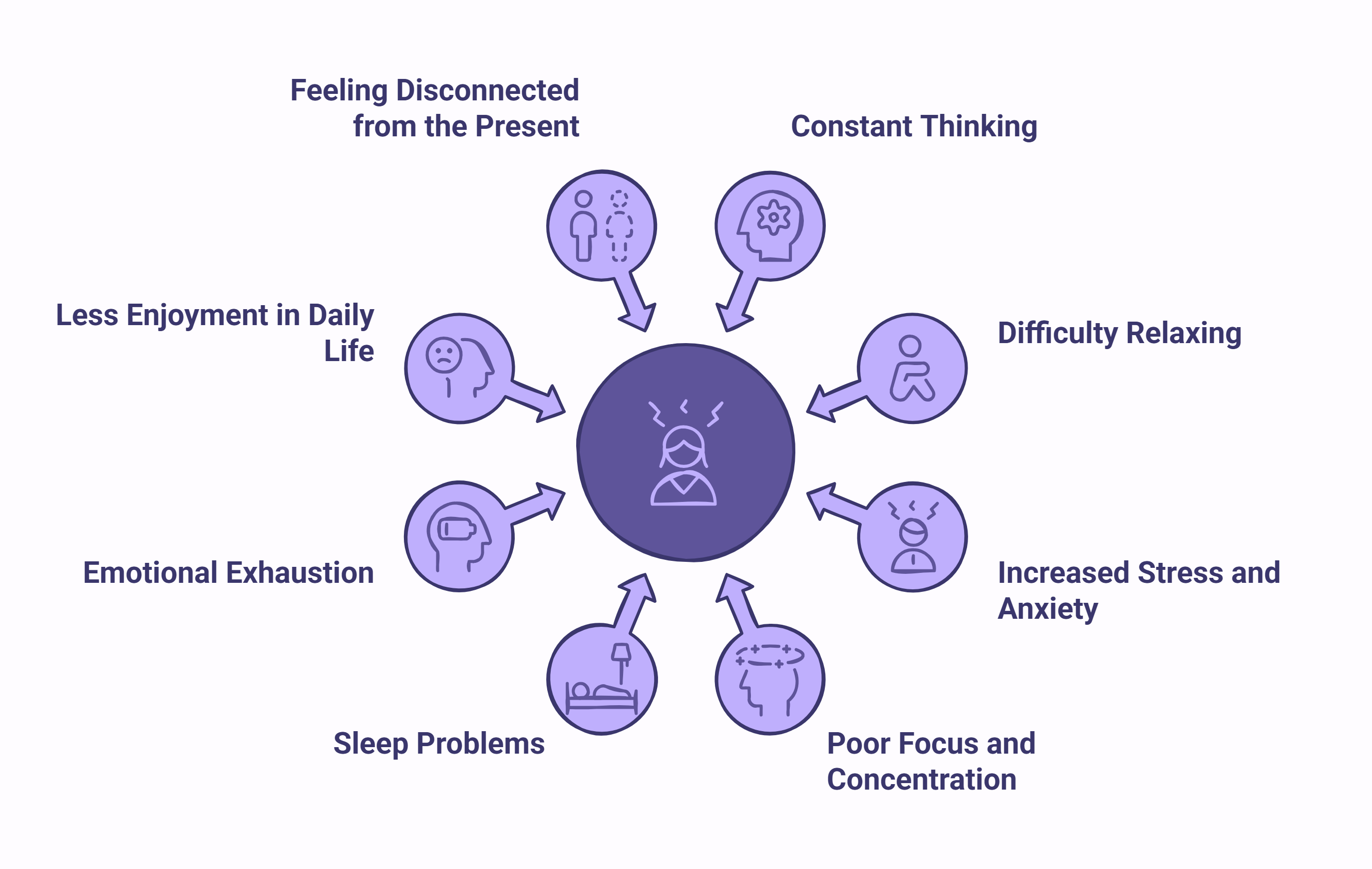
Most people do not realise how much the absence of peace is costing them until the effects start showing up everywhere. If you have quietly been asking yourself why I don't have peace of mind, the answer is rarely one thing. It is what happens when restlessness goes unaddressed for too long, and it touches more parts of your life than you expect.
1. Constant thinking
Your mind rarely gets a break. One thought leads to another, and before you know it, you are replaying old conversations, worrying about future situations, or thinking about problems that may never happen.
2. Difficulty relaxing
Even when you have free time, it can be hard to switch off truly. Instead of resting, your mind stays busy with tasks, responsibilities, and things you feel should be part of your life that you are not doing.
3. Increased stress and anxiety
Without peace of mind, everyday challenges can feel heavier than they really are. Small setbacks may trigger bigger worries because your mind is already carrying a lot of mental health conditions and emotional pressure.
4. Poor focus and concentration
When your thoughts are constantly moving in different directions, staying focused becomes difficult. You may find yourself reading the same thing twice, forgetting details, or struggling to stay present in conversations. Practising mindfulness meditation can help with these challenges.
5. Sleep problems
A busy mind often follows you into bed. You may find it difficult to fall asleep, wake up during the night, or start the day feeling tired because your thoughts never fully settle.
6. Emotional exhaustion
Overthinking, worrying, and constantly carrying mental pressure can leave you feeling drained. Even if you have not done much physically, you may still feel tired because your mind has been working nonstop.
7. Less enjoyment in daily life
When your attention is always on problems, tasks, or future concerns, it becomes harder to enjoy good, everyday moments. You may be physically present but find it difficult to appreciate what is happening fully.
8. Feeling disconnected from the present
Instead of focusing on what is happening right now, your mind keeps pulling you toward the past or future. This can make life feel like something you are managing rather than actually experiencing, even in small doses.
When peace of mind is missing, the effects often show up in small ways before you fully notice them. You may feel more tired, distracted, stressed, or disconnected from daily life. The good news is that peace of mind is not something you either have or do not have. It is something you can gradually rebuild by creating more space for rest, balance, and awareness in your everyday routine.
Loneliness and a restless mind often come together. Read our blog on how to deal with loneliness for honest, practical ways forward.
How to have peace of mind: 10 steps
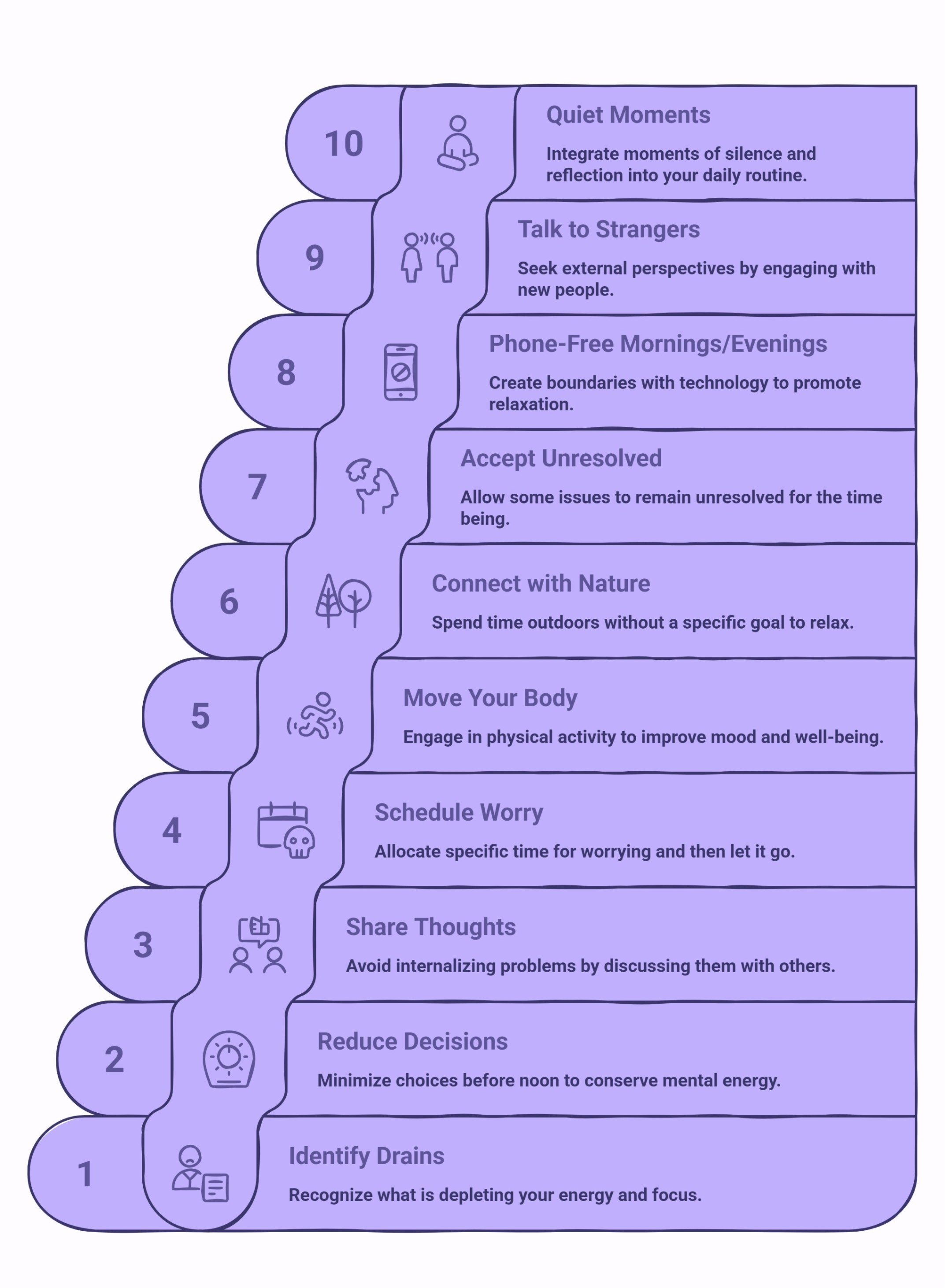
Peace of mind is not something you find in one big moment. It builds quietly through small, regular practice and repeated choices you make in your everyday life. If you have been wondering where to find peace, the honest answer is that it starts closer than you think. Here are ten steps that actually work.
1. Notice what is draining you before trying to fix anything
Try not to jump straight to solutions without identifying what is actually taking their peace. Spend a few days just noticing. What leaves you feeling worse? What conversations, habits, or situations consistently pull your energy down? Maintaining a positive attitude and awareness before action makes everything else more effective.
2. Reduce the decisions you make before noon
Decision fatigue is real. The more choices you make early in the day, the more mentally depleted you feel by the afternoon. Simplify your mornings where you can, including your morning routine. Same breakfast routine, clothes laid out the night before, a consistent start to your day. Small structure creates unexpected calm.
3. Stop processing everything alone inside your head
Thoughts that stay in your head tend to grow. Writing them down, talking them through with someone you trust, or even saying them out loud to yourself, changes how they feel. Externalising your thoughts takes some of their weight off you.
4. Set a time to worry, then close it
Instead of letting worry run all day, give it a specific window. Ten minutes in the evening to think through what is bothering you, write it down, and then deliberately move on. It sounds overly simple, but it genuinely reduces the background noise.
5. Moving your body changes more than just your mood.
Sport, or any regular physical activity, gives your mind something concrete to focus on outside your own thoughts. A weekly game, a morning run, a gym routine, it does not matter what it is. The point is that your body moving creates a kind of reset that sitting with your thoughts rarely does.
6. Spend time in nature without a purpose
Not a workout. Not a podcast. Just being outside without an agenda. Natural environments lower cortisol levels and help support inner balance, giving your nervous system a genuine break. Even twenty minutes makes a measurable difference to how you feel.
7. Let some things be unresolved for now
Not everything needs an answer today. The habit of needing closure on every situation keeps your mind in a constant state of pursuit. Some things settle on their own when you stop pushing. Practising tolerance for uncertainty is one of the quieter forms of peace.
8. Give your mornings and evenings a break from your phone
The first and last thirty minutes of your day set the tone for everything in between. Starting with notifications and ending with a scroll means your mind never gets a clean beginning or a proper close. These two windows are worth protecting more than most people do.
9. Sometimes a stranger is easier to talk to
There is something about saying things out loud to another person that makes them feel less heavy. If the people around you are not available or it just does not feel right, platforms like Listennr connect you with real human listeners, but not therapists, just warm, trained people who are genuinely there to hear you out. Sometimes you do not need advice. You just need someone to listen without judgment.
Sometimes, what we need most is simply someone who listens without judgment or rushing us to feel better.
Wanting someone to listen is not asking for too much. If these feelings resonated with you, our blog on exactly that experience may help you feel a little more understood.
10. Build one genuinely quiet moment into every day
Not meditation if that does not work for you. Not a structured practice. Just one moment where you are not consuming anything, not producing anything, not performing for anyone. Sitting with your cup of coffee before anyone else is up. A few minutes outside at lunch. Quiet does not need to be long to be effective.
Peace of mind is not waiting for you at the end of a perfect routine. It is already available in the spaces between things. You just have to start making room for it.
What gets better when you start taking care of yourself?

You do not always notice the shift right away. It happens quietly, in the background, while you are simply showing up. But over time, something starts to feel genuinely different. Here is what actually changes.
1. Your mind gets quieter
The constant background chatter does not disappear completely, but it loses its grip. You stop waking up already deep in thought and start having moments where your mind is simply still. That kind of quiet is something you have to experience to appreciate fully.
2. Loneliness starts to feel less heavy
When you start talking about what you are carrying, whether to a friend, a new connection, or a stranger, the isolation starts to lift. You realise that a lot of what you have been holding privately is something other people understand too.
3. Small things stop hitting as hard
The things that used to throw off your entire day are starting to feel more like inconveniences than crises. Your nervous system has more room to breathe, and that changes how you respond to almost everything.
4. Good moments start landing properly
You stop moving through life on autopilot. A good conversation, a quiet morning, something that makes you laugh properly. You are actually there for it instead of halfway somewhere else in your head.
5. Your body starts to feel the difference, too
Tension you did not realise you were holding begins to ease. Sleep improves. You stop carrying stress in your shoulders, your jaw, your chest. The mind and body are more connected than most people give credit for, especially when you focus on positive thoughts.
6. You start recognising yourself again
This one takes a little longer, but it might be the most important. The version of you that was buried under the noise, the pressure, and the exhaustion starts coming back. Quietly, steadily, and on your own terms.
Taking care of yourself is not selfish, and it is not something you should feel guilty about. It helps you stay balanced, manage life's demands more effectively, and support the people around you without feeling overwhelmed. You deserve that sense of well-being too.
Take a look at our blog on what to do when no one gets it for guidance on finding the right support.
Can Talking to Someone Help You Find Peace of Mind?
Sometimes the path to peace of mind is simpler than it seems. Not a new routine, not a productivity hack, just someone who will genuinely listen. When the people around you are busy, or when the conversation feels too heavy to bring to someone close, Listennr gives you a private space to be heard. It is not therapy, and it is not a hotline. It is a real person on the other side of a private conversation, there to listen without an agenda, without judgment, and without making you feel like a burden for reaching out.
- Trained listeners who are there specifically to hear you out.
- No judgement, no unsolicited advice, no pressure to explain yourself.
- Fully anonymous so you can open up honestly and safely.
- Private and encrypted conversations every single time.
- Available anytime, no appointments or waiting rooms.
- Text chat or voice calls, whatever feels comfortable for you.
The conversation you have been putting off is easier than you think. Start it on Listennr.
Conclusion
Peace of mind is not a destination. It is something you build through small choices every day. If there is one thing to take away from this article, let it be this: you do not need to change everything at once. Start with one small step that feels manageable, whether it is taking a quiet break, going for a walk, or setting aside time for yourself. Small actions can make a big difference over time. Most importantly, remember that your feelings are valid, and you deserve the same care, patience, and peace that you so often give to others.
Frequently asked questions
How do I regain my peace of mind?
Start small. Identify one thing that is consistently draining you and reduce your exposure to it. Add one grounding habit to your day. Peace does not return all at once. It rebuilds through small, repeated choices made with yourself in mind.
How can the 3-3-3 rule for anxiety calm your mind?
The 3-3-3 rule asks you to name three things you can see, three sounds you can hear, and move three parts of your body. It pulls your attention into the present moment and interrupts the anxiety spiral before it builds further.
What causes a lack of inner peace?
Usually, a combination of unprocessed emotions, unmet needs, constant overstimulation, and the pressure to keep up with everything at once. It rarely comes from one single cause. It builds gradually, which is also why it can be gradually undone.
What is the most effective way to achieve mental peace?
There is no single method that works for everyone. But consistently showing up for yourself, setting boundaries, moving your body, spending time in nature, and talking to someone when things feel heavy all contribute in meaningful and lasting ways.
How to cultivate a positive mindset?
Less about forcing positivity and more about noticing what is already working. Journaling, gratitude, and reducing time around things that drain you all help. A positive mindset grows naturally when you stop feeding the habits that work against it.
How to foster deeper connections?
Be honest about how you are actually doing. Ask real questions. Listen without planning your response. If opening up feels difficult, platforms like Listennr offer a low-pressure space to practise being heard before bringing that openness into your closer relationships.
How does nature impact our well-being?
Time outdoors lowers cortisol, reduces mental fatigue, and gives your nervous system a genuine break from overstimulation. Even short, purposeless time in a natural setting, a park, a quiet street, makes a measurable difference to how you feel mentally and physically.