.jpg)
Which Apps for Anxiety Are Worth Trying in 2026?

Key highlights
- Different anxiety apps are designed for different situations, including stress management, sleep support, mood tracking, and guided coping tools.
- Choosing an app based on your biggest challenge often works better than choosing the most popular option.
- Some apps focus on mindfulness and relaxation, while others help users track habits, reflect on daily experiences, or build coping skills.
- Conversation-based platforms like Listennr provide a private space to talk through stress and everyday challenges.
- Features such as breathing exercises, journaling tools, and mood tracking can make it easier to stay consistent with daily self-care habits.
- The best app is usually the one that fits naturally into your routine and feels easy to use during stressful moments.
Anxiety does not look the same for everyone. For some people, it shows up as constant overthinking. Others notice it before important meetings, during periods of work pressure, around family expectations, or when trying to fall asleep at night. When these feelings start becoming a regular part of daily life, finding practical ways to manage them becomes just as important as understanding what triggers them.
That is one reason anxiety support apps have become increasingly popular. Instead of waiting until stress builds up, these tools can help people create small habits that fit into their day. Some focus on guided meditation and breathing exercises, while others offer mood tracking, journaling tools, or conversation-based support.
The challenge is that not every app is designed for the same situation. An app that helps someone unwind before bed may not be the right fit for someone dealing with late-night overthinking or a stressful work schedule. In this guide, we'll explore some of the best apps for anxiety and highlight what makes each one useful for different needs and preferences.
What should you look for in an anxiety app?
One of the biggest mistakes people make is choosing an app based on popularity rather than the challenge they're trying to manage. Some apps are designed to help you unwind before bed, while others focus on building daily habits, tracking patterns, or providing a space to talk through what's on your mind.
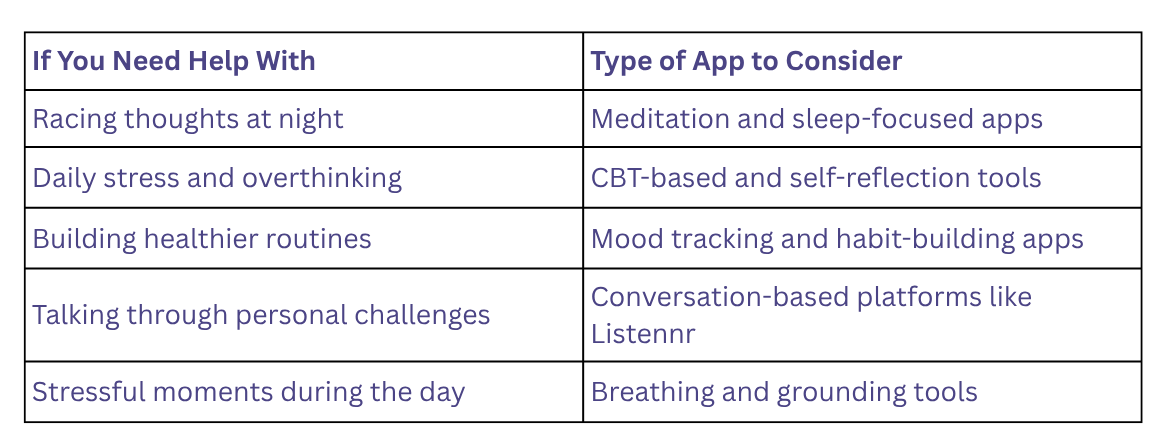
Beyond features, pay attention to a few practical factors:
- Ease of use: The app should be simple enough to use when you need it most.
- Transparency: Look for clear information about how the app works and what it offers.
- Regular updates: Actively maintained apps often provide a better user experience.
- Realistic claims: Avoid platforms that promise quick fixes or guaranteed results.
The best app is usually the one that fits naturally into your routine and helps with the specific challenges you face most often.
Top apps for anxiety to manage stress and feel more in control
Different anxiety apps serve different needs. Some focus on meditation and relaxation, while others offer mood tracking, panic support, CBT exercises, or emotional support to help you manage your anxiety levels and stress in ways that fit your daily life. And the options below can help you find a better fit.
1. Listennr
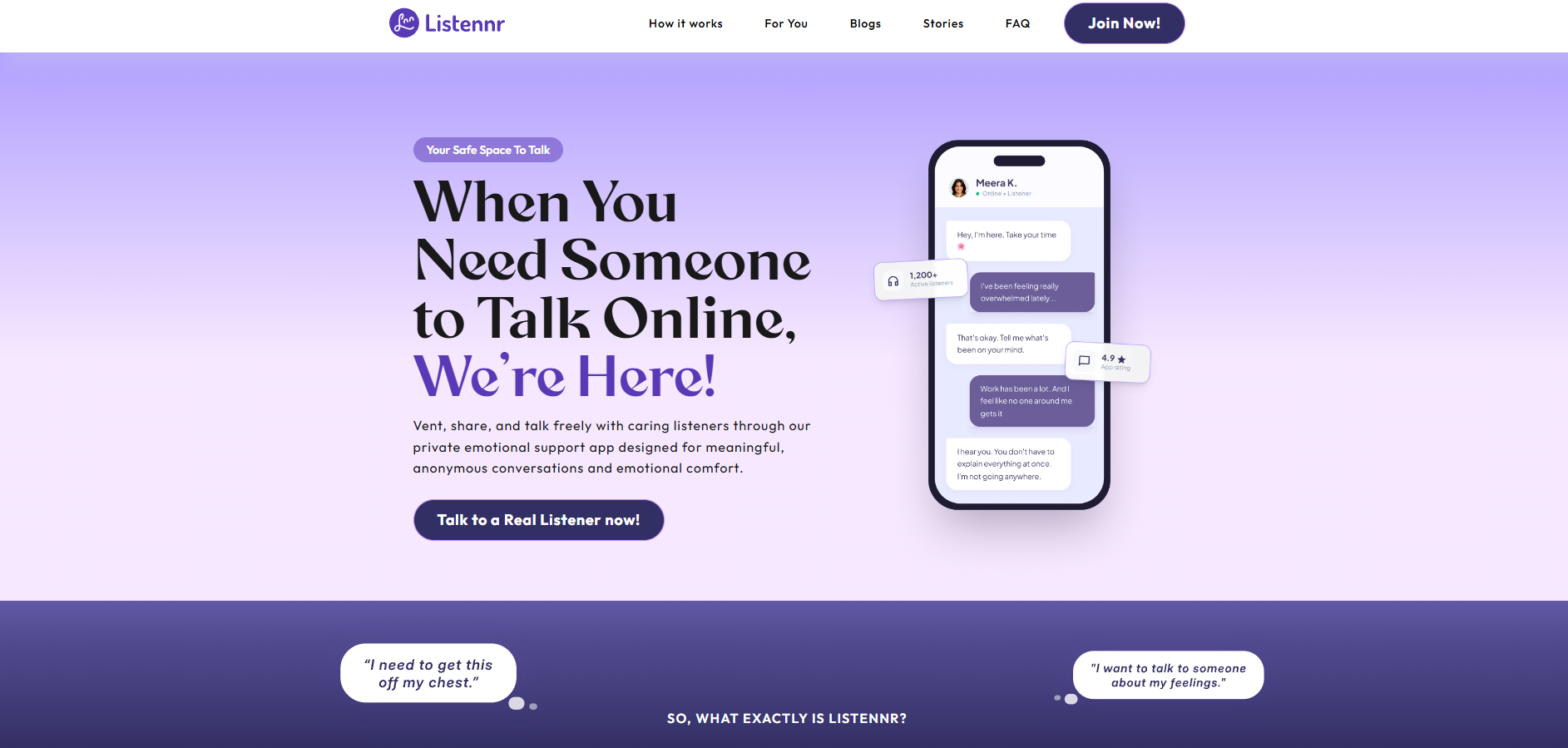
Sometimes stress feels heavier because there is no easy place to talk about it. You may not want to post on social media, ask friends for advice, or explain every detail of what is bothering you. In those moments, having someone willing to listen can make a difference.
Listennr is built around private conversations rather than public discussions. It gives people a space to talk through work pressure, relationship frustrations, family expectations, late-night overthinking, or difficult emotions at their own pace. The focus is simple: helping people feel heard without the pressure of performing, debating, or explaining everything perfectly.
This makes Listennr different from many other apps on this list. While some focus on meditation, habit tracking, or guided exercises, Listennr focuses on conversation. For people who process challenges by talking things through, that can feel more natural than following a program or completing daily activities.
Services Offered
- One-to-one conversations
- Private and low-pressure interactions
- Listening-focused support
- Easy access through a digital platform
Key Strengths
- More personal than public discussion forums
- Suitable for people who prefer private conversations
- Focuses on conversations rather than guided exercises, tracking tools, or perfectionism
- Simple and easy to use
Considerations
- Not designed for community discussions
- Focuses on conversations rather than guided exercises or tracking tools
- Best suited for people looking for a human connection and listening
Best Fit
Listennr is best for people who process stress by talking, sharing what's on their mind, and feeling heard. If private conversations feel more natural than meditation sessions or tracking tools, downloading the app can be a simple way to connect with someone and start talking things through.
2. Headspace

Headspace is one of the most widely used mindfulness apps for people who want a structured way to slow down and create moments of calm during a busy day. It offers guided meditation sessions, breathing exercises, and sleep-focused content that can be used at home, during work breaks, or before bed.
The app is designed to make mindfulness approachable, even for beginners. Rather than requiring long sessions or complicated routines, it provides short, guided exercises that can fit into everyday schedules. This makes it a practical option for people looking to build simple habits around relaxation and focus.
Key Features
- Guided meditation sessions
- Breathing and mindfulness exercises
- Sleep stories and sleep-focused content
- Short sessions for different schedules
- Progress tracking and daily reminders
Where It Might Not Be Suitable
- People looking for one-to-one conversations
- Users who prefer community discussions
- Those seeking professional counselling services
Best For
- People new to meditation
- Users looking to create a regular mindfulness routine
- Anyone who wants support with relaxation and sleep habits
3. Wysa
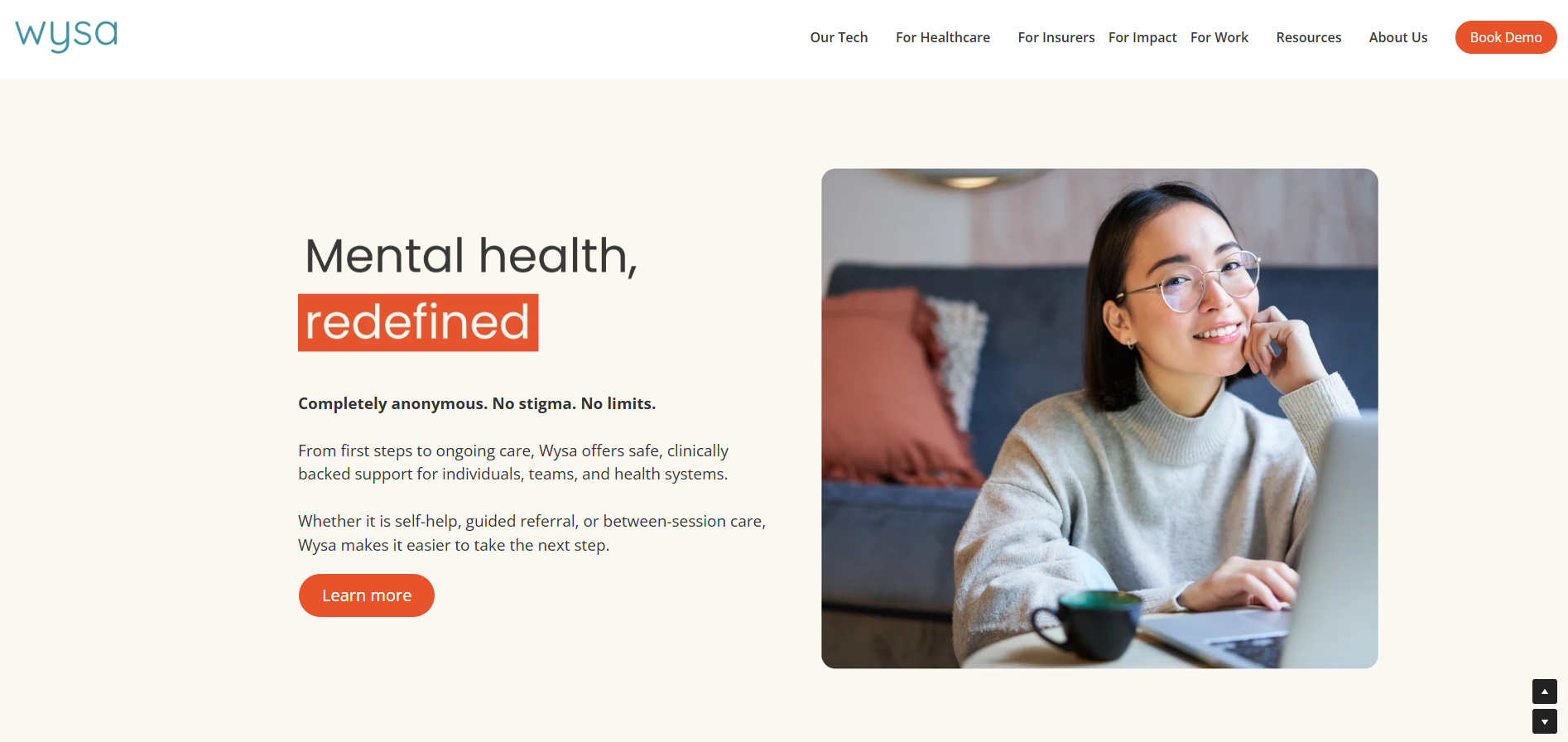
Wysa is designed for people who want a private space to reflect on their thoughts, track their mood, and work through everyday challenges. Instead of relying on community discussions or one-to-one conversations, the app uses an AI chatbot to guide users through self-reflection exercises and coping techniques.
The app combines guided conversations with practical tools such as journaling prompts, breathing exercises, and mood tracking. Its chat-based format can feel more approachable for people who prefer typing out their thoughts rather than speaking with someone directly. Many users also appreciate the ability to use the app whenever they need it, without scheduling sessions or waiting for responses.
Key Features
- AI-guided chat conversations
- Mood tracking tools
- Guided breathing exercises
- Journaling and self-reflection prompts
- Progress tracking and wellness activities
Where It Might Not Be Suitable
- People looking for real human conversations
- Users who prefer community-based support
- Those seeking professional counselling services
Best For
- People who enjoy guided self-reflection
- Users who prefer text-based support tools
- Anyone looking for mood tracking and daily wellness exercises
4. Calm
Calm is a popular app for people who want help slowing down after a busy or stressful day. It focuses on relaxation through guided meditations, breathing exercises, and sleep-focused content, making it a common choice for users who struggle to switch off and unwind.
One of Calm's biggest strengths is its variety of content. In addition to meditation sessions, the app includes sleep stories, relaxing sounds, and guided breathing activities that can easily fit into different parts of the day. Whether you want a short break during work or a calming bedtime routine, the app asks a series of questions to tailor its offerings, ensuring you find multiple ways to build moments of relaxation into your schedule.
Key Features
- Guided meditation sessions
- Breathing exercises
- Sleep stories and sleep content
- Relaxing music and nature sounds
- Daily mindfulness activities
Where It Might Not Be Suitable
- People looking for one-to-one conversations
- Users who prefer interactive community discussions
- Those seeking structured coaching or therapy services
Best For
- People looking to improve relaxation habits
- Users who want help winding down before bed
- Anyone interested in meditation and breathing exercises
5. MindShift CBT
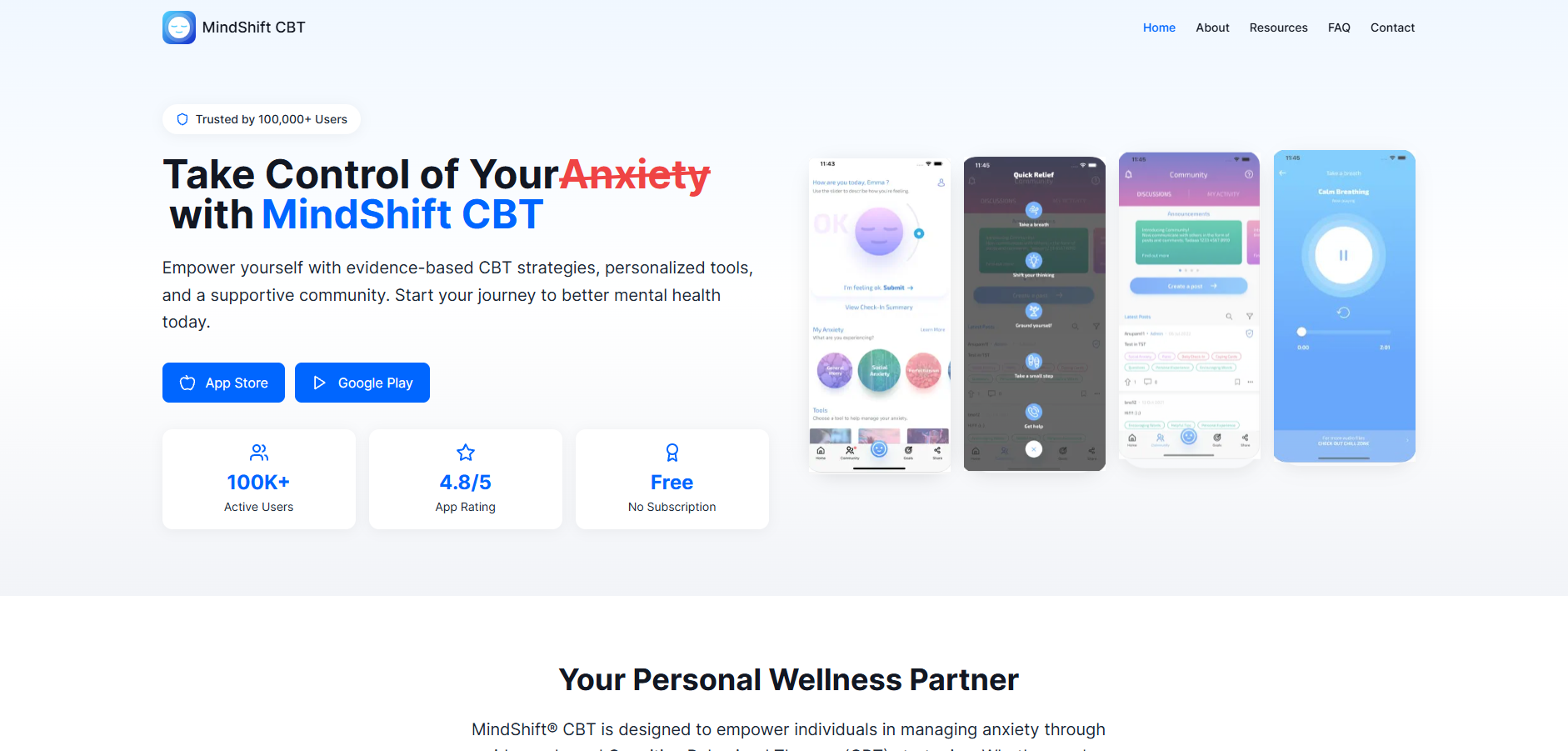
MindShift CBT is designed for people who want practical techniques to better understand and manage anxious thoughts. Rather than focusing primarily on meditation or sleep content, the app provides structured exercises that encourage users to reflect on their thinking patterns and develop healthier responses to stressful situations.
The app includes guided activities, coping tools, and mood-tracking features that can be used throughout the day. Woebot's step-by-step approach makes it useful for people who prefer interactive exercises over passive listening. Many users appreciate having tools they can turn to when overthinking, worrying, or feeling mentally overwhelmed.
Key Features
- CBT-inspired exercises and activities
- Guided coping tools
- Mood and thought tracking
- Goal-setting features
- Educational resources and self-help tools
Terms of Use apply where it might not be suitable
- People looking mainly for meditation or sleep content
- Users who prefer one-to-one conversations
- Those interested in community-based discussions
Best For
- People who prefer structured self-help exercises
- Users who want to better understand their thought patterns
- Anyone looking for practical tools to manage everyday worries and stress
6. Insight Timer
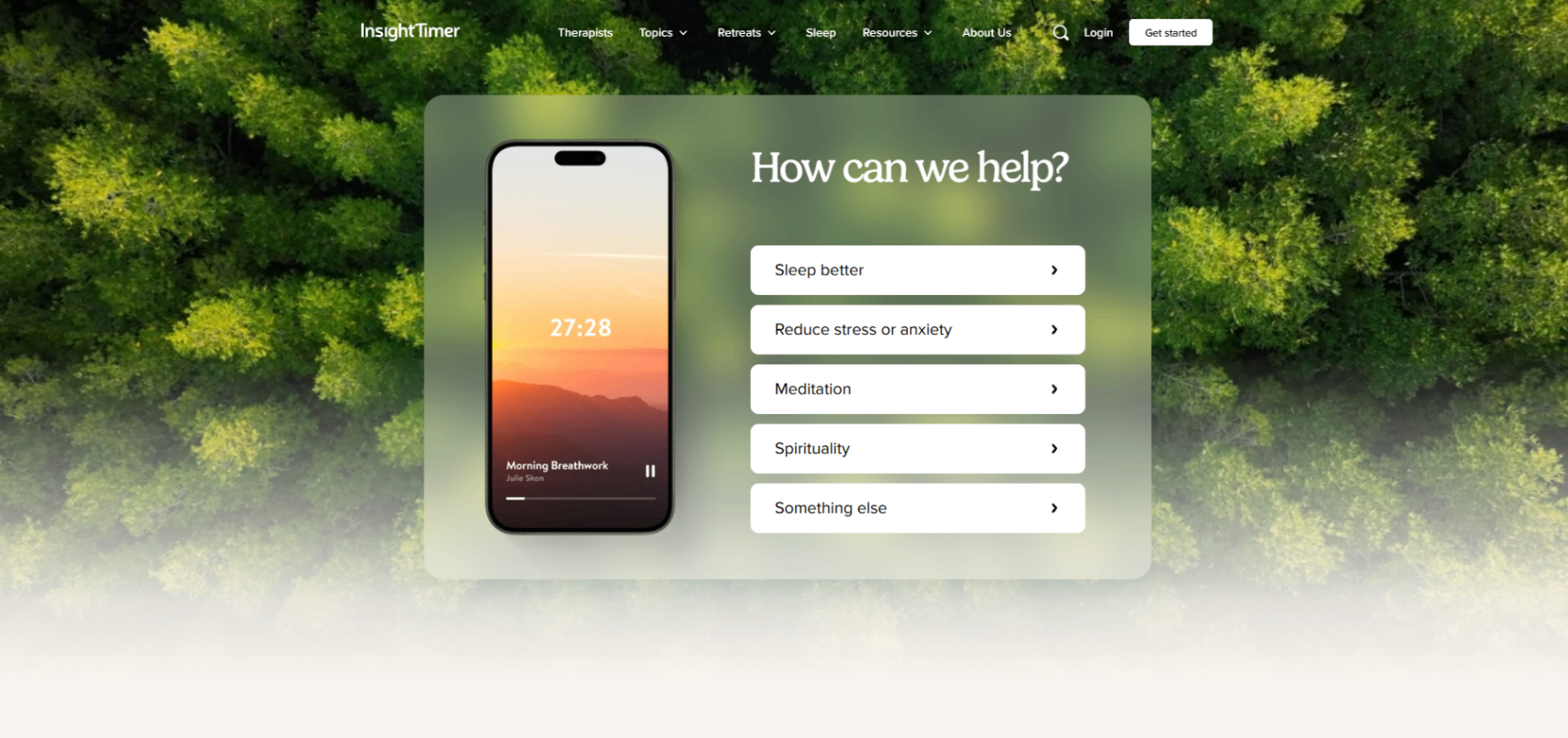
Insight Timer is a popular choice for people who want access to a large collection of meditation and relaxation content without committing to a paid subscription right away. The app offers thousands of guided sessions covering mindfulness, relaxation, focus, sleep, and personal growth.
Unlike many meditation apps that rely heavily on their own content library, Insight Timer brings together teachers, coaches, and creators from different backgrounds. It also includes community features, allowing users to follow teachers, join groups, and explore content such as music tracks based on their interests. This variety makes it easy to find meditation styles and practices that feel personally relevant.
Key Features
- Large library of guided meditation modules
- Sleep and relaxation content
- Breathing and mindfulness exercises
- Community groups and discussion features
- Access to content from multiple teachers
Where It Might Not Be Suitable
- People looking for one-to-one conversations
- Users who prefer a more structured learning path
- Those who feel overwhelmed by having too many content options
Best For
- People looking for a wide variety of meditation content
- Users who want to explore different teaching styles
- Anyone interested in mindfulness, relaxation, and community-based learning
7. Rootd
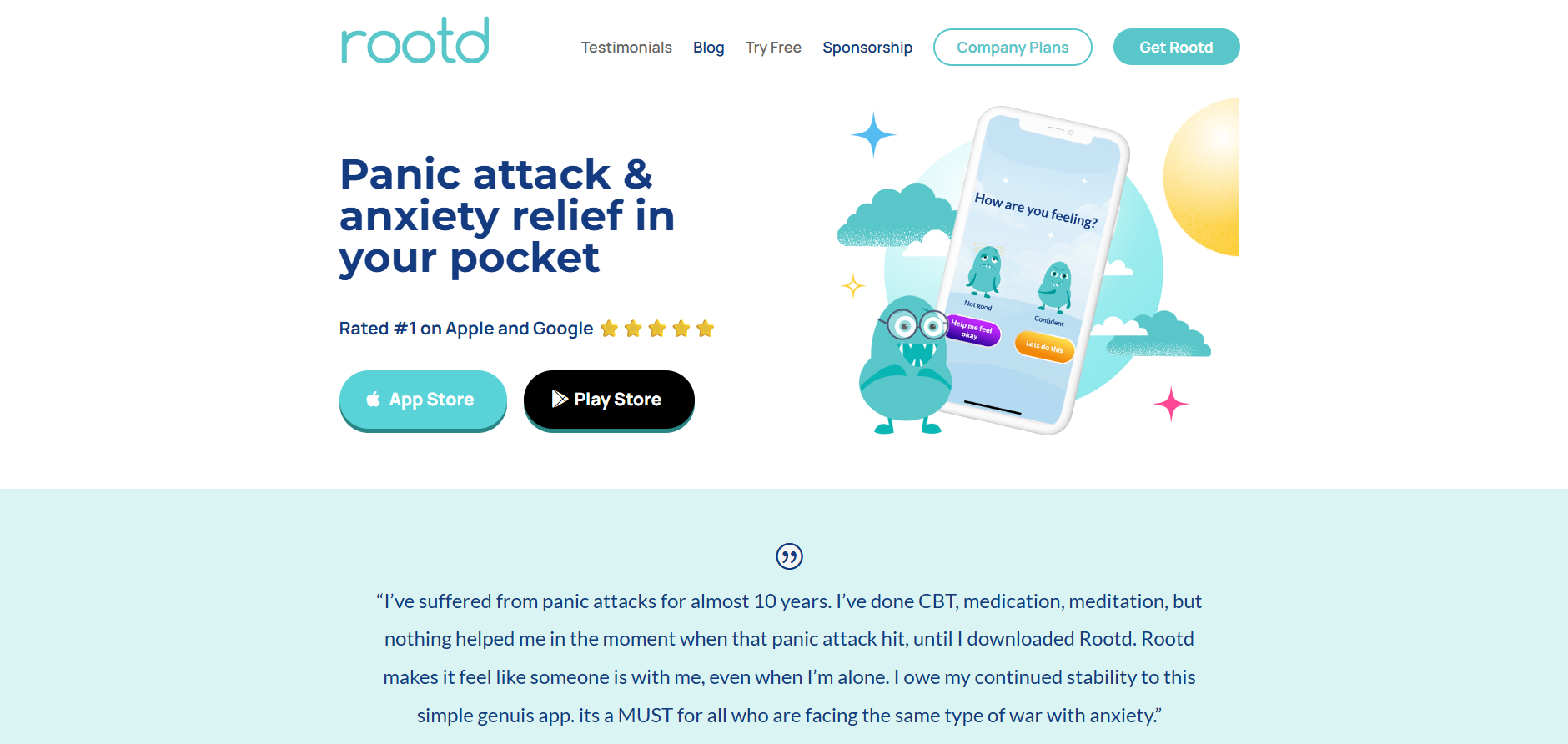
Rootd is designed for people who want quick, accessible tools during moments of intense stress or panic. Instead of focusing on long meditation sessions or habit-building routines, the app provides step-by-step exercises that can help users regain a sense of control when emotions feel overwhelming.
One of Rootd's standout features is its focus on immediate support. The app includes guided breathing exercises, grounding techniques, and educational content that users can access whenever they need it. Its straightforward design makes it easy to navigate, even during stressful situations when complicated menus and lengthy instructions can feel frustrating.
Key Features
- Guided breathing exercises
- Grounding and calming techniques
- Quick-access support tools
- Educational resources and guides
- Progress tracking features
Where It Might Not Be Suitable
- People looking for extensive meditation libraries
- Users interested in community discussions
- Those who prefer one-to-one conversations or coaching
Best For
- People who want practical tools for stressful moments
- Users looking for quick and easy-to-follow exercises
- Anyone who prefers immediate support over long-form wellness content
8. Moodfit
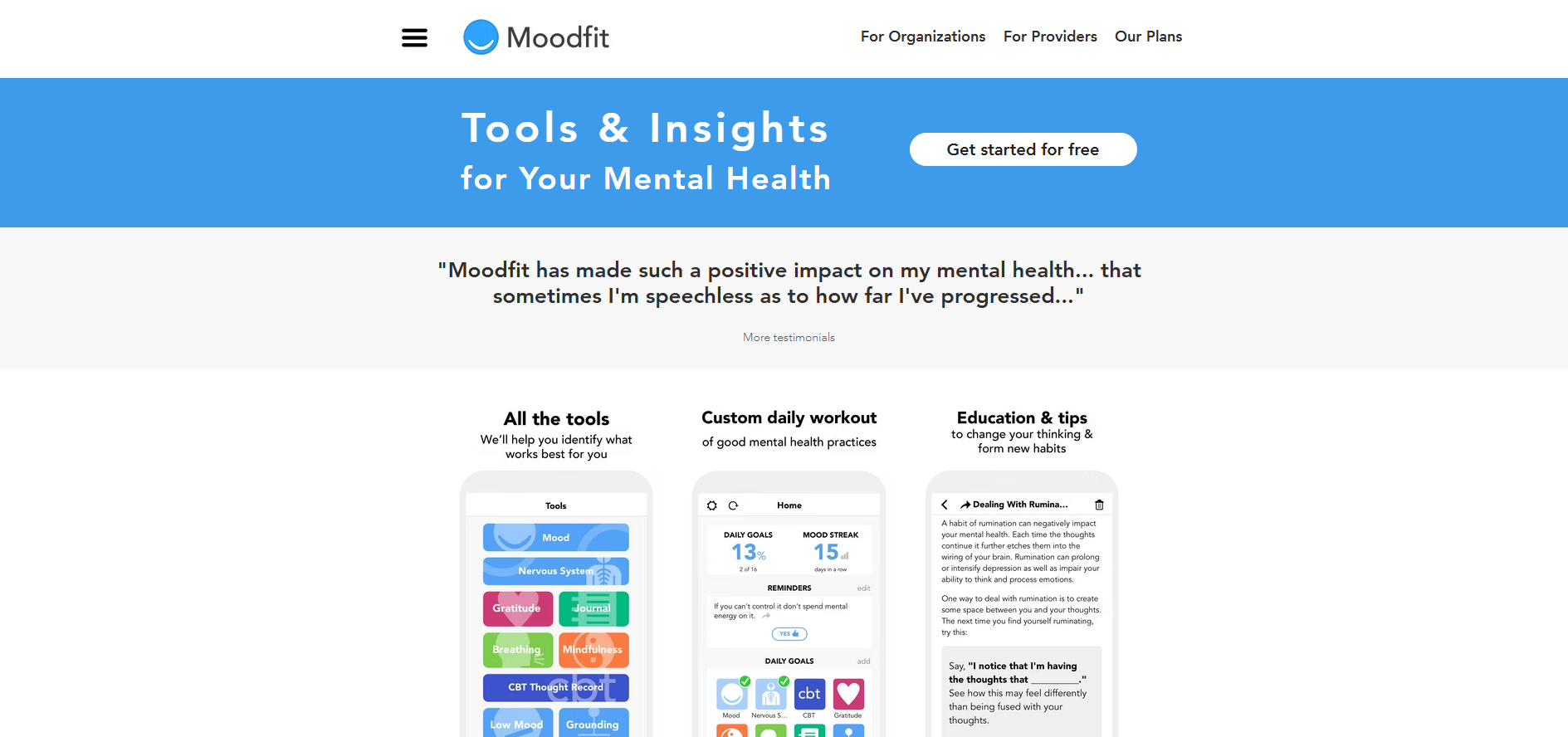
Moodfit is designed for people who like to understand patterns in their daily habits, emotions, and overall well-being. Rather than focusing primarily on meditation or guided conversations, the app helps users track different aspects of their day and see how those habits may influence how they feel over time.
The app combines mood tracking with tools for setting goals, building routines, and monitoring activities such as sleep, exercise, and mindfulness practices. This makes it useful for people who prefer a more structured approach and want insights they can refer back to instead of relying on memory alone.
Key Features
- Mood and wellness tracking
- Habit and goal-setting tools
- Activity monitoring
- Journaling features
- Progress reports and insights
Where It Might Not Be Suitable
- People looking for immediate in-the-moment support
- Users who prefer guided conversations
- Those who want a large library of meditation content
Best For
- People who like tracking habits and routines
- Users interested in understanding patterns over time
- Anyone looking for a structured approach to personal wellbeing
9. Happify
Happify takes a different approach from meditation and tracking apps by focusing on interactive activities and exercises. Instead of asking users to sit through guided sessions, it encourages participation through short tasks, quizzes, and activities designed to help build healthier habits and a more positive outlook.
The app uses a mix of games, reflection exercises, and guided activities to keep the experience engaging. This makes it a good option for people who find traditional meditation difficult to stick with or prefer a more active approach to personal growth. The variety of activities also helps prevent the experience from feeling repetitive over time.
Key Features
- Interactive activities and exercises
- Personalised wellbeing programs
- Goal-setting tools
- Progress tracking
- Reflection and journaling activities
Where It Might Not Be Suitable
- People looking for one-to-one conversations
- Users who prefer guided meditation as their primary tool
- Those seeking immediate support during stressful moments, especially those with chronic pain.
Best For
- People who enjoy interactive learning experiences
- Users looking to build positive daily habits
- Anyone who prefers activities and exercises over traditional meditation
The best app is often the one that fits naturally into your daily life. While meditation, journaling, and tracking tools work well for some people, others find it easier to process stress through conversation. That's one reason platforms like Listennr continue to appeal to people who want a more personal and private way to talk through what's on their mind.
Can anxiety apps actually help with stress and anxiety?
Yes, but different apps solve different problems. Someone dealing with late-night overthinking may prefer meditation tools, while someone carrying work pressure or everyday worries might find more value in guided exercises, mood tracking, or conversation-based support. The key is choosing an app that matches how you prefer to manage stress.
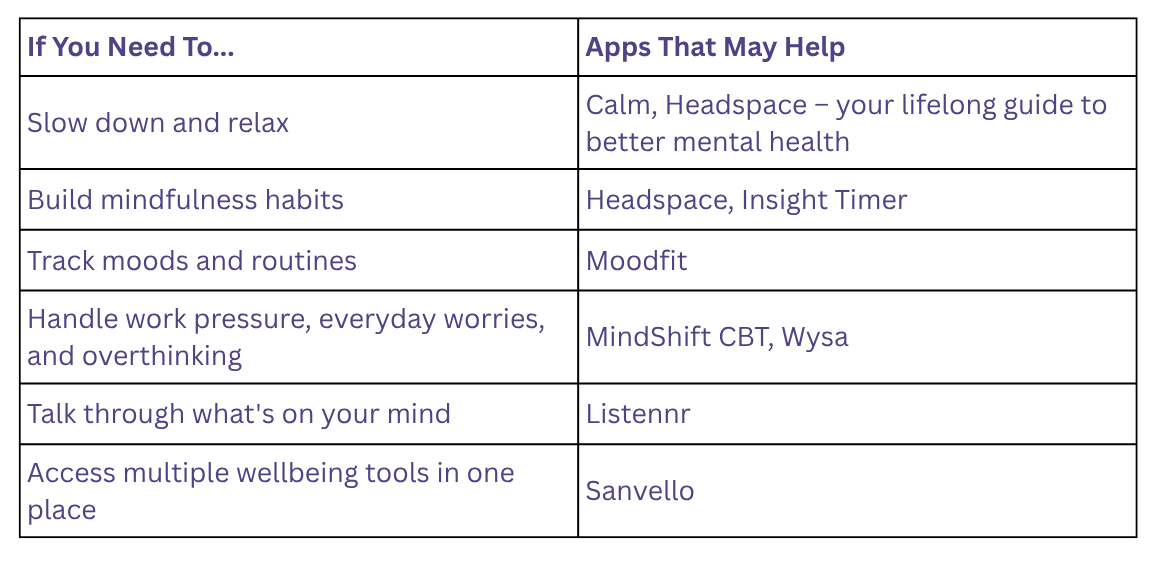
The most effective app is usually the one that fits naturally into your routine rather than the one with the most features.
How anxiety apps support stress management
Stress rarely comes from one thing. It often builds gradually through late-night overthinking, demanding work weeks, relationship challenges, family expectations, or simply feeling like there is never enough time to switch off.
Different apps support different needs. The right choice depends on what feels most helpful for you.
For example:
- Meditation and breathing apps can help you slow down and relax after a busy day.
- Mood-tracking apps can help you recognise patterns and understand what contributes to stressful periods.
- Journaling tools provide a private space to reflect on thoughts and emotions over time.
- Conversation-based platforms like Listennr allow you to talk through what's on your mind with someone who is there to listen.
The goal is not to download every app available. It is to find one that fits naturally into your routine and gives you practical support before stress starts feeling overwhelming.
Conclusion
The best anxiety app is not necessarily the most popular one. It is the one that fits naturally into your routine, whether that means meditation, habit tracking, guided exercises, or conversation-based support, including cognitive behavioural therapy techniques developed by Stanford experts.
If you're exploring apps for anxiety, start by identifying what you need most right now. Some people prefer tools that help them slow down and reflect, while others find it easier to work through challenges by talking things out. Trying a few options can help you find an approach that feels useful, practical, and sustainable for everyday life.
Frequently asked questions
Do apps to calm anxiety actually work?
Yes, they can be helpful when used consistently. Apps that offer meditation, breathing exercises, mood tracking, or conversation-based support can make it easier to manage everyday stress and enhance overall quality of life while building healthier coping habits, including through mental health treatment solutions.
Which anxiety relief app is free and trustworthy?
Several trustworthy anxiety apps, including Insight Timer, MindShift CBT for iPad, Wysa, and Moodfit, offer free versions addressing issues such as social anxiety and insomnia. The best choice depends on whether you prefer meditation, self-guided exercises, mood tracking, or conversation-based support.
Are there anxiety helper apps designed specifically for teens and young adults?
Yes. Apps such as Headspace, Wysa, and Happify are often popular with young people, including teens and young adults, because they offer simple, mobile-friendly tools that fit easily into everyday routines without feeling overwhelming on devices like iPhones and Android smartphones.
What features should I look for in an app designed for anxiety relief?
Look for features that match your needs, such as guided meditation, breathing exercises, mood tracking, journaling tools, sleep support, or conversation-based support to build better mental health habits. The best apps are easy to use, regularly updated, and fit naturally into your daily routine.
Can you suggest effective apps for helping with relaxation and coping skills for anxiety?
Headspace and Calm offer guided relaxation, breathing exercises, and sleep support, while Wysa and MindShift CBT provide coping tools to help take control of your mental health. Many mobile apps include a supportive community, physical activity tracking, and a premium version with additional features, which can be discussed with your GP for further insights.
How do I choose an anxiety app that’s trustworthy and safe?
Choose apps that are regularly updated, have transparent privacy policies, clear descriptions of their features, and positive user reviews. Some trustworthy apps even offer a free trial, focusing on practical support and realistic expectations rather than making promises or claiming to solve every problem, especially those available on the app store.
What are the best apps for anxiety and depression?
Popular options include Listennr, Headspace, Calm, Wysa, MindShift CBT, Moodfit, and Sanvello. The best choice depends on whether you prefer meditation, mood tracking, guided exercises, or conversation-based support.